Knife Collecting
Added 21 Jun 2026 · Updated 22 Aug 2026
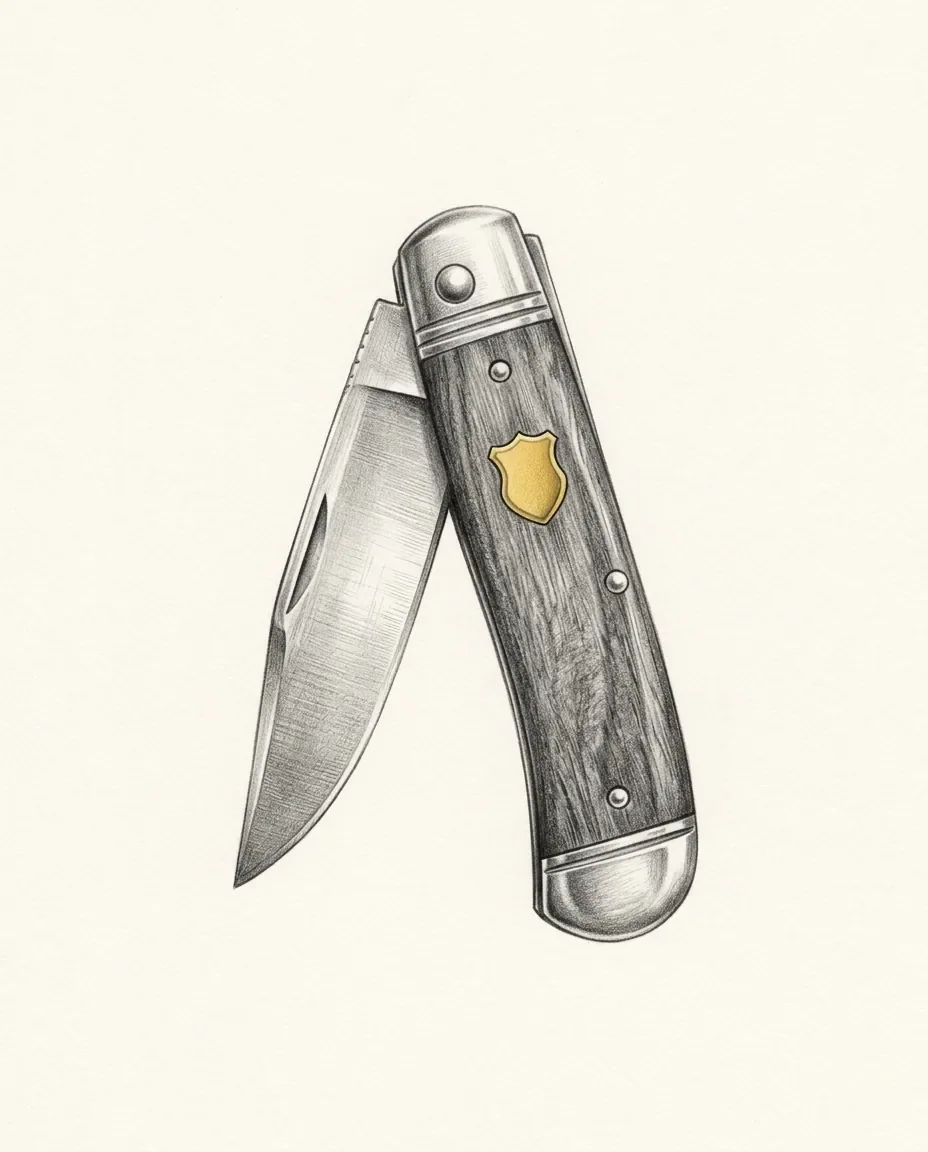
A non-sexual enthusiasm for knives and other edged tools as objects of craftsmanship: steel, grind geometry, and handle materials. Lock mechanisms, maker heritage, and everyday-carry culture matter too. It is a hobby and collecting interest, not a clinical condition.
- Prevalence
- Common
- Category
- Non-Sexual Fetishism
- Domain
- Non-sexual interest
- Confidence
- Low confidence
- Status
- Not a clinical condition; a non-sexual hobby and collecting interest involving tools that may be regulated.
- Also known as
- knife & edged-tool collecting, blade fixation, EDC knife culture, knife nut, edged-tool collecting
- Added
- 21 Jun 2026
- Updated
- 22 Aug 2026
Featured in
Overview
Knife collecting is a non-sexual enthusiasm for knives and other edged tools as objects of craftsmanship, function and design. Enthusiasts, self-described "knife nuts", study steel metallurgy, grind geometry, handle materials, lock mechanisms and the heritage of individual makers, ranging from mass-produced production knives to custom, handmade pieces. It is a hobby and collecting interest, not a paraphilia, and it sits within a long tradition of appreciating fine tools. This article traces the field's roots in ancient toolmaking and the great cutlery towns, the rise of a modern collectors' culture, and the legal context that distinguishes lawful collecting from any misuse of blades.
Examples
What the term covers. The field is broader than one kind of blade. A collector may specialise in traditional slipjoint pocketknives from the old Sheffield and Solingen houses; in modern production folders judged on lock design, steel and fit-and-finish; in custom, one-off pieces bought directly from a maker at a guild show; in kitchen cutlery, where Japanese and Western grind traditions are compared much as wine regions are; or in historical and military blades acquired as artefacts. Everyday-carry culture is a related mode rather than a separate hobby: the EDC enthusiast rotates a small working knife through daily use and values wear and patina over mint condition.
What the term does not cover. Knife collecting is not knife play, the consensual BDSM sensation practice built around the edge or the threat of a blade; the two share an object and nothing else, and this entry is not sexual. It is also distinct from compulsive hoarding, a recognised mental-health condition defined by distress and unusable living space rather than by curation. Adjacent hobbies catalogued separately here include watch collecting, antiquing and the general habit of collecting.
How the word is used. "Knife nut" is affectionate self-description inside forums and shows; "EDC" is community shorthand rather than a technical term. Neither knife collecting nor any of its jargon appears in DSM-5-TR or ICD-11, because an enthusiasm for well-made tools is not a clinical category; the manuals are cited on this page only to make that boundary explicit.
History & origins
From the oldest tool to the cutlery towns
The knife is among humanity's oldest manufactured tools. According to the Wikipedia overview of the knife, bladed implements appeared at least 2.5 million years ago in the form of Oldowan stone tools, and over the centuries blade materials advanced through copper, bronze, iron, steel, ceramic and titanium. Edged tools carried craft, status and ritual meaning across virtually every culture long before anyone collected them as objects of connoisseurship.
Collecting in the modern sense grew out of the industrial cutlery trade:
- 14th century onward: Sheffield, England began specialising in knife-making and became a household name for quality cutlery.
- 1740s: Benjamin Huntsman's invention of crucible steel in Sheffield gave cutlers a stronger, more uniform material, and by the 18th century the city sat at the heart of the global steel trade.
- Industrial era: Solingen, Germany, the "City of Blades," grew on the water power of the River Wupper; by around 1910 it had effectively overtaken Sheffield as the world's pre-eminent cutlery-producing centre. The folding pocketknife became a mass commodity in this period, and later in the American Northeast.
A modern collectors' culture
A distinct hobbyist field took shape in the twentieth century, as custom knifemaking grew into an organised craft in the United States:
- 1970: The Knifemakers' Guild was founded (conceived at a February 1970 Las Vegas gun show and formally established that November by A.G. Russell, with charter members including Bob Loveless, Blackie Collins, John Nelson Cooper and Dan Dennehy) to promote custom knives, support makers technically, and host an annual show now attended by thousands of collectors. This helped turn handmade blades into a recognised collectors' field with shows, makers and a specialist press.
- Late 1990s: BladeForums launched as a niche online community for knife enthusiasts, with sub-forums for folders, fixed blades, custom makers and multi-tools.
- Early 2000s: The "everyday carry" (EDC) movement spread through internet forums. A BladeForums thread dated 16 March 2003 (posted by a user known as UnknownVT) is often cited as an early landmark use of "EDC" as a distinct concept, and the community later broadened through the photo-sharing site Everyday Carry, founded by Bernard Capulong in 2009, and large subreddits such as r/EDC.
Clinically the interest is unremarkable. General overviews of object fixation, such as the Wikipedia article on paraphilia, are useful here chiefly to underline that an ordinary collecting hobby is not a sexual disorder.
In practice
The interest is expressed through acquiring, using and maintaining knives: sharpening and edge care, bushcraft and outdoor use, EDC rotation, and participation in forums, shows and maker communities. Collectors value both practical utility and the aesthetic and tactile qualities of a well-made tool: the snap of a lock, the feel of a handle, the mirror of a polished bevel. It overlaps naturally with adjacent collecting and craft interests such as watch collecting, stationery appreciation, and the broader gear culture that includes firearm enthusiasm.
Psychology
The appeal blends craftsmanship appreciation, mechanical and material curiosity, the practicality of genuinely capable tools, ordinary collecting behaviour, and community belonging. Origins are personal and cultural, often beginning with a first pocketknife, an outdoor pursuit, or a fascination with making and gear. None of this implies any clinical condition; it is the same connoisseurship that drives other tool- and object-collecting hobbies.
Prevalence & culture
Knife collecting is a niche but durable hobby with engaged online communities and a specialist retail and maker ecosystem. Cultural visibility is modest, intersecting with EDC, outdoor, bushcraft and craft scenes; large forums (BladeForums) and subreddits (r/EDC, r/knives) sustain an active, predominantly enthusiast presence.
How common is knife collecting?
Hard prevalence figures are not well established. No formal survey isolates knife collecting from the broader worlds of tool ownership, hunting, outdoor recreation and everyday carry, so this entry makes no statistical claim beyond noting a substantial, durable hobbyist base evidenced by the size of its forums, shows and maker guilds.
Safety, consent & law
Collecting and appreciating knives is lawful and non-sexual, but blades are tools that can cause injury and are regulated in many jurisdictions. Local laws frequently restrict the carry, length or type of certain knives (automatic/switchblade, balisong or concealed blades, for example) and rules vary widely by country and even by region. Responsible enthusiasts handle, store and transport their knives safely and in compliance with local law. This entry concerns lawful collecting and use, not the use of blades to harm, which is illegal and entirely outside its scope.
Common questions
Is it legal to collect knives?
Owning a knife collection is lawful almost everywhere; the restrictions fall on carrying, and in some places on specific mechanisms. Automatic or switchblade knives, balisongs, gravity knives and concealed fixed blades are prohibited or restricted in many countries and in individual US states, and blade-length limits for carry vary by city. Collectors generally treat possession at home as the safe default and check local law before carrying, travelling or shipping.
What makes a knife collectible?
Four things recur: the maker, the materials, the mechanism and the story. A blade from a named custom maker or a historic Sheffield or Solingen house carries provenance a mass-produced knife does not. Steel type, handle scales and finish quality speak to craft. Lock design and the feel of the action matter to folder collectors in particular. Limited runs, discontinued patterns and documented history add scarcity, which is what turns a good tool into a sought-after object.
Why do knife collectors care so much about steel?
Because no steel is best at everything. Edge retention, toughness, corrosion resistance and ease of sharpening trade off against one another, so a high-alloy stainless that holds an edge for a long time is usually harder to re-sharpen, while a simple carbon steel takes a keen edge quickly and rusts if neglected. Collectors compare steels the way other hobbyists compare engines: the differences are real, measurable and endlessly arguable.
What does EDC mean?
Everyday carry: the small set of tools a person keeps on them daily, typically a knife, a light, a pen and a wallet. As a movement it spread through internet forums in the early 2000s and through photo-sharing communities and subreddits afterwards. Within knife culture it marks a preference for knives that are used rather than displayed, which is why EDC enthusiasts talk about wear, patina and re-sharpening rather than condition.
Is knife collecting a sexual fetish?
No. It appears in this catalog among non-sexual fixations because the index covers intense object interests of both kinds, and this one is a hobby: an appreciation of craftsmanship, materials and mechanism, no different in structure from collecting watches or cameras. The separate sexual practice involving blades is knife play, a consensual BDSM sensation activity that shares an object with this entry and nothing else.
What is the difference between a production knife and a custom knife?
A production knife is manufactured in quantity to a fixed specification, with consistent tolerances and a catalogue price. A custom knife is made individually by a named maker, often to order, with the maker choosing or agreeing the steel, grind, handle material and finish. "Midtech" sits between the two, using machined parts finished by hand. Custom pieces dominate the guild-show and collector market; production knives dominate everyday carry.
How should a knife collection be stored?
Dry, and not in leather. Leather sheaths and rolls hold moisture and tanning residues that pit carbon steel over months, so long-term storage usually means a padded case, an untreated cloth knife roll, or individual sleeves, with a light film of oil on carbon blades and on pivots. Silica packets help in humid climates. Folders are generally stored closed and kept away from direct handling by visitors.
From the blog
- Gun Fetish48/100Non-Sexual FetishismA strong, non-sexual enthusiasm for firearms: collecting, shooting sports, mechanical and historical interest, and participation in gun culture. Here "fetish" means intense object fascination, a hobby and subculture, not a sexual paraphilia.48
- Watch Collecting41/100Horological Fixation · Non-Sexual FetishismAn intense, non-sexual fascination with mechanical timepieces and luxury watches, centered on craftsmanship, brand heritage, and the act of collecting. It is a hobby and consumer-culture interest rather than a clinical condition.41
- Stationery Fetish38/100Non-Sexual FetishismA non-sexual enthusiasm for fine stationery (fountain pens, inks, premium notebooks, and desk goods) driven by tactile pleasure. Craftsmanship, aesthetics, and collecting drive it too. It is an everyday hobby and connoisseurship interest, not a clinical condition.38
- Commodity Fetishism34/100Non-Sexual FetishismA concept from Marxist economic and social theory describing how commodities appear to possess intrinsic value and social power. That appearance masks the human labor and social relations that actually produce them. It is a non-sexual, analytical use of the word "fetish."34
- New Car Smell36/100Non-Sexual FetishismA non-sexual fondness for the distinctive smell of new manufactured goods, most famously the interior of a new car. Freshly printed books, electronics, or packaging carry it too. It is a common, pleasurable sensory and nostalgic experience, not a clinical condition.36
- Deltiology (Postcard Collecting)31/100Deltiology · Non-Sexual FetishismDeltiology is the collecting and study of postcards, one of the largest and oldest collecting hobbies by participation. Collectors pursue postcards for their images, history, and the traces of the people and places they document.31
collecting · hobby · craftsmanship appreciation
Prevalence is computed from the entry's cited population estimate. Rows marked ESTare indicative editorial estimates scored against a fixed anchor rubric, not measured quantities. Method & anchors: methodology.
Common · ≈ 1 in 20
- 01Paraphilia, Wikipediacontext distinguishing non-sexual object fixation/collecting from clinical paraphilia
- 02Google Trends, relative search interest (search-interest proxy)search-interest proxy for knife-collecting / EDC hobby popularity
- 03FetLife, kink community group sizes (community-size proxy)community-size proxy for niche object-fixation interest groups
- 04Knife, Wikipediathe knife as one of humanity's oldest tools (Oldowan tools ~2.5 million years ago) and the progression of blade materials through copper, bronze, iron, steel, ceramic and titanium
- 05Knifemakers' Guild, Wikipediafounding of the Knifemakers' Guild in 1970 (conceived Feb 1970, established Nov 1970 by A.G. Russell; charter members Bob Loveless, Blackie Collins, John Nelson Cooper, Dan Dennehy) and its role in organising custom knifemaking and collector shows
- 06Made in Sheffield: A History of Knife Making, S. StaniforthSheffield's development as a cutlery centre from the 14th century and Huntsman's 1740s crucible steel
- 07Welcome to Solingen, 'City of Blades', Ciselier CompanySolingen as the German 'City of Blades' powered by the River Wupper and its rise as a pre-eminent cutlery-producing centre
- 08BladeForums, knife enthusiast communityBladeForums as a late-1990s online knife community with sub-forums for folders, fixed blades, custom makers and EDC; the 16 March 2003 thread often cited as an early landmark use of 'EDC'; community-presence evidence
- 09About, Everyday CarryEveryday Carry (EverydayCarry.com) founded by Bernard Capulong in 2009 as a photo-sharing hub for daily-carry gear