Sweat Fetish
Olfactophilia (sweat subtype)
Added 21 Jun 2026 · Updated 22 Aug 2026
A sexual interest in sweat and natural body odor, valued for its scent, musk, and sense of physical authenticity. It is a benign olfactophilic interest among consenting adults rather than a recognized disorder.
- Prevalence
- Common
- Category
- Body Functions & Fluids
- Clinical term
- Olfactophilia (sweat subtype)
- Domain
- Sexual interest
- Confidence
- Low confidence
- Status
- Olfactophilic subtype focused on sweat/odor; a normal variation, not a disorder absent distress or impairment.
- Also known as
- Sweat fetishism (idrosophilia / olfactophilic subtype), perspiration fetish, idrosophilia, olfactophilia, musk fetish, body-odor fetish, scent fetish
- Added
- 21 Jun 2026
- Updated
- 22 Aug 2026
Overview
Sweat fetishism, sometimes labelled idrosophilia and understood as an odour-focused (olfactophilic) interest, centres on perspiration and natural body odour as a source of arousal. The appeal commonly rests on the musky scent of a partner, a sense of raw physical authenticity, the association of sweat with exertion, heat or sex, and the intimacy of close, unmasked bodily smell. It is best read as a benign, everyday variant of olfactophilia rather than a recognised disorder, and this article traces its clinical lineage, how it is expressed, the proposed psychology, and what little prevalence data exist.
Examples
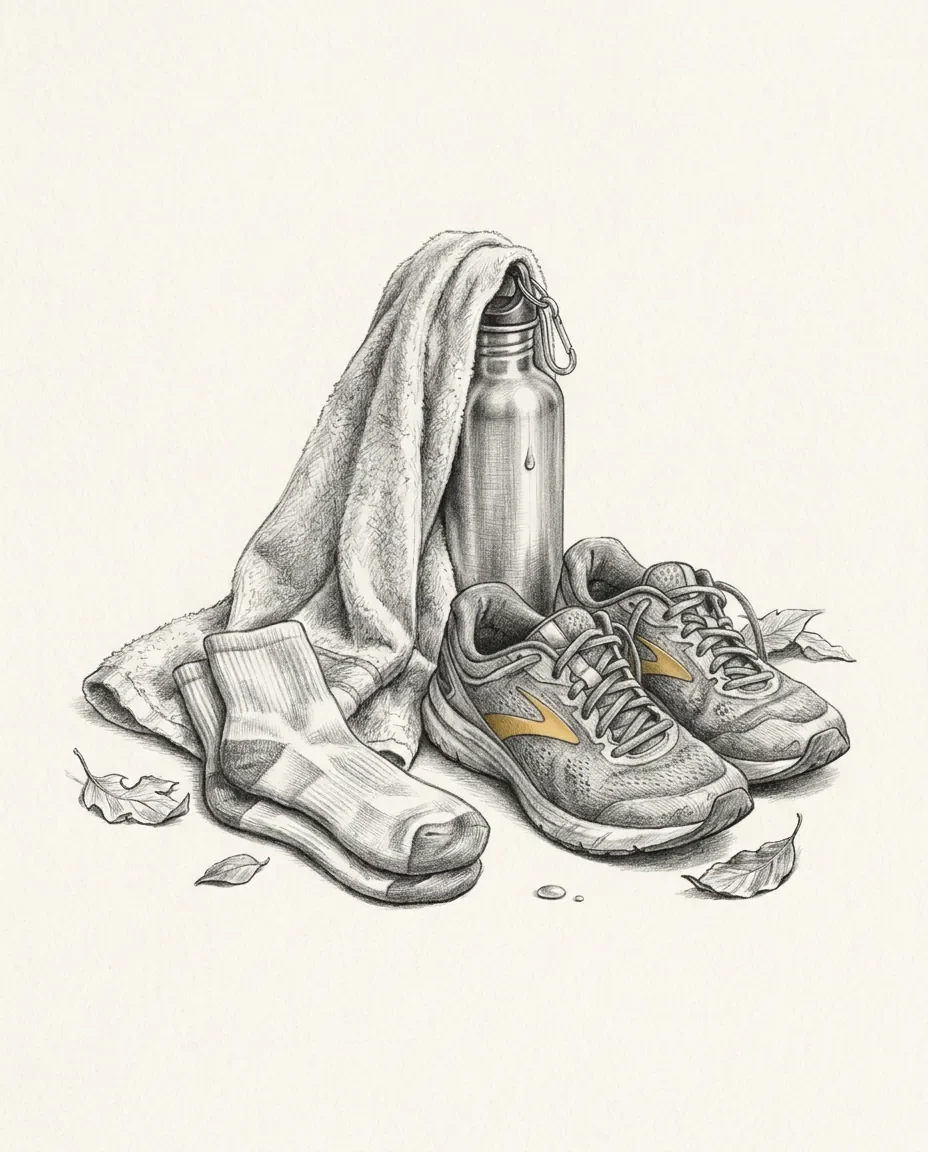
What the term covers. Preferring a partner's natural smell at close range, especially at the neck, chest or armpit, and choosing it over soap or fragrance; arousal tied specifically to sweat produced by exertion, which is why the interest clusters around athletic themes and settings such as the locker room, the sauna and gym wear; and the value placed on worn, unlaundered garments, socks, underwear or training kit, for the scent they hold after the wearer has gone.
What the term does not cover. It is one facet of a broader scent interest rather than the whole of it: foot odour and breath are separately named facets, and non-erotic scent enthusiasms such as new-car smell sit outside the frame entirely. Interests in which a bodily substance itself is the focus, whether saliva, urine or fluids more generally, are about the substance rather than its smell. Mysophilia attaches to dirtiness and soiled items at large, and salirophilia to messing a partner up; a sweat interest requires neither. Nor is it an interest in the athletic body itself, which is muscle worship.
How the word is used. "Sweat fetish" and "musk" are vernacular, the second being community shorthand for concentrated natural body scent as opposed to the perfumery ingredient of the same name. Olfactophilia is the clinical umbrella for odour-focused arousal and idrosophilia the sweat-specific label; both are descriptive names rather than diagnoses, and no scent-specific category exists in DSM-5-TR or ICD-11.
History & origins
Arousal tied to body scent occupies a documented place in the founding sexological literature, even though the sweat-specific label is recent and loosely defined. The history runs along two threads: the clinical naming of scent-based arousal, and the broader scientific recovery of olfaction as a genuine channel of human attraction.
Clinical lineage
- 1886: Richard von Krafft-Ebing's Psychopathia Sexualis established much of the clinical vocabulary for paraphilias and recorded cases in which odour, including that of a partner's body and worn clothing, carried an intense erotic charge.
- 1905: Sigmund Freud's Three Essays on the Theory of Sexuality discussed how smell figures in sexual life and speculated that a cultural "repression" of olfactory pleasure accompanied human upright posture; Freud also used the term osphresiolagnia for pleasure derived from odours.
- Early 1900s: Havelock Ellis's Studies in the Psychology of Sex, in the volume "Sexual Selection in Man," devoted an extended treatment to the role of smell in attraction, explicitly including the erotic pull some attach to perspiration.
The dedicated label olfactophilia, arousal centred on bodily odours, descends from this lineage and is sometimes given as osmolagnia. A sweat-focused variant, occasionally called idrosophilia, is described as one of its everyday forms, but the precise coinage of that standalone term is not well documented. Neither olfactophilia nor any sweat-specific label is listed as a discrete diagnosis in the DSM-5-TR or the ICD-11; scent interests fall under the general framing for paraphilia, where a disorder is recognised only with distress, impairment, or non-consent.
Scientific & cultural evolution
Through the late twentieth century the interest was absorbed into a broader scientific recovery of olfaction as a real channel of human attraction: work on chemosignals, scent-mediated mate preference, and the emotional salience of a familiar partner's smell. Culturally it became visible in athletic, gym and "musk" niches and in the trade in worn, scent-imbued garments, a folk practice that long predated its online communities.
In practice
Expression is varied and generally low-key: a strong attraction to a partner's natural scent, enjoyment of worn or sweat-imbued clothing, or arousal tied to sweat produced during exercise or intimacy. It overlaps with broader olfactophilia, with athletic and gym themes, and with garment interests involving worn items. For most people it functions as a heightened preference layered onto otherwise conventional attraction rather than a strict requirement for arousal.
Psychology
What makes sweat appealing?
Proposed mechanisms draw on two strands. The first is the documented role of scent and chemosensory cues in human attraction, which gives body odour a plausible biological footing as an arousal cue. Research on body odour and sexual attraction finds that a partner's natural smell weighs heavily in mate choice, and experimental work on sexual chemosignals reports that men rate the axillary sweat of sexually aroused women as more attractive, with exposure raising their own arousal. The second strand is associative learning: a partner's smell becomes paired with closeness, arousal and reward and acquires erotic salience through repetition, the same conditioning account offered for body-hair attraction and other body-focused interests. The evidence base specific to a sweat fetish is thin, and most of what is claimed is generalised from broader olfaction and fetishism research; the sweat subtype itself is rarely studied directly.
Prevalence & culture
How common is it?
There is no clean prevalence figure for a sweat-specific interest. Broad surveys show that fetishistic interest in general is common: Joyal & Carpentier (2017) found fetishism among the most prevalent paraphilic interests in a representative Quebec sample (roughly 44% expressing some fetishistic desire), but they do not isolate scent. Relative-frequency mapping of online fetish communities by Scorolli et al. (2007) places body-fluid and odour interests among the smaller categories (body fluids around 9% of body-part groups), well below dominant foot and object targets, a pattern echoed in the sexual fetishism literature. Communities are moderate, often tied to athletic and musk-themed niches on platforms such as FetLife, with limited but recognisable cultural visibility. It sits close to related interests such as spit play and body-hair attraction.
Safety, consent & law
The interest involves consenting adults and is neither harmful nor illegal. Practical considerations are ordinary: hygiene, and clear consent for any close-contact or garment-sharing practice. As with any body-contact interest, standard cleanliness and respect for a partner's boundaries apply.
Common questions
Is it normal to be turned on by a partner's smell?
Very. Natural body scent weighs measurably in mate choice, and most people can describe a partner whose smell they found compelling without ever reaching for the word fetish. The line, insofar as there is one, is whether the scent is a pleasing component of attraction or the thing attraction depends on. Only the second is what the word is doing here, and even then it is a description rather than a problem.
What is the difference between a sweat fetish and olfactophilia?
Scope. Olfactophilia is the clinical umbrella for arousal centred on bodily odours of any kind; a sweat fetish is one facet of it, focused specifically on perspiration and the musk of exertion. Other facets carry their own names, such as an interest in foot odour or in a partner's breath. The sweat-specific label sometimes given, idrosophilia, belongs to lay glossaries rather than to the research literature.
Is a sweat fetish a disorder?
No. Neither DSM-5-TR nor ICD-11 carries any scent-focused diagnosis, and the general paraphilia framework treats an unusual interest as a disorder only where it causes distress or impairment, or involves someone who has not consented. A pronounced preference for a partner's natural smell meets none of that. What is unusual about the interest is mainly how rarely it is discussed aloud, not how it functions.
Are there health risks to a sweat fetish?
Few, and ordinary ones. Sweat itself is not a meaningful route of infection, so the practical considerations are the same skin-to-skin ones that attend any close contact, plus basic hygiene where garments change hands. Unwashed clothing passed between people can carry fungal and bacterial skin infections, which is an argument for washing between wearers whenever the retained scent is not the point. Nothing about the interest requires anything unsafe.
What does "musk" mean in this context?
It is community shorthand for concentrated natural body scent, most often from the armpits, the groin, or clothing worn long enough to hold it, as distinct from the perfumery ingredient of the same name. The word carries an approving charge that "body odour" does not, which is why scent-oriented communities prefer it. Athletic and gym-themed groups use it most, since exertion is what produces the scent being described.
Why do people buy worn, unwashed clothing?
Because the scent is the point and it does not survive laundering. Trade in worn socks, underwear and gym kit long predates the online communities that now organise it, and buyers are generally after a particular person's smell rather than sweat in the abstract, which is why sellers are routinely asked how long an item was worn. The practice shades into mysophilia, where the soiled state itself is the appeal.
- Spit Fetish43/100Salivaphilia · Body Functions & FluidsA sexual interest in saliva, spit, or drool, often as part of kissing, oral play, or dominance dynamics. It is generally a benign body-fluid interest among consenting adults rather than a recognized disorder.43
- Watersports55/100Urolagnia · Body Functions & FluidsA sexual interest in urine or urination, commonly called watersports. Clinically named urolagnia or urophilia, it is a recognized paraphilic interest that, when practised safely between consenting adults, is generally regarded as a benign variation.55
- Body Hair Fetish34/100Hirsutophilia · Body Parts & PartialismAn erotic focus on natural body hair (chest, abdomen, arms, legs, or underarms) where its presence, density, or texture is a primary source of attraction. A benign partialism in consenting adults, sometimes labelled hirsutophilia.34
- Body Fluid Fetish46/100Body Functions & FluidsAn umbrella term for erotic interest in bodily fluids and secretions, such as semen, urine, saliva, blood, or sweat. The interest may run through their sight, taste, smell, or symbolic charge. It groups a family of narrower, fluid-specific interests rather than naming a single act.46
- Cum Fetish43/100Spermatophilia · Body Functions & FluidsAn erotic interest in which semen and the act of ejaculation become a focus of arousal, through their visual presence or their scent. Symbolic associations with climax, virility and fertility also carry the charge. It is a common element of mainstream adult fantasy rather than a discrete clinical disorder.43
- Foot Odor Fetish43/100Olfactophilia (foot-specific) · Body Functions & FluidsA foot-specific facet of olfactophilia: arousal centred on the natural scent of feet, worn socks, or the inside of shoes. It overlaps closely with general foot fetishism, where the smell (not only the look) of the foot is part of the attraction.43
*Idrosophilia* combines Greek *hidrōs* ("sweat") with *-philia* ("love, affinity"), literally "love of sweat." The broader clinical term *olfactophilia* joins Latin *olfactus* ("sense of smell") with the same Greek *-philia*; Freud used the parallel Greek-rooted *osphresiolagnia* (from *osphrēsis*, "smell," + *lagneia*, "lust").
sweat · body odor · scent
Prevalence is computed from the entry's cited population estimate. Rows marked ESTare indicative editorial estimates scored against a fixed anchor rubric, not measured quantities. Method & anchors: methodology.
Common · ≈ 1 in 20
- 01List of paraphilias, Wikipediadefinition/existence of olfactophilia and the sweat/body-odor subtype
- 02Scorolli et al. (2007), Relative prevalence of different fetishes, Int. J. Impotence Research 19(4):432-437relative prevalence anchor: body-secretion/odor interests fall within the small 'body fluids' share (~9% of body-part fetishes), well under broader object fetishism
- 03Sexual fetishism, Wikipedia (carries the Scorolli 2007 relative-frequency table)carries the Scorolli relative-frequency table placing scent/secretion fetishes among rarer categories
- 04Havelock Ellis, Studies in the Psychology of Sex, 'Sexual Selection in Man' (smell in attraction)early sexological treatment of olfaction and perspiration in sexual attraction
- 05Olfactophilia, Wikipediadefinition of olfactophilia as arousal from bodily odours; the sweat interest as an everyday variant
- 06Body odour and sexual attraction, Wikipedianatural body scent is a significant factor in mate choice and sexual attraction, giving sweat interest a biological footing
- 07Wisman & Shrira (2020), Sexual Chemosignals: Evidence that Men Process Olfactory Signals of Women's Sexual Arousal, Archives of Sexual Behavior (PMC)men rate axillary sweat from sexually aroused women as more attractive and show raised arousal on exposure
- 08Scorolli et al. (2007), Relative prevalence of different fetishes, International Journal of Impotence Research (Nature)body-fluid/secretion interests are a small share (~9%) of body-part fetishes, below dominant foot and object targets
- 09Psychopathia Sexualis, WikipediaKrafft-Ebing (1886) established clinical vocabulary for paraphilias and recorded odour-focused arousal
- 10Three Essays on the Theory of Sexuality, WikipediaFreud (1905) on smell in sexual life and the repression of olfactory pleasure; term osphresiolagnia
- 11Paraphilia, Wikipediageneral framing: a paraphilic interest is a disorder only with distress, impairment, or non-consent
- 12Joyal & Carpentier (2017), The Prevalence of Paraphilic Interests and Behaviors in the General Population, J. Sex Research 54(2):161-171representative-sample evidence that fetishistic interest is common (~44% expressing fetishistic desire); does not isolate scent
- 13DSM-5-TR, Paraphilic Disorders (American Psychiatric Association, 2022)no discrete sweat/odour diagnosis; disorder threshold requires distress or impairment
- 14ICD-11, Paraphilic disorders (World Health Organization)no discrete sweat/odour diagnosis in ICD-11
- 15FetLife, kink community platformcommunity-presence proxy for athletic/musk-themed scent-interest groups