Brat Play
Added 21 Jun 2026 · Updated 22 Aug 2026
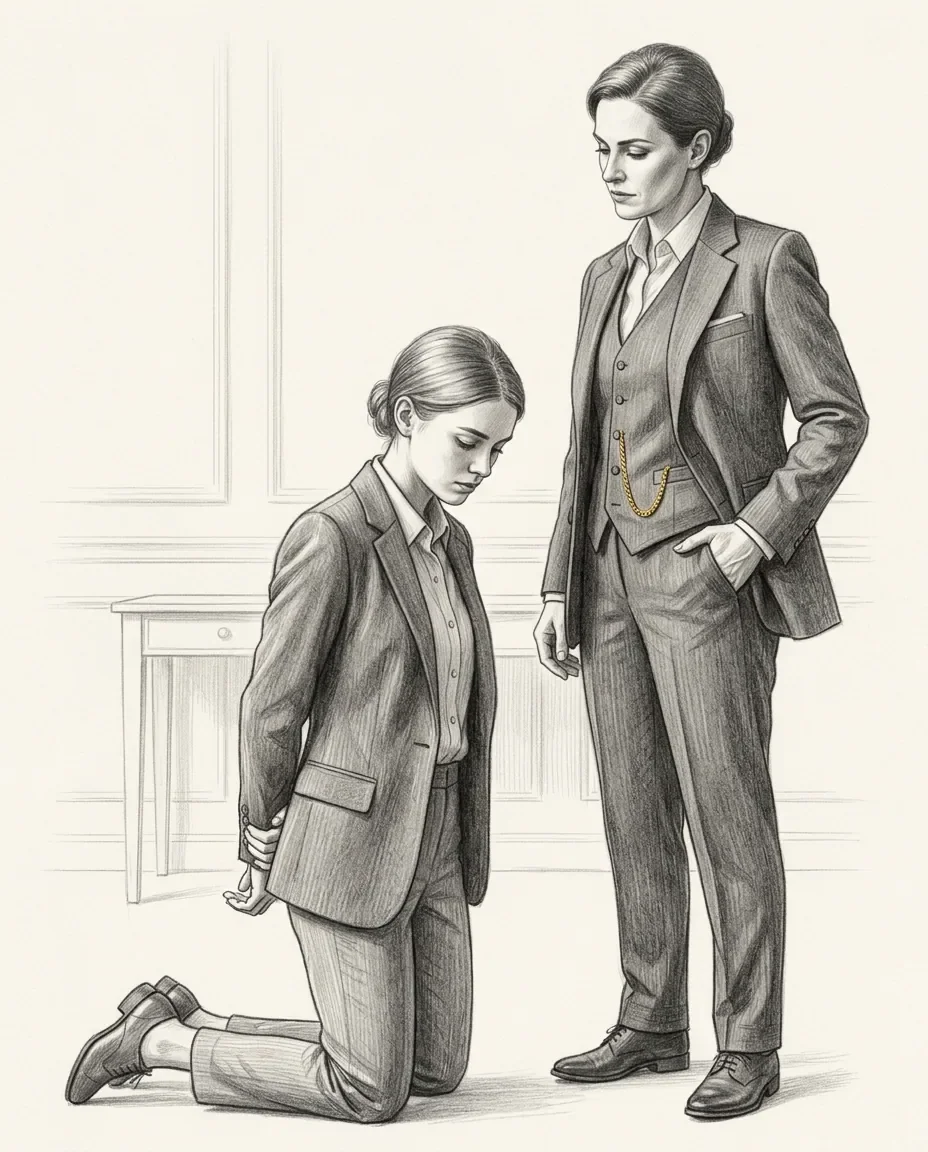
A submissive style within power exchange in which one partner playfully resists, teases, or defies a dominant partner. That dominant, the "brat tamer", responds by reasserting control. Both the cheek and its taming are consensually scripted between adults.
- Prevalence
- Common
- Category
- Power, Roles & Scenarios
- Domain
- Sexual interest
- Confidence
- Medium confidence
- Status
- Not a paraphilia or disorder; a consensual submissive style within power exchange among adults.
- Also known as
- brat play (brat/tamer dynamic), bratting, brat tamer, brat taming, defiant sub, resistance play
- Added
- 21 Jun 2026
- Updated
- 22 Aug 2026
Featured in
Overview
Brat play is a submissive style within dominance and submission in which the submissive, the "brat," deliberately tests, teases, or playfully disobeys, while the dominant partner, the "brat tamer," responds by reasserting authority. It reframes submission as something earned through challenge rather than offered passively, turning mock defiance into a flirtatious contest between consenting adults. This article covers where the term came from, how the dynamic is expressed, the psychology of friction as foreplay, and the consent questions raised by play that deliberately blurs "no."
Definition & scope
Bratting is an attitude, not a fixed rank. The brat performs resistance: banter, backtalk, and small rule-breaking that invite a firm response rather than express genuine refusal. The tamer's job is to notice, contain, and "win" that resistance. The style most often attaches to submission, but the community stresses that the cheeky, testing posture can sit alongside other roles too, so "brat" describes how someone plays rather than a rigid position in a hierarchy. What it is not: genuine refusal, real defiance of limits, or an excuse to ignore a safeword.
Examples
What the term covers. Backtalk and eye-rolling that invite a firm response; "forgetting" an honorific on purpose; hiding something the dominant partner is looking for; breaking a small agreed rule just to see what happens; and the tamer's answer: a raised eyebrow, a stern instruction, or a pre-negotiated consequence such as a spanking, drawn from the same rules-and-consequences frame as discipline. The exchange usually reads as flirtation with an edge on it, and both partners know how it ends.
What it does not cover. Bratting is not genuine refusal, and that is the misreading the term attracts most. Real defiance ends a scene; bratting is a move inside one, played against rules both people set up beforehand precisely so it could be played. Because it borrows the shape of consensual non-consent, the performed "no" is a scripted line, while a safeword or safe signal sits outside the script entirely and is untouched by it. Nor is brat play a rank. It is a style, distinct from service submission, which finds its satisfaction in anticipating a partner's needs rather than testing them, and different again from switching, where a person genuinely takes the dominant role. Humiliation play and degradation aim at feeling small; bratting aims at being caught. Age-play and DDlg sometimes use bratty behaviour as texture, but a brat is not a "little" and the two are independent.
How the word is used. "Brat" and "brat tamer" are community vernacular, coined in kink spaces and spread through forums and social media; neither appears in DSM-5-TR or ICD-11 and neither names a disorder. The verb form is standard usage ("he was bratting all evening"), which is a fair sign of how thoroughly the word describes a behaviour rather than a person.
History & origins
Clinical lineage of the container
Brat play has no clinical history of its own; what it inherits is the broader framework of dominance and submission. That framework descends from Richard von Krafft-Ebing's Psychopathia Sexualis (1886), which named sadism and masochism, and from the early-twentieth-century work of Havelock Ellis and Sigmund Freud, whose Three Essays on the Theory of Sexuality (1905) treated dominance and submission as common currents of erotic life. Consensual power exchange is not itself a disorder: it sits outside the DSM-5-TR and ICD-11, which classify only distressing or non-consensual paraphilias. Brat play sits inside that consensual space as a style, not a diagnosis.
A community-coined term
"Brat play" is a community term, not a clinical one. It grew out of the vocabulary of modern BDSM subcultures, which crystallised through leather, fetish, and later online communities across the second half of the twentieth century, where practitioners developed fine-grained labels for particular roles and styles. The word "brat," meaning an impudent or unruly child, is plain English attested for centuries and long predates any kink usage; the community repurposed it to name a submissive who resists for play, and the paired role of "brat tamer" followed the same metaphor. The precise coinage and dating of the kink sense are not well documented, but the dynamic became widely discussed as kink forums, FetLife, and social media grew through the 2000s and 2010s. "Bratting" now appears routinely in mainstream lay guides such as Glamour's A-Z of kinks and in community explainers like Feeld's account of the brat role.
In practice
Bratting is expressed through banter, eye-rolling, witty backtalk, deliberately forgetting honorifics, interrupting, breaking small agreed-upon rules, and light provocation, met with corrective responses such as verbal commands, mock-stern reproof, or pre-negotiated consequences. The resistance is theatrical: it signals engagement and invites a reaction rather than expressing genuine refusal. Partners agree in advance which rules are "bratty fun" and which are firm limits, so the contest stays inside a consensual frame even as it performs disobedience.
Psychology
The appeal often lies in the spark of friction itself: the playful contest of wills and the satisfaction of being "won over" or firmly held. For many it adds humour, energy, and emotional charge to power exchange. It suits people who enjoy autonomy alongside submission, and it can make the eventual yielding feel more meaningful and earned than passive compliance. The teasing builds anticipation, and the dynamic often centres on attention, care, and validation as much as on discipline. Brat play borrows the structure of consensual non-consent, where a performed "no" is not a real one, and it relies on the same explicit frameworks: the safety of the negotiated container is what lets the defiance be enjoyed. The empirical literature on this specific style is thin, and most published accounts are qualitative or community-authored rather than experimental.
Prevalence & culture
Brat play is a popular, widely discussed style in kink communities, with substantial presence on forums and social media, though it carries limited formal research and only modest mainstream visibility. The container around it is near-universal: Lehmiller's Tell Me What You Want (2018) survey of 4,175 Americans found BDSM and dominance-submission fantasy almost ubiquitous, leaving ample room for specialised styles like bratting to flourish within it. Community-size proxies such as FetLife show a sizable but specialised brat/tamer subgroup nested within that broad popularity, and the role has become a recognisable internet archetype, sometimes flattened by mainstream media into a "difficult" or "manipulative" caricature that obscures its negotiated, communicative core.
Safety, consent & law
The dynamic is legal and benign between consenting adults. Its central safety question follows from its design: because playful defiance deliberately blurs the signal value of resistance, clear prior negotiation, reliable safewords (and non-verbal safe signals for gagged or overwhelmed moments), and a shared understanding of where teasing ends and real limits begin are essential, so that provocation never overrides genuine consent. Related styles worth distinguishing include humiliation play, with which bratting sometimes overlaps when correction is verbal, and structured authority scenes such as teacher roleplay.
Common questions
What is a brat tamer?
The dominant half of the dynamic: the partner whose job is to notice the provocation, refuse to be rattled by it, and reassert authority in a way the brat enjoys losing to. Tamers are usually described as patient rather than harsh, since the skill lies in timing and in not taking the bait too early; the resistance is an invitation to a contest, not an insult. The role can be played warmly or sternly, and both are common.
Is bratting the same as topping from the bottom?
No, although they look alike from outside and the community argues about where the line falls. Topping from the bottom means a submissive steering a scene in a direction the dominant did not choose, taking control while appearing not to. Bratting is provocation inside a dynamic the dominant still runs, and it works because the tamer wants it there. The practical test is whether the behaviour was negotiated and is welcome; unwelcome, unnegotiated bratting is just someone ignoring the agreement.
Is brat play just being difficult or manipulative?
No, and this is the most common misreading of it. A brat is not defying their partner; they are performing defiance against rules both people set up beforehand so that it could be performed. The disobedience is scripted in the sense a stage fight is: real effort, agreed outcome. Genuine defiance, ignoring a stated limit, or using "bratting" as cover for not respecting a partner is not brat play, and the community draws that line sharply.
How do you know when a brat actually means no?
Because the real "no" is not a word used inside the game. This is exactly why brat dynamics depend on a safeword, and on a non-verbal signal for moments when speech is not available. In-scene protest, backtalk and refusal are part of the performance and carry no stopping power; the safeword sits outside the fiction and always does. Partners also agree beforehand which rules exist to be broken and which are firm limits, so nothing has to be interpreted mid-scene.
Do brats have to be submissive?
Mostly, but not by definition. Bratting is a style (a way of playing) rather than a position in a hierarchy, so the cheeky, testing posture attaches most naturally to submission without being confined to it. A switch might brat in one dynamic and tame in another. What separates it from actually taking the dominant role is that the brat still wants to be contained: the pleasure is in the resistance being overcome, not in winning.
What is a "funishment"?
Community slang for a consequence both partners know is enjoyable (a spanking, a task, a stretch of teasing), imposed with mock severity in response to bratting. The word exists because the exchange needs a category for a punishment that is not really a punishment. It is the opposite of genuine discipline, where the consequence is meant to be unwelcome and to change behaviour; a funishment is the reward for having misbehaved in the first place.
Is brat play a paraphilia or a disorder?
No. It is a style of consensual power exchange between adults, and neither DSM-5-TR nor ICD-11 lists anything corresponding to it; those manuals classify only interests that cause the person genuine distress or impairment, or that involve someone who has not consented. Brat play is community vocabulary rather than clinical vocabulary, and there is no diagnosis it maps onto.
From the blog
- Dominance and Submission92/100Power, Roles & ScenariosA consensual erotic dynamic in which one partner takes a dominant role and the other a submissive role, exchanging power within agreed limits. It is one of the most widespread elements of BDSM and of human sexual fantasy.92
- Humiliation Play60/100Power, Roles & ScenariosA psychological power-exchange interest in which consenting adults eroticize feelings of embarrassment, degradation, or being put down. Arousal arises from the negotiated experience of vulnerability rather than from real harm.60
- Teacher Roleplay62/100Power, Roles & ScenariosAn authority role-play sub-genre built around an imagined power gap between a figure of rank and a subordinate: teacher and student. Professor, boss and employee, and coach are other pairings in the same mode. Arousal comes from the eroticized hierarchy enacted between consenting adults inside a fictional frame.62
- Female-Led Relationship (FLR)48/100Power, Roles & ScenariosAn ongoing relationship structure in which the woman holds primary decision-making authority over shared life, from finances to household duties. Power is not confined to a single scene. Related to, but broader and more continuous than, femdom.48
- Foot Domination48/100Power, Roles & ScenariosA power-exchange practice in which a dominant uses their feet as the instrument of control over a consenting submissive. Typical acts are directing the submissive to kiss, lick or clean the feet, holding them underfoot, or foot-gagging. It is the dominant-framed counterpart to foot worship.48
- Age-Play49/100Power, Roles & ScenariosA consensual role-play between adults in which one or more partners adopt an age different from their own, often a younger persona, within a negotiated dynamic. An umbrella term for many caregiver, mentor, or peer scenarios; it never involves actual minors.49
From the colloquial English "brat" (an impudent or unruly child, attested for centuries), repurposed by BDSM communities to name a submissive who playfully resists; the paired "tamer" follows the same metaphor. Not a clinical term, and of uncertain ultimate origin.
power exchange · submissive style · playful resistance
Prevalence is computed from the entry's cited population estimate. Rows marked ESTare indicative editorial estimates scored against a fixed anchor rubric, not measured quantities. Method & anchors: methodology.
Common · ≈ 1 in 20
- 01Lehmiller (2018), Tell Me What You Want, survey of 4,175 Americansnear-universal BDSM/dominance-submission fantasy under which brat play is one specific submissive style
- 02An A–Z of Kinks and Fetishes, Glamourmainstream lay framing of 'bratting' / brat-tamer dynamics as a recognized kink
- 03FetLife, kink community group sizes (community-size proxy)community-size proxy showing a sizable but specialized brat/tamer subgroup
- 04Dominance and submission, Wikipediahistory of the dominance-submission framework within modern BDSM under which brat play developed as a community-coined style
- 05Understanding the Brat Role: A Dynamic Within BDSM, Feelddefinition of the brat and brat-tamer dynamic, bratting as negotiated playful resistance resembling consensual non-consent, the attitude-not-power-position nuance, and the need for safewords and prior negotiation
- 06Richard von Krafft-Ebing, Psychopathia Sexualis (1886), Wikipedianaming of sadism and masochism as the clinical root of the dominance-submission framework that contains brat play
- 07Three Essays on the Theory of Sexuality (Freud, 1905), WikipediaFreud's 1905 treatment of dominance and submission as common currents of erotic life
- 08DSM-5-TR, Paraphilic Disorders (American Psychiatric Association, 2022)consensual power exchange / brat play is not a paraphilic disorder under the DSM-5-TR
- 09ICD-11, Paraphilic disorders (World Health Organization)consensual brat play is not classified as a disorder under ICD-11, which codes only distressing or non-consensual paraphilias