Gorean Lifestyle
Added 26 Jul 2026 · Updated 22 Aug 2026
A BDSM-adjacent subculture built on the fictional world of John Norman's Gor novels (1966 onward), organized around a strict master/slave dynamic. Its female submission is modeled on the books' invented caste society.
- Prevalence
- Rare
- Category
- Power, Roles & Scenarios
- Domain
- Sexual interest
- Confidence
- Low confidence
- Status
- Not a clinical category; a fandom-derived BDSM lifestyle variant of consensual master/slave and total power exchange, with no dedicated entry in the DSM-5-TR or ICD-11.
- Also known as
- Goreanism, Gorean subculture, Gor lifestyle, kajira lifestyle, Chronicles of Gor lifestyle
- Added
- 26 Jul 2026
- Updated
- 22 Aug 2026
Featured in
Overview
The Gorean lifestyle is a real-world subculture that borrows its vocabulary, rituals and gender philosophy from Gor, a long-running science-fiction series written by the philosophy professor John Norman (pen name of John Lange), beginning with Tarnsman of Gor in 1966. Where most fandoms stop at costumes and conventions, some Gor readers took the novels' master/slave dynamic and turned it into a lived practice, most often as a variant of master/slave and total power exchange within consensual BDSM. This article covers the novels' premise, how the subculture formed and split into distinct camps, the real controversy attached to it, and how it is practiced today.
Definition & scope
Gor is a fictional planet, hidden on the far side of the sun from Earth, where an alien race called the Priest-Kings keeps human societies at a roughly classical level of technology. Norman built an elaborate caste system onto that setting: warriors, scribes, merchants, and, running through nearly every volume, a formal institution of slavery in which women (kajirae, singular kajira) are trained, branded, positioned and commanded by their owners. Fans who adopt this world as a real relationship framework are, in practice, adopting a strict, script-heavy form of consensual female submission and male dominance, dressed in invented Gorean terms rather than in Gor's alien geography.
Examples
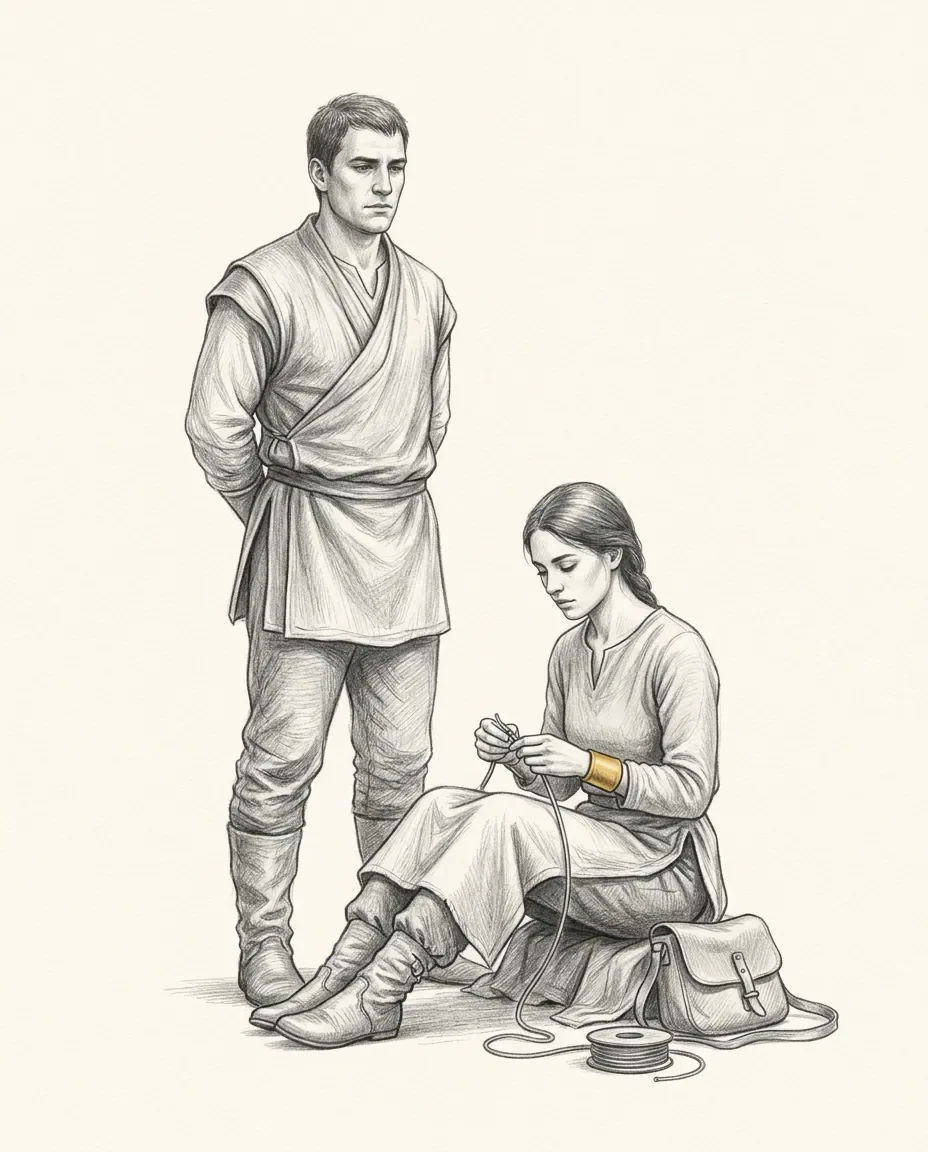
What the term covers. Among consenting adults the label covers a wide range. At one end are literalists, who run a household on Gorean titles, forms of address, kneeling positions and a slave protocol lifted from the novels, usually with a collar as the marker. In the middle are couples who keep the vocabulary and ceremony but treat it as one register of the relationship, not the whole of it. At the other end are role-players, who use Gorean settings for scene-length play or text role-play in virtual worlds, most visibly the Second Life Gor regions. The common thread is a borrowed fictional culture supplying script, terminology and ritual; the slavery is a negotiated role between adults, never a legal status.
What the term does not cover. Reading the novels is not the lifestyle, and most of the series' readership never adopted anything from it. Master/slave and total power exchange are the general relationship structures of which Gorean practice is one themed variant, and high protocol is the formalised address-and-posture style used across BDSM with no Gorean content. Collaring, service submission and dominance and submission each name one component rather than the framework. Cosplay is costume play that ends with the scene. Female-led relationships and femdom run opposite to the novels' male-dominant premise. Coercing a real person, as in the Kaotians prosecution described below, is a crime, not a version of any of this.
How the word is used. The register is fandom-derived jargon: kajira and kajirus for a female and a male slave, alongside a long list of invented terms whose fluent use marks an insider. Outside the subculture it appears mostly in criticism of the novels. None of it is clinical vocabulary: neither DSM-5-TR nor ICD-11 recognises Gorean practice, and consensual power exchange between adults is not a disorder.
History & origins
The novels and their fall from mainstream publishing
Norman published through Ballantine and then DAW Books from 1966, reaching volume 25 by 1988. DAW's publisher Betsy Wollheim, daughter of the firm's founder Donald A. Wollheim, eventually dropped the series herself, saying the later books had gotten "worse and worse" until publishing them felt "demeaning" to the company. Norman, for his part, argued that a loose, informal blacklist among major genre publishers, driven by feminist criticism, kept the series out of print through the 1990s; it resumed via the e-book house E-Reads in 2001 and later Open Road Media, and by 2024 had reached 38 volumes. The Encyclopedia of Fantasy judged the later volumes to have "degenerate[d] into extremely sexist, sadomasochistic pornography involving the ritual humiliation of women," and the Encyclopedia of Science Fiction called Norman's sexual philosophy "widely detested," even as the books built a durable readership.
From reading to lifestyle
Out of that readership grew two distinct groups, documented on Wikipedia's overview of the Gorean subculture: literalists (or "lifestylers"), who adopt Gorean gender roles, titles and slave protocol as an ongoing relationship structure, and role-players, who treat it as scene-based play or an online game, especially within the Second Life virtual world, where a dedicated Gor region opened in 2005 and grew into one of the platform's larger themed communities. In the 1990s, Gorean-themed internet chat rooms drew a different kind of notoriety: reporting on the scene noted that teenage boys sometimes posed online as experienced dominants, drawing older, married women into submissive roles, a pattern that unsettled feminist and BDSM commentators alike.
A parallel, more explicit strand
Separately from the novels, Norman published the non-fiction Imaginative Sex in 1974, a catalogue of male-dominant, female-submissive fantasy scenarios for couples. Its 1997 reissue carried a foreword by the BDSM writer Patrick Califia, who called it "one of the first above-ground nonfiction books to offer a rationalization for dominant/submissive role-playing," and noted that Norman recommended simulated effects, a hand clap standing in for a whipcrack, over real corporal punishment.
The Kaotians
The lifestyle's most serious real-world controversy involves the Kaotians, a splinter group that pushed literalist Goreanism toward coercive control. In 2008, Teesside Crown Court sentenced group figure Lee Thompson to three years in prison after his girlfriend was procured to have sex with other men against her will, an outcome unconnected to the consensual BDSM practice the wider subculture describes and reports as its norm, and cited across reporting on the case.
In practice
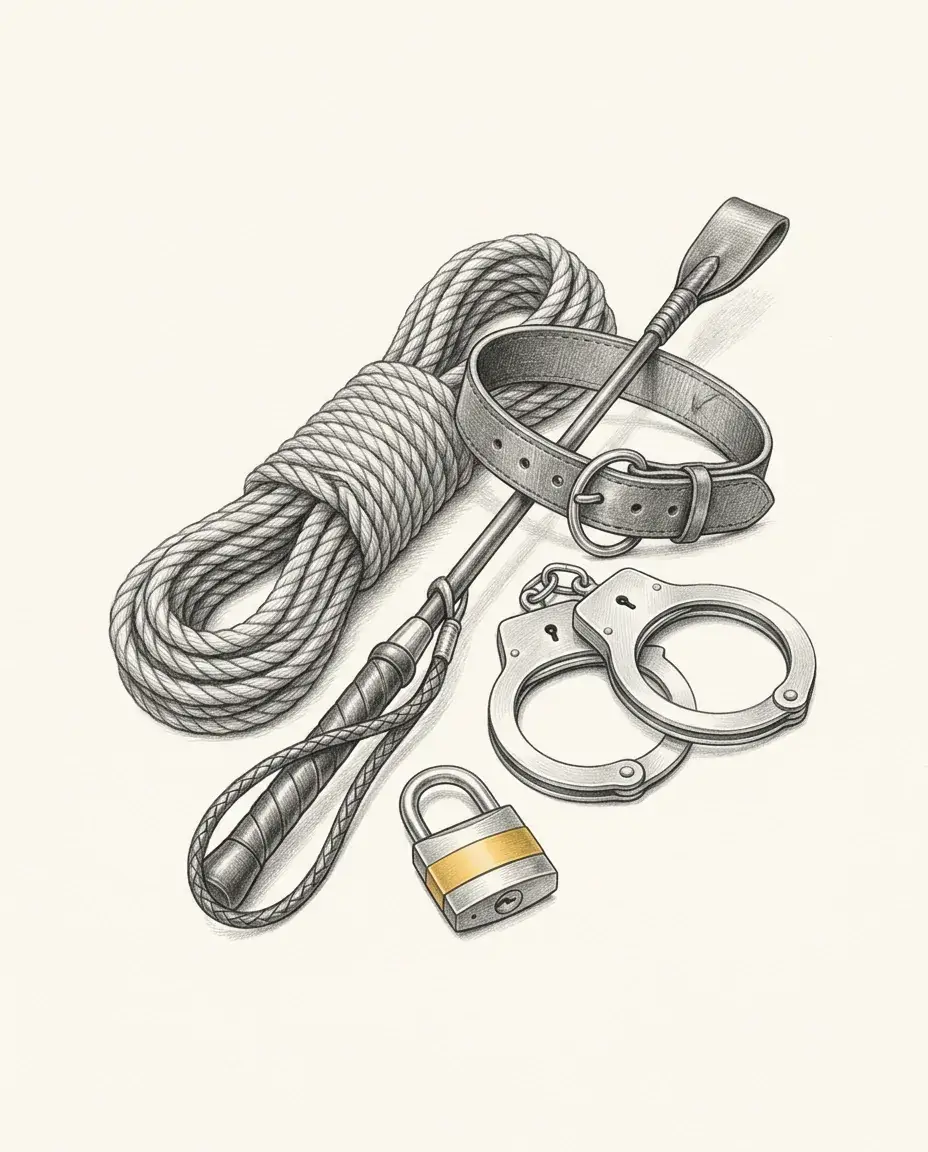
Lifestyle adherents typically adopt Gorean titles, a slave-position vocabulary, distinctive kneeling postures and modes of address, and sometimes physical markers such as a collar. As with any negotiated master/slave or dominance and submission dynamic, participants describe negotiating limits, using safewords, and distinguishing the roleplay frame from everyday legal and civic life; the fiction supplies the aesthetic and vocabulary, not a license to override consent.
Psychology
The appeal draws on the same themes documented across consensual power-exchange interests generally: structure, ritual, surrender and a clearly defined role, amplified by the novels' detailed invented culture, which gives participants a shared script and language that generic BDSM does not supply on its own. No dedicated clinical literature studies Gorean practice as distinct from BDSM broadly.
Prevalence & culture
The Gorean lifestyle is a small, durable niche within the wider BDSM and science-fiction fandom worlds rather than a mainstream interest; its clearest measurable footprint is the persistence of dedicated Second Life regions and forums decades after the novels' initial run, alongside recurring press coverage of the books themselves. Reliable population figures do not exist, so the estimate here is inferred from community and media visibility rather than a survey.
Safety, consent & law
Among consenting adults, Gorean-style master/slave and total-power-exchange dynamics are legal in most jurisdictions and are treated by practitioners as a form of negotiated BDSM, not a literal legal status. The Kaotians case shows the line clearly: adopting Gorean vocabulary and ritual is not itself illegal, but using it to coerce, procure or force a real person into sex without consent is criminal regardless of any fictional framing, and the subculture's own norms, going back to Norman's own caution against non-simulated harm, treat ongoing, revocable consent as the baseline requirement.
Common questions
Do you have to have read the Gor novels to be Gorean?
Literalists generally have, because the protocol, titles and philosophy come from the books and fluency in them is what marks someone as serious. Role-players often have not, picking the vocabulary up secondhand from communities and virtual worlds. The distinction matters inside the subculture, where knowing the source is treated as a marker of authenticity, and it is one of the main faultlines between the two camps.
Is the Gorean lifestyle abusive?
As practitioners describe it, no: it runs on negotiated limits, safewords and a role either party can end, which is what separates it from abuse. The ideology it borrows is another matter: the novels argue for natural male dominance and female slavery, and critics have attacked that seriously and at length. Where the framework has been used to coerce, as in the 2008 Kaotians case, courts have treated it as the crime it is.
Is Gorean slavery legal?
The role is; the thing it imitates is not. No jurisdiction recognises one person as another's property, so a Gorean slave retains every legal right, including the right to walk away, whatever has been agreed or ceremonially sworn. Consensual power exchange between adults is legal in most places. Using the framework to coerce, confine or procure someone is criminal regardless of any contract, collar or fictional justification.
Can a man be the slave in a Gorean dynamic?
The vocabulary allows it (kajirus is the male counterpart of kajira), but the framework was not built for it. Norman's world is explicitly organised around male dominance and female submission, so the subculture is overwhelmingly male-dominant, and men who want to submit generally find the wider BDSM world a better fit than a philosophy written against them.
How is Gorean different from ordinary master/slave BDSM?
The content is largely the same; the packaging is not. Master/slave dynamics are built by the people in them, out of whatever materials they choose. Gorean practice imports a ready-made culture: fixed titles, prescribed postures, a shared vocabulary and, unavoidably, a philosophy about the sexes that generic BDSM does not carry. That built-in ideology is the appeal for some and the objection for most critics.
Do Goreans use safewords?
Practitioners describe doing so, but the safeword is not a Gorean idea. The novels contain no such mechanism, since the fiction is not about negotiated play, so it is imported wholesale from BDSM practice along with limits, negotiation and aftercare. That import is what makes the lifestyle workable, and its absence is precisely what commentators point to when a group takes the fiction too literally.
- Master/Slave Dynamic58/100Power, Roles & ScenariosAn intensive, often ongoing form of consensual power exchange in which one adult (master or mistress) holds broad authority over another (slave). The arrangement runs inside a negotiated, ownership-styled framework. A structured, high-commitment expression of dominance and submission.58
- Total Power Exchange46/100Power, Roles & ScenariosA consensual BDSM relationship structure in which one partner cedes broad authority over their life to another on an ongoing basis. It extends dominance and submission beyond scenes into everyday living.46
- Dominance and Submission92/100Power, Roles & ScenariosA consensual erotic dynamic in which one partner takes a dominant role and the other a submissive role, exchanging power within agreed limits. It is one of the most widespread elements of BDSM and of human sexual fantasy.92
- Collaring63/100Power, Roles & ScenariosThe consensual act of placing a collar on a submissive partner as a negotiated symbol of ownership, commitment, protection or submission. It takes place within a Dominant/submissive relationship and is often likened to a wedding band.63
- Service Submission45/100Power, Roles & ScenariosA submissive style in which fulfillment comes chiefly from attending to a dominant partner's needs through tasks, anticipation, and acts of care. The power exchange is expressed through helpful service and devotion rather than through pain, discipline, or humiliation.45
- Consensual Blackmail29/100Power, Roles & ScenariosA negotiated BDSM fantasy in which a submissive shares real personal information so a dominant can fictionally threaten exposure. It is practiced mostly within financial domination. The leverage is real; the threat and its consequences are staged, never carried out.29
"Gorean" is the adjectival form of "Gor," the invented name of the fictional planet created by the author John Norman (pen name of John Lange) for his 1966 novel *Tarnsman of Gor*; the word has no independent Greek or Latin root outside the novels.
master/slave · total power exchange · fandom-derived lifestyle · female submission
Prevalence is computed from the entry's cited population estimate. Rows marked ESTare indicative editorial estimates scored against a fixed anchor rubric, not measured quantities. Method & anchors: methodology.
Rare · ≈ 1 in 1,000
- 01Gor (novel series), WikipediaPublication history 1966-2024, John Norman/John Lange authorship, the Priest-Kings/caste premise, the decision by DAW publisher Betsy Wollheim (daughter of founder Donald A. Wollheim) to drop the series, and its 2001 revival via E-Reads and Open Road Media.
- 02Gorean subculture, WikipediaKajira/kajirus terminology, the literalist/lifestyler vs role-player distinction, the 2005 Second Life Gor region, 1990s chat-room dynamics, the Kaotians prosecution, and the Encyclopedia of Fantasy/Science Fiction critical assessments.
- 03Imaginative Sex, WikipediaNorman's 1974 non-fiction book of dominant/submissive fantasy scenarios, its 1997 reissue with Patrick Califia's foreword, and Norman's recommendation of simulated rather than real corporal effects.
- 04Sex-cult leader Lee Thompson jailed for procuring girlfriend, Religion News BlogThe 2008 Teesside Crown Court sentencing of Kaotians figure Lee Thompson for coercing his girlfriend into sex with other men, the real-world criminal case distinct from consensual Gorean practice.
- 05Master/slave (BDSM), WikipediaGeneral framing of consensual, negotiated master/slave and total power exchange relationships that the Gorean lifestyle is a themed variant of.
- 06DSM-5-TR, Paraphilic Disorders (American Psychiatric Association, 2022)Consensual power-exchange dynamics such as Gorean master/slave roleplay are not classified as a paraphilic disorder absent distress, impairment or non-consent.
- 07ICD-11, Paraphilic disorders (World Health Organization)No dedicated ICD-11 entry exists for Gorean-style relationship practice; consensual variants fall outside the paraphilic disorder classification.