High Protocol
Added 26 Jul 2026 · Updated 22 Aug 2026
A formalised set of rules governing address, posture and conduct in a Dominant/submissive relationship, used on elevated occasions. Ceremonies and dungeon time are the usual settings. Rooted in the post-war gay leather scene's "Old Guard" hierarchy and its military-derived codes.
- Prevalence
- Uncommon
- Category
- Power, Roles & Scenarios
- Domain
- Sexual interest
- Confidence
- Low confidence
- Status
- Not a paraphilia or disorder; a consensual, ceremonial code of conduct within D/s and leather culture. Non-pathological under DSM-5-TR and ICD-11 absent distress, impairment, or non-consent.
- Also known as
- protocol (BDSM), old guard protocol, formal protocol, high protocol BDSM, protocols, protocol
- Added
- 26 Jul 2026
- Updated
- 22 Aug 2026
Featured in
Overview
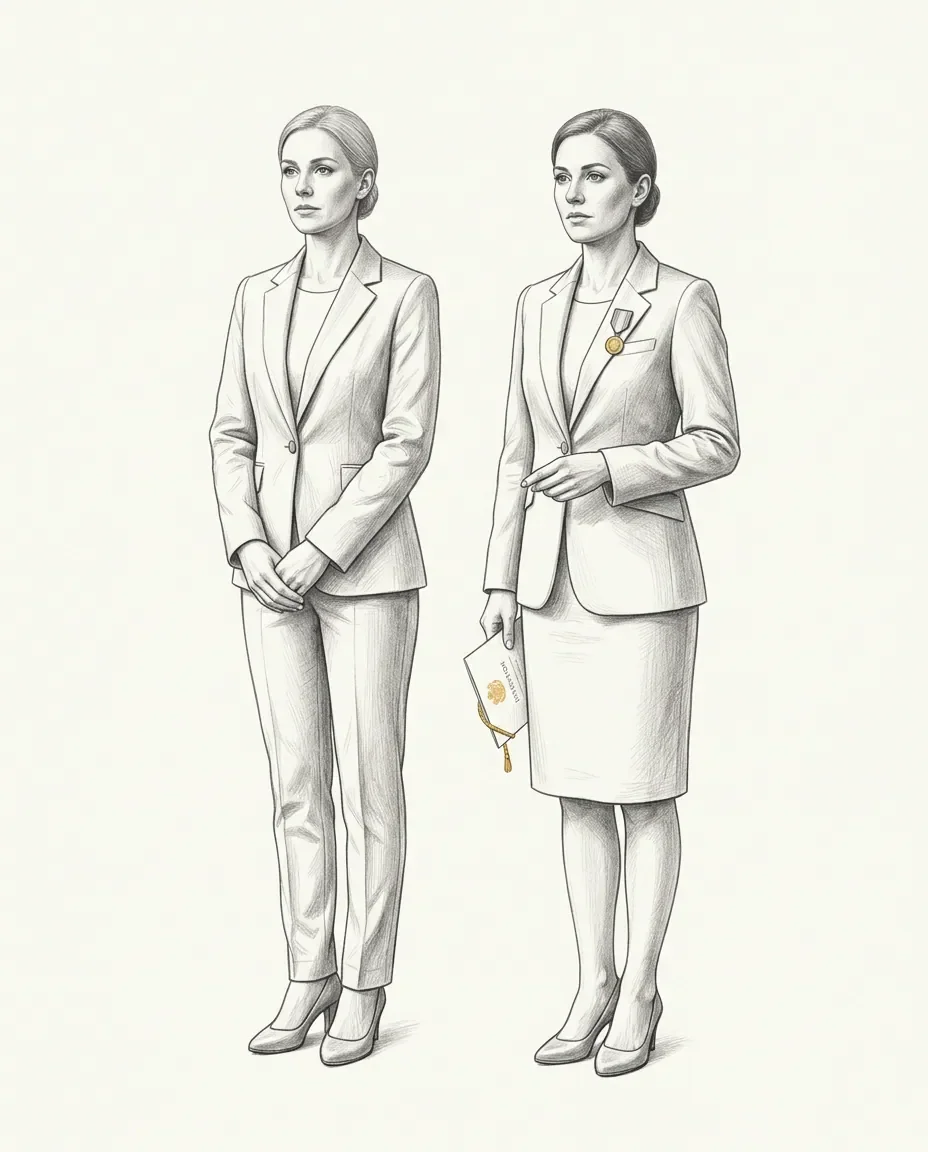
High protocol names the most formal tier of a structured set of rules, covering how a submissive addresses a dominant, how they hold their body, and what they may or may not do without permission, within a Dominant/submissive (D/s) relationship. It sits atop a graded system: community writers typically describe high protocol for ceremonies and dedicated scene or service time, low protocol for ordinary day-to-day household conduct, and social protocol for behaviour in mixed public company (Old Guard Leathermen, Protocol Levels in BDSM). The system's roots and its enduring appeal trace to the "Old Guard," the romanticised founding era of post-war American gay leather culture. This article covers what protocol is, where the idea came from, how it is graded and practised, and the questions it raises about consent and history.
Definition & scope
Protocol is a negotiated code of conduct rather than a fixed script: couples and households set their own rules, but the vocabulary of levels is widely shared. In high protocol, a submissive is typically expected to stay silent unless addressed, remain alert and ready to serve, hold a specified physical position, and use full honorifics when permitted to speak. Low protocol governs everyday household life, ordinarily around the clock, and still requires titles, deference and defined duties, but with more latitude. Social protocol lets a couple keep their dynamic intact while appearing ordinary to outsiders, using given names, plain clothes and subtler cues of deference (Old Guard Leathermen). All three sit within the broader landscape of dominance and submission and frequently accompany deeper commitments such as collaring or total power exchange.
Examples
What the term covers. High protocol shows up as a set of observable conventions adopted for a bounded occasion: a submissive kneeling and staying silent through a collaring ceremony; addressing a dominant only by title and only when invited to speak; holding a designated position rather than sitting freely; asking permission for ordinary acts such as eating or leaving the room; prescribed dress and forms of greeting at a leather club night or titleholder event; and set ways of presenting or receiving objects. Which of these a household adopts, and whether it adopts any at all, is negotiated between the adults involved rather than inherited.
What the term does not cover. Protocol is a code of conduct, not a relationship. Master/slave and total power exchange name the structures that high protocol often decorates, and either can exist with no formality whatsoever. Discipline is the rules-and-consequences half of BDSM, concerned with correction rather than ceremony; service submission is a submissive's preferred style, not a graded code; domestic discipline governs household conduct through agreed consequences rather than through forms of address. The hanky code comes from the same leather milieu but signals interests to strangers instead of regulating conduct, and a uniform fetish eroticises the dress itself where protocol is about behaviour.
How the word is used. It is community jargon, not clinical vocabulary. Leather and M/s circles speak of "running high protocol" for an evening or "dropping to social protocol" in company, and the graded high/low/social vocabulary travels far more widely than any particular rule set. Neither DSM-5-TR nor ICD-11 mentions protocol; what documentation exists is community writing (Guy Baldwin's Drummer column, John Weal's later handbook) rather than peer-reviewed study.
History & origins
The Old Guard and its military echo
Accounts of the Old Guard trace its formation to gay servicemen returning from the Second World War around 1946, who had experienced close male hierarchy and discipline in the military and sought to recreate elements of it in civilian life. They gravitated to motorcycle clubs, adopting paramilitary insignia, ritual, and rank-like structures; by around 1970 the scene had settled into distinct, exclusive protocols governing attire, hierarchy and conduct between strangers (Evil Monk, The Old Guard: History, Origins and Traditions). Leather itself was said to be "earned" through successive scenes, seniority followed experience rather than age, and a collar signified that a bottom belonged to a specific top, conventions that fed directly into the graded, ceremonial feel later writers call high protocol.
Codification in print
The most influential documentation came from Guy Baldwin (b. 1946), a Los Angeles psychotherapist and 1989 International Mr. Leather titleholder, whose monthly Drummer magazine column "Ties That Bind" ran from 1986 to 1993 and was later collected into the book of the same name (Guy Baldwin on Wikipedia). Baldwin's late-1980s essay on Old Guard history and rules remains the most cited single account of the tradition's hierarchy and etiquette. Decades later, John Weal's The Leatherman's Protocol Handbook (2010) attempted to systematise Old Guard practice for a new generation, though historians noted it folded in material from varied, not strictly Old-Guard, traditions.
Contested history
Historians of the leather subculture, including Gayle Rubin, Jack Rinella and Joseph Bean, have pushed back on the idea of a single, uniform Old Guard era running roughly from 1945 to the mid-1960s. They argue that both rigid, high-protocol conduct and looser, informal styles coexisted from the earliest days of the scene, and that the strict, military-derived hierarchy often described today is partly a retrospective, idealised construction rather than a documented universal practice. Baldwin's own later writing suggested that Old Guard rigidity would recede as the wartime generation's direct military influence faded, and by the 1980s younger leathermen, without that background, were already loosening its aesthetic and rules.
In practice
Practice is highly variable, and the graded vocabulary matters more than any particular rule. Households that use protocol at all typically reserve the high tier for ceremonies, dedicated service or "dungeon" time and formal community events, run a lighter version through daily routine, and switch to a socially invisible register in front of people who do not know about the dynamic. Many D/s relationships use no formal protocol whatever, and no authority issues or enforces one. Where it is used it is understood as negotiated and revocable (written down, revised, and set aside when it stops serving the people in it) rather than as a tradition handed down unchanged.
Psychology
Protocol's appeal is usually described in terms of ritual, structure and clarity: a defined code removes ambiguity about role and expectation, and for many participants the formality itself, bowed head, careful address, a held position, deepens focus and immersion in the D/s dynamic much as ceremony does in other contexts. For the dominant partner, maintaining and enforcing protocol carries a reciprocal duty of consistency and care. As with most of BDSM's structured relationship practices, dedicated empirical research on protocol specifically is scarce; most available accounts are community writing and retrospective history rather than clinical study.
Prevalence & culture
No survey measures adherence to protocol directly; it is a practice within the broader population that reports interest in dominance and submission, which is itself common. In a stratified sample of 1,040 adults, Joyal & Carpentier (2017) found that nearly half expressed interest in at least one paraphilic category, four of the eight listed in the DSM-5 (voyeurism, fetishism, frotteurism and masochism) proving neither rare nor unusual, each reported by more than 15.9% of respondents; that survey did not measure dominance or submission as a category of its own. The nearest direct measure comes from Joyal's earlier study with Cossette and Lapierre, a survey of 1,516 adults which reported that submission and domination themes were common for both women and men and significantly related to each other. Lehmiller's 2018 survey of 4,175 Americans found BDSM fantasy near-universal. Within that wider interest, formal protocol is a comparatively niche, deliberately adopted practice concentrated in leather and M/s communities and their events, conventions and titleholder culture, with far less mainstream visibility than dominance and submission generally.
Safety, consent & law
High protocol is legal and benign between consenting adults; its formality is symbolic and agreed, never coercive by definition. Responsible practice keeps protocol negotiated and revocable, checks in periodically outside the dynamic, and treats consent as ongoing rather than granted once and assumed forever. The specific risk formality carries is that the same rules which give it weight (speak only when addressed, hold the position, do not initiate) are the rules that make it hardest to say something is wrong, so an explicit out-of-role signal that overrides protocol is treated as part of the practice rather than an exception to it. Under the DSM-5-TR and ICD-11, consensual, non-distressing power-exchange practice, protocol included, is not classified as a disorder.
Common questions
Do you have to be part of the leather scene to use protocol?
No. The vocabulary comes from gay leather culture and is still strongest there, but the practice is simply an agreed code of conduct, and any D/s couple can write one. Plenty of households borrow the high/low/social framing with no connection to leather clubs, titles or events, and plenty of leather-identified people use very little formality. There is no body that grants permission or certifies a rule set.
Can a submissive break protocol or refuse it?
Yes, at any point. Protocol is a negotiated agreement, not a transfer of rights, and like the wider power-exchange relationship it structures it is revocable on the spot. Responsible practice keeps a safeword or an explicit out-of-role signal available even during formal time, and treats using it as correct behaviour rather than a failure of the role.
What do you call a dominant under high protocol?
Whatever the two people have agreed. Common forms are Sir, Ma'am, Master or Mistress, sometimes with a name attached, and many households also capitalise the dominant's pronouns in writing. The titles are chosen rather than assigned by tradition, and using one in the wrong company is exactly the situation social protocol exists to prevent.
Is high protocol abusive?
Not in itself. Every element is agreed in advance, bounded in time, and revocable, which is the difference between a formal code and coercion. What formality can do is make problems harder to raise: a rule about speaking only when addressed is precisely the rule that gets in the way of saying something is wrong. That is why regular check-ins outside the dynamic are treated as part of the practice, and why a code that cannot be questioned is a warning sign rather than a strict one.
Is high protocol a paraphilia or a mental-health concern?
No. Consensual power exchange, including its ceremonial forms, is not classified as a disorder under DSM-5-TR, and ICD-11 removed consensual sadomasochism from its disorder list altogether. A clinician would take an interest only if the arrangement were causing genuine distress or impairment, or if consent were absent, the same threshold applied to every interest in this catalog.
Did the Old Guard really have fixed rules?
Probably not in the uniform way the phrase implies. Historians of leather culture, among them Gayle Rubin, Jack Rinella and Joseph Bean, argue that strict and informal styles coexisted from the earliest days and that the single rigid military-derived code often described today is partly a retrospective idealisation. Guy Baldwin, whose writing is the most cited source on the era, himself expected that rigidity to fade as the wartime generation's influence did.
How common is formal protocol?
Rare as a practice, familiar as an idea. No survey measures it directly. The interest it sits inside is broad: Joyal, Cossette and Lapierre's 2015 survey of 1,516 adults found submission and domination fantasy themes common among both women and men, and Lehmiller's 2018 survey of 4,175 Americans found BDSM fantasy close to universal. Graded formal protocol is a deliberate minority practice within that much larger base.
Where can I read about protocol?
The most cited primary source is Guy Baldwin's Ties That Bind, which collects the Drummer magazine column he wrote from 1986 to 1993 and includes his essay on Old Guard history and etiquette. John Weal's The Leatherman's Protocol Handbook (2010) attempted to systematise the tradition for later readers, though historians note it blends material from several traditions rather than one. Beyond community writing of that kind there is essentially no clinical literature.
- Master/Slave Dynamic58/100Power, Roles & ScenariosAn intensive, often ongoing form of consensual power exchange in which one adult (master or mistress) holds broad authority over another (slave). The arrangement runs inside a negotiated, ownership-styled framework. A structured, high-commitment expression of dominance and submission.58
- Total Power Exchange46/100Power, Roles & ScenariosA consensual BDSM relationship structure in which one partner cedes broad authority over their life to another on an ongoing basis. It extends dominance and submission beyond scenes into everyday living.46
- Collaring63/100Power, Roles & ScenariosThe consensual act of placing a collar on a submissive partner as a negotiated symbol of ownership, commitment, protection or submission. It takes place within a Dominant/submissive relationship and is often likened to a wedding band.63
- Handkerchief Code (Hanky Code)43/100Power, Roles & ScenariosA system of wearing a colored handkerchief in a back pocket to signal sexual interests and preferred role without speaking. It developed in gay leather and BDSM communities from the early 1970s. Left or right placement indicated top or bottom; the color indicated the interest.43
- Dominance and Submission92/100Power, Roles & ScenariosA consensual erotic dynamic in which one partner takes a dominant role and the other a submissive role, exchanging power within agreed limits. It is one of the most widespread elements of BDSM and of human sexual fantasy.92
- Gorean Lifestyle30/100Power, Roles & ScenariosA BDSM-adjacent subculture built on the fictional world of John Norman's Gor novels (1966 onward), organized around a strict master/slave dynamic. Its female submission is modeled on the books' invented caste society.30
"Protocol" derives from Greek prōtokollon, the first sheet glued to a papyrus roll recording its origin, via Medieval Latin protocollum and French protocole, coming to mean a formal code of conduct or ceremonial procedure. "High" marks the most elevated, formal tier within the BDSM community's later graded system of high, low and social protocol; the specific compound is a modern leather- and D/s-community usage rather than a classical or clinical coinage.
leather subculture · protocol · old guard · D/s ritual
Prevalence is computed from the entry's cited population estimate. Rows marked ESTare indicative editorial estimates scored against a fixed anchor rubric, not measured quantities. Method & anchors: methodology.
Uncommon · ≈ 1 in 100
- 01The Old Guard: History, Origins and Traditions, Evil Monkpost-WWII origins of the Old Guard c.1946, military-derived hierarchy and ritual, leather 'earned' through scenes, seniority by experience, formalisation of protocol by c.1970
- 02Protocol Levels in BDSM, Old Guard Leathermendefinition and description of the three-tier system: high protocol (ceremony/service/dungeon time), low protocol (daily household rules), and social protocol (public conduct)
- 03Guy Baldwin, WikipediaBaldwin (b. 1946), 1989 International Mr. Leather, author of the Drummer column 'Ties That Bind' (1986-1993) collecting the most cited Old Guard history and protocol essay
- 04Leather subculture, Wikipediathe Old Guard's romanticised c.1945-mid-1960s era, its 'uniform hierarchical, high-protocol' military-modelled mythology, historian critiques (Gayle Rubin, Jack Rinella, Joseph Bean) of that narrative, and John Weal's 2010 Leatherman's Protocol Handbook
- 05Master/slave (BDSM), Wikipediaprotocol's place within collaring and total-power-exchange master/slave dynamics that high protocol commonly accompanies
- 06Joyal & Carpentier (2017), The Prevalence of Paraphilic Interests and Behaviors in the General Population, J. Sex Research 54(2):161-171stratified sample of 1,040 Quebec adults; nearly half interested in at least one paraphilic category, with voyeurism, fetishism, frotteurism and masochism each above the study's 15.9% 'neither rare nor unusual' threshold; the study reports no dominance/submission category
- 07Joyal, Cossette & Lapierre (2015), What Exactly Is an Unusual Sexual Fantasy?, J. Sexual Medicine 12(2):328-340survey of 1,516 adults finding submission and domination fantasy themes common for both women and men and significantly related to each other, the general-population backdrop from which the narrower practice of formal protocol draws
- 08Lehmiller (2018), Tell Me What You Want, survey of 4,175 Americansnear-universal BDSM fantasy in a large US sample, situating protocol practice within a much broader base of D/s interest
- 09DSM-5-TR, Paraphilic Disorders (American Psychiatric Association, 2022)consensual, non-distressing power exchange and its ceremonial conduct are not classified as a disorder
- 10ICD-11, Paraphilic disorders (World Health Organization)removal of consensual sadomasochism/power exchange from the disorder list absent coercion or harm