Spanking
Added 21 Jun 2026 · Updated 7 Sep 2026
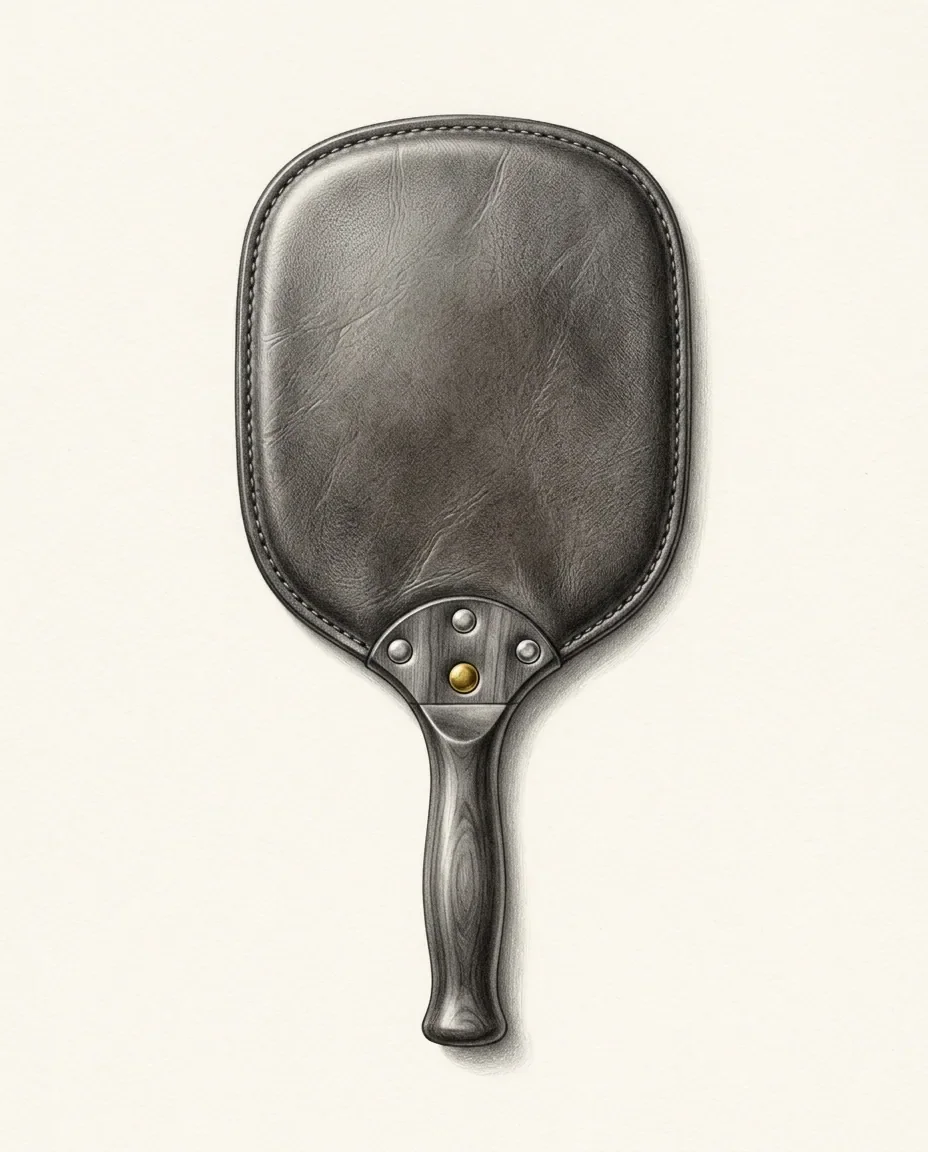
An interest in giving or receiving consensual, rhythmic blows to fleshy areas of the body, by hand or with implements such as paddles. People do it for erotic sensation, discipline themes, or power exchange between consenting adults.
- Prevalence
- Ultra-common
- Category
- Sensation & Pain
- Domain
- Sexual interest
- Confidence
- High confidence
- Status
- A very common consensual impact interest that neither manual lists as a disorder; clinically relevant only if it causes distress or harm.
- Also known as
- Spanking / Impact Play, impact play, corporal, corporal punishment kink, OTK (over-the-knee), paddling, hand-delivered impact
- Added
- 21 Jun 2026
- Updated
- 7 Sep 2026
Featured in
Overview
Spanking is a form of consensual impact play: striking the fleshy, padded areas of the body, most often the buttocks, by hand or with implements such as paddles, straps, hairbrushes, or canes, for erotic sensation, disciplinary role-play, or power exchange between consenting adults. It ranges from light, playful swats to intense, sustained sessions, and the appeal may rest on physical sensation, on the symbolism of discipline or correction, or on the surrender and control of the dynamic between the partner delivering and the partner receiving.
Definition & scope
Spanking sits inside the broader family of impact play, which covers any consensual striking of the body for erotic or disciplinary effect. Its target and its closeness set it apart: blows land on the buttocks and other padded areas, often by bare hand, in direct physical contact. The clinical categories of sexual sadism and masochism are different things, though a session can express either role, and pain is optional, since many practitioners prize the warmth, ritual, and symbolism over intensity. Three loosely overlapping subtypes recur: erotic spanking for sensation, disciplinary or "domestic discipline" spanking built around a correction narrative, and punishment play folded into a wider dominance and submission dynamic.
Examples
What the term covers. A few playful swats delivered by hand during otherwise unremarkable sex; a full over-the-knee session that begins light and escalates as the skin warms; a paddle, strap or hairbrush applied to the buttocks and upper thighs; a scene built around a correction narrative, where the words carry as much weight as the blows; and spanking folded into a wider dominance and submission arrangement as an agreed consequence.
What the term does not cover. Its siblings within impact play are distinct acts with distinct sensations: caning uses a thin rod for sharp, stinging strokes, flogging a multi-tailed implement for rhythmic thud, bastinado targets the soles of the feet, and face slapping changes both the target and the register. Discipline and domestic discipline name the rule structure rather than the blow. Masochism names a taste for pain, which a great many people who enjoy spanking do not have. Age play and DDlg may borrow the scenario, but their subject is role, not impact.
How the word is used. Plain English, attested from the eighteenth century and probably imitative of the sound of the blow. It is also the ordinary word for the corporal punishment of children, a separate, non-erotic and increasingly restricted practice, and most published research using the word is about parenting, so a study's title says little about its subject. Community jargon distinguishes "stingy" from "thuddy" sensation and abbreviates the over-the-knee position to "OTK". Neither DSM-5-TR nor ICD-11 lists consensual impact play.
History & origins
Ancient and pre-modern roots
The association of striking with erotic feeling is old and crosses many cultures. The Etruscan Tomb of the Whipping (c. 5th century BC) at Tarquinia carries one of the earliest surviving erotic-spanking depictions, and sex manuals such as the Kama Sutra, the Koka Shastra, and The Perfumed Garden mention striking as a means of heightening arousal. The pairing predates any clinical vocabulary for it.
The "English vice" and erotic flagellation
In early-modern Europe, erotic flagellation became so closely associated with England that the French phrase le vice anglais ("the English vice") came into use. The theme entered the literary record in John Cleland's Memoirs of a Woman of Pleasure, Fanny Hill: published in 1748–49, which contains a notorious flagellation scene and which literary historians count as the first original English prose pornography. Flagellation brothels appeared in late-eighteenth-century London and flourished through the nineteenth, and a whole genre of birch-discipline pamphlets followed. The early twentieth century saw a "golden age" of spanking literature peaking in the 1930s, with John Willie's Bizarre magazine (1946–1959) carrying the theme into the modern fetish press.
Clinical lineage
The medical literature has discussed the eroticisation of pain for well over a century. Richard von Krafft-Ebing's Psychopathia Sexualis (1886) grouped the desire to inflict and to receive pain under the terms he popularised, sadism and masochism, naming the latter after the novelist Leopold von Sacher-Masoch. Havelock Ellis treated "the love of pain" at length in his Studies in the Psychology of Sex, and Sigmund Freud's Three Essays on the Theory of Sexuality (1905) revisited the sadism–masochism pairing as a feature of ordinary psychosexual development.
The manuals moved from pathologising consensual play to excluding it late, and in two steps. The DSM-5 (2013) and DSM-5-TR classify sexual sadism and sexual masochism as disorders only when the interest causes clinically significant distress, impairment, or harm to a non-consenting person, drawing an explicit line between a paraphilia and a paraphilic disorder. The WHO's ICD-11, adopted in 2019, went further and removed consensual sadomasochism as a diagnostic category altogether, retaining only coercive sexual sadism disorder; the revision rationale (Reed et al., 2016) noted that consensual sadomasochism as practised in the community is not associated with poor psychological or social functioning. Consensual impact play between adults falls outside both manuals' definition of disorder.
| Manual | Status of consensual impact / sadomasochistic play |
|---|---|
| DSM-5-TR (2022) | Not a disorder unless the interest causes distress, impairment, or involves a non-consenting person |
| ICD-11 (2019) | Consensual sadomasochism removed entirely; only coercive sexual sadism disorder retained |
In practice
Impact play is organised around positions, implements, and rhythm:
- Positions: the over-the-knee (OTK) position is iconic, alongside bending over furniture or restraint, with intensity escalated gradually as the skin warms.
- Implements: a vocabulary of tools, each with a distinct feel. Practitioners distinguish "stingy" sensations (a sharp, surface burn, e.g. a cane or crop) from "thuddy" ones (a deeper, blunter impact, e.g. a heavy paddle or the flat of the hand).
- Themes: pairing with role-play such as teacher-and-student scenarios, domestic-discipline or authority framings, and broader dominance and submission dynamics.
Partners negotiate intensity, target zones, duration, and a safeword in advance, and many treat spanking as an accessible entry point into wider kink.
Psychology
The appeal is plural. Repeated impact releases endorphins and adrenaline that can produce a euphoric, "floaty" state some call subspace. The receiver's surrender and trust and the giver's focus and control each carry their own reward, and for many the symbolism of consensual discipline or "correction" is itself the charge. The frame decides how a blow reads: negotiated, trusted and eroticised, it registers as pleasure. Spanking needs no equipment, so it often serves as a first step into broader BDSM interest. Where a disciplinary scenario leads, the practice overlaps with age-play, a separate interest.
Prevalence & culture
How common is spanking?
Spanking is among the most prevalent kinks. In the general-population survey by Joyal & Carpentier (2017) of 1,040 Quebec adults, masochism (an interest in receiving pain or humiliation) came in above the 15.9% threshold the authors treat as statistically unusual, and correlated with higher sexual satisfaction. Fantasy research is broader still: in Lehmiller's Tell Me What You Want (2018) survey of 4,175 Americans, large majorities reported BDSM-themed fantasies, with masochistic fantasy among the most common. Spanking also draws high search interest and adult-media presence, supports large dedicated communities, and enjoys broad pop-culture familiarity. Lay round-ups list it among the most mainstream kinks, as in Glamour's A–Z of kinks.
Safety, consent & law
The activity is legal and benign between consenting adults. Safer practice means striking only fleshy areas and avoiding the spine, kidneys, tailbone, hipbones, and joints; warming up and calibrating intensity; using clear safewords; and providing aftercare. Impact that risks serious injury falls outside safe, consensual play, and in some jurisdictions consent is not a complete legal defence to causing actual bodily harm, a point that distinguishes the legal status of an interest from the safety of any given act.
Common questions
What is the difference between spanking and impact play?
Impact play is the umbrella term for any consensual striking of the body for erotic or disciplinary effect. Spanking is its most familiar member: blows to the buttocks and upper thighs, most often by bare hand, at close range. Caning, flogging and bastinado are siblings under the same umbrella, each defined by its implement or target, and none by intensity.
What is the difference between a "stingy" and a "thuddy" implement?
It is a distinction about where the force lands. Stingy implements (a cane, a crop, a thin strap) concentrate energy at the surface and produce a sharp, burning sensation that fades quickly. Thuddy ones (a heavy paddle, a broad flogger, the flat of the hand) spread it deeper into the muscle for a blunter, duller impact. Most people prefer one, and many sessions alternate between them.
Why can a spanking feel good instead of painful?
Partly physiology, partly framing. Repeated impact triggers endorphin and adrenaline release that can produce a floaty, euphoric state, and a session that starts light lets the skin and nervous system adapt before intensity rises. The same blow registers differently inside a negotiated, trusted, eroticised frame than outside one; context does much of the work, which is why consent is more than a formality.
Where on the body is spanking safe, and where is it not?
The target is the fleshy, padded area of the buttocks and the tops of the thighs, where muscle and fat sit over nothing fragile. The areas to avoid are the spine and tailbone, the kidneys in the small of the back, the hipbones, and any joint: bone and organ take impact badly and injuries there are not superficial. Strokes straying upward toward the lower back are the commonest way a mild session causes real harm.
Does erotic spanking leave marks?
Often, and usually harmlessly. Redness and warmth appear quickly and fade within hours, and bruising on the buttocks is common after a longer or heavier session, resolving like any other bruise. What is not routine is broken skin, a bruise that keeps darkening after a day or two, numbness, blood in the urine, or pain that persists. Those suggest impact landed where it should not have, and warrant medical attention.
Is erotic spanking legal?
Between consenting adults it is lawful and unremarkable in most jurisdictions. The complication is that consent is not everywhere a complete defence to causing actual bodily harm: in a number of common-law jurisdictions a person cannot legally agree to injury above a certain threshold, however willing they were. That distinguishes the legal standing of the interest, which is secure, from the standing of any particular act that causes real injury.
Why is erotic spanking called "the English vice"?
Because eighteenth- and nineteenth-century Europe associated erotic flagellation so strongly with England that the French coined le vice anglais for it. The reputation had material behind it: flagellation brothels operated in London from the late eighteenth century, birch-discipline pamphlets became a genre of their own, and Cleland's Fanny Hill (1748–49) placed a notorious flagellation scene in the first original English prose pornography.
Is enjoying spanking a sign of a disorder?
No. DSM-5-TR diagnoses sexual sadism or masochism only where the interest causes clinically significant distress or impairment, or involves someone who has not consented, and ICD-11 removed consensual sadomasochism as a category outright in 2019. General-population research points the same way: Joyal and Carpentier (2017) found masochistic interest associated with higher, not lower, sexual satisfaction.
From the blog

How common6 min read
Do men and women have different kinks, and by how much
Do men and women have different kinks? Bondage appeals to 29.5% of men and 29.2% of women, threesomes to 34.1% and 11.1%. Where the surveys find a gap.
Origins7 min read
Why some people enjoy pain, and what the body does when they do
Why do people enjoy pain? Context can flip moderate pain to pleasant, and BDSM scenes raise cortisol and endocannabinoids in the partner receiving.
Relationships8 min read
How to tell a partner about a kink, and how partners respond
How to tell a partner about a kink: 71% who shared a favourite fantasy got a positive response, and only 28% who never shared expected one.

Definitions8 min read
What BDSM stands for, and what it covers
What does BDSM stand for? Bondage and discipline, dominance and submission, sadism and masochism: what each pair means, how common it is, where the lines are.
Mental health7 min read
Is my kink normal? One answer from the surveys, another from the manuals
Is my kink normal? By the surveys, yes for nearly everyone: two fantasies of 55 are rare. By the DSM-5-TR and ICD-11, a disorder needs distress or harm.
Definitions8 min read
Kink vs fetish, the difference and where the words come from
Kink is the everyday word for any unconventional sexual interest. Fetish means arousal tied to an object or body part. Where they overlap and where they part.
How common7 min read
The most common kinks, ranked by what the surveys found
The most common kinks, ranked by evidence: dominance and submission, bondage, foot fetish, roleplay and voyeurism lead 474 entries, read tier by tier.
- Dominance and Submission92/100Power, Roles & ScenariosA consensual erotic dynamic in which one partner takes a dominant role and the other a submissive role, exchanging power within agreed limits. It is one of the most widespread elements of BDSM and of human sexual fantasy.92
- Teacher Roleplay62/100Power, Roles & ScenariosAn authority role-play sub-genre built around an imagined power gap between a figure of rank and a subordinate: teacher and student. Professor, boss and employee, and coach are other pairings in the same mode. Arousal comes from the eroticized hierarchy enacted between consenting adults inside a fictional frame.62
- Age-Play49/100Power, Roles & ScenariosA consensual role-play between adults in which one or more partners adopt an age different from their own, often a younger persona, within a negotiated dynamic. An umbrella term for many caregiver, mentor, or peer scenarios; it never involves actual minors.49
- Choking Kink78/100Sensation & PainA consensual interest in choking or being choked at the neck during sex: usually as a gesture of dominance, surrender, or intensity. Clinically termed sexual choking or strangulation, it is now common among young adults and carries serious, sometimes hidden, physical risk.78
- Impact Play71/100Sensation & PainAn umbrella term for consensual BDSM activities in which one partner strikes another's body with a hand or implement for erotic sensation or power exchange. It spans light spanking through to firmer use of paddles, floggers, crops, and canes within negotiated limits.71
- Subspace64/100Sensation & PainAn altered, often euphoric or trance-like headspace that some submissive or bottoming partners enter during intense BDSM play. It is marked by floating sensations, time distortion, reduced pain awareness and impaired verbal responsiveness.64
"Spanking" is plain English, attested from the 18th century, probably of imitative origin echoing the sound of a slap; it has no Greek or Latin clinical root. The related clinical pairing sadism/masochism was coined by Krafft-Ebing in 1886.
impact · hand-delivered · consensual pain · discipline-adjacent
Prevalence is computed from the entry's cited population estimate. Rows marked ESTare indicative editorial estimates scored against a fixed anchor rubric, not measured quantities. Method & anchors: methodology.
Ultra-common · ≈ 1 in 5 or more
- 01Lehmiller (2018), Tell Me What You Want, survey of 4,175 Americansfantasy prevalence anchor for pain play / BDSM (masochism fantasy ~65%)
- 02Joyal & Carpentier (2017), The Prevalence of Paraphilic Interests and Behaviors in the General Population, J. Sex Research 54(2):161-171general-population active interest in receiving pain (~23%)
- 03An A–Z of Kinks and Fetishes, Glamourspanking listed as a common mainstream kink (lay framing)
- 04Spanking, Wikipedia (erotic/disciplinary spanking, history of flagellation)historical and cultural framing of erotic and disciplinary spanking, including the flagellation tradition
- 05Erotic spanking, Wikipediadefinition, OTK and implements, stingy vs thuddy sensation, safe-zone caution, Etruscan Tomb of the Whipping, golden age of spanking literature, John Willie's Bizarre magazine
- 06The English Vice, Spanking Art wikile vice anglais / the English vice as a name for erotic flagellation associated with England
- 07Fanny Hill (Memoirs of a Woman of Pleasure), WikipediaJohn Cleland 1748-49, flagellation scene, first original English prose pornography
- 08Psychopathia Sexualis, WikipediaKrafft-Ebing 1886 coining/popularising sadism and masochism, naming masochism after Sacher-Masoch
- 09Three Essays on the Theory of Sexuality, WikipediaFreud 1905 treatment of the sadism-masochism pairing
- 10Havelock Ellis, WikipediaStudies in the Psychology of Sex and his treatment of the love of pain
- 11DSM-5-TR, American Psychiatric Associationparaphilia vs paraphilic disorder distinction; sexual sadism/masochism diagnosed only with distress, impairment or non-consent
- 12ICD-11, World Health OrganizationICD-11 (2019) removed consensual sadomasochism, retaining only coercive sexual sadism disorder
- 13Reed et al. (2016), Disorders related to sexuality and gender identity in the ICD-11, World Psychiatryrationale that consensual sadomasochism is not associated with poor psychological/social functioning; basis for ICD-11 depathologization