Kemonomimi
Added 26 Jun 2026 · Updated 22 Aug 2026
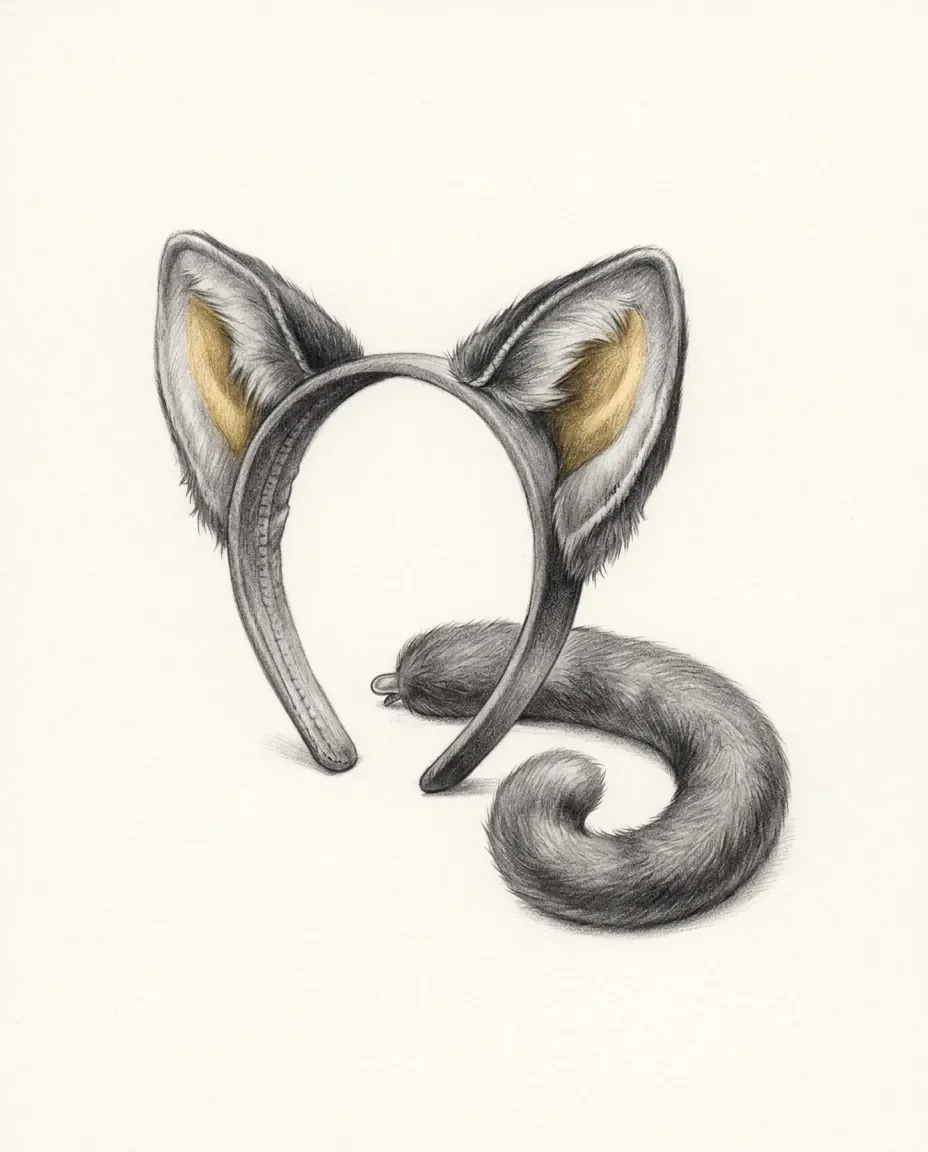
An aesthetic and erotic appreciation of otherwise human characters given a few animal traits, typically ears and a tail. The catgirl, or nekomimi, is the best-known type. The body stays human, which sets it apart from furry and from animal role-play.
- Prevalence
- Uncommon
- Category
- Identity & Transformation
- Domain
- Sexual interest
- Confidence
- Low confidence
- Status
- Not a clinical paraphilia and not in the DSM-5-TR or ICD-11; an aesthetic and fan-culture interest in human-bodied characters with animal ears and tails, with an optional adult dimension among consenting adults.
- Also known as
- nekomimi, catgirl, foxgirl, kitsunemimi, 獣耳, animal-eared characters
- Added
- 26 Jun 2026
- Updated
- 22 Aug 2026
Featured in
Collection
Fantasy, Fiction & Fandom
Interests rooted in fiction, fantasy creatures, and fan culture, from anime and gaming to monsters and myth.
45 entries
Collection
Pet Play & Animal Roles
Kitten, pup and pony play: adopting an animal headspace and role, from collars to primal instinct.
9 entries
Collection
Furry & Anthro
The furry fandom and anthropomorphic identity: fursuits, scalies, therians and animal personas.
9 entries
Overview
Kemonomimi (Japanese: 獣耳, "animal ears") is the appreciation of human-bodied characters who carry a small set of animal traits, most often a pair of ears and a tail, while staying anatomically human in every other respect. The best-known form is the catgirl (Japanese: 猫耳, nekomimi, "cat ears"), followed by the foxgirl (kitsunemimi). For most people the appeal is aesthetic and affectionate rather than explicitly sexual, though an adult, erotic dimension exists for some. This article covers what kemonomimi is and is not, its long lineage in Japanese folklore and anime, and how it sits beside related interests.
Definition & scope
A kemonomimi character is human first: a person with animal ears, perhaps a tail, sometimes a few feline or vulpine mannerisms, but no muzzle, fur coat, or animal body plan. That is the line separating it from neighbouring interests.
Is kemonomimi the same as furry?
No. The two differ at the level of the body. A furry or anthropomorphic character is an anthro, a fundamentally animal body that stands and talks like a person (a fox with a muzzle and fur). A kemonomimi character is a human with ears added. Many fans of one are indifferent to the other.
Two further distinctions:
- Versus kitten play and animal role-play: those are behaviours real adults perform (wearing ears, taking on a pet headspace, relating as handler and pet). Kemonomimi is an attraction to a character design, not a role one enacts.
- Versus therianthropy: a therian identifies, internally, as part-animal. Kemonomimi is an outward aesthetic taste, not an identity claim.
The interest is overwhelmingly expressed through fiction, illustration, games, and costume (cosplay ears and tails), and any erotic engagement concerns adult characters only.
Examples
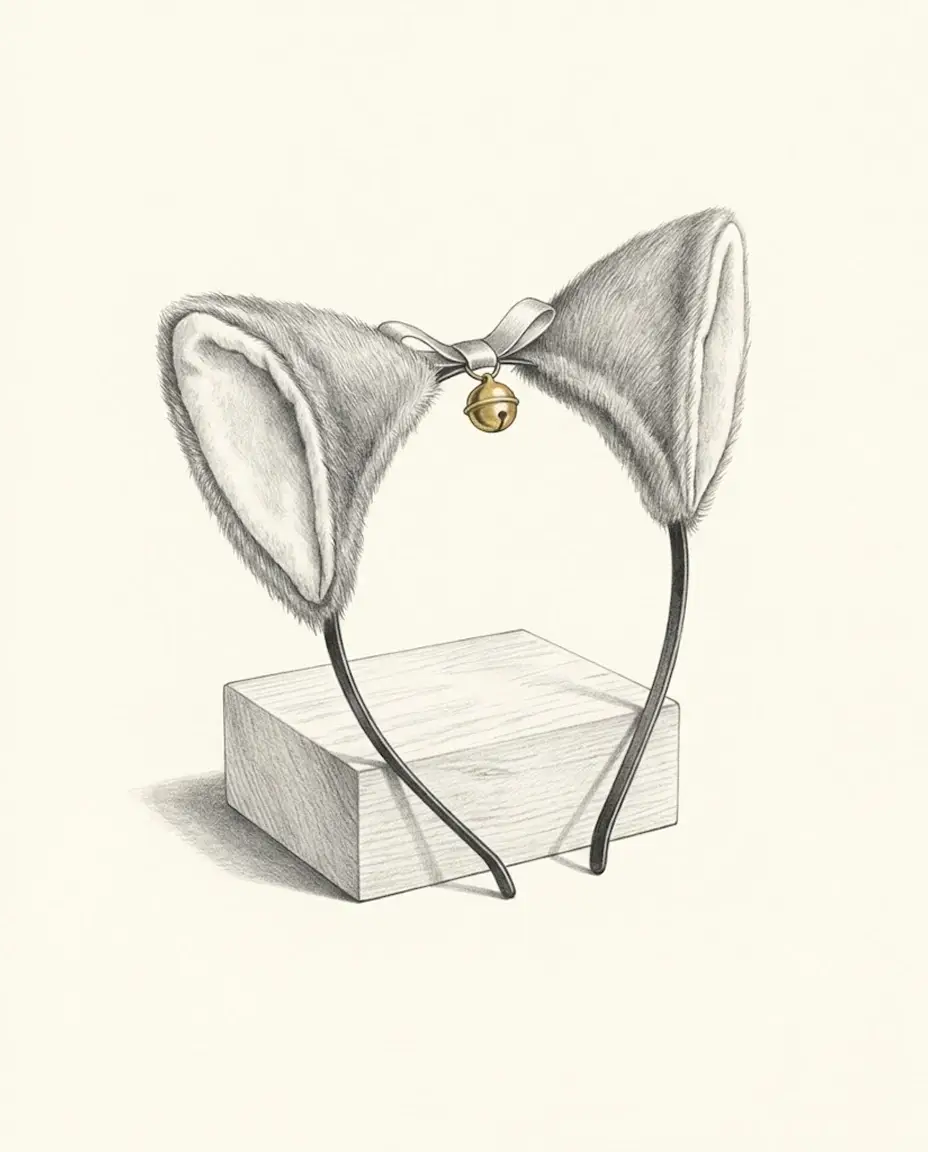
What the term covers. Characters drawn human but for a pair of animal ears and usually a tail: the catgirl of countless anime series, the fox-eared shrine attendant, the dog-eared companion in a role-playing game, the rabbit-eared idol. As an interest it shows up as watching and reading the media those characters appear in, following illustrators who specialise in the design, collecting figures and art, wearing clip-on ears and a tail to a convention, and, for the erotic minority of the interest, adult art of adult characters. A great many VTuber personas use the same design vocabulary, which is one of the routes by which the motif keeps renewing itself.
What the term does not cover. Monster girls add traits that go past a pair of ears (horns, scales, wings, a serpentine lower half) and alter the body plan in exactly the way kemonomimi does not. A tail fetish follows the tail wherever it appears, worn or drawn. Kigurumi masking and fursuiting replace the performer's head and body outright, where kemonomimi costume is an accessory on an otherwise ordinary appearance. Cosplay is keyed to a named character rather than to a design trait, and fictosexuality names attraction to fictional characters as such; kemonomimi names one feature such characters may have, which is a different order of claim. The furry, pet-play and therian distinctions are set out above.
How the word is used. Romanised Japanese fandom vocabulary, taken into English wholesale and used as a tag on art sites, wikis and storefronts rather than in any professional register. English speakers usually say "catgirl" and reach for "kemonomimi" only when they need the umbrella term. It has no clinical standing: neither DSM-5-TR nor ICD-11 contains it, and nothing in either manual corresponds to a taste in character design.
History & origins
Kemonomimi has no clinical lineage. It is an aesthetic of Japanese popular culture, and its history runs from folk monsters to modern moe design.
Folkloric roots
The cat-eared woman begins as a villain. According to the Catgirl cultural history, catgirls descend from Edo and Shōwa period tales of shapeshifting cat monsters, the bakeneko and nekomata, whose retained cat ears signalled to audiences that the figure was untrustworthy or dangerous. The ukiyo-e artist Utagawa Kuniyoshi (1798 to 1861) depicted such shapeshifters with feline features for exactly that narrative cue. The Crunchyroll history of the type traces the same arc from monster to moe.
From monster to moe
- 1924: Kenji Miyazawa's The 4th of Narcissus Month contains what is cited as the first beautiful cat-eared woman in modern Japanese literature, an early turn from monster toward heroine (though as a villain still).
- 1953: Osamu Tezuka's postwar manga, including Princess Knight, help reimagine cat-eared and animal-eared characters as cute and approachable rather than threatening.
- 1978: The Star of Cottonland (Wata no Kunihoshi) by Yumiko Ōshima advances the sympathetic, charming treatment of the type.
- 1990s onward: catgirls become common across anime and manga, and the broader kemonomimi label (cat, fox, dog, rabbit and other "-mimi" variants) settles into fandom usage, supported by dedicated communities and conventions.
What is the appeal?
The appeal sits largely within moe, the affectionate, protective response certain character designs are built to evoke, described in the Moe (slang) overview. Adding ears is a minimal-effort design choice that grafts cuteness and a hint of the wild onto an otherwise human figure, which helps explain how widely the motif spread. The trait reads as endearing and expressive (ears that flatten or perk) rather than threatening.
Variations & related interests
The family is named by animal plus mimi ("ears"):
| Variant | Animal | Note |
|---|---|---|
| Nekomimi | cat | the original and most common type |
| Kitsunemimi | fox | the second most common, often tied to kitsune folklore |
| Inumimi | dog | loyal, affectionate framing |
| Usagimimi | rabbit | rabbit ears, distinct from the unrelated "bunny girl" costume |
The interest overlaps the furry fandom at its edges, sits adjacent to transformation fantasy, and shares its costume vocabulary (worn ears and tails) with kitten play, though the underlying object of interest differs in each case.
Prevalence & culture
How common is kemonomimi?
There is no clinical or epidemiological measurement of kemonomimi interest; it is not isolated in sexological surveys, so its scale is inferred from the enormous footprint of catgirl characters across anime, manga, games and online art rather than counted. As a recognisable global motif the catgirl has very high cultural visibility, far out of proportion to any formal study of it.
Safety, consent & law
The interest is benign and legal. It concerns fictional character designs and, where costume is involved, consenting adults wearing ears and tails. As with all fan art and fiction, adult or erotic material is restricted to adults-only contexts and adult depictions.
Common questions
What is the difference between kemonomimi and nekomimi?
Kemonomimi is the umbrella and nekomimi is one branch of it. Kemono means beast and mimi means ears, so kemonomimi covers any human character given animal ears: cat, fox, dog, rabbit, wolf. Neko means cat, so nekomimi is specifically the cat-eared type, which is by far the most common and the reason English speakers usually just say catgirl.
Is liking catgirls a fetish?
For most people, no. It is normally a taste in how characters are drawn, closer to preferring a particular art style than to a sexual interest, and plenty of fans have no erotic engagement with it at all. An adult dimension exists and is unremarkable, but the trait becomes a fetish only in the ordinary sense that any feature can: when it turns into a condition of arousal rather than one pleasure among several.
Are there male kemonomimi characters?
Yes. English fandom leans on the "-girl" compounds because the female versions are the ones that travelled, but the convention is not gendered: cat-eared, fox-eared and dog-eared male characters are common across manga, games and animation, and the Japanese term attaches mimi to the animal rather than to the character's gender.
Does wearing cat ears mean someone is into pet play?
No. Clip-on ears and a tail are ordinary convention and costume accessories, worn as fandom dress in the same spirit as any other cosplay piece. Kitten play is a different thing entirely: a behaviour real adults engage in, involving a pet headspace and usually a handler, where the ears are a prop rather than the point. The same object turns up in both, which is where the confusion comes from.
Is kemonomimi a paraphilia or a disorder?
No. It is an aesthetic preference in fiction and fan art, and nothing in DSM-5-TR or ICD-11 corresponds to it. A fetishistic interest becomes clinically relevant only when it causes the person genuine distress or impairment, or involves someone who has not consented, none of which is at stake in liking how a character is drawn.
Is there an erotic side to kemonomimi?
For some people, yes. Adult art and fiction featuring animal-eared characters is a long-established niche, and the same design vocabulary appears in adult games and self-published doujinshi. It concerns drawn adult characters and, where costume is involved, consenting adults. It is a minority strand of a much larger and mostly non-sexual aesthetic interest that also fills all-ages anime, merchandise and VTuber avatars.
From the blog
- Furry Fandom54/100Identity & TransformationMembership in the furry fandom, the community organised around anthropomorphic animal characters that blend human and animal traits. It spans fan art, writing, costuming and conventions and centres on creating a character, a fursona. Most participation is social and creative; an erotic dimension is optional for some.54
- Kitten Play42/100Identity & TransformationA consensual adult role-play in which a person adopts the persona, mannerisms, and relaxed headspace of a kitten or cat. A partner often acts as owner or caretaker within a gentle power-exchange dynamic. It is symbolic human role-play with no connection to real animals.42
- Animal Role-Play50/100Zoomimetic Role-Play · Identity & TransformationA consensual adult role-play in which a person adopts the persona, body language, and headspace of an animal, most often a puppy, kitten, or pony. It is frequently set within a power-exchange dynamic with a handler. It is humans playing animals and has no connection to real animals or zoophilia.50
- Therianthropy / Therian Identity36/100Identity & TransformationA non-sexual subcultural identity in which a person feels themselves to be, in a personal and integral way, one or more non-human animals. It is distinct from clinical lycanthropy and from role-play.36
- Transformation Fetish33/100Metamorphophilia · Identity & TransformationA transformation fetish is an erotic or imaginative fascination with the process of a body changing form into something else. That might be an animal, an object, or another kind of being. The appeal centers on the metamorphosis itself rather than the end state.33
- Gynephilia (Attraction to Women)48/100Gynephilia · Identity & TransformationGynephilia (also spelled gynophilia) is sexual attraction to women, femaleness, or femininity. Sexologists use it as an orientation-independent descriptor: a person of any gender can be gynephilic. It is a normal variant of attraction, not a paraphilia.48
From Japanese kemono (獣, 'beast, animal') + mimi (耳, 'ears'), literally 'animal ears'. The common subtype nekomimi combines neko (猫, 'cat') + mimi, 'cat ears'. Colloquial fandom terms rather than clinical coinages.
anime aesthetic · human-with-animal-traits · character attraction
Prevalence is computed from the entry's cited population estimate. Rows marked ESTare indicative editorial estimates scored against a fixed anchor rubric, not measured quantities. Method & anchors: methodology.
Uncommon · ≈ 1 in 100
- 01Catgirl, Wikipediadefinition of nekomimi/catgirl as a kemonomimi type, bakeneko/nekomata folkloric roots, Utagawa Kuniyoshi, Kenji Miyazawa's 1924 cat-eared woman, Tezuka's Princess Knight (1953), Star of Cottonland (1978), and the moe-driven spread of the motif
- 02From Bakeneko to Bakemonogatari: The Secret History of Catgirls, Crunchyrollthe arc from villainous shapeshifting bakeneko/nekomata to rehabilitated, docile moe catgirls in postwar and modern media
- 03Kemonomimi, WikiFur, the furry encyclopediakemonomimi as human characters with animal ears/tails, the nekomimi and kitsunemimi variants, and its distinction from anthropomorphic (furry) characters
- 04Moe (slang), Wikipediamoe as the affectionate/protective aesthetic response that frames the appeal of cute animal-eared character designs