Animal Role-Play
Zoomimetic Role-Play
Added 21 Jun 2026 · Updated 22 Aug 2026
A consensual adult role-play in which a person adopts the persona, body language, and headspace of an animal, most often a puppy, kitten, or pony. It is frequently set within a power-exchange dynamic with a handler. It is humans playing animals and has no connection to real animals or zoophilia.
- Prevalence
- Common
- Category
- Identity & Transformation
- Clinical term
- Zoomimetic Role-Play
- Domain
- Sexual interest
- Confidence
- Medium confidence
- Status
- Consensual adult role-play, not a clinical paraphilia; benign between consenting adults and unrelated to any interest in real animals.
- Also known as
- pet play, petplay, zoomimetic role-play, puppy play, pup play, kitten play, pony play, human pup, human pet
- Added
- 21 Jun 2026
- Updated
- 22 Aug 2026
Featured in
Overview
Animal role-play, commonly called pet play, is a consensual adult role-play in which a participant takes on the behaviours, body language, and headspace of an animal, most often a puppy, kitten, or pony, while a partner may act as a handler, owner, or trainer. It is an umbrella term covering several distinct styles, each with its own culture, gear, and aesthetic. This article surveys the practice's subcultural lineage, how it is typically expressed, its proposed psychology, and its place in kink communities. One framing point matters above all: pet play is humans performing animal personas and has no connection whatsoever to actual animals; it is wholly unrelated to zoophilia (an interest in real animals).
Examples
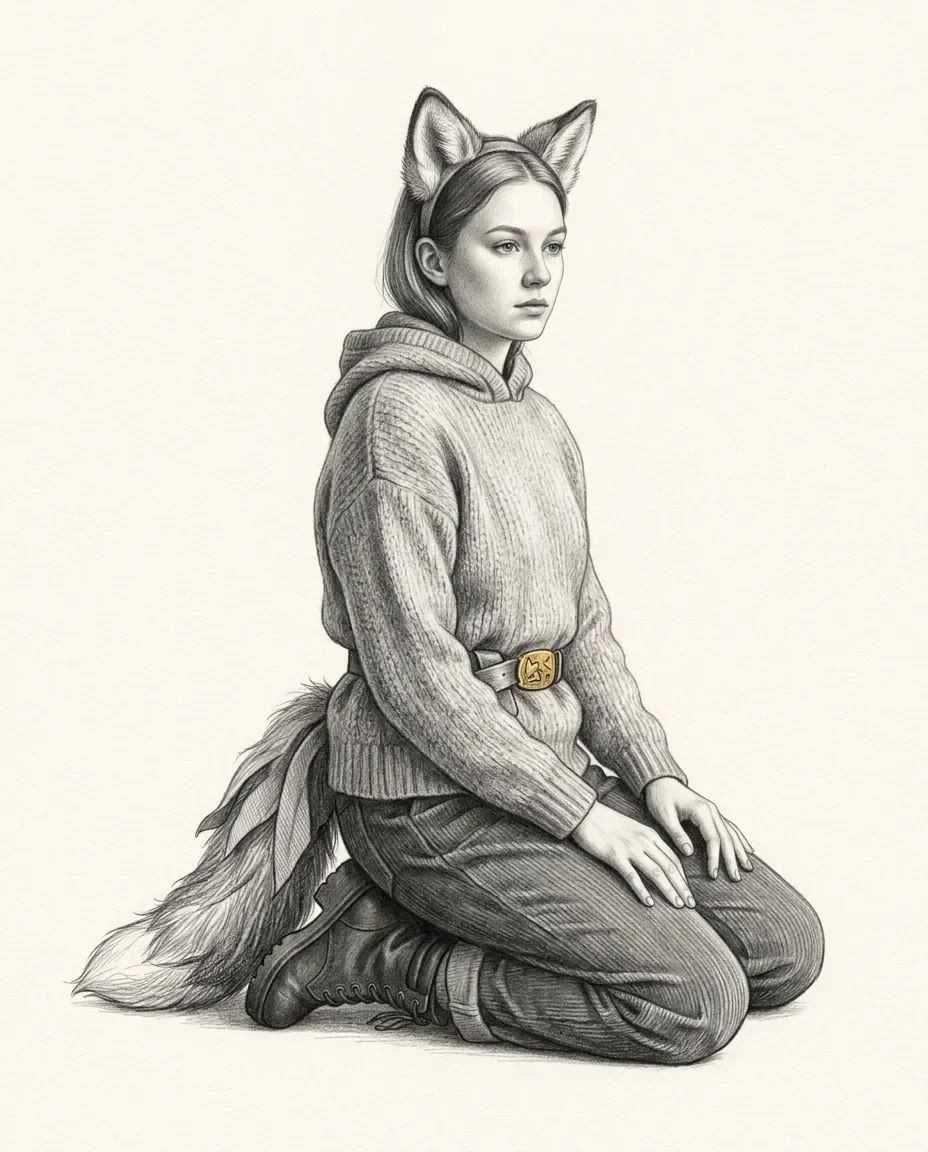
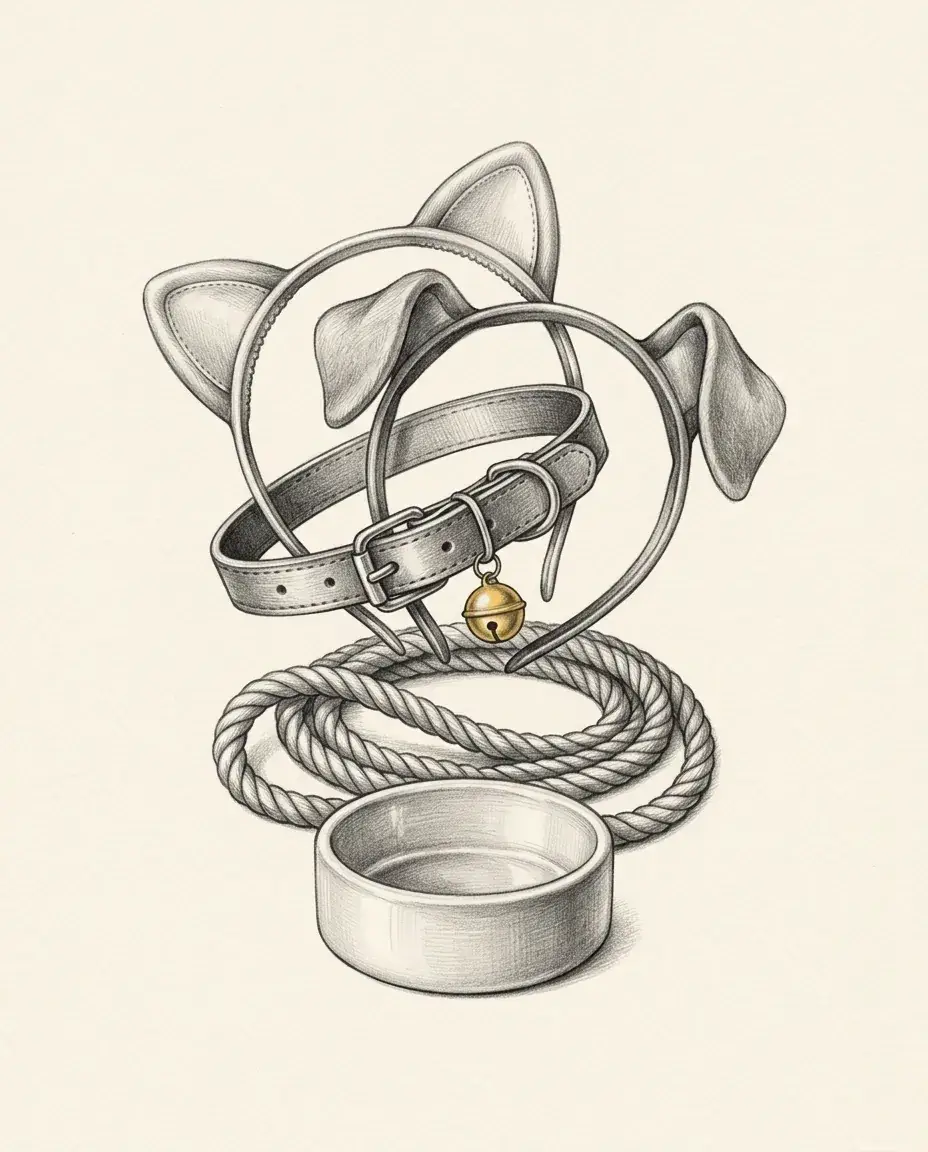
What the term covers. Three strands account for most of the practice. Pony play is the oldest documented, organised around harness and tack, posture and gait. Puppy or pup play is the largest, built around a handler, obedience training and boisterous physicality. Kitten play trades instead on aloofness, grooming and comfort-seeking. Beyond these sit rarer personas (wolves, foxes, rabbits) and a great deal of play that is not erotic at all. Gear such as ears, a tail, a hood, mitts or a collar is typical but not required; the persona is what defines the activity.
What the term does not cover. It has nothing to do with real animals. Every participant is a consenting adult performing a role, and the practice is wholly separate from zoophilia, an interest in actual animals that is illegal in most jurisdictions and forms no part of this practice. Pet play is the closest neighbour and the narrower word: it names the companion-animal subset in which an owner or handler relationship is central, while animal role-play is the umbrella that also holds working-animal personas such as pony play. The furry fandom is a fan community built around anthropomorphic animal characters and art rather than around embodying one, and it is not inherently sexual. Age-play and transformation fetish share the shift of self but not the animal frame, and primal play drops social restraint into instinctual behaviour without adopting a persona or a handler.
How the word is used. "Animal role-play" is the neutral umbrella reference works use; "pet play" is what practitioners say, and "pup," "kitten" and "pony" work as both activity names and self-descriptions. None of it is diagnostic vocabulary: neither DSM-5-TR nor ICD-11 lists animal role-play, and zoomimetic, the descriptor used in this catalog, is a neutral coinage meaning "animal-imitating" rather than a clinical category.
History & origins
The theatrical impulse to take on an animal persona is ancient (found in shamanic ritual, masque, and folklore) but pet play as an organised kink practice is largely a twentieth-century development rooted in the BDSM and leather subcultures rather than in clinical sexology.
Early fetish documentation
- 1946–1959: Some of the earliest published images of animal play, especially pony play, appear in the bondage art and photography of John Willie in his magazine Bizarre, per Wikipedia's survey of animal roleplay. Pony play is sometimes nicknamed the "Aristotelian Perversion," tied playfully and apocryphally to the medieval Phyllis and Aristotle legend (13th century), in which the philosopher is bridled and ridden like a horse.
- Mid-20th century: Across the 1940s and 1950s, pony play crystallised within fetish circles built around harness, tack, and bondage gear, establishing the equine strand of the practice.
Puppy play and the leather community
Puppy (or "pup") play emerged from the post-war gay leather scene, where master/slave dynamics sometimes shaded into a handler training a submissive as a dog. The community's own oral histories, such as pupplay.info's account, record a recognisable lineage:
- 1989: The pup educator known as Pup Tim recounts consciously taking on a pup identity after a leather mentor called him "pup," finding early online "dogslave" training communities.
- 1995–1996: In the UK, the DynSky event ran novelty "dog shows," growing from three contestants in 1995 to eight in 1996, as "puppy" began to split off as a gentler term from the older "dogslave."
- 1997: "Dog Head Space" classes began in San Francisco, formalising the idea of a distinct animal headspace.
- 2001–2003: The Lone Star Boys of Leather ran an early pup contest in Texas (2001); the International Puppy Contest, modelled on canine dog shows, gave the scene a flagship event; and a documentary on pup play screened publicly in 2003, raising mainstream visibility.
Clinical and terminological framing
There is no single clinician who "coined" pet play, and it is not a diagnosis. Mainstream reference works such as Wikipedia's List of paraphilias and Animal roleplay document it descriptively as a recognised form of consensual role-play, and contemporary sexology treats consensual BDSM as a non-pathological interest. The neutral clinical descriptor zoomimetic ("animal-imitating") role-play is used in this directory; the precise origin of individual sub-terms like "pup play" or "kitten play" is not well documented and arose organically within the community.
In practice
Pet play is expressed through embodied behaviour (body language, posture, vocalisations such as barking, purring, or whinnying) and through gear like ears, tails, collars, hoods, mitts, harnesses, or pony tack. Common activities include training, fetching or play, grooming, feeding, and obedience or trick work. The dynamic can be overtly erotic, primarily playful and affectionate ("SFW" pet play that some participants treat as pure stress relief), or a blend, and many move fluidly between registers. As an embodied power-exchange practice it sits close to dominance and submission and overlaps thematically with age-play, which similarly trades on a shift in role and headspace.
Psychology
Pet play draws on power exchange, nurturing and care, escapism, and the relief of stepping outside an adult self-image into a simpler, present-focused "animal" mind. The persona can offer structure, permission to be playful or non-verbal, and a strong sense of bonded trust; for handlers, the appeal often lies in caretaking, control, and connection. These are framed in terms of role, attachment, and embodiment rather than any attraction to animals, and the practice is not a sign of disorder. Direct empirical study of pet-play psychology specifically is thin, so most accounts are qualitative and drawn from community self-report.
Prevalence & culture
Within kink communities pet play, and puppy play in particular, has high visibility through large FetLife groups, organised contests and "mosh" meets, and a distinctive gear aesthetic (neoprene hoods and tails) that has reached some mainstream and fashion awareness. Documentary film has tracked the equine strand in particular, including Pony Passion (2003) and Born in a Barn (2005), noted in the Animal roleplay reference. It overlaps culturally but is distinct from the furry fandom, which centres on anthropomorphic-animal characters and is not inherently sexual. Dedicated prevalence research is scarce; broad surveys of paraphilic and kink interests such as Joyal & Carpentier (2017) establish that BDSM-adjacent interests are common in the general population, but pet play itself is usually estimated via community-size proxies rather than precise figures, and lay overviews like Glamour's A–Z of kinks treat it as a well-known, mainstream-recognised kink.
Safety, consent & law
The practice is legal and benign between consenting adults. Responsible practice emphasises negotiation, safewords, and aftercare, with attention to comfort, breathing, and circulation whenever hoods, restraint, or pony tack are involved, and care to avoid joint strain in quadruped or harness work. A single shared understanding underpins everything: the roles are symbolic human role-play, entirely separate from any contact with real animals.
Common questions
Does animal role-play involve real animals?
No, never, in any form. Animal role-play is adults performing animal personas with other adults; the animal exists only as a character, in the way a costume drama does not involve real aristocrats. It is entirely separate from zoophilia, which concerns actual animals, is illegal in most jurisdictions, and shares nothing with this practice but a superficial resemblance of vocabulary. Communities are explicit and unusually firm about the distinction.
What is the difference between pet play and animal role-play?
They are used interchangeably in conversation, but they are not quite the same width. Pet play names the companion-animal version, in which a handler, owner or trainer relationship is part of the frame. Animal role-play is the umbrella above it and also covers personas that are not pets at all, pony play being the clearest case, since a pony is a working animal rather than a household one.
Is pup play sexual?
Sometimes, and often not. A substantial part of the community treats it as non-erotic: a way to stop talking, stop performing adulthood and play, which participants frequently describe as stress relief rather than arousal. The same person may move between an erotic register with a partner and a purely social one at a group meet. Consent, negotiation and clear limits apply either way, because the shift in headspace is real regardless.
Is animal role-play the same as being a furry?
No, though the two socialise together. The furry fandom is organised around anthropomorphic animal characters (art, writing, costume, conventions), and most of it is not sexual. Animal role-play is about embodying an animal's behaviour and mindset, usually with a partner and usually within a power-exchange frame. A person can be one, both or neither, and plenty of furries have no interest in pet play at all.
What is pup headspace?
It is the mental shift participants describe as the core of the practice: a simpler, present-focused, largely non-verbal state in which planning, self-monitoring and adult responsibility drop away and attention narrows to play, touch and the handler. Practitioners compare it to the absorption of deep play rather than to intoxication. It is also why the activity is treated as needing a proper ending and aftercare, whether or not anything sexual happened.
Do you need gear to try pet play?
No. Ears, a tail, a hood, mitts and a collar are the recognisable iconography and much of the community aesthetic, but they are props for a persona rather than a requirement of one. Plenty of people start with nothing, or with a single collar, and the neoprene hoods that dominate the imagery are among the most expensive items rather than the most necessary.
Is animal role-play a paraphilia or a mental disorder?
No. Neither DSM-5-TR nor ICD-11 lists it, and contemporary sexology does not pathologise consensual role-play between adults absent distress, impairment or non-consent. Dedicated research is thin, so most of what is written about its psychology comes from community self-report rather than clinical study, a gap in the literature rather than evidence of a problem.
Is animal role-play legal?
Yes, between consenting adults in private. It involves no animals and no unlawful act, and the gear is ordinary costume. The usual caveats about public space apply, since some pup gear reads as fetishwear and ordinary public-decency rules govern where it can be worn, but that is a question about clothing in public rather than about the practice itself.
- Dominance and Submission92/100Power, Roles & ScenariosA consensual erotic dynamic in which one partner takes a dominant role and the other a submissive role, exchanging power within agreed limits. It is one of the most widespread elements of BDSM and of human sexual fantasy.92
- Age-Play49/100Power, Roles & ScenariosA consensual role-play between adults in which one or more partners adopt an age different from their own, often a younger persona, within a negotiated dynamic. An umbrella term for many caregiver, mentor, or peer scenarios; it never involves actual minors.49
- Furry Fandom54/100Identity & TransformationMembership in the furry fandom, the community organised around anthropomorphic animal characters that blend human and animal traits. It spans fan art, writing, costuming and conventions and centres on creating a character, a fursona. Most participation is social and creative; an erotic dimension is optional for some.54
- Human Pup Play49/100Identity & TransformationA consensual adult role-play in which a participant adopts the mannerisms, body language, and headspace of a dog, usually a puppy. Participants are often paired with a handler or trainer. It is a form of animal role-play involving humans only and is explicitly distinct from any interest in real animals.49
- Gynephilia (Attraction to Women)48/100Gynephilia · Identity & TransformationGynephilia (also spelled gynophilia) is sexual attraction to women, femaleness, or femininity. Sexologists use it as an orientation-independent descriptor: a person of any gender can be gynephilic. It is a normal variant of attraction, not a paraphilia.48
- Kemonomimi48/100Identity & TransformationAn aesthetic and erotic appreciation of otherwise human characters given a few animal traits, typically ears and a tail. The catgirl, or nekomimi, is the best-known type. The body stays human, which sets it apart from furry and from animal role-play.48
"Pet play" and "animal role-play" are plain-English descriptive terms from kink communities, with no clinical coinage. The descriptor "zoomimetic" derives from Greek *zōion* ("animal") + *mīmēsis* ("imitation"), literally "animal-imitating" role-play.
animal role-play · power exchange · embodiment
Prevalence is computed from the entry's cited population estimate. Rows marked ESTare indicative editorial estimates scored against a fixed anchor rubric, not measured quantities. Method & anchors: methodology.
Common · ≈ 1 in 20
- 01List of paraphilias, Wikipediadefinition/existence of zoomimetic animal role-play
- 02FetLife, kink community group sizes (community-size proxy)community-size proxy for human-pup and pony-play groups
- 03An A–Z of Kinks and Fetishes, Glamourlay framing of animal role-play as a recognized kink
- 04Pony play, Wikipediadocuments the mid-twentieth-century fetish-subculture roots of pony play and its place within BDSM animal role-play
- 05Animal roleplay, WikipediaJohn Willie's Bizarre magazine (1946–1959) as earliest pony-play imagery; types (pony/kitten/puppy play); distinction from zoophilia and furry fandom; placement within BDSM
- 06John Willie, Wikipediaidentifies John Willie as the fetish artist behind Bizarre magazine, source of early published pony-play imagery
- 07A Slice of Pup Community History, pupplay.infocommunity oral history: 1989 pup identity, 1995–1996 DynSky dog shows, 1997 San Francisco Dog Head Space, early-2000s pup contests and documentary
- 08Joyal & Carpentier (2017), The Prevalence of Paraphilic Interests and Behaviors in the General Population, J. Sex Research 54(2):161-171general-population evidence that BDSM-adjacent paraphilic interests are common, contextualising pet play's prevalence