Stationery Fetish
Added 21 Jun 2026 · Updated 22 Aug 2026
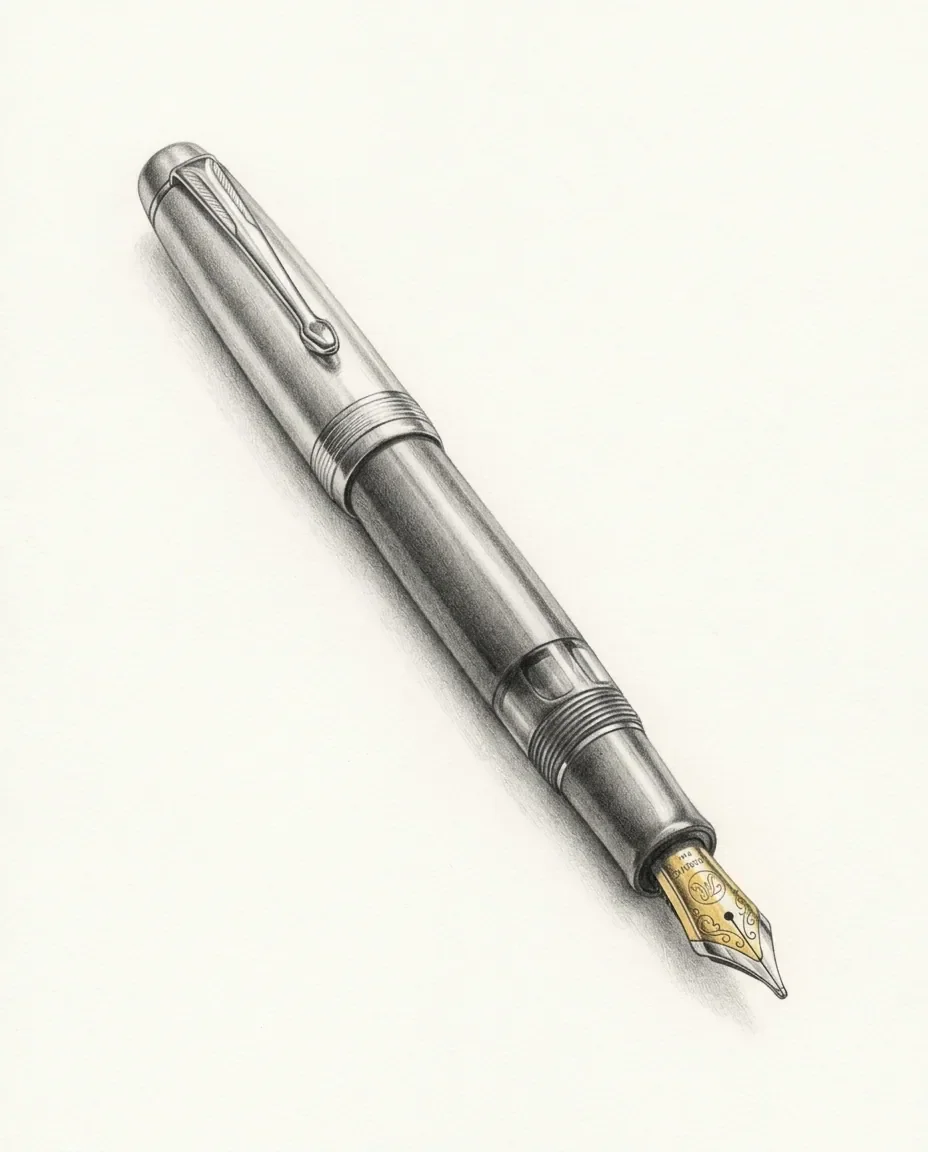
A non-sexual enthusiasm for fine stationery (fountain pens, inks, premium notebooks, and desk goods) driven by tactile pleasure. Craftsmanship, aesthetics, and collecting drive it too. It is an everyday hobby and connoisseurship interest, not a clinical condition.
- Prevalence
- Common
- Category
- Non-Sexual Fetishism
- Domain
- Non-sexual interest
- Confidence
- Medium confidence
- Status
- Not a clinical condition; a non-sexual hobby and sensory/collecting interest.
- Also known as
- Stationery & Pen Fixation, stationery obsession, pen addiction, fountain-pen fixation, notebook fetish
- Added
- 21 Jun 2026
- Updated
- 22 Aug 2026
Featured in
Overview
Stationery fetish describes an absorbing, non-sexual fascination with writing instruments and paper goods: fountain pens, inks, premium notebooks, planners, washi tape, and desk accessories. Enthusiasts prize the feel of a nib gliding across paper, the way an ink shades and sheens, the texture and weight of fine paper, and the design heritage of storied brands. Here "fetish" is used in its loose, everyday sense of an avid enthusiasm, not the clinical sense; the interest is a hobby, a craft, and a collecting passion rather than a paraphilia. This article traces the long industrial history of the objects involved, the appeal of analog writing, and the modern enthusiast culture that grew up around it.
Examples
What the term covers. Fountain pens first: nib width and flex, the difference a steel or gold nib makes, vintage models restored and put back into daily use. Then ink, compared bottle by bottle for colour, shading, sheen, water resistance and drying time. Then paper, judged mainly by how little it feathers, ghosts or bleeds through. Around those three sit the rest of the desk: pencils and their leads, erasers, rulers, pencil cases, rubber stamps, washi tape, planners and notebooks bought faster than they can be filled.
What it does not cover. Nothing sexual: this is not object sexuality, where objects are experienced as partners. It is a species of ordinary collecting rather than a clinical pattern, so it is also not compulsive hoarding or compulsive shopping, both of which are defined by impairment. Book-focused habits are their own thing: bibliomania and tsundoku concern reading matter, not the tools used to write it, and deltiology collects postcards for their images and history rather than for writing on. The tactile side overlaps with ASMR and texture fixation without being either.
How the word is used. "Fetish" here is the loose everyday sense of an avid enthusiasm, the same way people speak of a fetish for good coffee, and enthusiasts apply it to themselves with some irony; "pen addiction" and "stationery obsession" circulate in the same self-mocking register, in shop copy, review blogs and forum signatures. None of it is clinical vocabulary. Neither DSM-5-TR nor ICD-11 contains anything of the kind, and the nearest diagnostic categories describe distress and impairment, not enthusiasm.
History & origins
Unlike the clinical -philia terms catalogued in sexological literature, "stationery fetish" has no coinage, sexologist, or diagnostic lineage to document. Its history is instead the history of its objects and of the communities that collect them.
The word and the medieval stationer
The term stationery descends from the medieval Latin stationarius, a vendor who kept a fixed station, a permanent shop or stall, rather than travelling as an itinerant peddler. As Wikipedia's article on stationery records, between the 13th and 15th centuries these fixed sellers clustered near universities, where books were bound, copied, published, and rented to students in sections. The word stationer thus originally meant a bookseller at a fixed location; over time its sense narrowed to the paper goods and writing supplies such shops sold.
The industrial age of the pen
The modern hobby tracks the industrial history of its objects through a series of dated milestones:
- 1828–1830: the mass-produced steel pen nib arrives. As the history of the fountain pen records, Josiah Mason refined cheap nib production in 1828, and around 1830 William Joseph Gillott, William Mitchell, and James Stephen Perry devised ways to mass-manufacture robust, inexpensive steel nibs, turning Birmingham into the world's nib-making centre by the 1850s.
- 1884: Lewis Waterman is granted U.S. Patent 293,545 for his "three fissure feed," the capillary feed that made the fountain pen reliable; Waterman led the American market into the 1920s and the 1880s became "the era of the mass-produced fountain pen."
- 1938 / 1943: László Bíró patents a workable ballpoint (British patent, 1938; a later patent and Biro Pens of Argentina, 1943).
- early 1950s: cheap, disposable ballpoints overtake fountain-pen sales for everyday use, demoting the fountain pen from daily necessity to deliberate, collectible object: the moment that makes pen collecting, as opposed to mere pen owning, a distinct pursuit.
The contemporary enthusiast scene
The modern community crystallised online. The Fountain Pen Network, founded in 2004, grew into the hobby's central hub, gathering more than 118,000 members and over four million posts. Reddit's r/fountainpens, started in 2010, added a faster, image-led venue, and together with a wealth of review blogs and "ink-swatch" culture they gave the hobby its now-familiar rhythms of unboxings, hauls, and nib comparisons. Japan's deep stationery retail culture and the global journaling and productivity scenes broadened the audience further. The 2010s bullet journal method, devised by designer Ryder Carroll, drew a large adjacent audience toward analog notebooks and pens, feeding the same retail and social-media ecosystem.
In practice
The interest is expressed through acquiring and actually using pens and inks: journaling, calligraphy, planner decoration, and "swatching" inks to compare colour, shading, and behaviour on different papers. Enthusiasts follow reviews and unboxings, attend pen shows, and participate in active online communities where they share collections and techniques. Many describe a strong ritual satisfaction in the physical act of writing itself, and a sharp sensitivity to how a particular nib-paper-ink combination feels.
Psychology
The appeal blends several non-sexual drivers: sensory enjoyment of touch, sound, and visual colour; appreciation of craftsmanship and design heritage; nostalgia; and the calming, mindful quality of analog writing as a deliberate counterpoint to screens. It also draws on the well-documented curatorial pleasures of collecting: variety-seeking, completing a set, and the small reward of acquisition. As a benign hobby it sits alongside other connoisseur-collector interests such as watch collecting, audiophilia, and knife collecting; like them it is best understood through the psychology of collecting and craftsmanship rather than through sexology. Origins are personal and cultural, frequently rooted in childhood school experiences, a memorable gift, or a deliberate turn toward tactile tools in a digital life.
Prevalence & culture
It is a modestly common, generally low-cost hobby with a disproportionately large and engaged online presence relative to its everyday visibility, especially in Japan, across Europe, and within journaling and productivity communities. Because it is not a clinical category, there are no sexological prevalence figures; its footprint is measured instead through community size and retail culture. The single largest dedicated forum, The Fountain Pen Network, passed 118,000 registered members, and annual pen shows in cities such as Washington, London, and Tokyo anchor an in-person circuit. Cultural visibility is moderate, reinforced by stationery retail, pen-show circuits, and aesthetic social-media trends around journaling and "deskscaping."
Safety, consent & law
The interest is entirely benign, with no consent, safety, or legal implications. The only notable downside is the familiar collector's risk of overspending or accumulation, given the abundance of inexpensive, individually collectible items (each ink bottle or notebook is cheap, but the habit compounds).
Common questions
Is a stationery fetish an actual fetish?
Not in the sexual sense. The word is being used the way people say they have a fetish for good coffee: an avid, slightly self-mocking enthusiasm. Clinical fetishism means arousal that depends on an object, and nothing of the sort is involved here. The closest genuinely sexual category is object sexuality, attraction to objects as partners, which is unrelated. The interest appears in no diagnostic manual because it is a hobby.
Why do people prefer fountain pens to ballpoints?
A fountain pen lays ink down by capillary action, so it needs almost no pressure, which many people find easier on the hand over a long writing session. The line varies with angle and speed, so handwriting looks more individual, and the pen can be refilled from bottled ink in an enormous range of colours. Against that it is slower to dry, fussier about paper and easier to lose. The appeal is deliberate use rather than convenience.
Why does paper matter so much to fountain-pen users?
Because a wet ink line exposes the paper. Absorbent or lightly sized paper lets the line feather into fuzzy edges, show through the sheet, or bleed onto the page beneath, and it flattens the shading and sheen that make an ink interesting in the first place. Smoother, well-sized paper holds a crisp line and lets ink dry on the surface, at the cost of longer drying times. Hence the habit of discussing specific papers as closely as specific pens.
Is buying a lot of stationery a sign of hoarding?
Usually not. Compulsive hoarding is defined by difficulty discarding possessions until living space becomes unusable and the person is distressed or impaired, and compulsive shopping by buying that feels uncontrollable and causes real harm. A drawer of unused notebooks is neither. The honest risk in this hobby is quieter: individually cheap items bought steadily accumulate faster, and cost more in total, than expensive ones do.
Is it an expensive hobby?
It does not have to be. The entry cost is unusually low, since a serviceable steel-nib pen, a bottle of ink and a decent notebook are ordinary consumer purchases and one bottle outlasts a great many cartridges. The expense arrives at the other end: gold nibs, limited editions, vintage restoration and specialty papers have no ceiling. For most enthusiasts the money goes on the steady accumulation of small purchases rather than on any single pen.
Is the appeal of stationery the same as ASMR?
They overlap without being the same thing. ASMR is a specific tingling response to soft sounds and close attention, and pen-on-paper sounds are a common trigger for it, while a texture fixation attaches to how a surface feels. The stationery interest can include both, but its centre of gravity is elsewhere: craftsmanship, design history and the satisfaction of using a well-made tool, which are judgements rather than sensations.
- Watch Collecting41/100Horological Fixation · Non-Sexual FetishismAn intense, non-sexual fascination with mechanical timepieces and luxury watches, centered on craftsmanship, brand heritage, and the act of collecting. It is a hobby and consumer-culture interest rather than a clinical condition.41
- Audiophilia39/100Non-Sexual FetishismA non-sexual devotion to high-fidelity sound reproduction and the equipment behind it: amplifiers, speakers, turntables, headphones, and cables. It is a hobby and connoisseurship interest, not a clinical condition or sexual paraphilia.39
- Knife Collecting34/100Non-Sexual FetishismA non-sexual enthusiasm for knives and other edged tools as objects of craftsmanship: steel, grind geometry, and handle materials. Lock mechanisms, maker heritage, and everyday-carry culture matter too. It is a hobby and collecting interest, not a clinical condition.34
- Coin & Stamp Collecting38/100Non-Sexual FetishismA non-sexual, focused interest in acquiring, organizing, and studying coins, banknotes, and postage stamps (numismatics and philately). It centers on heritage, completeness, and the tactile and historical appeal of small physical artifacts.38
- Handbag Fetish38/100Non-Sexual FetishismA non-sexual, intense interest in acquiring and curating designer handbags, prized for craftsmanship, brand prestige, and status. It blends collecting, consumer culture, and identity signaling rather than any clinical condition.38
- Plangonology38/100Non-Sexual FetishismThe collecting of dolls as objects, from nineteenth-century bisque to Barbie and ball-jointed dolls. The work is identifying makers and moulds, grading condition, restoring and displaying. A mainstream non-sexual hobby with its own societies and shows.38
From the medieval Latin stationarius, a vendor who kept a fixed station (shop) near a university rather than trading itinerantly; such sellers dealt in books, paper, and writing supplies, and the term later narrowed to mean paper goods themselves.
collecting · hobby · sensory satisfaction
Prevalence is computed from the entry's cited population estimate. Rows marked ESTare indicative editorial estimates scored against a fixed anchor rubric, not measured quantities. Method & anchors: methodology.
Common · ≈ 1 in 20
- 01List of paraphilias, Wikipediaframing as a non-sexual fixation / object fetishism (definition)
- 02Google Trends, relative search interest (search-interest proxy)search-interest proxy for stationery/pen enthusiast hobby communities
- 03Stationery, Wikipediaetymology from medieval Latin stationarius (a fixed-station vendor near universities, 13th–15th centuries) and the history of the paper-goods trade
- 04Fountain pen, WikipediaMass-produced steel nibs (Josiah Mason 1828; Gillott, Mitchell and Perry around 1830; Birmingham nib industry), the 1880s as the era of the mass-produced fountain pen, and the mid-20th-century rise of the ballpoint.
- 05Lewis Waterman, WikipediaWaterman's 1884 'three fissure feed' patent (U.S. Patent 293,545) that made the fountain pen reliable, and his market leadership into the 1920s.
- 06László Bíró, WikipediaBíró's ballpoint pen patents (British patent 1938; later patent and Biro Pens of Argentina 1943) preceding the ballpoint's mid-century displacement of the fountain pen.
- 07Forums, The Fountain Pen NetworkThe Fountain Pen Network as the central enthusiast forum (founded 2004, 118,000+ members, 4M+ posts).
- 08Best Pen Forums in 2026, FPN, FP Geeks & More (PenVibe)FPN founding year (2004) and membership scale; r/fountainpens started in 2010.
- 09Bullet journal, WikipediaThe 2010s bullet journal method (Ryder Carroll) as an adjacent analog-notebook and pen audience feeding stationery culture.