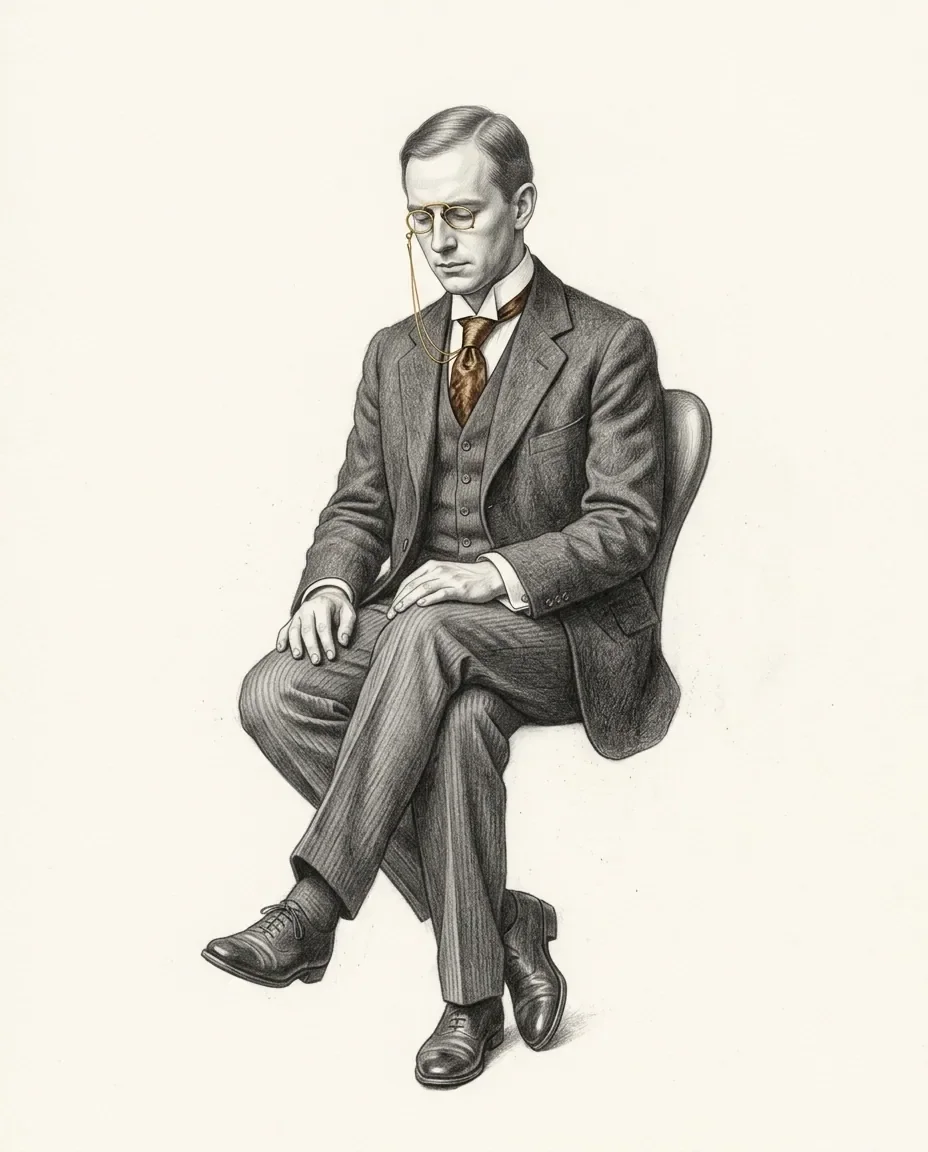
Human Furniture
Forniphilia
Added 21 Jun 2026 · Updated 22 Aug 2026
A consensual power-exchange role-play in which a submissive adult takes the role of an object, such as a piece of furniture. A dominant partner then treats them as such. It is a negotiated dehumanization fantasy among consenting adults.
- Prevalence
- Rare
- Category
- Identity & Transformation
- Clinical term
- Forniphilia
- Domain
- Sexual interest
- Confidence
- Low confidence
- Status
- Consensual adult power-exchange role-play, not a clinical paraphilia; benign when negotiated between consenting adults.
- Also known as
- Human-object / Furniture transformation play, objectification play, forniphilia, object transformation, human furniture play
- Added
- 21 Jun 2026
- Updated
- 22 Aug 2026
Overview
Human furniture, named in modern kink vocabulary as forniphilia, is a consensual BDSM role-play in which a submissive partner takes on the role of an inanimate object (classically a chair, table, footstool, or lamp) and is treated as such by a dominant partner. The arousal centres on objectification: the experience of being used, displayed, or reframed as "merely" an object within a tightly negotiated scene. It belongs to the broader family of objectification play and transformation play and is regarded as benign when it occurs between consenting adults. This article covers the coinage of the term, the practice's artistic and clinical antecedents, its psychology, and the safety considerations that distinguish it from genuine harm.
Examples
What the term covers. A submissive partner kneeling on all fours with a flat back as a low table, a tray or cup resting on it; standing still as a coat stand, lamp or towel rail; kneeling as a footstool while the dominant partner reads; or being held in a fixed posture by rope, a frame or padding so the pose can be sustained. Scenes run from a few symbolic minutes in a living room to elaborately constructed pieces built for fetish photography. What unites them is that, for a bounded and pre-agreed stretch of time, one consenting adult is addressed and used as a fixture rather than as a partner.
What it does not cover. Objectification play is the wider dynamic of being treated as an object or possession; furniture is one specific, functional form of it. Dollification and the statue and doll fetish centre on a lifelike figure rather than a useful object, and petrification is the fantasy of a living body turning to stone. Object sexuality runs the other way entirely: attraction to a real object rather than to a person playing one. Treating someone as furniture without their prior agreement is not this practice at all, since the negotiation is the thing that brings it into existence.
How the word is used. Forniphilia is fetish-scene vocabulary rather than clinical language: it reached the lexicon through bondage photography and kink glossaries rather than the journals, and no diagnostic manual uses it. "Human furniture" is the plainer phrase, is what most people actually search for, and the two are used interchangeably.
History & origins
The coinage of "forniphilia"
Forniphilia is a recent coinage, not a classical clinical term. It is credited to the British-born bondage artist, photographer and filmmaker Jeff Gord (Jeffrey E. Owen, 1946–2013), who specialised in the subgenre, launched the website House of Gord in 1997, and is generally said to have minted the word around 1998. Gord built an elaborate body of "human furniture" work across the late 1990s and 2000s and is consistently cited as having created the term. The standard reference, Wikipedia's Forniphilia article, notes his coinage but records no formal academic first-use; the term entered the lexicon through the fetish scene rather than the journals.
Artistic antecedents
The image of a person posed as furniture predates the BDSM term. British Pop artist Allen Jones exhibited his fibreglass sculptures Hatstand, Table and Chair in 1969, depicting figures in fetish dress fashioned into household objects; the works became a lightning rod for feminist protest, drawing critique from Laura Mulvey in Spare Rib and later vandalism at the Tate. They are frequently cited as the most visible cultural antecedent of forniphilia imagery.
Clinical lineage
The underlying fantasy, eroticised surrender of will and reduction to a used object, is much older than either word.
- 1886: Richard von Krafft-Ebing's Psychopathia Sexualis catalogues masochism (a term he coined) and the eroticised surrender of agency, prefiguring the objecthood fantasy without naming it.
- early 1900s: Havelock Ellis's Studies in the Psychology of Sex explores the pleasure some take in extreme submission.
- late 20th century: the practice crystallises within the leather and BDSM scene, where total power-exchange and immobilisation aesthetics give the "object" role a recognisable form.
- 1997 onward: Gord's House of Gord names and popularises forniphilia as a distinct subgenre of fetish photography and bondage.
Modern diagnostic manuals do not list forniphilia: the DSM-5-TR and ICD-11 classify only paraphilic disorders marked by distress, impairment, or non-consent, none of which a negotiated, consensual scene involves.
In practice
Expression ranges from light, symbolic role-play to elaborate posed positions, sometimes supported by furniture-style props, cushions, or bondage to help maintain a static pose. The theme is closely related to dehumanisation and total power-exchange dynamics, in which one partner is treated, for the duration of the scene, as having no agency. Many enthusiasts emphasise the visual and ceremonial qualities of the role (the stillness, the utility, the display) rather than any physical act.
Psychology
Commonly proposed motivations include the deep surrender of being reduced to a passive object, relief from decision-making and selfhood, the dominant partner's pleasure in control and display, and an aesthetic appreciation of stillness and utility. It connects psychologically to broader objectification, immobilisation, and service-submission interests, and shares ground with statue and doll play and with sissification as forms of negotiated identity suspension. For many practitioners the contrast between rigorous "object" treatment during the scene and warm care afterward is itself central to the appeal. The formal evidence base is thin; most understanding comes from community and qualitative sources rather than controlled studies.
Prevalence & culture
Human furniture is a recognised but distinctly niche interest within kink communities, with dedicated forums, fetish-art traditions, and groups, yet little mainstream visibility and minimal formal research. No general-population survey isolates forniphilia, so prevalence figures are proxy-based and place it firmly in the long tail of sexual interests; lay references such as Glamour's A–Z of kinks treat it as recognised but uncommon. Its cultural footprint is largest in fetish photography and the leather scene, and in art via Allen Jones, rather than in popular media.
Safety, consent & law
Between consenting adults the practice is legal and benign. Because posed and bound positions can restrict movement and circulation, safe practice emphasises negotiation, sensible limits on time and position (Gord himself noted sessions rarely exceeding two hours), ongoing monitoring, easy non-verbal signalling or safewords, and attentive aftercare. Numbness, pins and needles, cold or discoloured hands and feet, joint pain or dizziness are signals to end the pose at once rather than to endure it, since nerve and circulatory compression from a held or bound position can outlast the scene itself. Practitioners stress a clear separation between the consensual fantasy of objecthood and any genuine disregard for a person.
Common questions
Is human furniture play safe?
Between consenting adults it is low-risk when poses are short and monitored, and the hazards that do exist are circulatory and neurological rather than dramatic. Holding a fixed position restricts movement and blood flow, and rope or a frame adds pressure on nerves and joints. Numbness, tingling, cold or discoloured extremities, joint pain or dizziness mean the pose ends immediately. The situations that go wrong are a dominant partner who leaves the room and a submissive who has no way to signal.
How long can someone stay posed as human furniture?
There is no fixed limit, and the honest answer is shorter than most people assume. Jeff Gord, who coined the term and built much of the genre's imagery, noted that sessions rarely exceeded two hours, and a kneeling or standing pose becomes uncomfortable well before that. The limiting factors are circulation, joint strain and the submissive's ability to signal, not willpower.
Who invented forniphilia?
The practice is older than the word. The term is credited to the British-born bondage artist and photographer Jeff Gord (1946-2013), who launched the House of Gord website in 1997 and is generally said to have minted it around 1998 for the human-furniture subgenre he specialised in. The imagery predates him by decades: Allen Jones exhibited his Hatstand, Table and Chair sculptures in 1969, to considerable protest.
Is human furniture the same as objectification play?
No, it is one form of it. Objectification play is the broader dynamic in which one partner is treated by agreement as an object or possession, which can be as slight as being addressed in object terms. Human furniture is the version where the object has a function: a table, a footstool, a lamp. Someone can enjoy objectification for years without ever holding a furniture pose.
Is being used as furniture degrading?
The staged loss of status is often the point, and it is staged rather than real. Many practitioners describe the contrast between rigorous object treatment inside the scene and warm, attentive care afterwards as the core of the appeal, and the fantasy of having no agency works precisely because the agency is intact and was used to agree. For some it sits close to humiliation play and degradation; others describe it purely as stillness, service and use, with no shame involved.
Do you need special equipment to try it?
No. The kit ranges from nothing at all, in a kneeling pose held by agreement, up to purpose-built frames, cushions and rope used to sustain a position the body could not otherwise keep. The elaborate constructions that circulate in fetish photography are the exhibition end of the practice rather than its baseline, and most of what people actually do is symbolic and unequipped.
Is forniphilia a disorder, and is it legal?
It is neither a disorder nor an offence. DSM-5-TR and ICD-11 classify only paraphilic disorders marked by distress, impairment or non-consent, none of which a negotiated scene between adults involves, and neither manual lists forniphilia at all. It is lawful wherever consensual BDSM is lawful. The one line that matters legally is consent: posing or restraining a person who has not agreed is assault or false imprisonment, whatever it is called.
- Statue / Doll Fetish19/100Agalmatophilia · Objects & MaterialsAgalmatophilia is a sexual or romantic attraction to statues, mannequins, dolls, or other lifelike representations of the human form. A linked theme, Pygmalionism, centres on fantasies of such a figure coming to life, or of a living body turning to stone or freezing into immobility.19
- Sissification43/100Identity & TransformationA consensual power-exchange role-play in which one adult partner directs another, usually a cisgender man, to adopt feminine presentation. It is often combined with submission or humiliation themes. The word "forced" denotes a negotiated fantasy, not actual coercion.43
- Gender Swap Fetish30/100Identity & TransformationAn erotic or imaginative interest in fantasy scenarios where a character changes sex or swaps bodies, rather than any real-world act. It is expressed mainly through fiction, art, captions, games, and role-play. A media-driven theme distinct from real gender identity.30
- Hucow27/100Identity & TransformationA role-play and BDSM subculture in which a submissive partner takes on the persona of a dairy cow, overseen by a dominant "farmer" or "bull." Scenes combine milking and lactation play, restraint and breeding themes. It is a consensual objectification fantasy involving no real animals.27
- Mermaid Fetish27/100Identity & TransformationAn erotic or romantic attraction to mermaids and merfolk, or to mermaid imagery and embodiment. It spans fantasy attraction to the half-human, half-fish figure and an overlapping real-world hobby, mermaiding, in which people swim in costume tails.27
- Muscle Growth Fetish28/100Identity & TransformationAn erotic and imaginative fascination with the fantasy of a body rapidly gaining muscle, usually depicted in art, animation, or fiction. The appeal centers on the process of growth itself, distinguishing it from muscle worship, which is attraction to an already-muscular body.28
From Old French 'fornir' ("to furnish, provide": the root of English 'furnish/furniture') plus Greek '-philia' ("love, attraction"), and likely influenced directly by English 'furniture'. Coined by bondage artist Jeff Gord in 1998 to name 'human furniture' objectification play.
objectification · dehumanization role-play · transformation
Prevalence is computed from the entry's cited population estimate. Rows marked ESTare indicative editorial estimates scored against a fixed anchor rubric, not measured quantities. Method & anchors: methodology.
Rare · ≈ 1 in 1,000
- 01List of paraphilias, Wikipediadefinition/existence of forniphilia as objectification/transformation BDSM play
- 02Lehmiller (2018), Tell Me What You Want, survey of 4,175 Americansobjectification and dominance/submission fantasy framing within the broad BDSM umbrella
- 03An A–Z of Kinks and Fetishes, Glamourlay framing of human-furniture/objectification as a recognized but niche kink
- 04Forniphilia, WikipediaGord's coinage of the term, the description of the human-furniture practice, Gord's note that sessions rarely exceed two hours, and Allen Jones's 1969 sculptures Hatstand, Table and Chair as a cultural antecedent
- 05Jeff Gord, WikipediaJeff Gord (Jeffrey E. Owen, 1946–2013), bondage artist/photographer/filmmaker who launched the House of Gord website in 1997 and specialised in forniphilia
- 06forniphilia, Wiktionaryetymology from Old French 'fornir' + '-philia', possibly influenced by English 'furniture', coined by Jeff Gord in 1998
- 07Psychopathia Sexualis, WikipediaKrafft-Ebing's 1886 cataloguing of masochism and the eroticised surrender of agency as a clinical antecedent of the objecthood fantasy
- 08DSM-5-TR, American Psychiatric Associationmodern manuals classify only paraphilic disorders marked by distress, impairment or non-consent; forniphilia is not a listed disorder