Maid Fetish
Added 21 Jun 2026 · Updated 22 Aug 2026
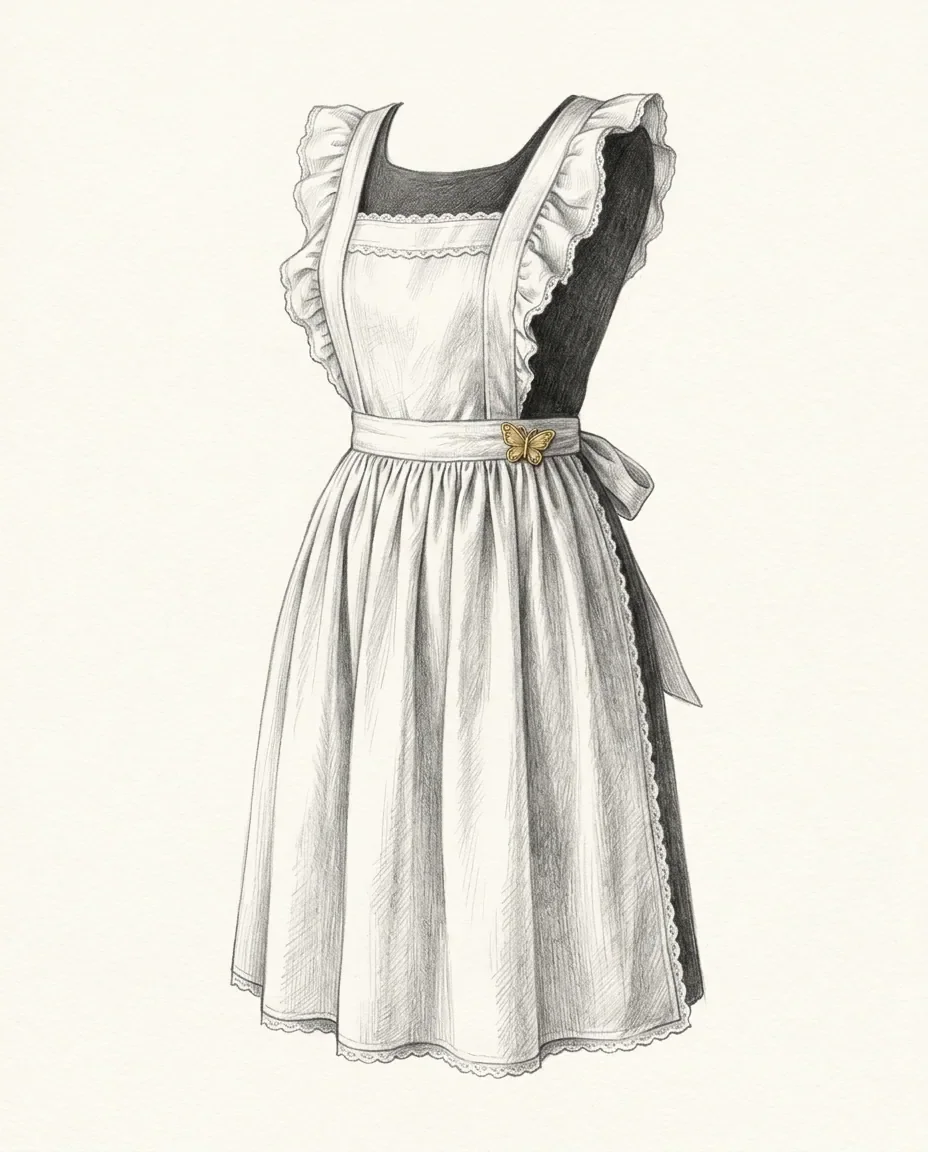
An erotic interest in maid costumes worn by consenting adults, classically the black-and-white "French maid" look. That look means a fitted dress, frilled white apron, lace trim, and headpiece. A costume- and service-role clothing preference, not a clinical disorder.
- Prevalence
- Common
- Category
- Clothing & Garments
- Domain
- Sexual interest
- Confidence
- Low confidence
- Status
- Common costume/role-coded fetish; a normal variation, not a disorder unless it causes distress or impairment.
- Also known as
- Maid-Outfit Fetishism, maid costume kink, French maid fetish, service-uniform kink, maid outfit fetish, maid uniform fetish
- Added
- 21 Jun 2026
- Updated
- 22 Aug 2026
Featured in
Overview
Maid-outfit fetishism is a clothing- and role-focused interest in which the maid costume (classically the "French maid" look of a fitted black dress, frilled white apron, lace trim, and headpiece) becomes a strong source of arousal or fixation. The appeal blends the garment's ornamental, theatrical styling with the service role it signals: attentiveness, deference, and playful submission. Worn by consenting adults, it is best understood as a costume-and-role preference rather than a disorder. This article traces the costume's theatrical lineage, the clinical framing of garment fetishism it sits within, and how anime and "maid café" culture carried the look worldwide.
Examples
What the term covers. A partner wearing the classic black-and-white outfit (fitted dress, frilled white apron, lace headpiece, cuffs) as a look in its own right, with no scenario attached; the same costume framing a light service scene between consenting adults, in which the wearer performs small domestic tasks or waits on the other; the fuller, more covered Victorian lady's-maid variant favoured by people who prefer the period silhouette to the short soubrette version; and the anime-derived maid worn at conventions. The costume is also one of the standard wardrobes of sissification play, where the appeal is the feminising role rather than the garment.
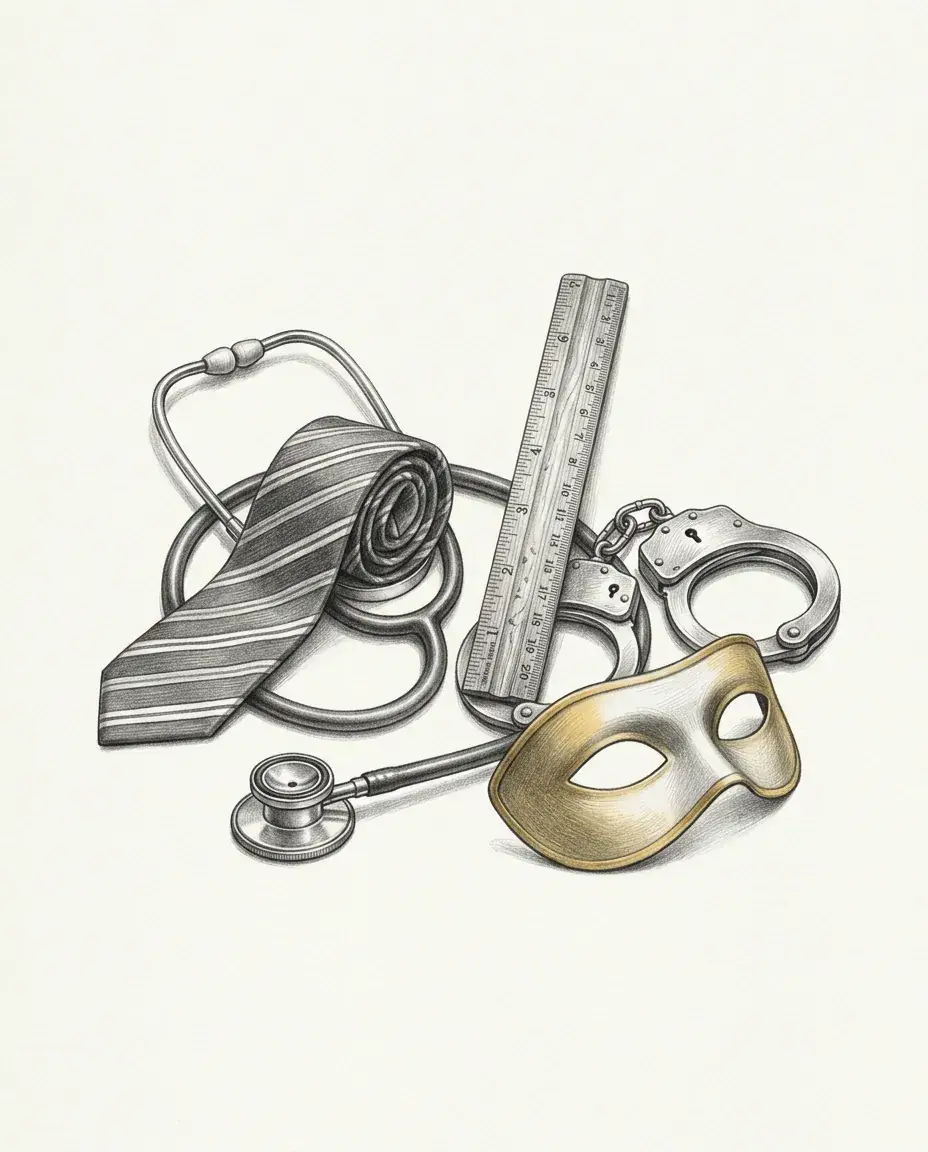
What the term does not cover. Uniform fetish is the broader family, keyed to the authority a uniform signals (military, police, medical), where the maid outfit signals service instead. Schoolgirl-uniform fetish is a separate role-coded outfit, and a cosplay fetish is tied to a named fictional character rather than a generic role. An apron fetish is about that garment alone, maid or not, and lingerie fetish about intimate apparel. Service submission is the dynamic without any costume, and plenty of people enjoy one without the other. Real domestic employment is not role-play, and nothing here concerns it.
How the word is used. "Maid fetish" and "French maid fetish" are vernacular, not clinical. Neither manual names them: DSM-5-TR recognises fetishistic disorder only where a garment-focused interest causes marked distress or impairment, and ICD-11 reserves its paraphilic-disorder category for patterns involving non-consenting people or comparable distress. "French maid" itself names a costume convention rather than a historical uniform: the phrase is theatrical shorthand, and no housemaid ever dressed the way the costume shop does.
History & origins
The costume: from lady's maid to soubrette
The stereotyped "French maid" began with a real role. As Wikipedia's account of the French maid records, the phrase originally denoted a lady's maid of French nationality, prized in Victorian and early-twentieth-century households for fashion sense and command of French. Erotic fantasy then reshaped the figure into the soubrette (the flirtatious, cheeky, "saucy" servant stock character of burlesque dramas and bedroom farces) whose distinctive black-and-white domestic dress, loosely modelled on nineteenth-century French housemaids' afternoon uniforms, was exaggerated by music hall, burlesque, and early cinema into an instantly readable theatrical shorthand. The modern costume's combination of black dress, ruffled white half-apron, headpiece, stockings, and heels is more theatrical convention than accurate historical dress.
The clinical lineage: garment & uniform fetishism
There is no single coiner of the "maid fetish" as a named interest; it sits within the broader clinical understanding of garment and uniform fetishism. That medical framing dates to the late nineteenth century:
- 1886: Richard von Krafft-Ebing's Psychopathia Sexualis catalogued garment-focused attractions among the early case studies of fetishism.
- 1887: Alfred Binet introduced the term fétichisme in an erotic sense, giving the field its name; Krafft-Ebing and Havelock Ellis would frame fetishism as arising from associative experience.
- 1920: Magnus Hirschfeld argued that "sexual attractiveness never originates in a person as a whole but always is the product of the interaction of individual features", a view that helps explain why a single garment can carry such charge.
Mainstreaming through media and maid cafés
The maid costume specifically was amplified through twentieth-century film, pin-up and burlesque imagery, and, from the late twentieth century, Japanese anime and cosplay, where maid outfits became a moe (cute, endearing) archetype. That fandom spilled into physical space: the first permanent maid café, Cure Maid Café, opened in Akihabara, Tokyo, in March 2001, and the format spread internationally, giving the look its present global familiarity well beyond any fetish context.
In practice, how the interest is typically expressed
The interest is typically expressed through a partner wearing the costume, costume play, and light role scenarios built around a service dynamic, negotiated between consenting adults and stoppable at any point by either of them. For most people it functions as an aesthetic and role-play preference rather than a fixed requirement, and it overlaps with broader uniform, schoolgirl-uniform, and dominance-and-submission interests.
Psychology
The interest fits associative-learning models of fetish formation, in which a garment becomes eroticised through repeated pairing with arousal, together with the symbolic loading the maid figure carries across stage, film, anime, and cosplay. Hirschfeld's "individual features" idea anticipates the mechanism: the costume packages a recognisable service role with a distinctive visual style, and the contrast between formal service dress and an intimate setting drives much of the appeal. As with most specific costume kinks, the focused research base is thin, and these accounts remain interpretive.
Prevalence & culture
How common is the maid fetish?
No survey isolates the maid costume specifically, so its true rate is unknown, but two things can be said with confidence: the imagery is culturally ubiquitous, while dedicated fetish interest in it is a modest slice of the broader clothing-fetish population. The maid outfit is highly visible through cosplay, anime, and maid-café culture, giving it broad mainstream recognition even though the specific fetish supports only modest dedicated communities and limited academic study. It is not classed as a disorder in the DSM-5-TR or ICD-11 unless it causes the person marked distress or impairment. In Scorolli and colleagues' (2007) survey of fetish-related online communities, clothing fetishes were dominated by legwear (33%) and footwear (32%), with underwear (12%) and whole-body wear such as jackets (9%) trailing, costume/uniform items forming a minor share, so the maid costume's mainstream recognition far outruns its share of self-identified fetish interest. Lay catalogues such as Glamour's A–Z of kinks and fetishes list the French-maid look among familiar role-play kinks, and many people encounter the imagery casually without identifying a personal fetish.
Safety, consent & law
There are no inherent safety, consent, or legal concerns: the interest involves ordinary costume and consenting adults, and the service role-play built around it is play rather than employment, agreed in advance, and ended by either partner whenever they want. Standard norms of mutual consent and privacy apply, as with any clothing- or role-play-based interest such as lingerie fetish. The only practical notes are mundane ones: costume corsetry and heels become uncomfortable long before they become risky, and the outfit's thin synthetic fabrics occasionally irritate sensitive skin.
Common questions
Why is the maid outfit such a common fetish?
Because it does two things at once. The garment is deliberately ornamental (ruffles, lace, contrast, a silhouette designed to be looked at), and it simultaneously announces a role, attentive service, that carries an implied power gap. Add a century of exposure through burlesque, film, pin-up art, anime and Halloween aisles, and almost everyone can picture it without explanation. A costume that is instantly legible and already coded needs no setup, which is much of its appeal.
What is the difference between a maid fetish and a uniform fetish?
Scope, and what the clothing signals. A uniform fetish is the broad interest in dress that marks rank or authority: military, police, medical, academic. The maid outfit sits inside that family but points the other way, marking service and deference rather than command. Many people with a general uniform interest have no particular feeling about maid costumes, and plenty of the reverse.
Is a maid fetish a disorder?
No. Enjoying a costume, or wanting a partner to wear one, is a preference and nothing more. Clothing-focused interests become clinically relevant only under the same threshold applied to every interest in this catalog: marked personal distress, real impairment in someone's life, or the involvement of a person who has not consented. A costume in a wardrobe meets none of those.
Is the French maid costume historically accurate?
Not really. The phrase originally described a lady's maid of French nationality, prized in wealthy Victorian households for her fashion sense. The outfit sold today is a theatrical descendant of the soubrette (the flirtatious servant of stage comedy), filtered through music hall, burlesque and early cinema. Actual housemaids' uniforms were long, plain and practical. The short dress, the ruffled half-apron and the lace headpiece are costume convention rather than dress history.
What is a maid café?
A hospitality venue, not a sexual one. Staff dressed in maid costume serve food and drink with a deliberately cute, attentive style of service. The first permanent example, Cure Maid Café, opened in Akihabara, Tokyo, in March 2001, and the format has since spread internationally. It grew out of anime and cosplay fandom rather than any fetish scene, and is a large part of why the costume is globally recognisable.
Do you have to be into submission to enjoy maid role-play?
No. For many people the interest stops at the costume (the look, the fabric, the silhouette) with no scenario attached at all. Where a scenario is involved it can be light and playful rather than a power exchange. Service submission is a distinct interest that needs no costume whatsoever, and the two overlap without depending on one another.
Why does the maid outfit appear so often in feminization play?
Because it is the most exaggeratedly feminine service costume in common circulation, which makes it useful shorthand. In sissification the point is the feminising role rather than the garment, and the maid outfit simply supplies the most legible version of it: unmistakably decorative, unmistakably deferential, and recognisable to everyone involved without a word of explanation.
From the blog
- Uniform Fetish60/100Uniform Fetishism · Clothing & GarmentsAn erotic interest in uniforms and the authority, role, or status they signal: military, police, medical, school, or service dress. A common clothing-and-role fetish rather than a clinical disorder.60
- Schoolgirl Uniform Fetish47/100Clothing & GarmentsAn erotic interest in school or academic uniforms (pleated skirts, blazers, neckties, and sailor-style collars) worn by consenting adults as styled costume. It is a role-coded clothing preference rather than a clinical disorder.47
- Lingerie Fetish70/100Clothing & GarmentsAn erotic interest in lingerie and intimate apparel in which the garments themselves, their fabrics, and their styling become a focus of arousal. Bras, briefs, stockings, corsets and slips are typical. One of the most common and mainstream garment-related interests.70
- Diaper Fetish44/100Autonepiophilia · Clothing & GarmentsAn erotic or comfort-oriented adult interest in wearing or using diapers. It overlaps with but is distinct from paraphilic infantilism; when centred on the garment and on perceiving oneself as an infant it is termed autonepiophilia. Adherents often call themselves diaper lovers (DL) within the ABDL community.44
- Garter Belt Fetish44/100Garter and suspender-belt fetishism · Clothing & GarmentsAn erotic interest in garter (suspender) belts and the straps that frame the thighs and hold up stockings, prized for their glamour. The visual framing of the upper legs is central to the appeal. A common intimate-apparel fetish tied to lingerie, not a clinical disorder.44
- Gym Wear Fetish43/100Clothing & GarmentsAn erotic interest in athletic and activewear, valued for its tight fit, smooth stretch fabric and fitness associations. Leggings, yoga pants, compression gear, lycra and spandex tops, and gym kit are typical. A common garment/material fetish, not a clinical disorder.43
"Maid" is a shortening of Middle English *maiden* (Old English *mægden*), "young woman / female servant"; the "French maid" label borrows from the *soubrette*, the flirtatious servant role of French stage comedy whose domestic dress became the costume's template.
costume play · service dress · role-coded clothing
Prevalence is computed from the entry's cited population estimate. Rows marked ESTare indicative editorial estimates scored against a fixed anchor rubric, not measured quantities. Method & anchors: methodology.
Common · ≈ 1 in 20
- 01List of paraphilias, Wikipediaframing of clothing/costume fetishism
- 02Scorolli et al. (2007), Relative prevalence of different fetishes, Int. J. Impotence Research 19(4):432-437clothing-fetish relative-frequency framing; costume/uniform items a minor share below footwear (32%) and legwear (33%)
- 03An A–Z of Kinks and Fetishes, Glamourlay/mainstream framing of the maid/French maid costume as a common roleplay kink
- 04French maid, Wikipediahistory of the French-maid costume: the French lady's-maid origin, the flirtatious soubrette stock character, the 19th-century black-and-white afternoon-uniform basis, and the anime/moe/maid-café lineage
- 05Sexual fetishism, Wikipedia (carries the Scorolli 2007 relative-frequency table)Alfred Binet's 1887 coinage of fétichisme, the associative-learning framing of Krafft-Ebing and Havelock Ellis, and Magnus Hirschfeld's 1920 'individual features' theory
- 06Krafft-Ebing, Psychopathia Sexualis (1886), Wikipedia1886 cataloguing of garment-focused fetishistic attractions in early sexology
- 07DSM-5-TR, Paraphilic Disorders (American Psychiatric Association, 2022)a costume/clothing fetish is not a disorder unless it causes marked distress or impairment
- 08ICD-11, Paraphilic disorders (World Health Organization)ICD-11 classifies fetishistic interests as disorders only where there is distress or harm, not for consensual costume/role preference