Skin Fetish
Integumentophilia
Added 22 Jun 2026 · Updated 22 Aug 2026
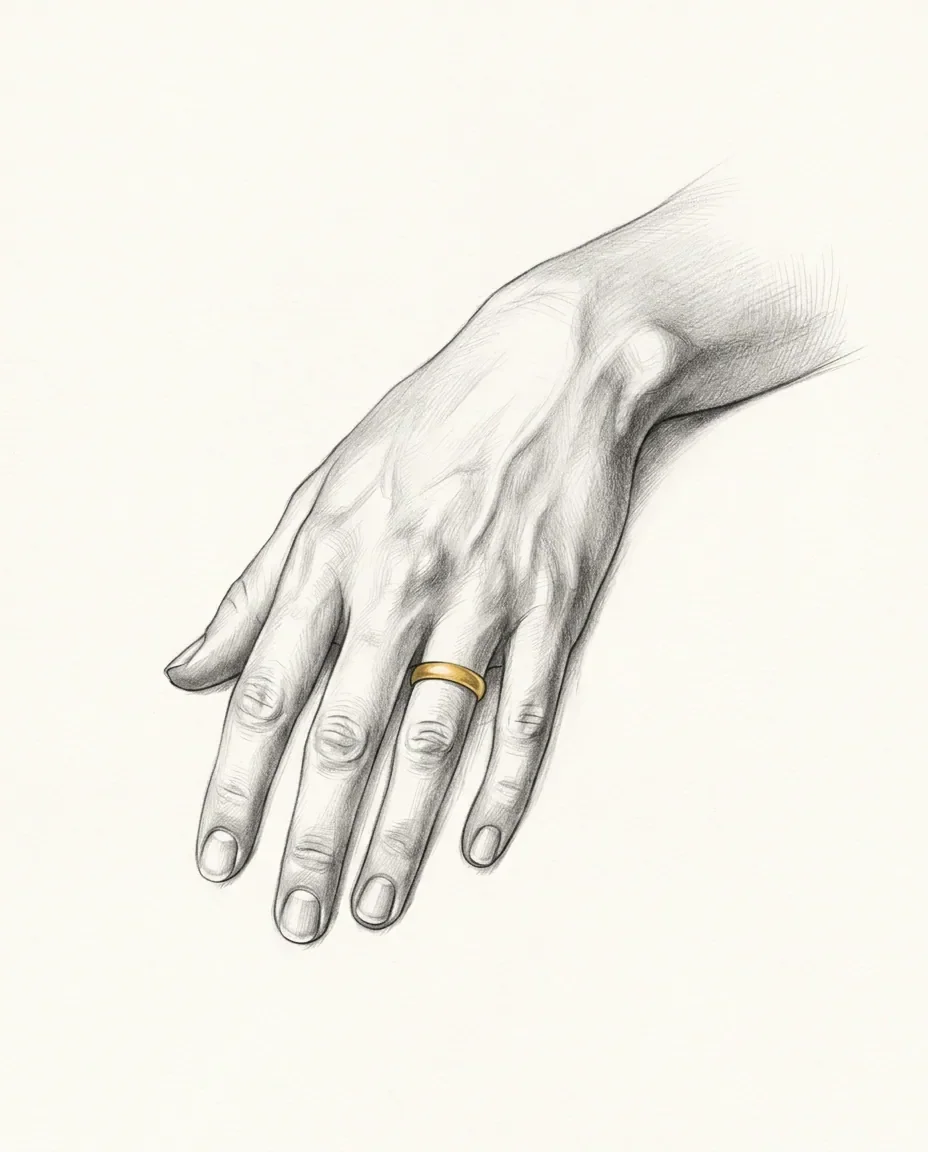
A focused erotic interest in human skin itself, its texture, smoothness, warmth, scent and sheen, rather than the body as a whole. The act of touching and being touched is part of it. It is generally a benign aesthetic and tactile preference.
- Prevalence
- Uncommon
- Category
- Body Parts & Partialism
- Clinical term
- Integumentophilia
- Domain
- Sexual interest
- Confidence
- Low confidence
- Status
- Common variation of attraction; not a disorder. Subsumed under partialism/fetishistic interest and only clinically relevant if it causes distress or impairment.
- Also known as
- dermatophilia, skin partialism, tactile skin fetish, hyphephilia (touch/tactile fetishism), bare-skin fetish
- Added
- 22 Jun 2026
- Updated
- 22 Aug 2026
Overview
A skin fetish is a focused erotic interest in human skin as a surface and a sensation: its smoothness, softness, warmth, scent, sheen, or the act of stroking and being stroked. For people who experience it, bare skin is a strong or even primary source of arousal, valued in its own right rather than only as part of the whole body. It is sometimes labelled with the weakly-attested coinage integumentophilia (from Latin integumentum, "a covering"), but it is more reliably understood through the established clinical concepts of partialism and tactile (touch) fetishism. This article frames it within those documented lineages and notes that, in typical form, it is a benign variation of ordinary attraction rather than a disorder.
Examples
What the term covers. Skin treated as a surface in its own right: the smoothness of a forearm or a back, the warmth and faint scent of a partner, the way light sits on skin, and above all slow stroking: skin-to-skin contact, massage and oil are the usual settings. The focus is unusual among partialisms in being spread across the whole body rather than pinned to one region, which is why it sits a little awkwardly in a category otherwise organised by body part.
What the term does not cover. Simply liking bare skin is ordinary; the fetish sense implies skin is a strong or primary source of arousal rather than one pleasant thing among many. It is a member of partialism, not a synonym for it, and it is distinct from the region-specific interests it gets confused with: a back fetish, a belly fetish, an armpit fetish. Stigmatophilia is an attraction to marked skin, meaning tattoos, piercings and scarification, the opposite emphasis to unadorned surface, and a body hair interest concerns what grows from skin rather than the skin itself. Material fetishes such as latex, silk or lace put a fabric between hand and body, and a sweat interest is about what skin produces.
How the word is used. Vernacular. Integumentophilia and dermatophilia appear on paraphilia lists but are barely attested in peer-reviewed work, so neither should be treated as technical vocabulary; hyphephilia has better standing but is broader, covering hair, fur, leather and fabric as well. No diagnostic manual names skin as a category of its own.
History & origins
Unlike fetishes with a crisp coinage, the skin fetish has no single documented naming event. The labels integumentophilia and dermatophilia circulate online but are barely attested in the peer-reviewed clinical literature, so they are best treated as informal. The interest is instead anchored in two well-grounded threads.
Clinical lineage: from fetishism to partialism
The modern study of erotic focus on the body begins with Richard von Krafft-Ebing's Psychopathia Sexualis (1886), one of the first psychiatric texts to catalogue and name sexual variation. Out of that tradition grew the concept of partialism: an erotic focus on a specific non-genital body region or surface, such as skin. Diagnostically, partialism had a distinct career:
- 1987: partialism was introduced as a separate paraphilia (under Paraphilia Not Otherwise Specified) in the DSM-III-R, defined as an "exclusive focus on part of the body."
- 1994: the DSM-IV retained the partialism category.
- 2013: the DSM-5 merged partialism into fetishistic disorder, widening that diagnosis from non-living objects to include a "highly specific focus" on non-genital body parts, and, crucially, making it a disorder only where it causes distress or impairment.
Tactile lineage: touch fetishism
A skin fetish is as much about touch as appearance, which places it within tactile or touch fetishism: arousal tied to the feel of skin, hair, fur, leather, or fabric. This is captured by the term hyphephilia, defined in reference works as arousal from touching such surfaces (see the medical-dictionary entry). The concept sits within the broader paraphilia typology developed by the sexologist John Money, whose Lovemaps (1986) advanced a template-based model of erotic preference; Money later grouped cutaneous, "haptoerotic" interests within that scheme. A neighbouring skin-surface interest is stigmatophilia, attraction to marked skin such as scars, tattoos, or piercings.
In practice
The interest is usually expressed through aesthetic appreciation, skin-to-skin contact, massage, slow stroking, and close attention to the texture, scent, and temperature of bare skin. It overlaps with general sensuality and commonly coexists with broader physical attraction, and it sits near other surface- and partialism-focused interests such as a back fetish, a belly fetish, an armpit fetish, or fabric-against-skin interests like a lace fetish.
Psychology
The most concrete physiological link is to C-tactile (CT) afferents, a class of unmyelinated nerve fibres in hairy skin that fire most strongly to slow, gentle stroking. As summarised on the C tactile afferent reference page, these fibres are maximally responsive to stroking at roughly 3 cm/s (within an interpersonal range of about 1–10 cm/s), their firing correlates with how pleasant the touch feels, and they project to the insular cortex, feeding the affective and social-bonding pathways of the "social touch hypothesis." Partialisms and touch fetishes are thought to arise from a blend of ordinary aesthetic taste, early associative learning, and the foundational role of skin contact in comfort and intimacy. The evidence base specific to a skin fetish (as opposed to touch and partialism generally) is thin, so causal claims should stay tentative. For most people it is simply a pronounced preference, not a clinical issue.
Prevalence & culture
Skin is not among the most commonly reported standalone fetishes. Surveys of body-part interest are dominated by feet, which account for roughly 47 percent of body-part foci in the often-cited Scorolli et al. (2007) analysis of online fetish communities, leaving skin a small share. Dedicated skin-focused communities are correspondingly small, and the topic attracts little specific research, so any prevalence figure here is a rough estimate. More broadly, general-population work such as Joyal & Carpentier (2017) finds fetishistic interests to be common overall, too common to be called atypical, which supports treating a benign skin preference as an ordinary variant.
Safety, consent & law
This interest is a benign variation of normal attraction. It carries no inherent legal issue and requires only the ordinary conditions of mutual consent; under DSM-5-TR logic it would be clinically relevant only if it caused significant distress or impairment, which is not the typical case.
Common questions
Is a skin fetish different from just enjoying being touched?
It is a matter of degree and of what the attention settles on. Nearly everyone finds skin contact pleasant; the fetish sense means bare skin (its texture, warmth, scent and the act of stroking it) is a strong or primary source of arousal in its own right, not simply a pleasant accompaniment to attraction. There is no bright line between the two, which is one reason the interest is so hard to measure.
What is hyphephilia?
Hyphephilia is the reference-work term for tactile fetishism: arousal tied to touching surfaces such as skin, hair, fur, leather or fabric. It is broader than a skin fetish, since it groups the body surface together with materials, and it is the closest thing to an established label for the touch-centred side of this interest. It is not a diagnostic category.
Is integumentophilia a real medical term?
Barely. The word joins Latin integumentum, a covering, to the Greek -philia, and it circulates on online paraphilia lists, but it is close to unattested in peer-reviewed clinical literature, as is the variant dermatophilia. Both are best treated as informal labels. A clinician describing this interest would write partialism or tactile fetishism instead.
How common is a skin fetish?
Nobody has measured it directly. Body parts are the most common target in fetish-community surveys, but Scorolli et al. (2007) found feet alone accounted for about 47% of body-part foci, leaving skin a small residual share. Dedicated communities are correspondingly modest. The prevalence figure on this page is an estimate anchored to that relative picture, not a measured rate.
Is a skin fetish a disorder?
No. Partialism was folded into fetishistic disorder in DSM-5, and that diagnosis applies only where the interest causes significant distress or impairment, which is not the typical case here. General-population work such as Joyal & Carpentier (2017) finds fetishistic interests common enough that calling them atypical is hard to justify. Nothing beyond ordinary mutual consent is required.
What is the difference between a skin fetish and a latex or leather fetish?
What is being touched. A skin fetish is about the living surface: its warmth, softness and scent. Latex, leather, silk and lace interests are material fetishes, where a fabric sits between hand and body and the material's own qualities (sheen, smell, constriction) are the draw. Plenty of people hold both, and second-skin materials sit deliberately close to the boundary.
Does a skin fetish include tattoos, scars and piercings?
That is usually treated as a separate interest called stigmatophilia: an attraction to skin that has been marked or modified. A skin fetish more often runs the other way, toward unbroken, unadorned surface. The two can coexist in one person, but they emphasise opposite things about the same body.
- Back Fetish23/100Dorsal Partialism · Body Parts & PartialismA focused erotic interest in the back and shoulders, where this dorsal region of the torso is a primary source of attraction rather than the body as a whole. It is generally a benign aesthetic preference, best understood as a form of partialism.23
- Armpit Fetish35/100Maschalagnia · Body Parts & PartialismMaschalagnia (armpit fetishism) is a partialism in which the armpit is a primary focus of sexual attraction. Interest may center on the underarm's appearance, hair, natural scent, or touch; the related term axillism denotes underarm sexual contact specifically.35
- Belly Fetish32/100Abdominal Partialism · Body Parts & PartialismAbdominal partialism is a strong erotic focus on the belly and stomach area. Preferences vary widely, from toned or soft midriffs to the navel itself, and may include gentle touch of the region. It is a benign variation in consenting adults.32
- Lace Fetish33/100Objects & MaterialsA focused erotic interest in lace and lace-trimmed garments: their openwork pattern, sheerness, and delicate texture. The association with lingerie and intimate apparel is part of the appeal. A benign variant of material and clothing fetishism rather than a disorder.33
- Body Hair Fetish34/100Hirsutophilia · Body Parts & PartialismAn erotic focus on natural body hair (chest, abdomen, arms, legs, or underarms) where its presence, density, or texture is a primary source of attraction. A benign partialism in consenting adults, sometimes labelled hirsutophilia.34
- Neck Fetish29/100Trachelophilia · Body Parts & PartialismA partialism (trachelophilia) in which the neck, nape and throat are a focus of erotic interest, both in appearance and in sensation. Light touch, breath and kissing are typical. A benign body-part interest unless it causes distress.29
Plain-English descriptive name. The weakly-attested clinical label "integumentophilia" joins Latin integumentum ("covering, skin") with Greek -philia ("love of"); the variant "dermatophilia" uses Greek derma ("skin"). Neither is firmly established in the clinical literature.
skin & surface · tactile / touch fetish · partialism
Prevalence is computed from the entry's cited population estimate. Rows marked ESTare indicative editorial estimates scored against a fixed anchor rubric, not measured quantities. Method & anchors: methodology.
Uncommon · ≈ 1 in 100
- 01List of paraphilias, Wikipediaplaces skin/touch interest within the partialism and tactile-fetishism family; lists hyphephilia
- 02Partialism, Wikipediapartialism as a clinical concept; retained in DSM-IV and merged into fetishistic disorder in DSM-5 (2013), clinical only where distress/impairment results
- 03Sexual fetishism, Wikipediapartialism introduced as a separate paraphilia (Paraphilia NOS) in the DSM-III-R (1987) as an 'exclusive focus on part of the body'
- 04Psychopathia Sexualis, WikipediaRichard von Krafft-Ebing's Psychopathia Sexualis (1886) as one of the first psychiatric texts cataloguing and naming sexual variation, the root of the fetishism/partialism tradition
- 05Hyphephilia, Medical Dictionary (Farlex/TheFreeDictionary)tactile fetishism: arousal from touching skin, hair, leather, fur or fabric; ties skin interest to touch fetishism
- 06Lovemap (John Money, Lovemaps, 1986), Wikipediasexologist John Money's template-based paraphilia typology in Lovemaps (1986), within which cutaneous/haptoerotic touch interests are grouped
- 07C tactile afferent, WikipediaC-tactile afferents in hairy skin fire most strongly to slow gentle stroking (~3 cm/s, range ~1-10 cm/s), correlate with perceived pleasantness, and project to the insular cortex (social touch hypothesis)
- 08Scorolli et al. (2007), Relative prevalence of different fetishes, Int. J. Impotence Research 19(4):432-437relative-frequency context: feet dominate body-part fetishes (~47%), leaving skin a small share
- 09Joyal & Carpentier (2017), The Prevalence of Paraphilic Interests and Behaviors in the General Population, J. Sex Research 54(2):161-171general-population evidence that fetishistic interests are common overall, supporting treatment of a benign skin preference as an ordinary variant