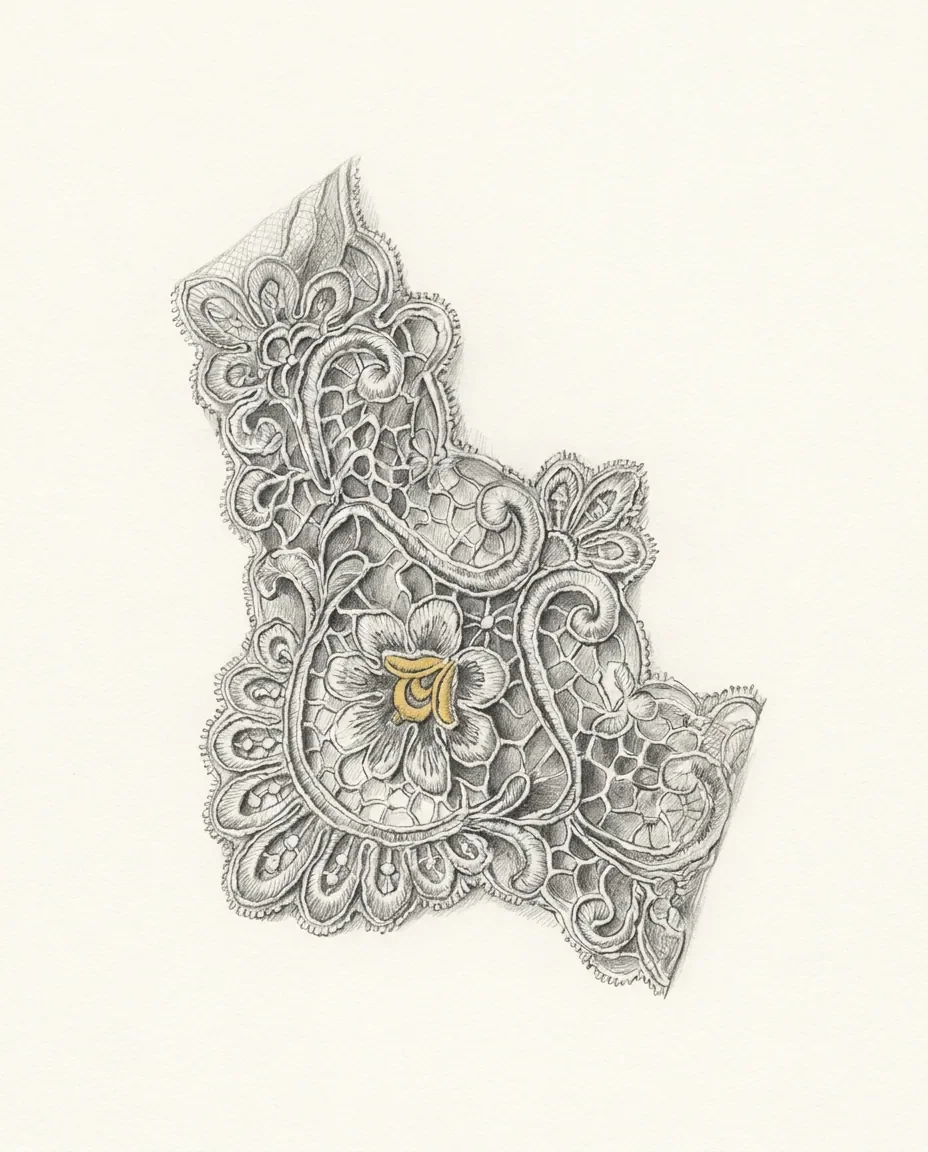
Lace Fetish
Added 22 Jun 2026 · Updated 22 Aug 2026
A focused erotic interest in lace and lace-trimmed garments: their openwork pattern, sheerness, and delicate texture. The association with lingerie and intimate apparel is part of the appeal. A benign variant of material and clothing fetishism rather than a disorder.
- Prevalence
- Uncommon
- Category
- Objects & Materials
- Domain
- Sexual interest
- Confidence
- Low confidence
- Status
- Common variation of attraction; not a disorder. Subsumed under material and clothing fetishism (fetishistic interest in the DSM-5-TR / ICD-11 sense) and only clinically relevant if it causes distress, impairment or non-consensual behaviour.
- Also known as
- lace lingerie fetish, lacy underwear fetish, lace material fetish, delicate-fabric fetish
- Added
- 22 Jun 2026
- Updated
- 22 Aug 2026
Featured in
Overview
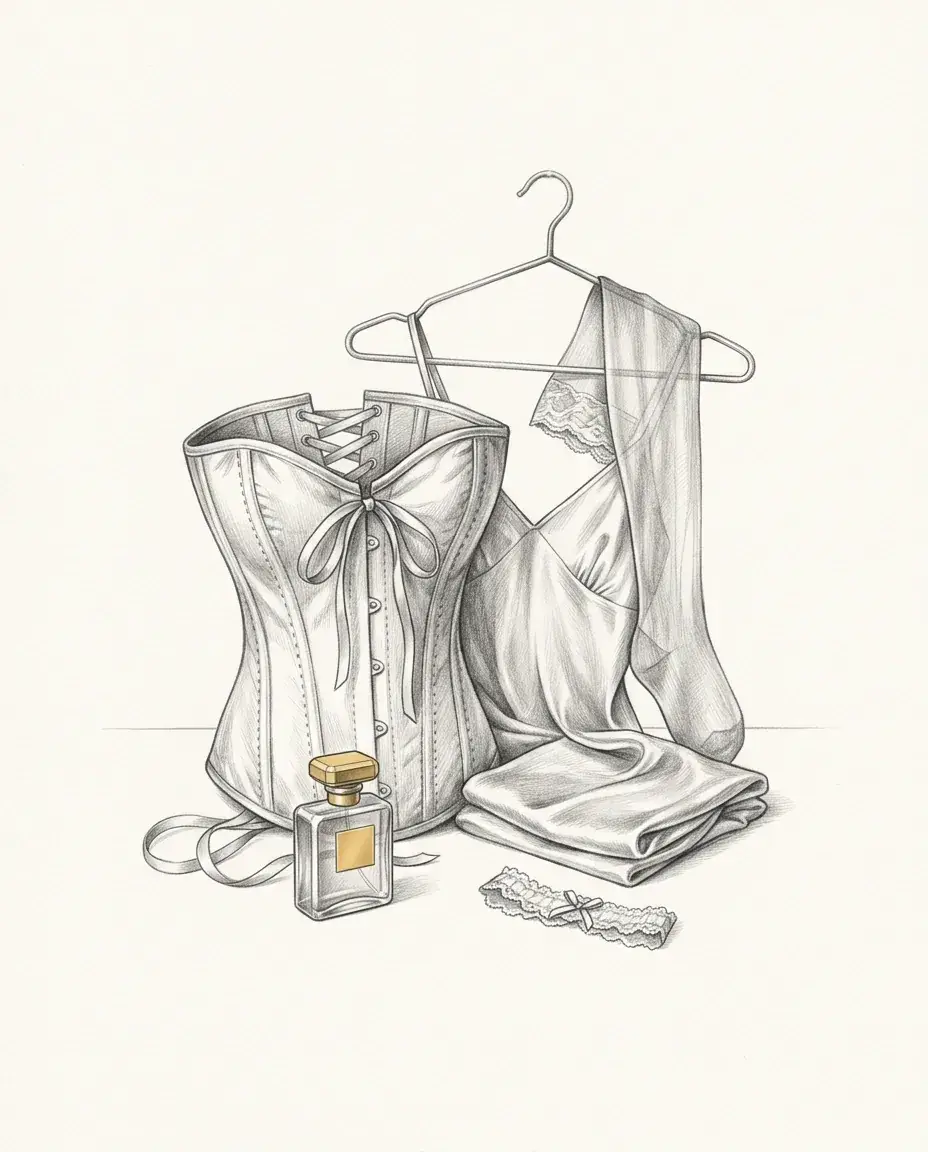
A lace fetish is a focused erotic interest in lace and lace-trimmed garments: the openwork pattern, the sheerness and partial concealment, the delicate texture against the skin, and the strong cultural link to lingerie, bridalwear and intimate apparel. For those who experience it, lace is a strong or even primary trigger of arousal, valued for its look and feel rather than only as a covering. It is best understood as a variant of material and clothing fetishism, and is generally a benign preference rather than a disorder.
Definition & scope
A lace fetish is a material interest, keyed to the fabric itself, which distinguishes it from a purely garment-based interest in a specific item. The same length of lace can carry the charge whether it appears as a bra, a stocking top, a glove, a veil, or a trim on some other garment: what matters is the openwork weave, the semi-transparency, and the tactile fineness. This sets it slightly apart from adjacent interests such as a general lingerie or underwear focus, though the categories overlap heavily in practice. As with other material fetishes, intensity ranges from a pronounced preference (lace simply makes an encounter more appealing) to a genuine trigger that a person seeks out. It is not, in itself, a clinical condition.
Examples
What the term covers. The same openwork fabric carries the charge wherever it turns up: as the cup of a bra, the top of a stocking, the trim on a garter belt, a glove, a mantilla or veil, the overlay of a wedding dress, or an edging on an otherwise plain garment. That portability is the test of a material interest: change the garment and the appeal survives, because the fabric is the constant. It extends to lace handled rather than worn, since much of the pull is tactile: the raised motifs, the gaps between them, the fineness of the thread.
What the term does not cover. A lingerie fetish is keyed to a class of garment and a panty fetish to a single item, whatever either is made from. Silk and satin are closed, smooth weaves, while lace is defined by openwork and semi-transparency, so a general liking for soft fabrics is a broader textile taste rather than this one. Nylon and pantyhose interests turn on sheer encasement, corsetry on compression and shaping whatever it is trimmed with, and texture fixation is a non-sexual sensory pleasure in surfaces that belongs to a different register entirely.
How the word is used. Plain descriptive English with no clinical counterpart: neither DSM-5-TR nor ICD-11 names lace or any other fabric, and both reach material interests only through the general category of fetishistic disorder, which requires distress, impairment or non-consent. "He has a thing for lace" is how people actually describe it.
History & origins
Lace has no separate clinical coinage; it sits within the broader history of fetishism, tracing the same lineage as other fabric- and garment-focused interests.
The term and its sexual sense
- 1750s: the French scholar Charles de Brosses introduced fétichisme to describe the religious veneration of material objects; the word would later be borrowed into psychology.
- 1882: Jean-Martin Charcot and Valentin Magnan described eroticised inanimate objects in an early clinical paper, an origin point for the theory of sexual fetishism.
- 1886: Krafft-Ebing's Psychopathia Sexualis catalogued case histories of arousal tied to specific fabrics and garments, classifying them as fetishism.
- 1887: the psychologist Alfred Binet gave the idea its lasting form in Le Fétichisme dans l'amour, which listed fine lingerie among the kinds of objects that can become a focus of desire and which established the associative, learning-based view of how such interests form.
Lace as a recurring example
Soft, sheer and decorative textiles (silk, satin and lace among them) recur as examples in writing on clothing fetishism. Krafft-Ebing, Havelock Ellis and later Sigmund Freud each proposed mechanisms (childhood association, symbolic substitution) that placed delicate intimate fabrics squarely within the fetishistic register.
Lace's cultural charge is partly a function of its history as a luxury textile. As a distinct fabric it emerged in Italy and Flanders during the 15th and 16th centuries, made painstakingly by hand as needle lace or bobbin lace, and was costly enough that Italian city-states passed sumptuary laws regulating who could wear it. Long tied to fine undergarments, mourning veils and, after Queen Victoria's lace wedding dress of 1840, bridalwear, lace carried a ready-made coding of intimacy, refinement and status that the eroticised interest draws on.
In practice
The interest is usually expressed through seeing and handling lace garments (lingerie, stockings, gloves, veils) and through partners wearing them. Appeal can be visual (the pattern and the play of concealment and exposure), tactile (the fine, slightly textured weave against the skin), or symbolic. It commonly overlaps with broader lingerie and underwear interest, with stocking and hosiery preferences, and shades into adjacent textile and surface interests such as skin and the fabric-and-garment focus of an apron fetish.
Psychology
Material fetishes are generally explained through a mix of ordinary aesthetic taste, the early associative learning that Binet, Krafft-Ebing and Ellis emphasised, pairing a fabric with arousal, and the cultural coding of lace as intimate, luxurious or romantic. Lace's semi-transparency, which both reveals and hides, is frequently cited as part of the erotic charge: it sits at the threshold of concealment and exposure. For most people it is a pronounced preference rather than a clinical issue, and the evidence base is largely descriptive rather than experimental.
Prevalence & culture
Lace is a sub-interest within clothing fetishism rather than a top-ranked fetish in its own right, and no survey isolates it directly. In the often-cited Scorolli et al. (2007) analysis of online fetish communities, clothing-focused groups were led by legwear (about 33%) and footwear (about 32%), with underwear around 12%: categories where lace frequently features as a defining material. Lace is highly visible in fashion, bridalwear and lingerie marketing, but dedicated communities are small and the topic attracts little standalone research, so any prevalence figure for lace specifically is a rough estimate held with low confidence.
Safety, consent & law
This interest is a benign variation of ordinary attraction. Consistent with the DSM-5-TR and ICD-11 distinction between a fetishistic interest and a disorder, it requires only the usual conditions of mutual consent and is not associated with harm, distress or impairment in typical cases: becoming clinically relevant only in the rare event that it causes significant distress, functional impairment, or non-consensual behaviour.
Common questions
What is the difference between a lace fetish and a lingerie fetish?
Material versus garment. A lingerie fetish attaches to intimate apparel as a class (bras, briefs, slips, stockings) regardless of what they are made from. A lace fetish attaches to the fabric, so a lace glove, veil or dress trim can carry the same charge as a lace bra, while a satin slip may carry none at all. The two overlap constantly, because most lace anyone encounters is on lingerie.
Why is lace considered sexy?
Mostly because of what it half-shows. Lace is openwork, so it conceals and reveals at the same time, and that threshold quality is the feature enthusiasts name most often. Its cultural coding does the rest: lace was a hand-made luxury textile in fifteenth- and sixteenth-century Italy and Flanders, restricted by sumptuary laws, and has been bound up with fine undergarments, mourning veils and, after Queen Victoria's lace wedding dress of 1840, bridalwear ever since.
Is a lace fetish a disorder?
No. Both DSM-5-TR and ICD-11 separate a fetishistic interest from fetishistic disorder, and only the second is a diagnosis. It requires that the interest cause the person marked distress or functional impairment, or that it involve someone who has not consented. A pronounced preference for lace, however strong, meets none of that. It is an ordinary variation of taste with no inherent risk attached to it.
How common is a lace fetish?
Nobody knows precisely, because no survey isolates it. The nearest frame is Scorolli and colleagues' 2007 analysis of online fetish communities, where clothing-focused groups were led by legwear at about 33% and footwear at about 32%, with underwear around 12%, categories in which lace is often the defining material but is never counted on its own. Any figure for lace specifically is an estimate held with low confidence.
Is it a fetish to like wearing lace yourself?
It can be, and self-wearing is a common form of the interest. It does not require a partner: people describe arousal from the feel of lace against their own skin, or from wearing it privately under ordinary clothes. That is the same material interest pointed inward rather than a separate phenomenon, and on its own it says nothing about a person's gender or orientation.
Is lace only a women's-clothing thing?
Not historically. Lace cuffs, collars, cravats and jabots were standard in elite European menswear for centuries before the shift to plain tailoring, and lace survives in menswear at the margins. In contemporary practice the interest most often attaches to women's intimate apparel simply because that is where lace is now concentrated, but the defining object is the fabric, not the wearer.
- Skin Fetish29/100Integumentophilia · Body Parts & PartialismA focused erotic interest in human skin itself, its texture, smoothness, warmth, scent and sheen, rather than the body as a whole. The act of touching and being touched is part of it. It is generally a benign aesthetic and tactile preference.29
- Apron Fetish20/100Apron Fetishism · Clothing & GarmentsAn erotic interest centered on aprons, including kitchen, household, and glossy PVC styles, valued for their domestic symbolism, texture, and coverage. It is a niche clothing fetish, not a clinical disorder.20
- Sock Fetish50/100Clothing & GarmentsA sexual interest in socks, in their look, feel, scent, or association with the feet, treated as a benign relative of foot fetishism. It overlaps with hosiery and scent (olfactophilic) interests.50
- Foot Fetish83/100Podophilia · Body Parts & PartialismA focused erotic interest in feet (their shape, soles, toes, arches, or grooming) as a primary source of attraction. Within partialism (erotic focus on a non-genital body part) it is the example people report most, by a wide margin.83
- Wetsuit Fetish33/100Objects & MaterialsAn erotic interest in wetsuits and other neoprene garments, prized for their second-skin fit, glossy surface and the enclosure a full suit gives. A material fetish beside rubber, latex and spandex, with a diving-gear strand of its own.33
- Fur Fetish32/100Doraphilia · Objects & MaterialsAn erotic interest in fur, animal skins, or hides, real or faux, valued for their softness, warmth, scent, and sensory feel against the body. Clinically termed doraphilia, it is generally a benign material fetish rather than a disorder.32
Plain-English descriptive name from the fabric "lace" (via Old French "laz, las," from Latin "laqueus," a noose or snare). There is no dedicated Greek- or Latin-derived clinical term; the interest is classified under material/clothing fetishism rather than a specific -philia.
clothing fetish · textile / material fetish · lingerie & underwear
Prevalence is computed from the entry's cited population estimate. Rows marked ESTare indicative editorial estimates scored against a fixed anchor rubric, not measured quantities. Method & anchors: methodology.
Uncommon · ≈ 1 in 100
- 01Sexual fetishism, Wikipediaframes lace as a material/clothing fetish within fetishism; carries the Scorolli 2007 relative-frequency table for clothing categories
- 02Clothing fetish, Wikipediaplaces lace within clothing/garment fetishism alongside lingerie, stockings and other intimate apparel
- 03The Origins of the Theory of Sexual Fetishism: Articles by Charcot and Magnan (1882) and Alfred Binet (1887)documents Charcot & Magnan (1882) and Binet's 1887 'Le Fétichisme dans l'amour', which listed fine lingerie among objects of fetishistic desire; Charles de Brosses' coinage of 'fétichisme'
- 04Psychopathia Sexualis, Richard von Krafft-Ebing (1886)early case histories of arousal tied to specific fabrics and garments, classified as fetishism
- 05Scorolli et al. (2007), Relative prevalence of different fetishes, Int. J. Impotence Research 19(4):432-437clothing-fetish relative frequencies (legwear ~33%, footwear ~32%, underwear ~12%) that contextualise lace as a sub-interest within clothing fetishism
- 06Lace, Wikipedialace's origin as a hand-made luxury textile in 15th-16th century Italy and Flanders (needle and bobbin lace), sumptuary laws, and its bridalwear association after Queen Victoria's 1840 lace wedding dress
- 07DSM-5-TR, Paraphilic Disorders (American Psychiatric Association, 2022)distinction between a fetishistic interest and fetishistic disorder, which requires distress, impairment or non-consent
- 08ICD-11, Paraphilic disorders (World Health Organization)ICD-11 framing that a consensual, non-distressing material/clothing interest is not a disorder