Wetsuit Fetish
Added 7 Sep 2026
An erotic interest in wetsuits and other neoprene garments, prized for their second-skin fit, glossy surface and the enclosure a full suit gives. A material fetish beside rubber, latex and spandex, with a diving-gear strand of its own.
- Prevalence
- Uncommon
- Category
- Objects & Materials
- Domain
- Sexual interest
- Confidence
- Low confidence
- Status
- A benign material fetish. Neither manual names it; an interest in a material is a disorder only with distress, impairment or a non-consenting person.
- Also known as
- neoprene fetish, scuba fetish, wetsuit fetishism, diving suit fetish, frogman fetish
- Added
- 7 Sep 2026
Featured in

Overview
A wetsuit fetish is an erotic interest in wetsuits and other neoprene garments: the close-fitting foam-rubber suits of surfing, diving and open-water swimming, prized for their second-skin fit, their smooth or glossy surface, the sound and resistance of the material, and the sense of enclosure a full suit gives. It is a material fetish in the classic sense, the class the clinical literature built the word fetishism around, and it sits beside rubber fetish, latex fetish and spandex fetish in the family of interests routed through what a garment is made of.
Definition & scope
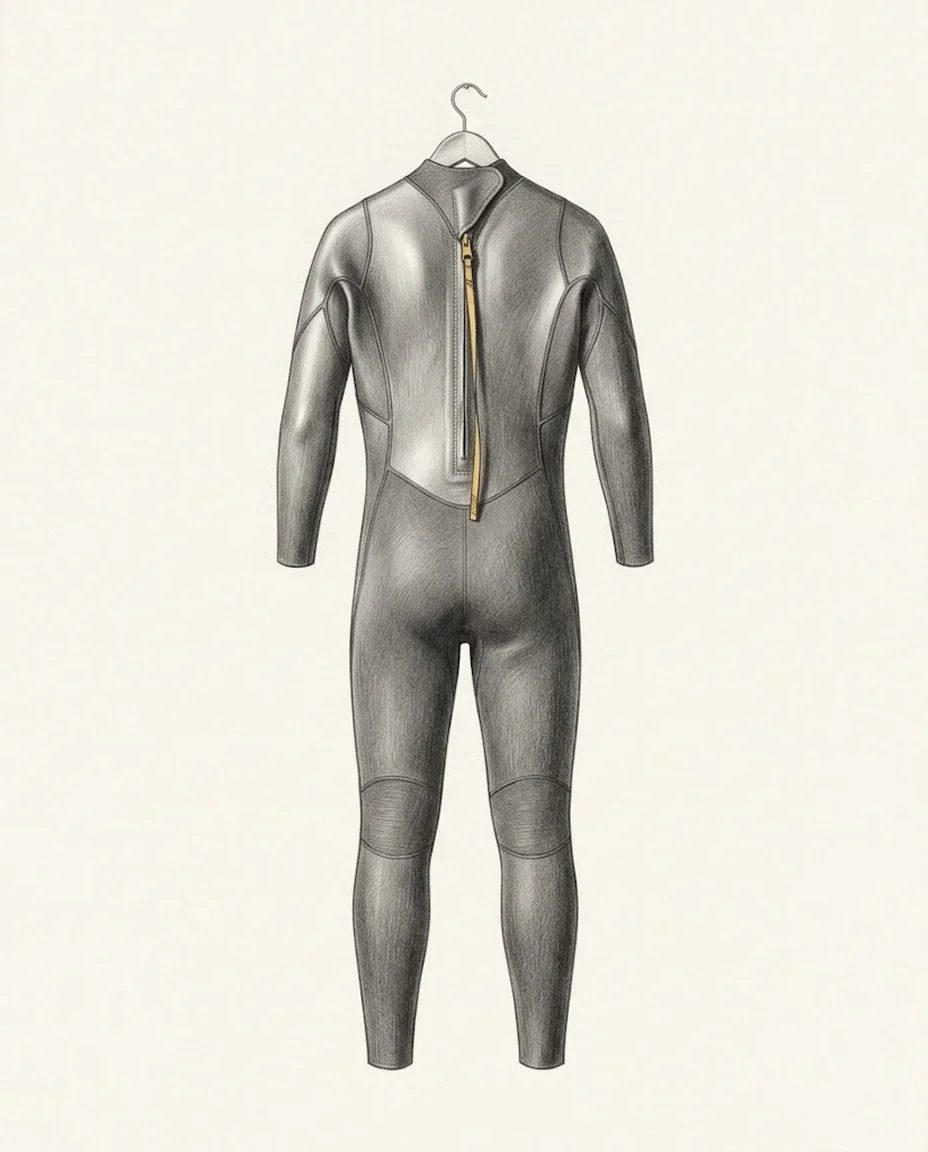
Neoprene is a synthetic rubber, closed-cell and foamed, laminated to nylon or left as a smooth "smoothskin" surface. A wetsuit made from it is thick, matte or glossy depending on the finish, warm, and tight enough to shape the body without the shine of latex. The interest attaches to any of those qualities and often to the whole set: the fit, the texture, the smell of the material, the sound it makes, the way a full suit with a hood and gloves encloses the wearer. It also attaches to the settings the garment belongs to, the beach, the dive boat, the pool, which is where it overlaps with the sport and gear interests. Some people are drawn to the suit as an object to wear, some to seeing it worn, and a smaller number to the diving equipment that goes with it, the mask, the fins and the tank.
Examples
What the term covers. Wearing a wetsuit for its own sake, at home or in water; an attraction to surfers, divers and swimmers in their suits; collecting suits by cut, thickness and finish; the full-enclosure form, a hooded suit with gloves and boots, which shares its appeal with rubber enclosure; and the scuba variant, sometimes called a frogman interest, where the diving gear completes the picture.
What the term does not cover. A rubber fetish and a latex fetish centre on sheet rubber and latex, materials that are thinner, shinier and made for the purpose; neoprene is a working fabric first. A spandex fetish and a gym wear fetish share the tight fit and the sporting context and lack the thickness and the enclosure. A PVC fetish centres on the wet-look gloss that only a smoothskin neoprene approaches. Diving and surfing themselves are sports, and most people who own a wetsuit own it to stay warm in cold water.
How the word is used. Wetsuit fetish and neoprene fetish are the community's terms; scuba fetish and frogman name the diving-gear strand. None appears in the DSM-5-TR or the ICD-11, which handle an interest in a material under fetishistic disorder, and only with distress, impairment or a non-consenting person.
History & origins
The material and the garment
The fetish is younger than most because the material is. DuPont chemists led by Wallace Carothers produced the first commercial synthetic rubber in 1930, sold from 1931 as Duprene and renamed neoprene in 1937, according to the history of neoprene. The wetsuit followed after the war: the physicist Hugh Bradner at the University of California is credited with the neoprene wetsuit in 1952, and the history of the wetsuit records Jack O'Neill in Northern California and the Meistrell brothers in Southern California turning it into a product for surfers and divers through the 1950s. Diving and surfing culture then spread the garment worldwide.
The interest as a named community
Material fetishism has a clinical record that runs from Krafft-Ebing's Psychopathia Sexualis of 1886 through the rubber and mackintosh enthusiasts of the mid-twentieth century, and the wetsuit inherited that lineage as soon as the garment existed. The online era gave the interest its own name and its own rooms: the Wikipedia article on wetsuit fetishism describes a community organised around forums and image galleries from the late 1990s, distinct from the rubber scene it grew beside, with its own vocabulary of smoothskin, hooded and drysuit variants.
In practice
The interest is expressed by wearing and by looking. People wear a suit at home, in the bath or in open water, sometimes for hours; they collect suits across brands and thicknesses; they photograph themselves and trade pictures in dedicated communities; and a number take up the sports the garment belongs to, so that a surf session or a dive doubles as the pleasure of the suit. The full-enclosure form, hood, gloves and boots, is the strand that overlaps most with the latex, leather and rubber collection, and it is often practised alongside rubber gear.
Psychology
The accounts are the ones material fetishism in general receives. Associative learning proposes that a garment paired with arousal becomes arousing itself; for neoprene the pairing is helped by the material's sensory load, a distinct smell, pressure over the whole body, warmth and the sound of movement. Enclosure and compression carry their own appeal, shared with rubber and with the bondage literature, where a tight suit reads as being held. The sporting setting adds the body in motion and the aesthetics of surf and dive culture. None of these has been tested for wetsuits in particular, and the surveys that count material fetishes do not separate neoprene from rubber.
Prevalence & culture
No survey measures the interest. The class is measured: in Scorolli and colleagues' 2007 analysis of 381 online fetish groups, materials such as rubber and leather made up a large share of the object preferences counted. The catalog estimates the wetsuit interest at under one adult in a hundred, a niche beside the rubber and latex interests it draws on, and marks the confidence low. Its visibility is helped by the garment's ordinariness: a wetsuit is on every beach, so the image the interest centres on needs no special setting.
Safety, consent & law
The interest is no disorder under either manual and raises no legal concern. The risks are the garment's. Neoprene holds heat, so a suit worn out of the water for long periods can overheat the wearer, and a hood and gloves add to it; water breaks and time limits are the usual measures. Enclosure play with a hood follows the rules any breath-restricting gear follows: a partner present, an agreed signal, nothing over the mouth or nose that cannot be removed at once. In the water the risks are the sport's, and the suit is the safety equipment.
Common questions
What is a wetsuit fetish?
An erotic interest in wetsuits and other neoprene garments: their second-skin fit, their smooth or glossy surface, the smell and sound of the material, and the enclosure a full suit with a hood and gloves gives. It is a material fetish in the classic sense, beside rubber fetish and latex fetish, and it includes a diving-gear strand where the mask, fins and tank complete the picture.
Is a wetsuit fetish the same as a rubber fetish?
No, though they overlap. A rubber fetish centres on sheet rubber made for the purpose, thinner and shinier than neoprene. Neoprene is a foamed synthetic rubber and a working sports fabric, thicker, warmer and matte unless it has a smoothskin finish. Many people hold both interests, and the full-enclosure form of the wetsuit interest is often practised alongside rubber gear.
How common is a wetsuit fetish?
No survey measures it. The class is measured: in Scorolli and colleagues' 2007 analysis of 381 online fetish groups, materials such as rubber and leather made up a large share of the object preferences counted, and neoprene was not separated from them. The catalog estimates the wetsuit interest at under one adult in a hundred and marks the confidence low.
Is wearing a wetsuit out of the water dangerous?
Yes, it can be, from heat. Neoprene is built to hold warmth, so a suit worn for long periods out of the water can overheat the wearer, and a hood and gloves add to it; water breaks and time limits are the usual measures. Enclosure play with a hood follows the rules any breath-restricting gear follows: a partner present, an agreed signal, and nothing over the mouth or nose that cannot be removed at once.
Why do people find wetsuits attractive?
The usual accounts for a material fetish apply and none has been tested for neoprene in particular. Associative learning proposes that a garment paired with arousal becomes arousing itself, and neoprene carries a heavy sensory load: a distinct smell, pressure over the whole body, warmth and the sound of movement. Enclosure and compression add the appeal of being held, and the surf and dive setting adds the body in motion.
Is a wetsuit fetish a disorder?
No. Neither the DSM-5-TR nor the ICD-11 names any material interest. Both manuals handle an interest in a material under fetishistic disorder, and only where it causes the person clinically significant distress or impairment or involves someone who has not consented. An interest in wetsuits worn or watched between consenting adults meets no criterion.
- Rubber Fetish56/100Rubberism · Objects & MaterialsAn erotic interest in rubber garments and gear, prized for the heavier, matte material and the look, smell, and enveloping feel it provides. A material fetish closely tied to latex and BDSM gear culture among consenting adults.56
- Latex Fetish62/100Latex fetishism · Objects & MaterialsAn erotic interest in latex garments and their tight, glossy, second-skin qualities. A common material fetish involving the look, feel, sound, smell, and enveloping sensation of clinging latex on consenting adults.62
- Spandex Fetish36/100Objects & MaterialsAn erotic attraction to spandex and similar stretch fabrics (Lycra, elastane), focused on their tight, second-skin fit and smooth, glossy surface. It is a benign synthetic-material interest rather than a clinically defined paraphilia.36
- PVC Fetish42/100Objects & MaterialsAn erotic attraction to shiny PVC and vinyl clothing, prized for its high-gloss "wet look", smooth slick surface, and tight, body-hugging fit. A common, accessible cousin of latex and leather fetishism.42
- Gym Wear Fetish43/100Clothing & GarmentsAn erotic interest in athletic and activewear, valued for its tight fit, smooth stretch fabric and fitness associations. Leggings, yoga pants, compression gear, lycra and spandex tops, and gym kit are typical. A common garment/material fetish, not a clinical disorder.43
- Lace Fetish33/100Objects & MaterialsA focused erotic interest in lace and lace-trimmed garments: their openwork pattern, sheerness, and delicate texture. The association with lingerie and intimate apparel is part of the appeal. A benign variant of material and clothing fetishism rather than a disorder.33
"Wetsuit" is a plain-English compound for a suit that admits a thin layer of water and warms it, the garment Hugh Bradner developed in 1952; "neoprene" is DuPont's 1937 trade name for the synthetic rubber it is made from. The fetish label is descriptive community usage with no clinical derivation.
material fetish · neoprene · sports gear · enclosure
Prevalence is computed from the entry's cited population estimate. Rows marked ESTare indicative editorial estimates scored against a fixed anchor rubric, not measured quantities. Method & anchors: methodology.
Uncommon · ≈ 1 in 100
- 01Wetsuit fetishism, Wikipediadefinition of the interest, its sensory basis (fit, texture, smell, sound, enclosure), the smoothskin and hooded variants, and the online community that formed around it from the late 1990s
- 02Wetsuit, WikipediaHugh Bradner's 1952 neoprene wetsuit and its commercialisation by Jack O'Neill and the Meistrell brothers in the 1950s
- 03Neoprene, WikipediaDuPont's 1930 synthetic rubber, sold as Duprene from 1931 and renamed neoprene in 1937; the material's closed-cell foam structure
- 04Scorolli et al. (2007), Relative prevalence of different fetishes, Int. J. Impotence Research 19(4):432-437materials such as rubber and leather as a large share of object preferences in the 381-group community analysis, the class the wetsuit interest belongs to
- 05DSM-5-TR, Paraphilic Disorders (American Psychiatric Association, 2022)no material interest is named; fetishistic disorder requires distress, impairment or non-consent
- 06ICD-11, Paraphilic disorders (World Health Organization)an interest in a material is a disorder only with distress, impairment or a non-consenting person