Spandex Fetish
Added 21 Jun 2026 · Updated 22 Aug 2026
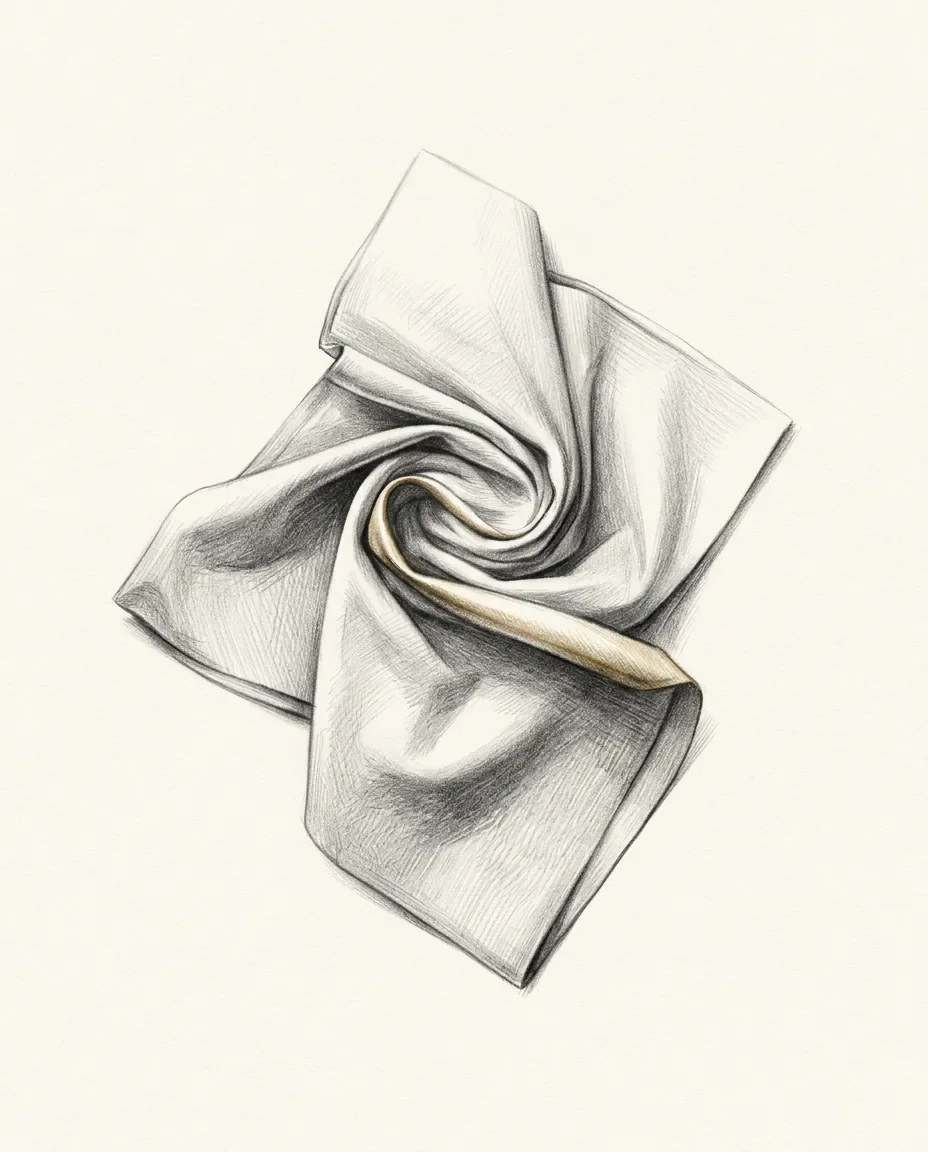
An erotic attraction to spandex and similar stretch fabrics (Lycra, elastane), focused on their tight, second-skin fit and smooth, glossy surface. It is a benign synthetic-material interest rather than a clinically defined paraphilia.
- Prevalence
- Uncommon
- Category
- Objects & Materials
- Domain
- Sexual interest
- Confidence
- Low confidence
- Status
- Synthetic-material sensory interest; not a recognized paraphilia. Benign common-spectrum preference.
- Also known as
- spandex fetishism, lycra fetish, elastane fetish, zentai-adjacent material fetish
- Added
- 21 Jun 2026
- Updated
- 22 Aug 2026
Featured in
Overview
Spandex fetishism is an erotic interest in tight elastic fabrics (sold under names such as spandex, Lycra and elastane) in which the material's clinging, second-skin quality becomes a focus of arousal. The appeal usually combines the smooth, faintly glossy surface of the fabric with the way it stretches to hug and outline the body. Also called Lycra or elastane fetish, it belongs to the broad family of clothing and material fetishes rather than to any clinically defined disorder. This article covers the material's short history, how the interest is expressed, its psychology, and its place in fetish culture.
Definition & scope
The interest centres on the fabric itself and on tight, form-fitting garments made from it, rather than on any specific act. What distinguishes it from a general clothing preference is that the material (its sheen, stretch and enveloping fit) is the erotic focus. It shades into related synthetic-material interests: latex and rubber share the shine and tight fit, while nylon and satin share the smoothness. At its most immersive it overlaps with zentai, the full-body second-skin suit. It is not a recognised paraphilia and is regarded as a benign preference on the common spectrum of human sexual interests.
Examples
What the term covers. In practice the fibre is met as garments: leggings and yoga pants, cycling shorts and skinsuits, leotards, gymnastics and dance wear, competitive swimwear, compression tops, catsuits, and at the fullest extent a zentai suit covering the body and face. What is eroticised is the material's behaviour: the low sheen under light, the faint rustle, the even pressure of the stretch, and the way the fabric traces a contour instead of hanging away from it. For some the appeal is purely visual; for others it is the sensation of wearing it, and the two are often reported together.
What the term does not cover. Latex and rubber share the shine and the second-skin fit but are non-porous sheet materials with their own smell, sound and heat, and the communities treat them as distinct. Nylon and satin offer smoothness without the stretch. Interests defined by a garment's role rather than its fibre are separate again: swimsuit fetish, gym wear fetish, uniform fetish and cosplay fetish frequently involve spandex without being about it. Mummification uses full encasement for restraint rather than for surface, and skin fetish is an interest in actual skin, which the fabric only imitates.
How the word is used. Entirely vernacular, and the vocabulary is regional rather than technical, so "Lycra fetish", "elastane fetish" and "spandex fetish" name one interest in three markets. There is no clinical term and no -philia coinage; the DSM-5-TR recognises only the general category of fetishistic disorder, which requires lasting distress or impairment that an ordinary material preference does not produce, and ICD-11 takes the same position.
History & origins
A modern material
Unlike silk or leather, spandex has no ancient lineage; the fibre is barely older than the fetish. As the Wikipedia history of spandex records:
- Early 1950s–1958: chemist Joseph Shivers developed the polyether-polyurea copolymer at DuPont, modifying Dacron polyester into a fibre that could stretch and recover while withstanding heat; the invention is dated to 1958. The generic name spandex is an anagram of "expands."
- Late 1950s–1960s: DuPont commercialised the fibre (initially "Fiber K") under the trademark Lycra. In North America the fibre is called spandex; across continental Europe it is elastane; and in the UK, Ireland, Spain, Portugal, Australia, New Zealand and Latin America it is widely known simply as Lycra.
- 1970s–1980s: as girdle sales fell, DuPont repositioned Lycra around the aerobics and fitness boom; the fibre spread through swimwear, dancewear, leotards and cycling shorts, and, through superhero and comic-book costume imagery, became culturally fused with the visibly outlined body.
The clinical concept behind it
The broader idea of erotic attachment to a fabric or garment is far older than the material. It was catalogued by Richard von Krafft-Ebing in Psychopathia Sexualis (1886) and developed by Havelock Ellis in his Studies in the Psychology of Sex, both of whom described fixations on textiles and clothing. Modern manuals such as the DSM-5-TR treat such interests as a fetishistic focus on a nonliving object, clinically relevant only where it causes lasting distress or impairment, a threshold an ordinary spandex preference does not meet. The precise coinage of "spandex fetish" as a label is not well documented and appears to have emerged informally within enthusiast communities rather than from the clinical literature.
In practice
The interest is usually expressed through form-fitting garments:
- swimwear, dancewear, leotards and gymnastics wear
- cycling and athletic clothing, leggings and catsuits
- full-body suits, overlapping with zentai, skin-tight garments covering the entire body, a portmanteau of the Japanese zenshin taitsu ("full-body tights")
At its more immersive end the appeal shifts toward total coverage, where some enthusiasts value the enveloping, anonymising effect of a seamless second skin as much as the look of the fabric.
Psychology
What causes it?
Like other material fetishes, spandex interest is generally understood through sensory conditioning and the visual and tactile salience of tight, smooth fabric: its sheen, the faint sound it makes, and the even pressure of its stretch against the skin. For some, the enclosing quality of full-body coverage adds a sense of containment, anonymity or transformation. No single mechanism is proven, and the research base specific to spandex itself is minimal, so most accounts fall back on the associative-learning and symbolic-meaning models used for fetishism generally.
Prevalence & culture
How common is a spandex fetish?
Spandex has a vast mainstream footprint through sportswear, dancewear and costume imagery, but dedicated spandex and zentai communities remain comparatively small and specialised. In the most-cited relative-frequency survey, Scorolli et al. (2007) found clothing-related fetishes dominated by footwear and legwear, with whole-body garments a far smaller slice: the band into which tight synthetic bodywear falls.
| Study | Year | Population | Finding |
|---|---|---|---|
| Scorolli et al. | 2007 | ~5,000 online fetish-group members | footwear and legwear dominate clothing fetishes; whole-body garments a small minority |
| Joyal & Carpentier | 2017 | 1,040 Quebec adults | fetishistic interest common in general, but a single second-skin fabric is a narrow slice |
Academic research devoted specifically to spandex is sparse, so the prevalence estimate here is approximate and held with low confidence. Its cultural presence is carried more by mainstream fashion, sport and superhero imagery than by documentation of the fetish itself.
Safety, consent & law
The interest is consensual and entirely legal, and raises no consent question of its own between adults. The practical considerations are garment ones and they are real at the full-coverage end: a suit over the face restricts vision and muffles hearing, and tight synthetic fabric traps heat and sweat, so overheating, dehydration and chafing are the usual problems on long wear. Sensible practice is to keep sessions bounded, remain able to remove the suit unaided, and not combine full coverage with restraint while alone.
Common questions
Is a spandex fetish a paraphilia or a disorder?
No. Material and clothing interests are treated as ordinary variation, and DSM-5-TR reserves the label of fetishistic disorder for cases causing lasting distress or impairment in someone's life. A preference for how stretch fabric looks and feels does not meet that threshold and is not recognised as a paraphilia in any diagnostic manual.
Is having a spandex fetish normal?
Yes, in the sense that matters. Joyal and Carpentier's 2017 survey of 1,040 Quebec adults found fetishistic interests to be common in the general population rather than exceptional, and a preference for one particular fabric is a narrow slice of that. What is unusual about spandex specifically is only how little it has been studied, not the interest itself.
What is the difference between a spandex fetish and a latex fetish?
Materially, quite a lot. Spandex is a woven stretch fibre: breathable, machine-washable, matte to lightly glossy, and cheap enough to be everywhere in ordinary clothing. Latex is a non-porous sheet rubber that traps heat, has a strong characteristic smell, needs polishing and careful storage, and is bought as specialist gear. Some people are drawn to both; many are firmly drawn to one and indifferent to the other.
What is zentai, and is it the same as a spandex fetish?
Zentai is a specific garment: a seamless skin-tight suit, usually nylon-spandex, covering the entire body including the face and hands, its name a shortening of the Japanese zenshin taitsu. It is one expression of the material interest, not a synonym for it. Many people with a spandex preference never wear one, and part of zentai's own appeal is anonymity and full coverage rather than the fabric.
Do people with a spandex fetish wear it themselves or prefer seeing it on others?
Both patterns are common and neither is standard. Some enthusiasts are primarily visual and are drawn to how the fabric looks on a partner or in imagery; others are focused on the tactile experience of wearing it: the compression, the smoothness against skin, the sense of being enclosed. A good many describe both, and the balance often shifts over time.
Is it safe to wear a full-body spandex suit for a long time?
With ordinary care, yes, but full coverage introduces real practical limits. A suit over the face restricts vision and muffles hearing, and tight synthetic fabric traps heat and sweat, so overheating and chafing are the common problems on long wear. Sensible practice is to keep sessions bounded, stay hydrated, be able to get out of the suit unaided, and not combine full coverage with restraint while alone.
Why do superhero costumes come up so often in spandex fetish discussion?
Because comic and film costume design made stretch fabric the standard way of showing an idealised body clothed. From the 1970s onward, as DuPont repositioned Lycra around the fitness boom, the fibre spread through sportswear and costume alike, and the visibly outlined superhero body became one of the most widely circulated images of what the material does. That imagery is a common route into the interest and overlaps with cosplay fetish.
From the blog
- Latex Fetish62/100Latex fetishism · Objects & MaterialsAn erotic interest in latex garments and their tight, glossy, second-skin qualities. A common material fetish involving the look, feel, sound, smell, and enveloping sensation of clinging latex on consenting adults.62
- Nylon Fetish43/100Nylon Fetishism · Objects & MaterialsAn erotic attraction to nylon as a material: the sheer, smooth, faintly glossy synthetic fabric used in hosiery, stockings, tights, and other slick garments. It is a textile-material preference rather than a clinically defined paraphilia.43
- Satin Fetish31/100Objects & MaterialsAn erotic attraction to satin centred on its smooth, slippery feel and characteristic sheen, a benign soft-textile material interest. It is not a clinically defined paraphilia, and it overlaps closely with silk and other shiny-fabric preferences.31
- Smoking Fetish36/100Capnolagnia · Objects & MaterialsSmoking fetishism, clinically capnolagnia, is sexual arousal tied to watching someone smoke or to smoking oneself. The appeal centres on the visual ritual, exhaled smoke, the mouth, and the confident or transgressive persona smoking projects.36
- Food Fetish37/100Sitophilia · Objects & MaterialsAn erotic interest in food and eating, in which edible items, their taste and texture, or the act of food contact become a focus of arousal. Often expressed as playful, messy, sensory-led intimacy between consenting partners; its messy variant is known as sploshing.37
- Gas Mask Fetish37/100Objects & MaterialsAn erotic interest in gas masks and respirators, valued for the rubber enclosure of the face, anonymity, and altered breathing. An uncommon object fetish tied to rubber/latex culture and breath play, carrying real physical risk when airflow is restricted.37
An English compound: "spandex" (an anagram of "expands," coined for the stretch fibre) plus the plain-English word "fetish." The fibre was invented by Joseph Shivers at DuPont in 1958 and commercialised as Lycra; the term has no Greek or Latin clinical root.
synthetic materials · tight-fitting materials · second-skin
Prevalence is computed from the entry's cited population estimate. Rows marked ESTare indicative editorial estimates scored against a fixed anchor rubric, not measured quantities. Method & anchors: methodology.
Uncommon · ≈ 1 in 100
- 01Scorolli et al. (2007), Relative prevalence of different fetishes, Int. J. Impotence Research 19(4):432-437clothing/material fetish framing; tight synthetic fabrics sit below the dominant footwear and legwear clothing categories
- 02Joyal & Carpentier (2017), The Prevalence of Paraphilic Interests and Behaviors in the General Population, J. Sex Research 54(2):161-171broad fetishism interest anchor (~44%), within which a single second-skin fabric is a small niche slice
- 03Sexual fetishism, Wikipedia (carries the Scorolli 2007 relative-frequency table)existence and definition of synthetic/tight-material clothing fetishism
- 04Spandex, Wikipedia (invention by Joseph Shivers at DuPont, 1958; Lycra trademark)material history: invention by Joseph Shivers at DuPont (1958), DuPont/Lycra commercialisation, the 'expands' anagram, regional naming (spandex/elastane/Lycra), and the 1970s–80s fitness-led spread into sportswear
- 05Zentai, Wikipediadefinition of zentai full-body skin-tight garments, nylon/spandex construction, and the Japanese etymology (portmanteau of zenshin taitsu, 'full-body tights')
- 06Psychopathia Sexualis, Wikipedia (Krafft-Ebing, 1886)early clinical cataloguing of fetishistic attachment to fabrics and garments by Richard von Krafft-Ebing in 1886
- 07DSM-5-TR, Paraphilic Disorders (American Psychiatric Association, 2022)fetishistic disorder framing: a focus on a nonliving object is clinically relevant only where it causes distress or impairment; an ordinary spandex preference does not meet that threshold