Degradation Kink
Added 22 Jun 2026 · Updated 22 Aug 2026
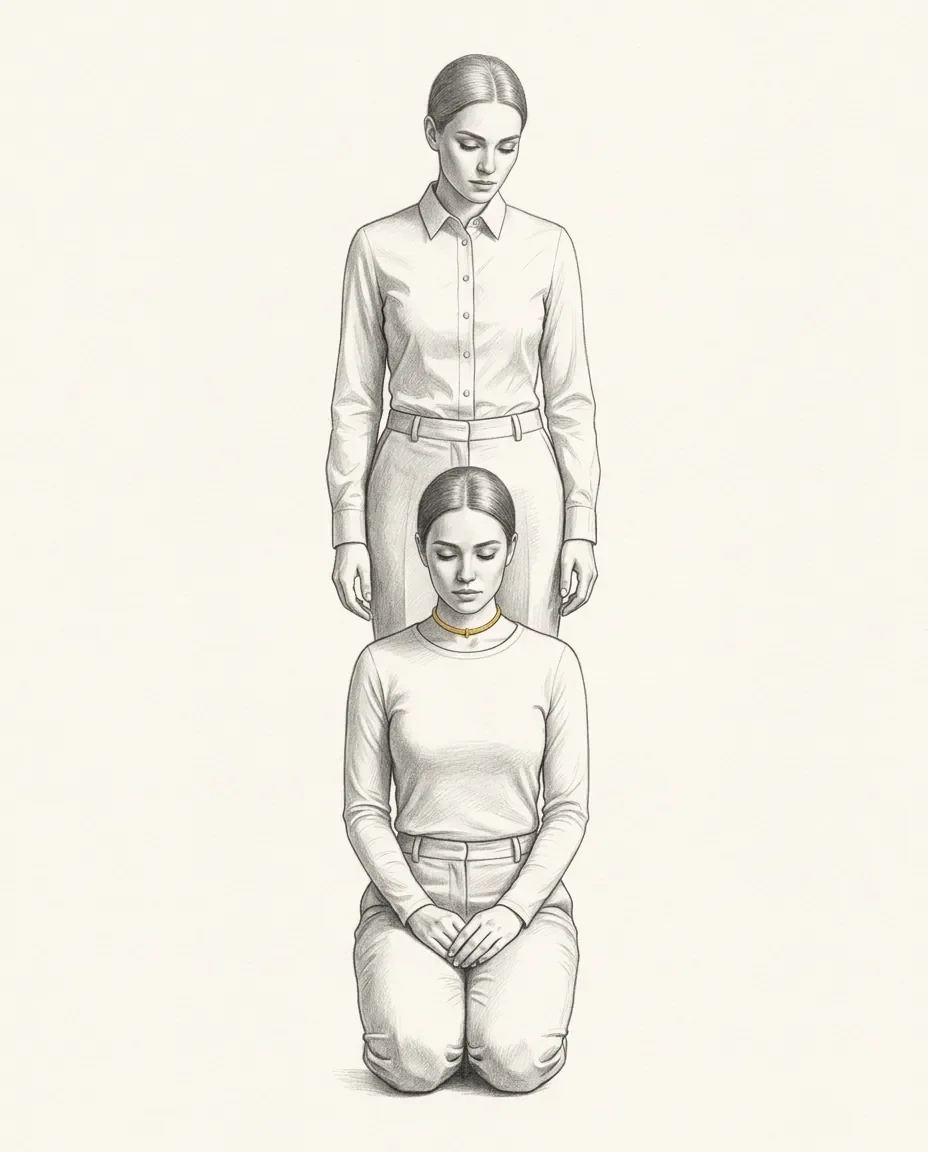
A consensual power-exchange interest in being demeaned, insulted, or treated as lowered in status for erotic effect, negotiated within BDSM. A common variation, not a disorder.
- Prevalence
- Very common
- Category
- Power, Roles & Scenarios
- Domain
- Sexual interest
- Confidence
- Medium confidence
- Status
- Common BDSM/power-exchange variation; not a distinct DSM-5-TR or ICD-11 diagnosis. Consensual humiliation falls under non-disordered sexual masochism and is pathologised only if it causes distress or impairment.
- Also known as
- degradation play, erotic degradation, consensual degradation, humiliation kink, humiliation play, erotic humiliation, degradation/humiliation (D/h)
- Added
- 22 Jun 2026
- Updated
- 22 Aug 2026
Featured in
Overview
Degradation kink is a consensual erotic interest in lowering a partner's perceived status through demeaning words, names, or treatment, almost always staged inside a negotiated dominance-and-submission dynamic. Within the kink community it is usually paired with humiliation, and the two are written together as "degradation/humiliation" or D/h. It is widely regarded as an ordinary variation of erotic interest, not a disorder. This article traces where the idea came from, how it is expressed and understood, how common it is, and why consent, negotiation, and aftercare sit at its centre.
Definition & scope
Practitioners commonly draw a soft three-way distinction between related modes of play:
| Mode | What it lowers | Typical feel |
|---|---|---|
| Degradation | Status or dignity ("you're worthless") | A sustained reduction in standing |
| Humiliation | Pride, through shame or embarrassment | A sharper, more episodic flush of shame |
| Objectification | Personhood, by treating someone as a thing | Being used, owned, or displayed |
The community resource Consent Culture frames humiliation as a more temporary, episodic shame and degradation as a sustained reduction of dignity. In practice the labels overlap heavily, and people use whichever language matches their own emotional response. The interest is closely tied to humiliation play and is the conceptual mirror of praise-based dynamics such as the praise kink.
Examples
What the term covers. Demeaning names and status-lowering talk directed at a consenting bottom; rules requiring permission for ordinary actions; service tasks framed as beneath the person performing them; objectification framing in which someone is addressed as a thing rather than a person; and specific scripted forms such as small-penis humiliation. It may last a single scene or run as a standing rule between scenes, and the words used are, in well-run practice, chosen in advance by the person they will be aimed at.
What the term does not cover. Dirty talk is far broader and usually carries no status element at all. Masochism is organised around sensation rather than dignity, and the two often but not always travel together. Brat play turns on cheek and resistance, close to the opposite move. Its exact mirror is the praise kink, which runs the same power dynamic in the opposite direction. Some subtypes, notably race play, remain actively contested inside kink communities rather than settled. And degradation is not abuse: what separates them is negotiation, a safeword, and the unconditional right to stop.
How the word is used. It is community vocabulary, written degradation kink or abbreviated D/h alongside humiliation, and it has no clinical synonym. DSM-5-TR and ICD-11 name only sexual masochism, and only as a disorder where distress or impairment is present; neither has a category for consensual status play. The word "degradation" survives in the clinical record chiefly inside Krafft-Ebing's original nineteenth-century phrasing, not as a term anyone is diagnosed with.
History & origins
The term itself is plain-English kink vocabulary with no single documented coiner: it is a descriptive phrase, not a clinically minted one. Its lineage runs instead through the much older concept of masochism, of which eroticised degradation has long been understood as one expression.
Clinical lineage
- 1870: The Austrian writer Leopold von Sacher-Masoch publishes Venus in Furs, a novella whose protagonist seeks arousal in being dominated, demeaned, and abased by a commanding woman: the literary template later attached to the clinical term.
- 1886–1890: The Viennese psychiatrist Richard von Krafft-Ebing coins masochism (after Sacher-Masoch) and sadism (after the Marquis de Sade) in his catalogue Psychopathia Sexualis and follow-up work, explicitly placing pleasure taken in "pain and degradation" inside the new diagnostic frame.
- 1905: Sigmund Freud, in Three Essays on the Theory of Sexuality, treats sadism and masochism as paired tendencies and fuses them into a single concept of sadomasochism, within which humiliation and submission are recurring elements.
- DSM-5-TR / ICD-11 era: Modern classifications draw a sharp line between consensual interest and disorder. Sexual masochism is a disorder only where it causes the person clinically significant distress or impairment. Consensual degradation between adults therefore is not itself a diagnosis, and reference sources treat erotic humiliation as a recognised, non-pathological BDSM activity.
Cultural & subcultural evolution
As organised BDSM culture matured through the late twentieth century, degradation and humiliation became standard entries in community vocabularies and "play menus," with their own negotiated etiquette around safewords, limits, and aftercare. The rise of FetLife and kink-positive writing in the 2000s and 2010s moved the language from niche manuals into mainstream sex-education media, where it now appears routinely on "A-to-Z of kinks" explainer lists.
In practice
Degradation play is negotiated in advance and confined to agreed roles, scenes, and limits. Common expressions include:
- Verbal degradation: insults, demeaning names, or status-lowering talk directed at a consenting bottom by a top (variously "Dom/me," "Master," "Mistress").
- Ritual and symbolic elements: rules, permission-seeking, service tasks, or objectification-style framing that reinforce a lowered in-scene status.
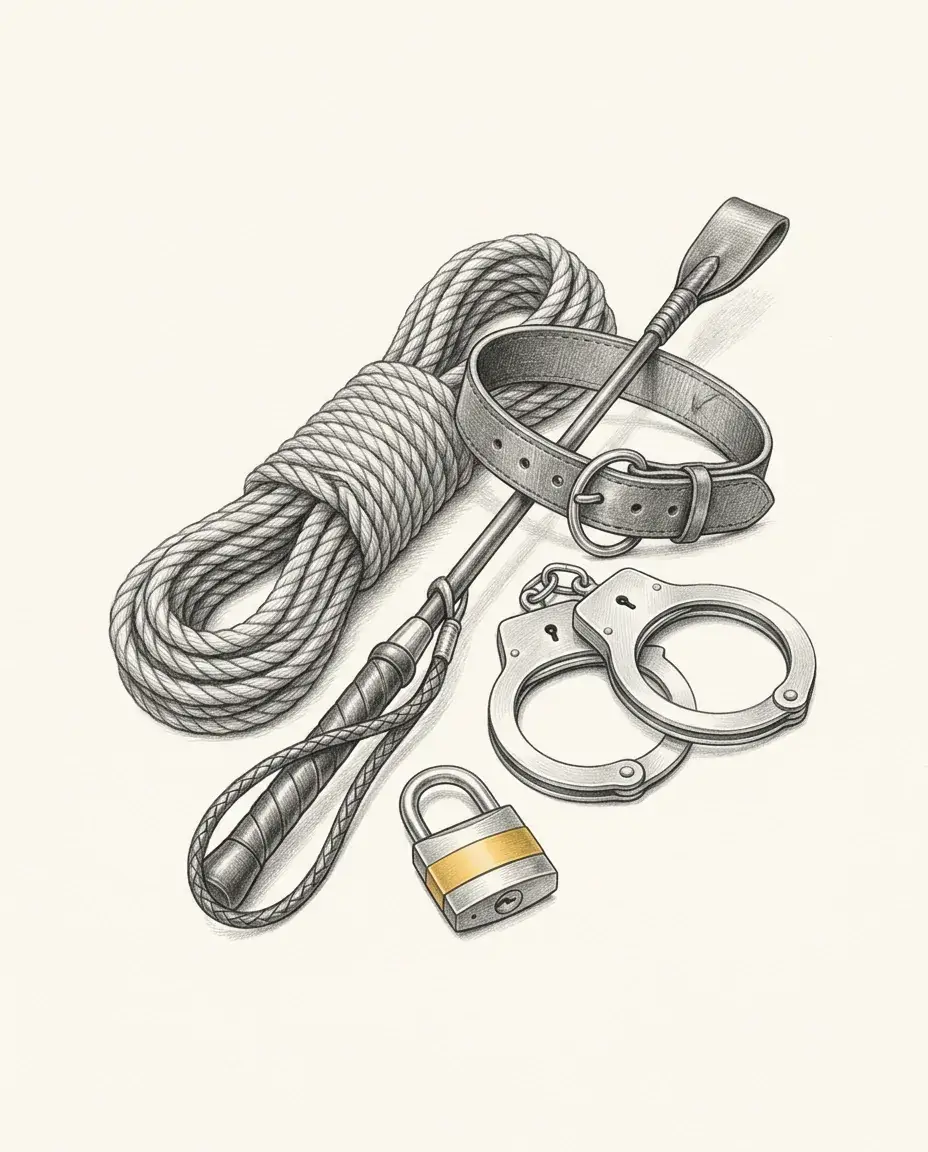
- Adjacent dynamics: it overlaps with dominance and submission, brat play, discipline, and bondage.
What counts as "degrading" is defined entirely by the participants: words that would be cruel out of context are recontextualised as erotic play, and a recurring community guideline is to degrade the role or behaviour in the scene, never the person's core worth.
Psychology
What is the appeal?
Proposed mechanisms cluster around surrender, release from self-consciousness, eroticised shame, and trust. Being demeaned by a chosen partner inside firm limits can feel paradoxically liberating: a controlled handing-over of dignity that the bottom can reclaim at will, often deepening into the absorbed state practitioners call subspace. One often-cited neural angle is that social rejection and physical pain engage overlapping brain regions: in Kross and colleagues' 2011 PNAS study, rejection recruited sensory pain areas such as the secondary somatosensory cortex and dorsal posterior insula. This is sometimes invoked to explain why social degradation feels so visceral, though that research concerns rejection in general, not erotic play, and the authors stress shared rather than identical representation. For the top, the draw centres on controlled dominance and the bottom's demonstrated trust. The dedicated evidence base specific to consensual degradation is thin and largely qualitative.
Prevalence & culture
How common is it?
The broad power-exchange interest behind degradation play is among the most commonly reported sexual fantasy themes. In Joyal, Cossette & Lapierre (2015), a survey of 1,516 adults, both submission and domination fantasies were common for women and men alike and were significantly correlated with each other; the authors cautioned against labelling such themes "unusual" at all. Intense, sustained degradation regimes remain more niche than the underlying fantasy, but humiliation and degradation are durable fixtures of kink community spaces and mainstream sex-education coverage.
Safety, consent & law
Between consenting adults in private the practice is legal, and it turns entirely on negotiation, ongoing consent, and the unconditional right to stop. Its principal risk is psychological rather than physical: degrading content can land on genuine insecurities, so practitioners stress pre-scene negotiation, explicit limits, safewords, and structured aftercare to reabsorb shame and reaffirm mutual respect once the scene ends. Consent and a clear separation between play and real life are what distinguish negotiated degradation from abuse.
Common questions
Is a degradation kink a sign of low self-esteem?
There is no evidence that it is, and the dedicated research base is thin and largely qualitative. Practitioners describe close to the opposite dynamic: handing over dignity inside firm limits presupposes having it to hand over, and the bottom retains the power to end the scene at any moment. What would warrant attention is not the interest but genuine distress about it, the same threshold applied to every interest in this catalog.
What is the difference between degradation play and abuse?
Everything except the surface content. Degradation play is negotiated before it starts, bounded by stated limits, revocable by either person at any moment through a safeword, and followed by aftercare that restores the ordinary footing. Abuse has none of those features and cannot be halted by the person on the receiving end. The test is not how harsh the words are but whether they were agreed and whether they can be stopped.
Does enjoying degradation mean you want to be treated that way in real life?
No, and practitioners are unusually emphatic about the separation. The appeal depends on the play being framed, chosen and temporary; the same words delivered unbidden by a stranger or a colleague are simply insults. A recurring community guideline is to degrade the role or the behaviour inside the scene and never the person's core worth, precisely so that the two do not bleed together.
How do people negotiate a degradation scene?
Usually by being specific in advance rather than general. Partners agree which words and themes are in play, name the ones that are off limits, typically anything touching real insecurities, family or identity, settle a safeword, and agree what aftercare will look like afterwards. Because the risk here is psychological rather than physical, the negotiation does more work than it does in most other kinds of play.
Is it normal to feel low or tearful after a degradation scene?
It is common enough to have its own name. The comedown from intense play is called subdrop, and degradation is particularly prone to it because the content can land on real insecurities rather than staying inside the scene. Structured aftercare exists largely to absorb that, and the drop can arrive immediately or surface a day or more later.
Can someone enjoy both degradation and praise?
Frequently, and many people alternate between the two within a single scene. The praise kink runs the same power dynamic in the opposite direction, and both depend on words from a chosen partner carrying disproportionate weight. Preferring one does not rule out the other, and some practitioners find the contrast between them is the whole point.
Is a degradation kink a mental disorder?
No. Consensual degradation between adults is not a diagnosis in DSM-5-TR or ICD-11. The nearest category, sexual masochism, is a disorder only where the interest causes the person clinically significant distress or impairment. Reference sources treat erotic humiliation as a recognised, non-pathological BDSM activity, and the power-exchange fantasies underlying it are among the most commonly reported of all.
- Brat Play48/100Power, Roles & ScenariosA submissive style within power exchange in which one partner playfully resists, teases, or defies a dominant partner. That dominant, the "brat tamer", responds by reasserting control. Both the cheek and its taming are consensually scripted between adults.48
- Bondage86/100Acts & ActivitiesConsensual binding or restraint of a partner with rope, cuffs, tape or other materials for erotic, aesthetic or sensory pleasure. It is the "B" of BDSM and one of the most widely fantasised-about kinks.86
- Subspace64/100Sensation & PainAn altered, often euphoric or trance-like headspace that some submissive or bottoming partners enter during intense BDSM play. It is marked by floating sensations, time distortion, reduced pain awareness and impaired verbal responsiveness.64
- Aftercare66/100Acts & ActivitiesThe deliberate emotional, physical and psychological care partners give one another after intense sex or a BDSM scene. It helps everyone come down from heightened arousal and return to a calm, grounded baseline. A widely shared best practice rather than a kink in itself.66
- Forced Orgasm56/100Power, Roles & ScenariosA consensual BDSM practice in which a restrained or submissive partner is repeatedly brought to orgasm, often past the point of comfort. It is a form of erotic power exchange and overstimulation play.56
- Cuckolding66/100Troilism · Power, Roles & ScenariosA consensual erotic interest, sometimes termed troilism, in which a person is aroused by their committed partner's intimacy with someone else. The arousal can come from watching, knowing about, or imagining it. It ranges from humiliation play to affirming compersion.66
Plain-English kink term: "degradation" (from Latin *de-* 'down' + *gradus* 'step', via Late Latin *degradare* 'to reduce in rank') applied to consensual erotic status-lowering. An informal community usage with no classical -philia/-lagnia root; its clinical antecedent is *masochism*, coined by Krafft-Ebing (1886) after the novelist Leopold von Sacher-Masoch.
dominance and submission · humiliation and degradation · power exchange
Prevalence is computed from the entry's cited population estimate. Rows marked ESTare indicative editorial estimates scored against a fixed anchor rubric, not measured quantities. Method & anchors: methodology.
Very common · ≈ 1 in 7
- 01Erotic humiliation, WikipediaDefines consensual erotic humiliation and degradation, verbal and physical forms, top/bottom roles, and frames it as a negotiated BDSM activity rather than a standalone diagnosis.
- 02Sadomasochism, WikipediaDocuments Krafft-Ebing's coinage of masochism/sadism, the Sacher-Masoch and Venus in Furs origin, Freud's Three Essays fusion into sadomasochism, and the inclusion of pleasure in humiliation and degradation within the concept.
- 03Joyal, Cossette & Lapierre (2015), 'What Exactly Is an Unusual Sexual Fantasy?', Journal of Sexual MedicineSurvey of 1,516 adults found submission and domination fantasies common for both women and men and significantly correlated, situating the power-exchange interest behind degradation play within ordinary variation.
- 04An A–Z of Kinks and Fetishes, GlamourLay framing of humiliation and degradation as recognised, mainstream-discussed kinks within consensual power exchange.
- 05What are the differences between humiliation and degradation in kink?, Consent CultureCommunity framing of the degradation / humiliation / objectification distinction and the emphasis on negotiation, consent, and aftercare.
- 06Kross et al. (2011), 'Social rejection shares somatosensory representations with physical pain', PNAS 108(15):6270-6275Evidence that social rejection recruits sensory pain regions (secondary somatosensory cortex; dorsal posterior insula), cited to explain the visceral intensity of social degradation, with the caveat that it concerns rejection generally, not erotic play.