Sadism
Sexual Sadism Disorder
Added 21 Jun 2026 · Updated 22 Aug 2026
Recurrent, intense sexual arousal from the physical or psychological suffering of another person. As the DSM-5-TR's Sexual Sadism Disorder it is diagnosed only when acted on with a non-consenting person or when it causes clinically significant distress or impairment; consensual dominance is not itself a disorder.
- Prevalence
- Common
- Category
- Clinical Paraphilias
- Clinical term
- Sexual Sadism Disorder
- Domain
- Sexual interest · Paraphilia
- Confidence
- Medium confidence
- Status
- DSM-5-TR paraphilic disorder; diagnosed when acted on with a non-consenting person or when urges cause clinically significant distress or impairment. Consensual dominance without these features is a non-disordered variation.
- Also known as
- sexual sadism disorder, sexual sadism, algolagnia (active), sadomasochism (S), the sadism side of S&M
- Added
- 21 Jun 2026
- Updated
- 22 Aug 2026
Featured in
Overview
Sadism, in its clinical sense Sexual Sadism Disorder, is recurrent and intense sexual arousal derived from the physical or psychological suffering of another person, expressed in fantasies, urges, or behaviours over a period of at least six months. The key distinction running through this entry is between the interest (a broad, often consensual taste for giving sensation or holding power that is widespread and non-disordered) and the disorder, which the DSM-5-TR reserves for cases where a person has acted on these urges with a non-consenting individual, or where the urges or fantasies cause clinically significant distress or impairment. This article traces the term's lineage, how the interest is expressed, what is and is not known about its psychology, and how common it is.
Examples
The word does double duty (plain English for cruelty, and the name of a specific arousal pattern), and most misreadings of it come from sliding between the two.
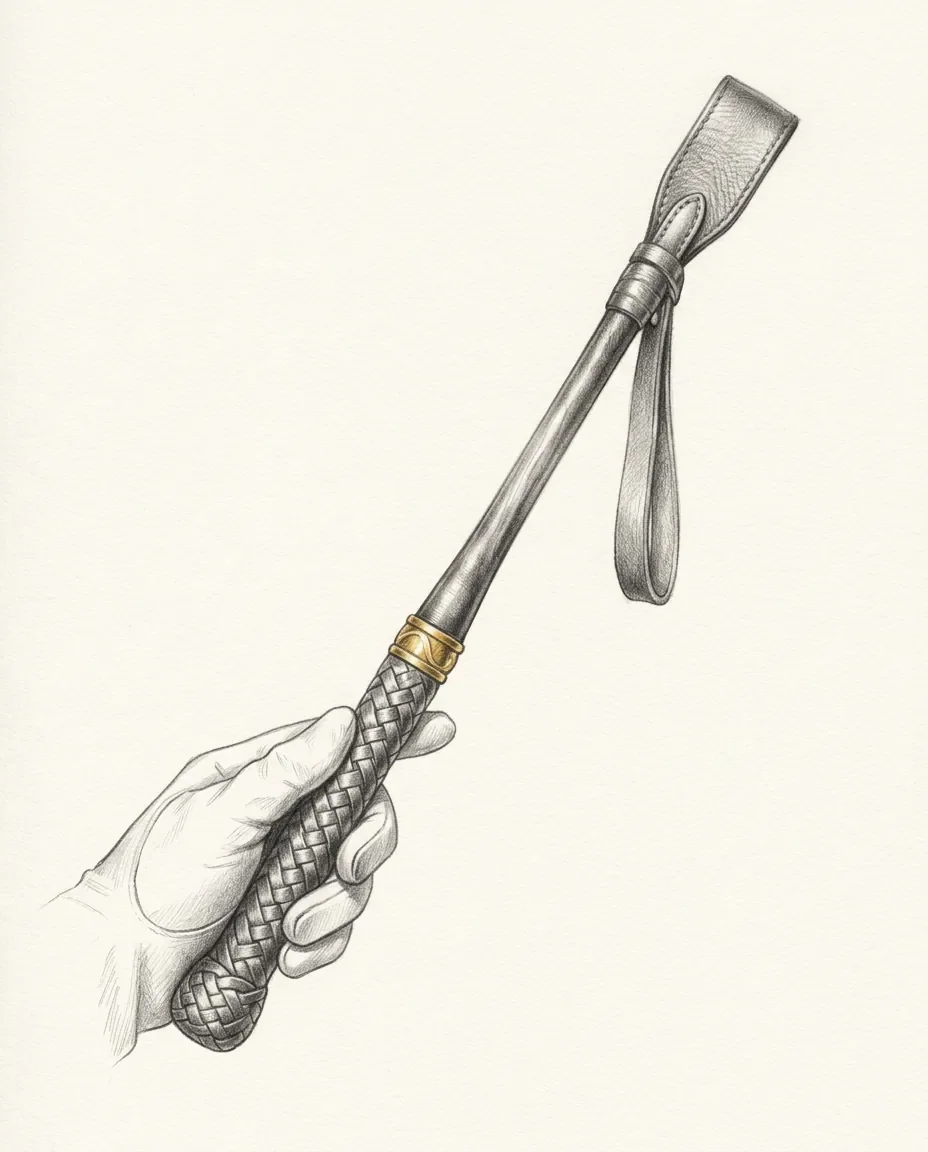
What the term covers. In its consensual form the interest is arousal at a partner's response to something that partner has agreed to: the negotiated sensation of impact play, spanking, flogging or caning; the psychological equivalents in degradation and humiliation play; the frustration deliberately built by orgasm denial. What is being named is the arousal, not the technique: someone moved by a partner's caught breath is describing the same thing as someone using a cane.
What the term does not cover. Masochism is the receiving pole of the same pairing, not a synonym for it. Dominance is not sadism either: many people who run a dominance and submission dynamic take no pleasure at all in a partner's discomfort, and a service top delivers identical sensations precisely because someone else wants them. Most importantly, it does not cover violence against people who have not agreed to it. Arousal at a non-consenting person's suffering is what the diagnosis addresses, and the forensic categories describing offending (biastophilia, erotophonophilia) are separate entries and separate matters.
How the word is used. In kink communities the "S" of S&M names a negotiated role. The clinical term is narrower than that and narrower than the everyday insult: DSM-5-TR lists Sexual Sadism Disorder, diagnosable only where the urges have been acted on with a non-consenting person or cause the individual marked distress or impairment, while ICD-11 names it coercive sexual sadism disorder and expressly excludes consensual sadomasochism.
History & origins
Clinical lineage
The word sadism descends from the French aristocrat and writer Donatien Alphonse François de Sade, the Marquis de Sade (1740–1814), whose libertine novels paired cruelty with eroticism. It entered psychiatry through Richard von Krafft-Ebing's Psychopathia Sexualis (1886), which coined both sadism and its mirror term masochism, the latter after the novelist Leopold von Sacher-Masoch, and treated Sade's work as a catalogue of sexual pathology.
- 1886: Krafft-Ebing names and clinically defines sadism (and masochism) in Psychopathia Sexualis.
- 1892: the physician Albert von Schrenck-Notzing introduces the umbrella term algolagnia (from Greek álgos, "pain," and lagneía, "lust") for pleasure derived from pain, of which sadism is the active and masochism the passive pole.
- 1905: Sigmund Freud's Three Essays on the Theory of Sexuality discusses sadism and masochism as paired tendencies woven through ordinary sexuality, not merely as disease; Havelock Ellis likewise normalised the pair as common erotic variation in his Studies in the Psychology of Sex.
- DSM lineage: across the twentieth century the diagnostic picture narrowed. Successive editions of the Diagnostic and Statistical Manual increasingly separated consensual, negotiated dominance from a clinical disorder; the DSM-5 (2013) and DSM-5-TR (2022) formalised this by diagnosing Sexual Sadism Disorder only where a non-consenting person is involved or the urges cause marked distress or impairment.
- ICD lineage: the World Health Organization's ICD-11 (effective 2022) reframed the chapter around harm, listing the diagnosis as coercive sexual sadism disorder and explicitly excluding consensual sadomasochism.
This is the central historical movement of the entry: the depathologisation of consensual kink, with the clinical label retained only for behaviour defined by non-consent or distress.
Cultural & subcultural evolution
In parallel, the active side of "S" grew its own community grammar. Mid- and late-twentieth-century leather, fetish, and BDSM scenes developed shared ethics (negotiation, limits, safewords, and aftercare) that recast the consensual sadist as a responsible "top" or dominant rather than a danger. Mainstream visibility followed: dominance themes saturate popular fiction and film, and the consensual practice is closely tied to its complements masochism, dominance and submission, and pain play.
In practice, how the interest is expressed
In its consensual form the interest is expressed by a dominant or "top" partner administering negotiated impact, restraint, or psychological control strictly within a receiving partner's stated limits, framed by safewords and check-ins. The emphasis is on a willing partner's experience rather than the infliction of injury. The clinical disorder is distinguished by either the involvement of a non-consenting person or by associated distress and impairment; a separate forensic subset, studied apart from recreational kink, overlaps with coercive and violent sexual offending and is assessed for dangerousness rather than desire.
Psychology
Consensual sadistic enjoyment is generally framed around control, the responsibility of stewarding another's experience, trust, and the responsive feedback of a willing partner: the appeal lies as much in the dynamic and the partner's chosen surrender as in sensation itself. Proposed mechanisms (classical conditioning, the eroticisation of arousal and power, attachment and play dynamics) remain partly speculative, and the evidence base distinguishing benign interest from offending pathology is thin and contested. The harmful, non-consensual form is studied separately as a public-safety and offending concern, associated in forensic samples with risk factors for sexual violence; clinical attention there centres on dangerousness, not on the mere presence of a fantasy.
Prevalence & culture
How common is sadism?
Sadistic interest appears in fantasy and survey research at non-trivial rates, while far fewer people meet criteria for the disorder and the non-consensual offending subset is rarer still. In Lehmiller's survey of 4,175 Americans (Tell Me What You Want, 2018), about 60% of respondents reported fantasising about inflicting pain on a partner, with BDSM fantasy near-universal. In Joyal & Carpentier's (2017) provincial survey of 1,040 adults, roughly half expressed interest in at least one paraphilic category, men reported sadistic interest and behaviour more often than women, and reported sadism rates vary widely across studies (cited ranges run from about 7% to over 80% depending on wording). Community presence is large on platforms such as FetLife and dominance-themed subreddits, and the topic carries unusually high research attention because of its diagnostic and forensic stakes. The gap between common fantasy and the rare clinical disorder is the single most important figure to keep in view.
Safety, consent & law
Consensual dominance between adults is legal and not a clinical concern absent distress or impairment. Ethical practice depends on the receiving partner's ongoing, revocable consent, clearly negotiated limits, safewords, risk-aware technique, and aftercare. Inflicting suffering on a non-consenting person is criminal assault or worse, is the harm-defining feature that separates the disorder's offending subset from consensual practice, and in some jurisdictions consent may not legally extend to serious bodily injury.
Common questions
Is sadism a mental disorder?
Not in itself. DSM-5-TR diagnoses Sexual Sadism Disorder only where a person has acted on these urges with someone who has not consented, or where the urges or fantasies cause that person marked distress or impairment. Arousal at a willing partner's negotiated experience meets neither condition. ICD-11 is blunter still: it names the diagnosis coercive sexual sadism disorder and explicitly excludes consensual sadomasochism from it.
Does enjoying this mean I am dangerous?
There is no evidence that it does. The clinical and forensic literatures treat consensual practice and sexual offending as different populations, studied for different reasons, and interest in a consenting partner's experience does not predict harm to anyone else. The question worth putting to yourself is not whether the desire exists but whether you stop when asked, stay inside what was agreed, and would still want it if the other person were not enjoying it.
What is the difference between a sadist and a dominant?
Where the arousal comes from. A dominant's satisfaction lies in control, authority and a partner's surrender; a sadist's lies specifically in the partner's discomfort or reaction. The two overlap constantly, but neither requires the other: a service top administers exactly the same sensations because a partner wants them, with no particular pleasure taken in the suffering, which is the cleanest demonstration that they are separate things.
Can someone be both a sadist and a masochist?
Commonly, yes. Masochism is the receiving pole of the same pairing, and the two were described together from the outset: nineteenth-century sexology treated them as mirrored halves of one phenomenon. People who move between the roles describe themselves as switches, and within kink communities that is an ordinary position rather than an unusual one.
Is consensual sadism legal?
Between adults, generally yes, though consent has limits that surprise people. In several common-law jurisdictions the courts have held that a person cannot consent to serious bodily harm, and prosecutions have followed encounters both participants wanted. In practice the legal exposure tracks the severity of injury rather than how unusual the activity is: marks that fade are one thing, anything needing medical attention is another.
How do people practise sadism safely?
By treating it as something negotiated in advance rather than improvised. That means agreed limits and a safeword settled before anything begins, sober participants, knowing which areas of the body tolerate impact and which cover the kidneys, spine and joints, starting well below what either person expects to want, and checking in as it goes. Aftercare afterwards is standard for both partners, not only for the one receiving.
Is a sexual sadist the same as a violent offender?
No, and conflating the two is the most common misreading of the word. The overwhelming majority of people with sadistic interests direct them at consenting partners and harm nobody. A small forensic subset (studied under labels such as erotophonophilia, and assessed for dangerousness rather than for desire) is what fiction and news coverage draw on, and it bears little relation to the consensual practice the word usually describes.
From the blog
Origins7 min read
Why some people enjoy pain, and what the body does when they do
Why do people enjoy pain? Context can flip moderate pain to pleasant, and BDSM scenes raise cortisol and endocannabinoids in the partner receiving.

Definitions8 min read
What BDSM stands for, and what it covers
What does BDSM stand for? Bondage and discipline, dominance and submission, sadism and masochism: what each pair means, how common it is, where the lines are.
Mental health7 min read
Is my kink normal? One answer from the surveys, another from the manuals
Is my kink normal? By the surveys, yes for nearly everyone: two fantasies of 55 are rare. By the DSM-5-TR and ICD-11, a disorder needs distress or harm.
- Pain Play58/100Algolagnia · Sensation & PainPain play (algolagnia) is a clinical umbrella term for sexual arousal connected to physical pain, whether that pain is received or inflicted. The received form is labelled active/masochistic, the inflicted form passive/sadistic. It frames pain itself, not any specific implement, as the source of erotic interest.58
- Masochism69/100Sexual Masochism Disorder · Clinical ParaphiliasA DSM-5-TR paraphilic disorder defined by recurrent, intense arousal from being humiliated, beaten, bound, or otherwise made to suffer. It is diagnosed only when that arousal causes the person clinically significant distress or impairment. Consensual masochistic interest without distress is not a disorder.69
- Dominance and Submission92/100Power, Roles & ScenariosA consensual erotic dynamic in which one partner takes a dominant role and the other a submissive role, exchanging power within agreed limits. It is one of the most widespread elements of BDSM and of human sexual fantasy.92
- Fetishism64/100Fetishistic Disorder · Clinical ParaphiliasA DSM-5-TR paraphilic disorder defined by recurrent, intense arousal from nonliving objects or a strong focus on non-genital body parts. The body-part form is partialism, and the arousal must cause clinically significant distress or impairment. An object or body-part preference without distress is not a disorder.64
- Transvestic Disorder50/100Transvestic Disorder (Transvestic Fetishism) · Clinical ParaphiliasThe clinical diagnosis applied when recurrent sexual arousal from cross-dressing causes significant distress or impairment. It names the disordered presentation of an interest that is, in its non-distressing form, a common and benign variation.50
- Partialism46/100Partialism · Clinical ParaphiliasThe clinical term for an exclusive or near-exclusive sexual focus on a specific, usually non-genital body part: feet, hands, hair, legs, the navel. It is the umbrella concept under which interests such as foot or hand attraction are formally classified.46
"Sadism" (German Sadismus) was coined by Richard von Krafft-Ebing in Psychopathia Sexualis (1886) from the name of the Marquis de Sade (Donatien Alphonse François de Sade, 1740–1814), whose novels linked cruelty to eroticism. The active form is one pole of "algolagnia," a term introduced by Albert von Schrenck-Notzing in 1892 from Greek álgos, "pain," + lagneía, "lust."
DSM-5-TR named disorder · algolagnic · BDSM clinical overlap
Prevalence is computed from the entry's cited population estimate. Rows marked ESTare indicative editorial estimates scored against a fixed anchor rubric, not measured quantities. Method & anchors: methodology.
Common · ≈ 1 in 20
- 01DSM-5-TR, Paraphilic Disorders (American Psychiatric Association, 2022)Sexual Sadism Disorder as a DSM-5-TR named paraphilic disorder (distress/non-consent threshold distinguishes the disorder from consensual sadistic interest)
- 02Lehmiller (2018), Tell Me What You Want, survey of 4,175 Americansfantasy prevalence anchor (inflicting pain fantasy ~60%), framing consensual sadism as common while the clinical disorder is far rarer
- 03Joyal & Carpentier (2017), The Prevalence of Paraphilic Interests and Behaviors in the General Population, J. Sex Research 54(2):161-171general-population active interest anchor (inflicting pain / sadism ~20%)
- 04ICD-11, Paraphilic disorders (World Health Organization)clinically recognized coercive/sadistic paraphilic disorder classification
- 05Richard von Krafft-Ebing, Psychopathia Sexualis (1886)historical origin: Krafft-Ebing coined and defined sadism (after the Marquis de Sade) and its counterpart masochism in the 1886 work
- 06Marquis de Sade, Wikipediaeponym of 'sadism': Donatien Alphonse François de Sade (1740–1814), whose libertine fiction linked cruelty to eroticism; Krafft-Ebing later gave the term its clinical sense