Hair Pulling
Trichophilia
Added 21 Jun 2026 · Updated 22 Aug 2026
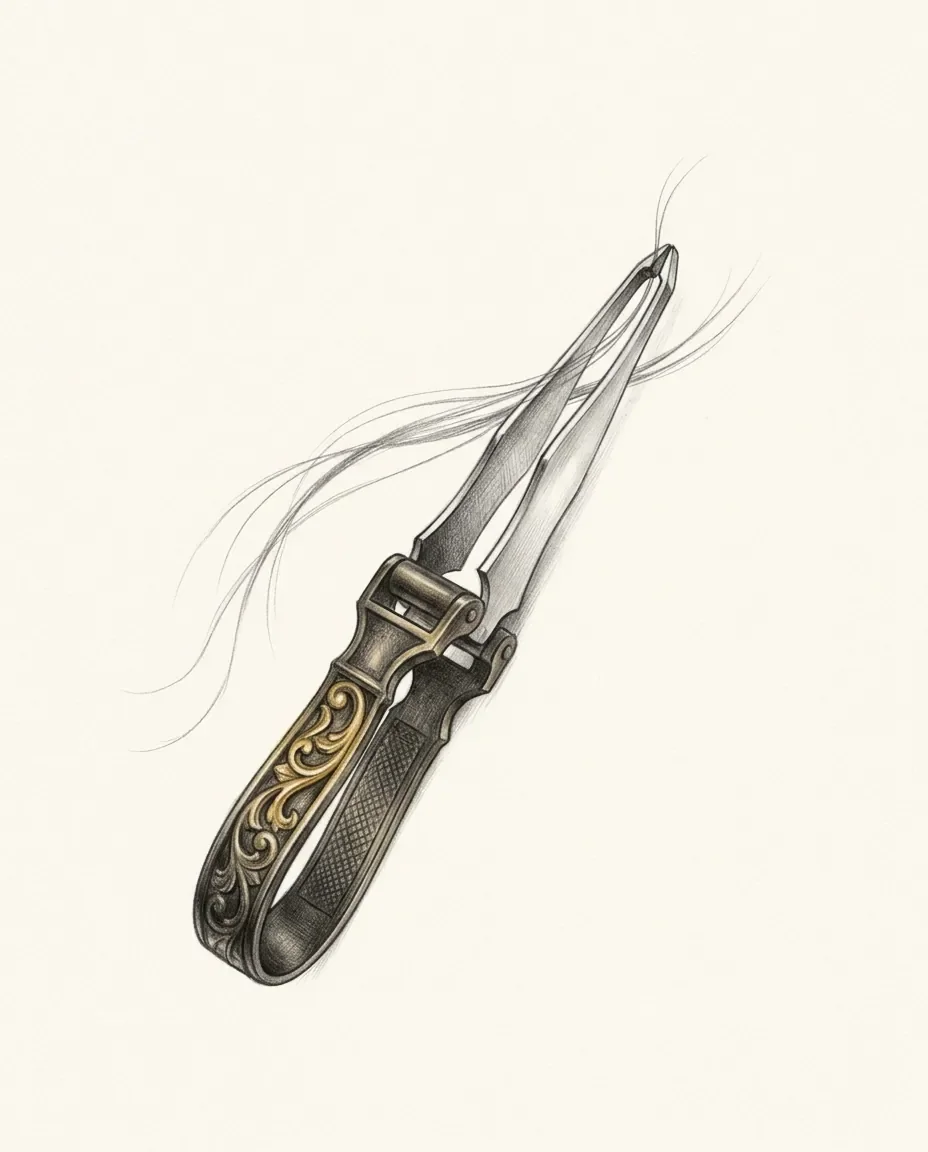
A consensual interest in the sensation and dynamic of pulling, or having one's hair pulled, during intimacy. The appeal blends scalp tension, dominance and surrender, and the guided movement the grip allows.
- Prevalence
- Common
- Category
- Sensation & Pain
- Clinical term
- Trichophilia
- Domain
- Sexual interest
- Confidence
- Low confidence
- Status
- Common consensual sensation and control variation; not a clinical paraphilia.
- Also known as
- hair play, scalp tension, tension play, trichophilia-adjacent play, hair grabbing
- Added
- 21 Jun 2026
- Updated
- 22 Aug 2026
Featured in
Overview
Hair pulling as an erotic interest centres on the sensation and relational dynamic of grasping and tugging the hair, or having one's own hair pulled, during partnered intimacy. It is adjacent to trichophilia, an interest in hair itself, but is defined more by the tension, control and guided movement of the act than by a fixation on hair as an object. It is widely regarded as one of the most common and accessible consensual sensation-and-control variations rather than a clinical condition, and this article traces its mixed lineage, how it is expressed, why it appeals, and how it is practised safely.
Examples
What the term covers. A hand gathered close to the scalp and drawn back so the head tilts; a steady grip used to guide a partner's posture or pace; a brief, affectionate tug during a kiss; and the same gesture used deliberately inside a negotiated scene, where it signals control without a word being spoken. It runs in both directions (asking to have one's hair pulled is as common a starting point as wanting to do it), and it is very often an unremarked part of ordinary sex between consenting adults rather than a scene in its own right.
What the term does not cover. Trichophilia, the hair fetish proper, is an interest in hair itself (its length, colour, scent, or its cutting and handling) rather than in the tension of pulling it, and the two frequently occur apart. Redhead, body hair and pubic hair interests likewise attach to hair as an attribute. Among rough-sex gestures at the head, choking and face slapping are neighbours that carry physical risks hair pulling does not, and treating the three as interchangeably casual is how a genuinely dangerous act gets adopted without thought.
How the word is used. Plain English, and almost always as a verb phrase rather than a label: people say they like having their hair pulled far more readily than they call it a kink. There is no clinical name for the act (trichophilia names the fetish, not the gesture), and it appears in neither the DSM-5-TR nor the ICD-11. Community writing files it under "sensation play" or simply "rough sex".
History & origins
Hair pulling has no discrete clinical pedigree of its own; instead it sits where two much longer histories meet, the eroticisation of hair and the development of consensual power-exchange play.
The eroticisation of hair
- 1886: Richard von Krafft-Ebing's Psychopathia Sexualis, one of the first systematic catalogues of sexual variation, framed the erotic salience of discrete bodily features and, in the same volume, coined the terms sadism and masochism that would later organise power-exchange play.
- 1887: the French psychologist Alfred Binet introduced fétichisme in an erotic sense in Du fétichisme dans l'amour, the conceptual home for an interest attaching to a single bodily cue such as hair.
- Early 1900s: Havelock Ellis's Studies in the Psychology of Sex and, in 1920, Magnus Hirschfeld's theory of "partial attractiveness" developed the idea that arousal arises from individual features rather than the whole person: the frame within which hair becomes a focal cue. The modern reference category trichophilia (hair fetishism) explicitly notes that the arousal can attach to touching and pulling the hair, not merely looking at it.
Consensual power-exchange play
The control dimension of hair pulling belongs to the lineage of negotiated dominance, submission and sensation play that coalesced through the twentieth century into the framework now called BDSM. The initialism itself is recent, first recorded in a Usenet post on 20 June 1991 and in wider circulation by the mid-1990s, even though the practices long predate the word. Across this period the clinical understanding shifted decisively from pathology toward acceptance of consensual kink: the DSM-5 (2013) treats such interests as disorders only when they cause distress, impairment or harm, and the ICD-11 (2018) removed consensual sadomasochism from its list of disorders entirely.
Light, affectionate hair-pulling has almost certainly been a feature of intimacy far longer than any of these labels; its precise emergence as a named element of erotic "sensation play" is not formally documented and owes more to community and lay usage than to clinical literature.
Not to be confused with trichotillomania
Erotic hair pulling must be distinguished from trichotillomania (hair-pulling disorder), a recurrent compulsion to pull out one's own hair that causes hair loss and distress. The DSM-5 places it among the obsessive-compulsive and related disorders, and lifetime prevalence is estimated at roughly 1–2%. It is wholly unrelated to sexual interest; the two share only a surface description.
In practice
It is typically expressed by gathering and pulling the hair at the scalp to create tension and to guide a partner's head or posture. Intensity ranges from a light, affectionate grip to firmer pulling within a negotiated power-exchange scene. It frequently accompanies other dominance or sensation elements (spanking, biting, scratching or pinching) rather than standing alone.
Psychology
No single mechanism is established, but the appeal is commonly linked to:
- the heightened scalp sensation and the autonomic rush a firm grip produces;
- clear, embodied signalling of control or surrender, which makes a dominance dynamic legible without words;
- trust and the intimacy of close physical guidance.
For the person whose hair is pulled it can carry feelings of being directed or claimed; for the other it offers a tactile, unambiguous expression of dominance. As with most sensation play, the evidence base specific to hair pulling is thin, and these accounts are largely inferred from broader learning, arousal-transfer and power-exchange research rather than from dedicated study.
Prevalence & culture
Light hair pulling is a common, often unremarked feature of intimacy, while deliberate, control-focused hair play is a recognisable element within BDSM and dominance dynamics. There is little dedicated research, so estimates are inferred from adjacent data and confidence is low. The closest anchor is Scorolli and colleagues' (2007) analysis of online fetish communities, in which hair accounted for roughly 7% of interest in body parts, ranking behind feet (about 47%) but ahead of muscles and above genitals or breasts as a focal cue. Surveys such as Lehmiller's (2018) found dominance-and-submission fantasies to be near-universal, the broader frame in which controlled hair-pulling sits. Mainstream lay coverage, such as popular "A–Z of kinks" guides, routinely lists it among the most accessible and widely practised light kinks.
Safety, consent & law
Between consenting adults it is legal and considered benign. Responsible practice emphasises gathering the hair in a whole hand and gripping at the scalp rather than the ends, since repeated hard pulling on a few strands can damage the hair shaft and scalp; explicit negotiation and safewords, because it is one of the gestures most often assumed rather than asked; and avoiding any pulling that wrenches the neck or affects breathing, which crosses into the far higher risks of choking. It is not a clinical disorder.
Common questions
Is hair pulling during sex safe?
Between consenting adults it is one of the lower-risk things in this catalog, with two caveats. Grip close to the scalp with the hair gathered in a whole hand rather than a few strands at the ends, which spreads the force and makes it a pull rather than a tear. And keep it clear of the neck: a grip that drags the head into an extreme angle or affects breathing has crossed into choking, which is not low-risk at all.
Why does having your hair pulled feel good?
Two things at once. The scalp is densely supplied with nerve endings, so a firm, spread pull produces a strong tingling sensation and a small autonomic rush without real injury. And the gesture is legible: it communicates direction and control without a word, which is why it appeals to people who want the dominance dynamic as much as the feeling. No study isolates the mechanism, so these accounts are descriptive rather than measured.
Is hair pulling a kink or just normal sex?
Usually the latter, and the two are not exclusive. Light hair pulling is a common, unremarked part of ordinary intimacy for a great many people who would never describe themselves as kinky. It becomes recognisably a kink when it is deliberate, sustained and used as a control device inside a negotiated dynamic. There is no threshold at which one turns into the other.
Can hair pulling cause hair loss?
Repeated hard pulling can damage the hair shaft and irritate the scalp, and sustained traction on the same area of scalp is a recognised cause of thinning in general. Occasional pulling with a spread grip at the roots is unlikely to do it. Tenderness that persists after a scene, or visible loose hair afterwards, is a sign the grip was too narrow or too far from the root.
Does liking hair pulling mean I have a hair-pulling disorder?
No. Trichotillomania is a compulsion to pull out one's own hair, producing hair loss and distress, and it sits among the obsessive-compulsive and related conditions. Erotic hair pulling is done by or to a partner, is wanted, and produces no distress. The two share a surface description and nothing else, and enjoying one says nothing whatever about having the other.
What is trichophilia, and is it the same thing?
Trichophilia is the clinical word for a hair fetish: arousal attaching to hair itself, its length, colour or texture, and to touching, handling or cutting it. Reference accounts note that the arousal can include pulling, which is why the terms get run together. But most people who enjoy having their hair pulled have no particular interest in hair as an object: the act is about tension and control, the fetish is about the hair.
Should hair pulling be negotiated in advance?
Yes, briefly. It is one of the things most often assumed rather than asked, because it looks minor, and a hand already closed in someone's hair is awkward to undo gracefully if it turns out to be unwelcome. A sentence beforehand and an agreed signal to stop is all it takes. It also sits close to the neck, where an unwanted escalation is not a small matter.
- Scratching46/100Amychesis · Sensation & PainAmychesis is a consensual interest in arousal from scratching or being scratched with the fingernails, producing sharp surface sensation. It sometimes leaves temporary marks. A form of sensation play that links touch with intimacy and marking.46
- Biting Kink51/100Odaxelagnia · Sensation & PainOdaxelagnia is a consensual interest in arousal from biting or being bitten, ranging from gentle nibbling to firmer bites that may leave a temporary mark. It blends strong sensation, intimacy, and a mild element of marking, and sits at the gentle end of sensation play.51
- Pinching and Clamping45/100Sensation & PainA consensual sensation-play interest in steady, focused pressure applied to the skin or sensitive areas, by the fingers or by implements. Clamps and clothespins are typical. The appeal lies in the slow build of controlled pressure and the vivid rush of sensation when it is released.45
- Spanking78/100Sensation & PainAn interest in giving or receiving consensual, rhythmic blows to fleshy areas of the body, by hand or with implements such as paddles. People do it for erotic sensation, discipline themes, or power exchange between consenting adults.78
- Mummification45/100Sensation & PainMummification is a form of consensual bondage in which a person's body is wrapped or encased in materials such as plastic film, tape, or bandages. The wrapping often runs head to foot, restricting movement and heightening sensory experience. It is a recognised BDSM practice, not a clinical paraphilia.45
- Sensation Play45/100Sensation & PainAn interest in heightened, varied skin sensations created with soft, textured, or lightly stimulating implements. Feathers, fur, silk, brushes, ice, or pinwheels are typical, often combined with anticipation and the contrast between soothing and prickling touch. It is a common, gentle form of erotic play.45
A plain-English descriptive name for the act. The adjacent clinical term *trichophilia* combines Greek *thríx / trikhós* ("hair") with *-philía* ("love of"); the act of hair pulling itself has no distinct learned etymology.
pulling sensation · tension play · control-adjacent
Prevalence is computed from the entry's cited population estimate. Rows marked ESTare indicative editorial estimates scored against a fixed anchor rubric, not measured quantities. Method & anchors: methodology.
Common · ≈ 1 in 20
- 01Scorolli et al. (2007), Relative prevalence of different fetishes, Int. J. Impotence Research 19(4):432-437relative-frequency context for hair-focused interest (hair ~7% of fetishes)
- 02Sexual fetishism, Wikipedia (carries the Scorolli 2007 relative-frequency table)carries the Scorolli table placing hair among recognized partialisms/fetishes
- 03An A–Z of Kinks and Fetishes, Glamourmainstream lay framing of hair pulling as a common, light sensation/control kink
- 04BDSM, Wikipediahistory and framing of consensual power-exchange and sensation play within which hair pulling sits; BDSM initialism first recorded 20 June 1991
- 05Hair fetishism (trichophilia), Wikipediatrichophilia explicitly includes touching and pulling hair; etymology from Greek tricha- (hair) + -philia
- 06Trichotillomania (hair-pulling disorder), Wikipediadisambiguation: compulsive self-directed hair pulling is an OCD-related disorder, unrelated to erotic interest
- 07Diagnosis, Evaluation, and Management of Trichotillomania, Pereira & Grant, PMC4143797trichotillomania lifetime prevalence estimated at roughly 1-2%; classified among OCD-related disorders in DSM-5
- 08Richard von Krafft-Ebing, Psychopathia Sexualis (1886), Wikipedia1886 systematic catalogue of sexual variation; coined sadism/masochism underpinning power-exchange play
- 09Sexual fetishism, Wikipedia (Binet 1887, Ellis, Hirschfeld 1920)Binet coined fetishism 1887; Ellis and Hirschfeld's partial-attractiveness frame for feature-focused arousal such as hair
- 10Lehmiller (2018), Tell Me What You Want, survey of 4,175 Americansdominance/submission fantasies near-universal, broader frame for controlled hair pulling
- 11DSM-5-TR, Paraphilic Disorders (American Psychiatric Association)consensual interests treated as disorders only with distress, impairment or harm
- 12ICD-11, Paraphilic disorders (World Health Organization)ICD-11 (2018) removed consensual sadomasochism from the list of disorders