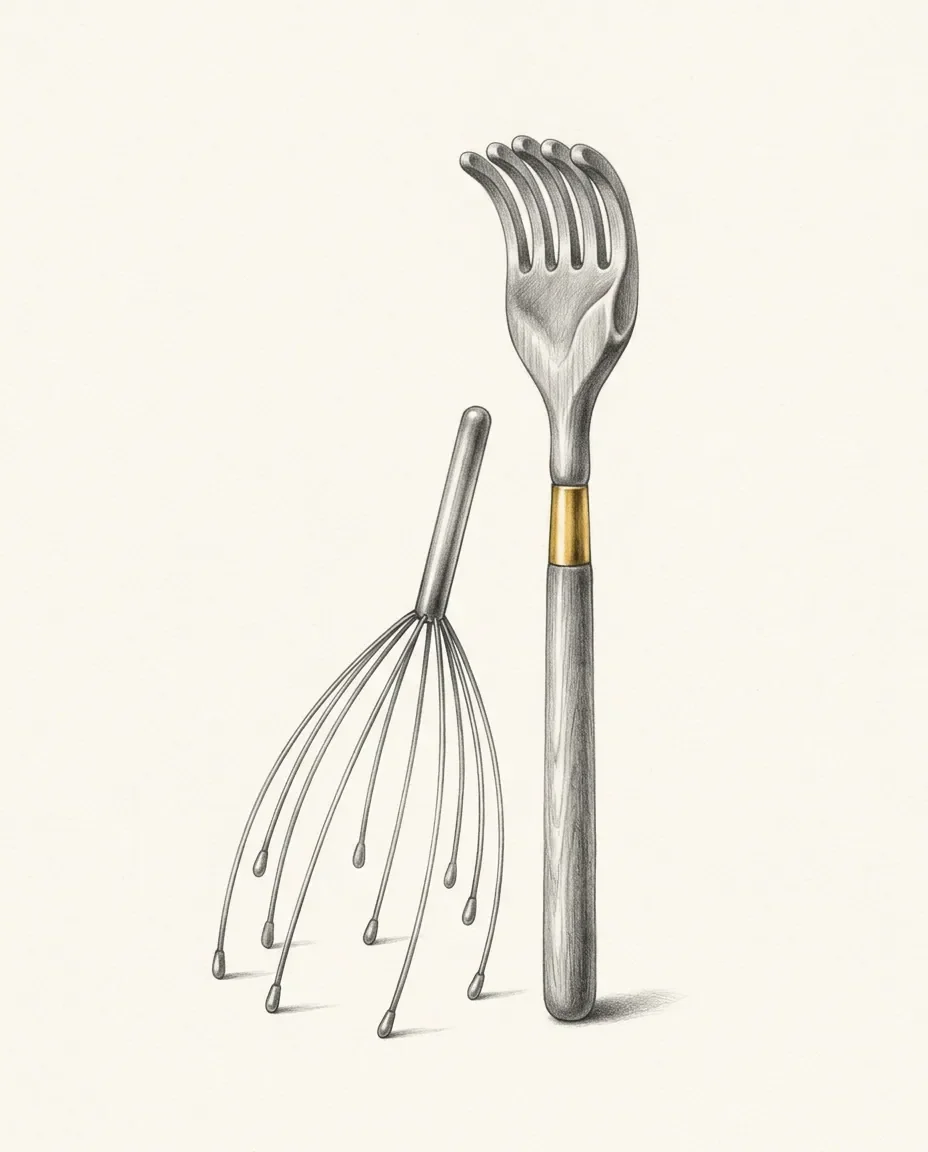
Scratching
Amychesis
Added 21 Jun 2026 · Updated 22 Aug 2026
Amychesis is a consensual interest in arousal from scratching or being scratched with the fingernails, producing sharp surface sensation. It sometimes leaves temporary marks. A form of sensation play that links touch with intimacy and marking.
- Prevalence
- Common
- Category
- Sensation & Pain
- Clinical term
- Amychesis
- Domain
- Sexual interest
- Confidence
- Medium confidence
- Status
- Common consensual sensation variation (amychesis); not a clinical paraphilia.
- Also known as
- amychesis, nail marking, marking by nails, clawing, scratch play, amychophilia
- Added
- 21 Jun 2026
- Updated
- 22 Aug 2026
Featured in
Overview
Amychesis is a consensual interest in arousal from scratching, or being scratched, typically with the fingernails. It produces a sharp, surface-level sensation distinct from deeper pressure or blunt impact, and may leave transient red marks. Sitting within the broad family of consensual sensation play, it is widely regarded as a normal variation rather than a clinical condition. This article traces its ancient documentation, its place in nineteenth-century sexology, and how it overlaps with neighbouring forms of sensation play.
Definition & scope
Scratching in this sense means using the fingernails to deliver a sharp, well-localised surface sensation, either spontaneously at moments of high arousal or as a deliberately negotiated element of a scene. It ranges from the light raking that leaves brief pink lines to firmer, marking-focused play that a partner values for its visible trace. It is not the same as cutting or blood play: responsible scratching stays at the skin's surface and does not aim to break it. Kept to that boundary it is one of the lower-risk forms of sensation play, closer to pinching and clamping or hair pulling than to anything that draws blood.
Is scratching normal?
Yes. Light scratching during intimacy is a common, ordinary behaviour that most people never think of as a "kink," and neither the DSM-5-TR nor ICD-11 treats consensual sensation play of this kind as a disorder.
Examples
What the term covers. The light raking across a partner's back or shoulders that arrives unbidden at a peak of arousal; deliberate, negotiated tracing in which one partner draws the nails slowly across the chest, thighs or inner arms to deliver a controlled line of sensation; and marking-focused play in which the temporary lines are themselves the point, valued as a private trace of the encounter. The fingernails are the instrument in every case, which is what separates scratching from the rest of sensation play.
What the term does not cover. Abrasion play produces a comparable surface sting with sandpaper or coarse cloth, Wartenberg wheel play with a spiked roller, and urtication with nettles. Biting, pinching and clamping and hair pulling are neighbouring gestures with different instruments and different sensations. Anything that deliberately opens the skin belongs elsewhere: knife play, needle play, blood play and branding are separate practices with separate risk profiles. Piquerism, the paraphilic interest in piercing or cutting another person, is a clinical and typically non-consensual category with no relation to consensual scratch play.
How the word is used. "Scratching" is plain English, and inside kink communities the practice is usually filed under sensation play or marking rather than named as a kink in its own right, which is part of why it has a thin literature and a broad practice. The clinical-sounding labels circulate in lay glossaries of sexual interests rather than in diagnostic writing, and nothing here appears in DSM-5-TR or ICD-11.
History & origins
Ancient and textual roots
Light scratching during intimacy is an ancient, cross-cultural behaviour rather than a modern invention.
- c. 3rd century CE: The Kama Sutra of Vātsyāyana, which most scholars date to the second half of the third century CE, devotes an entire chapter, "On Pressing or Marking with the Nails", to nail-marking, cataloguing named techniques and the occasions for them. It explicitly states that little so increases love as the effects of marking with the nails and biting, making it among the earliest written treatments of the practice.
Clinical lineage
- 1886: Krafft-Ebing's Psychopathia Sexualis folded scratching-type behaviours into broader discussions of pleasure linked to sensation and pain.
- Early 1900s: Havelock Ellis, in Studies in the Psychology of Sex, analysed algolagnia, pleasure connected with intense sensation, situating consensual nail play on a continuum with biting and other passionate "love-marks".
- 2013–2022: Modern diagnostic systems, the DSM-5-TR and ICD-11, do not list scratching as a disorder. Mild consensual sensation play of this kind is treated as ordinary sexual expression, pathologised only where it is non-consensual or causes distress, impairment, or harm.
The term "amychesis"
The clinical-sounding label "amychesis" derives from the Greek for "a scratching" and appears in lay glossaries of sexual interests rather than in formal diagnostic manuals; its precise coinage is not well documented and should not be mistaken for a recognised diagnosis.
In practice
Scratching is most often expressed spontaneously during moments of high arousal (across the back, shoulders, or thighs) and also in more deliberate scenes where one partner traces or rakes the nails to deliver controlled sensation. The marks left behind can carry an added element of marking or possession that some participants value, linking the interest to biting and other forms of consensual love-marking.
Psychology
The appeal is commonly linked to instinctive expressions of passion, the intensifying effect of strong surface sensation on arousal, and feelings of closeness, ownership, or being claimed. The sharp, well-localised stimulus can heighten bodily awareness and, for some, tip into the endorphin-mediated rush associated with light pain play, overlapping with hair pulling and spanking. Because light scratching is so embedded in ordinary physical affection, many people do not regard it as a distinct interest at all, and the evidence base specific to scratching is correspondingly thin.
Prevalence & culture
Milder scratching is a widespread accompaniment to intimacy and appears, usually implicitly, across fantasy and behaviour surveys. Lehmiller's 2018 survey of 4,175 Americans situates light pain and sensation play within a very common fantasy spectrum, and Joyal & Carpentier (2017), surveying 1,040 adults in Quebec, found masochism (an interest in receiving sensation or pain) at levels well above their statistical-unusualness threshold of 15.9%: gentle sensation play such as scratching being a subset of that broad interest. Lay catalogues such as Glamour's A–Z of kinks treat scratching and marking as a familiar, accessible sensation kink. Deliberate, marking-focused nail play is a smaller niche within sensation-play and BDSM communities, and dedicated study is sparse, so figures here are inferred from broader sensation and masochism data rather than from scratching-specific research.
Safety, consent & law
Between consenting adults, scratching is legal and considered benign, and, like related pinching and clamping, it carries low physical risk when kept to the skin's surface. The risk changes character the moment the skin opens. A broken scratch is an entry point for bacteria carried under the fingernail, and any resulting exchange of blood becomes a shared exposure between partners, at which point the practice has stopped being sensation play and become blood play. Responsible practice therefore keeps nails clean, trimmed and filed smooth, sets a deliberate ceiling on pressure, and treats any break as a minor wound: washed with soap and water, covered while it weeps, and watched for spreading redness, warmth, swelling, pus or fever, any of which warrants a clinician. Marks are the second negotiation, because a partner may need bare shoulders, arms or a neck the following morning; where visible marks may appear is agreed in advance rather than discovered afterwards. People with fragile skin, a clotting disorder, or who take blood thinners tear and bruise far more readily and should say so beforehand. It is not a clinical disorder.
Common questions
Why do people like being scratched during sex?
Three things are usually described. The sensation is sharp and well localised, which raises bodily awareness and can heighten arousal directly. The gesture reads as passion, an involuntary sign that a partner has lost some composure. And the marks that follow carry a sense of being claimed, which is why the interest sits close to biting and other consensual love-marking. For some people the intensity also tips into the endorphin rush associated with light pain play.
Is scratching during sex safe?
Kept to the surface, it is among the lower-risk things two people can do to each other. The risk rises sharply once skin breaks, because an open scratch is an entry point for bacteria from under a fingernail and any blood exchanged becomes a shared exposure. Clean, trimmed, filed nails and a deliberate ceiling on pressure keep it in the low-risk band. Fragile skin, a clotting disorder or blood-thinning medication all make tearing and bruising much more likely.
What should you do if a scratch breaks the skin?
Treat it as a minor wound rather than as part of the scene. Wash it with soap and water, cover it while it is still weeping, and keep it clean until it closes. Over the next couple of days watch for spreading redness, warmth, swelling, pus or fever, and get it looked at if any of those appear. Deeper or dirtier breaks, and anyone unsure whether their tetanus cover is current, warrant a clinician rather than a wait.
How long do scratch marks last?
It depends almost entirely on pressure. Light raking usually leaves pink lines that fade within minutes to an hour, because the colour is a transient skin response rather than damage. Firmer marks can stay visible for a day or two and may bruise. Anything that breaks the skin scabs, takes a week or more to close, and can leave a paler or darker line for months, which is worth knowing before agreeing to marks anywhere visible.
What is the difference between scratching and knife play?
Intent and risk class. Scratching aims at surface sensation and treats broken skin as a mistake; knife play uses a blade for sensation, fear and threat, and brings the equipment, hygiene and skill that an edged tool requires. Where blood is deliberately drawn the practice becomes blood play, with its own infection and disclosure considerations. The three sit at visibly different points on any risk ladder, and the tools do not transfer between them.
Do you need to agree about scratching in advance?
For light scratching in the moment, most couples do not, and it rarely needs it, since ordinary physical affection already includes it. Two things do warrant a conversation: pressure hard enough to leave lasting marks, and where on the body those marks may appear, because a partner may need bare shoulders, arms or a neck the following day. Anyone with fragile skin, a clotting disorder or a skin condition should say so beforehand.
- Biting Kink51/100Odaxelagnia · Sensation & PainOdaxelagnia is a consensual interest in arousal from biting or being bitten, ranging from gentle nibbling to firmer bites that may leave a temporary mark. It blends strong sensation, intimacy, and a mild element of marking, and sits at the gentle end of sensation play.51
- Pinching and Clamping45/100Sensation & PainA consensual sensation-play interest in steady, focused pressure applied to the skin or sensitive areas, by the fingers or by implements. Clamps and clothespins are typical. The appeal lies in the slow build of controlled pressure and the vivid rush of sensation when it is released.45
- Hair Pulling44/100Trichophilia · Sensation & PainA consensual interest in the sensation and dynamic of pulling, or having one's hair pulled, during intimacy. The appeal blends scalp tension, dominance and surrender, and the guided movement the grip allows.44
- Spanking78/100Sensation & PainAn interest in giving or receiving consensual, rhythmic blows to fleshy areas of the body, by hand or with implements such as paddles. People do it for erotic sensation, discipline themes, or power exchange between consenting adults.78
- Mummification45/100Sensation & PainMummification is a form of consensual bondage in which a person's body is wrapped or encased in materials such as plastic film, tape, or bandages. The wrapping often runs head to foot, restricting movement and heightening sensory experience. It is a recognised BDSM practice, not a clinical paraphilia.45
- Sensation Play45/100Sensation & PainAn interest in heightened, varied skin sensations created with soft, textured, or lightly stimulating implements. Feathers, fur, silk, brushes, ice, or pinwheels are typical, often combined with anticipation and the contrast between soothing and prickling touch. It is a common, gentle form of erotic play.45
"Amychesis" derives from the Greek *amychē* (ἀμυχή), "a scratch or laceration of the skin", giving the literal sense "a scratching". The everyday name "scratching" is plain English with no specialised derivation.
skin sensation · marking · sharp sensation
Prevalence is computed from the entry's cited population estimate. Rows marked ESTare indicative editorial estimates scored against a fixed anchor rubric, not measured quantities. Method & anchors: methodology.
Common · ≈ 1 in 20
- 01Lehmiller (2018), Tell Me What You Want, survey of 4,175 Americansfantasy context: scratching as light pain/sensation play sits within the very common BDSM/pain-play fantasy spectrum
- 02Joyal & Carpentier (2017), The Prevalence of Paraphilic Interests and Behaviors in the General Population, J. Sex Research 54(2):161-171general-population context: masochism (an interest in receiving sensation/pain) reported above the study's 15.9% statistical-unusualness threshold, of which mild sensation play like scratching is a subset
- 03An A–Z of Kinks and Fetishes, Glamourmainstream lay framing of scratching/marking as a common sensation kink
- 04Kama Sutra, Wikipediahistorical context: Vatsyayana's Kama Sutra (most scholars date it to the second half of the 3rd century CE) includes a chapter, 'On Pressing or Marking with the Nails', treating nail-marking as an element of lovemaking
- 05Psychopathia Sexualis, WikipediaKrafft-Ebing's 1886 work folding scratching-type behaviours into broader discussions of pleasure linked to sensation and pain
- 06Havelock Ellis, Wikipediaearly-twentieth-century analysis of algolagnia (pleasure connected with intense sensation) situating nail play alongside biting and other love-marks
- 07DSM-5 (American Psychiatric Association)diagnostic framework under which consensual sensation play such as scratching is not a disorder absent non-consent, distress, impairment, or harm
- 08ICD-11 (World Health Organization)international classification treating consensual sensation play as ordinary sexual expression, not a paraphilic disorder