Service Top
Added 26 Jul 2026 · Updated 22 Aug 2026
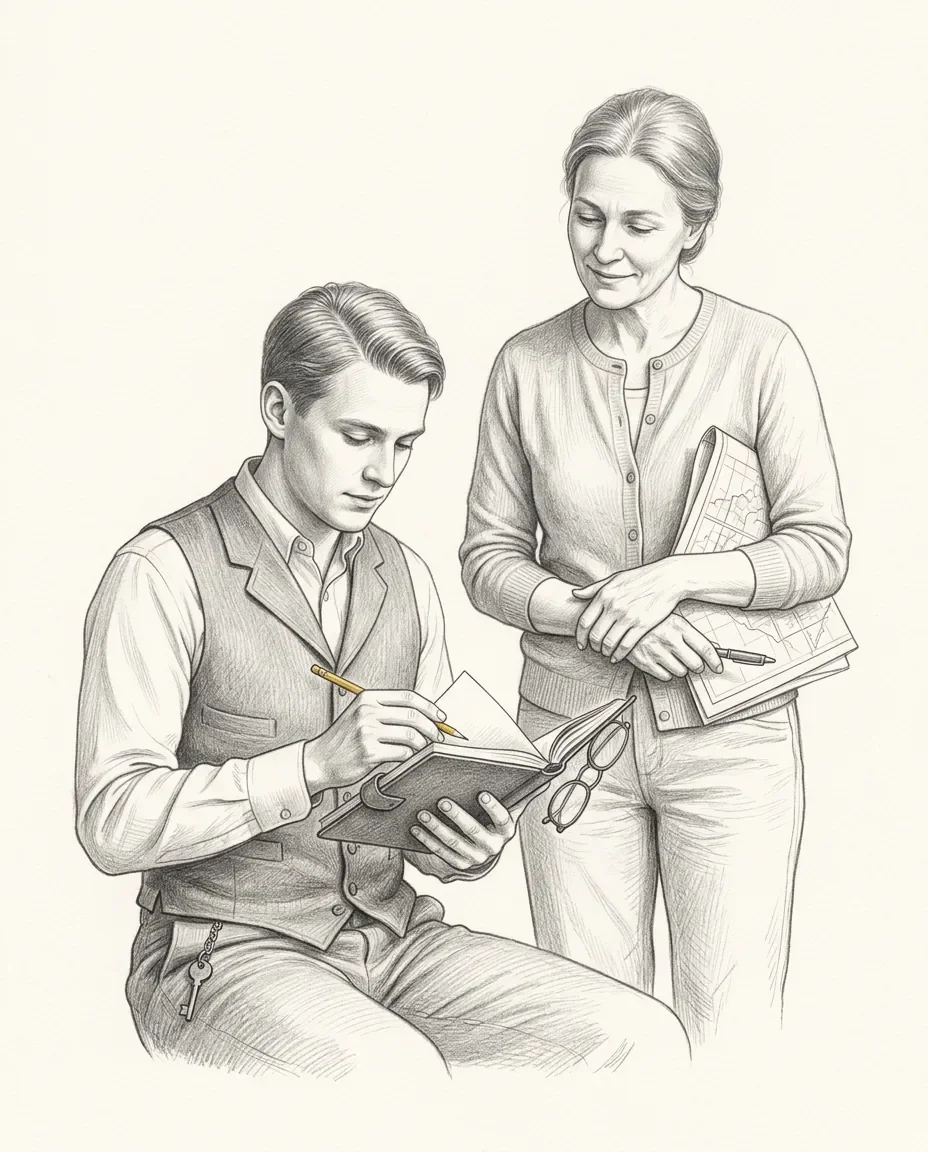
A top who directs sensation, restraint or control during a scene but calibrates every action to the bottom's stated wants rather than their own agenda. The counterpart role to service submission, with the reward found in giving a partner exactly what they asked for.
- Prevalence
- Uncommon
- Category
- Power, Roles & Scenarios
- Domain
- Sexual interest
- Confidence
- Low confidence
- Status
- Not a paraphilia or disorder; a community role label describing a style of consensual topping, not a clinical category.
- Also known as
- service dominant, service-oriented top, topping in service, service domination
- Added
- 26 Jul 2026
- Updated
- 22 Aug 2026
Featured in
Overview
A service top occupies the active, top position in a scene, applying sensation, restraint or command, while taking direction from the bottom about what that scene should contain. The role inverts the usual picture of a top setting the agenda: here the top's satisfaction comes from delivering precisely what the partner asked for, well and attentively, rather than from asserting a personal will. It is the structural mirror of service submission, and like that role it is community vocabulary rather than a clinical category. This article covers the distinction from ordinary dominance, where the label came from, how it plays out in practice, and the consent questions it raises.
Definition & scope
BDSM community writers typically separate two axes: the physical one (top/bottom, who applies or receives sensation) and the psychological one (dominant/submissive, who holds authority), a split laid out explicitly in the Wikipedia entry on top, bottom and switch. A person can be a top without being a dominant. A service top sits at that junction: they take the physically active role, but authorship of the scene, its content, pace and limits, stays with the bottom. As one glossary puts it, a service top "enjoys topping in line with his partner's desires" rather than his own (Fearless Press, 2012); another frames the motivation directly: "a Dominant takes control because they want control; a Service Top provides dominant actions as a service to their partner's desires" (Consent Culture glossary). The role is distinct from "topping from the bottom," in which a bottom covertly steers a scene against the top's stated intentions; a service top's direction-taking is explicit and agreed, not concealed.
Examples
What the term covers. A top who applies impact, restraint or command to a specification the bottom set beforehand: the rigger who ties the pattern their partner asked for rather than the one they would have chosen; the partner with no personal appetite for authority who is nonetheless skilled with a flogger and enjoys delivering exactly the impact play that was requested; the experienced player who runs a newer partner through a scene the newer partner wrote. It can describe a whole relationship or a single evening.
What the term does not cover. It is not dominance in the usual sense, where the top's own appetite for control is the engine of the scene, and it is not submission either, since a service top is the one doing the tying, striking or ordering. It is not switching, which is movement between roles rather than a style within one. It is not "topping from the bottom," a separate and usually pejorative term for a bottom steering a scene away from what the top agreed to. Nor is it brat play, where the bottom's resistance is itself the game, or service submission, which is the same generosity expressed from the receiving side of the same dynamic.
How the word is used. Community jargon, not clinical vocabulary. It circulates in kink glossaries, workshop descriptions and profile self-labels, and appears in neither DSM-5-TR nor ICD-11. People use it both as a standing self-description ("I top, but I'm a service top") and as a note about one particular scene, and the two uses are not always distinguished.
History & origins
"Service top" is modern kink-community slang, assembled from "service" (in the sense already established by service submission) and "top," and no single coiner or date is documented. It surfaces as a named concept in online BDSM writing and glossaries from the 2010s onward, part of a broader community effort to separate the physical top/bottom axis from the psychological dominant/submissive one. That vocabulary has a longer history behind it: top and bottom took shape as role labels against the backdrop of the gay leather subculture that emerged in the 1950s, and the Wikipedia account of top, bottom and switch records the 1970s flagging and handkerchief code conventions that gave practitioners a working shorthand for role long before finer distinctions like "service top" were needed. The term's clinical lineage runs through the same sexology that shaped dominance and submission generally, Krafft-Ebing, Ellis and Freud, none of whom isolated a service-oriented top as distinct from a controlling one; that distinction is a product of recent community discourse about consent and motivation rather than of any diagnostic tradition. Writers on the subject frame its emergence as a corrective to "role policing," the idea that a top who takes direction is somehow less legitimately dominant, arguing instead that directed, attentive topping is simply one valid style among several (YourTango).
In practice
A service top negotiates the bottom's wants in detail beforehand, implements, adjusts, or ends a scene according to real-time feedback, and treats the bottom's stated limits as the frame for the whole encounter rather than as an obstacle to their own preferences. Because direction is explicit, some practitioners describe using an unusually attentive form of check-in in place of a rigid safeword system, stopping the moment a bottom says so, though this varies by couple and is not a defining requirement of the role. The label can describe a whole relationship style or apply only within a single scene; a person might be a service top with one partner and hold a different stance, dominant, submissive, or switching, with another.
Psychology
The appeal is typically framed as satisfaction in competence and generosity: pride in reading a partner well, in technical skill applied precisely to what was asked for, and in the partner's resulting pleasure or relief. This differs from the arousal-from-control that anchors classic dominance, and from the arousal-from-suffering that anchors classic masochism; the service top's gratification is contingent on the bottom's experience rather than on asserting authority for its own sake. As with service submission, dedicated empirical research on the orientation is scarce, and most discussion of it remains descriptive, drawn from community writing rather than clinical study.
Prevalence & culture
No population survey has measured "service top" specifically; it is a subset of the wider dominance/submission landscape that large surveys do measure. Lehmiller's 2018 survey of 4,175 Americans found BDSM and power-exchange fantasies to be near-universal, and Joyal, Cossette & Lapierre (2015) likewise found dominance and submission themes common rather than statistically unusual. Within that broad population, service top is a recognised but modestly discussed role identity, present in kink glossaries and community forums and referenced on platforms such as FetLife, without the mainstream visibility of terms like "dominant" or "submissive."
Safety, consent & law
Service topping is legal and benign between consenting adults. Because the top follows the bottom's direction, clear upfront negotiation of limits, safewords, and what the bottom actually wants matters as much as in any other power-exchange dynamic; a service top still bears full responsibility for physical safety, technique, and for stopping when asked. Direction from the bottom does not transfer that responsibility away, and a request that exceeds the top's skill, limits or judgement of what is safe should be declined rather than attempted. Under the DSM-5-TR and ICD-11, consensual power exchange in any configuration is non-pathological absent distress, impairment, or non-consent.
Common questions
What is the difference between a service top and a dominant?
Motivation, not activity. Both are the person doing the tying, striking or ordering. A dominant does it because holding control is what they want out of the scene; a service top does it because delivering the scene their partner asked for is what they want. The identical act can belong to either, which is why the label describes a stance toward the role rather than a technique you could watch someone perform.
Is a service top submissive?
Not necessarily, and the question mixes two separate axes. Community writing distinguishes the physical question of who applies sensation from the psychological question of who holds authority. A service top is physically active and defers on content, which is neither ordinary dominance nor submission. Some service tops also identify as submissive in other contexts or with other partners; plenty do not, and nothing about the role requires it.
Is being a service top the same as topping from the bottom?
No, and conflating them is the usual insult aimed at the role. Topping from the bottom describes a bottom covertly steering a scene away from what the top agreed to, which is a negotiation failure. A service top has agreed in advance to run the scene their partner specified. One is a consent problem; the other is a consented arrangement that happens to look similar from the outside.
Who is responsible for safety when the bottom is directing the scene?
The top, without exception. Taking direction on content does not transfer responsibility for technique, physical risk, or stopping in time. A service top still has to understand the implement they are using, watch their partner rather than the script, and end things when something goes wrong. That includes refusing a request they judge unsafe, even though the request came from the person the scene is for.
Can a service top say no?
Yes. Direction is not obligation. A service top agrees to serve a partner's wants within their own limits, so a request that falls outside those limits, whether because it is distasteful to them, beyond their skill, or too risky, can simply be declined. A dynamic in which the top has no standing right of refusal has stopped being negotiated at all, which is a different and worse problem.
Is service topping a paraphilia or a disorder?
No. It is a role label from kink community vocabulary rather than a clinical category, and it appears in neither DSM-5-TR nor ICD-11. Both treat consensual power exchange in any configuration as non-pathological absent distress, impairment, or non-consent, and the one feature that distinguishes this role, taking direction from a partner, is not a diagnostic criterion of anything.
How common are service tops?
No survey has measured the role directly. It sits inside the much larger power-exchange landscape that surveys do reach: Lehmiller's 2018 survey of 4,175 Americans found BDSM and power-exchange fantasies close to universal, and Joyal, Cossette and Lapierre (2015) found dominance and submission themes common rather than statistically unusual. Service topping is a recognised but modestly discussed slice of that population.
- Service Submission45/100Power, Roles & ScenariosA submissive style in which fulfillment comes chiefly from attending to a dominant partner's needs through tasks, anticipation, and acts of care. The power exchange is expressed through helpful service and devotion rather than through pain, discipline, or humiliation.45
- Dominance and Submission92/100Power, Roles & ScenariosA consensual erotic dynamic in which one partner takes a dominant role and the other a submissive role, exchanging power within agreed limits. It is one of the most widespread elements of BDSM and of human sexual fantasy.92
- Switching65/100Power, Roles & ScenariosA person who enjoys both the dominant and submissive roles in consensual power exchange, rather than identifying with only one. A switch may move between leading and yielding across partners, scenes, relationship phases, or moods.65
- Master/Slave Dynamic58/100Power, Roles & ScenariosAn intensive, often ongoing form of consensual power exchange in which one adult (master or mistress) holds broad authority over another (slave). The arrangement runs inside a negotiated, ownership-styled framework. A structured, high-commitment expression of dominance and submission.58
- Total Power Exchange46/100Power, Roles & ScenariosA consensual BDSM relationship structure in which one partner cedes broad authority over their life to another on an ongoing basis. It extends dominance and submission beyond scenes into everyday living.46
- Mindbreak34/100Power, Roles & ScenariosA fiction trope, chiefly in Japanese hentai manga, anime and games, in which a character is depicted losing rational thought and resistance. The loss comes under overwhelming, often coercive sexual pressure. It names a narrative device and doujin tag, not a real practice.34
A plain-English compound of "service" (Latin servitium, "the condition of a servant") and "top," the BDSM-community term for the person who applies sensation or control within a scene. The pairing is a recent kink-community coinage, formed by analogy with service submission, and has no single documented originator.
power exchange · topping · service dynamic
Prevalence is computed from the entry's cited population estimate. Rows marked ESTare indicative editorial estimates scored against a fixed anchor rubric, not measured quantities. Method & anchors: methodology.
Uncommon · ≈ 1 in 100
- 01Service Top, Consent Culture glossarycore definition contrasting a service top's partner-directed motivation with a traditional dominant's own desire for control
- 02Top, bottom, switch, Wikipediathe physical (top/bottom) vs. psychological (dominant/submissive) axis distinction that locates the service top role, plus the 1970s flagging and handkerchief-code conventions that gave practitioners a shorthand for role
- 03BDSM Roles, 'Topping From The Bottom', and 'Service Top', Fearless Pressdefinition of a service top as one who tops in line with a partner's desires, contrasted with topping from the bottom, and the role-policing critique
- 04What EXACTLY Is A 'Service Top' In The BDSM Kink Community?, YourTangofirst-person account of identifying as a service top and the argument against role policing of tops who take direction
- 05Leather subculture, Wikipediahistorical backdrop of the gay leather scene from the 1950s in which top/bottom role vocabulary and later refinements like service topping developed
- 06Lehmiller (2018), Tell Me What You Want, survey of 4,175 Americansprevalence context: BDSM and power-exchange fantasies near-universal in the general population that service topping is a subset of
- 07Joyal, Cossette & Lapierre (2015), What Exactly Is an Unusual Sexual Fantasy?, J. Sexual Medicine 12(2):328-340dominance/submission themes found common rather than statistically unusual, the broader population from which service-top identity is drawn
- 08FetLife, kink community group sizes (community-size proxy)community-size proxy for present-day discussion and identification with the service-top role
- 09DSM-5-TR, Paraphilic Disorders (American Psychiatric Association, 2022)consensual power exchange in any role configuration is non-pathological absent distress, impairment, or non-consent
- 10ICD-11, Paraphilic disorders (World Health Organization)consensual sadomasochism and power exchange removed from the disorder list absent coercion or harm