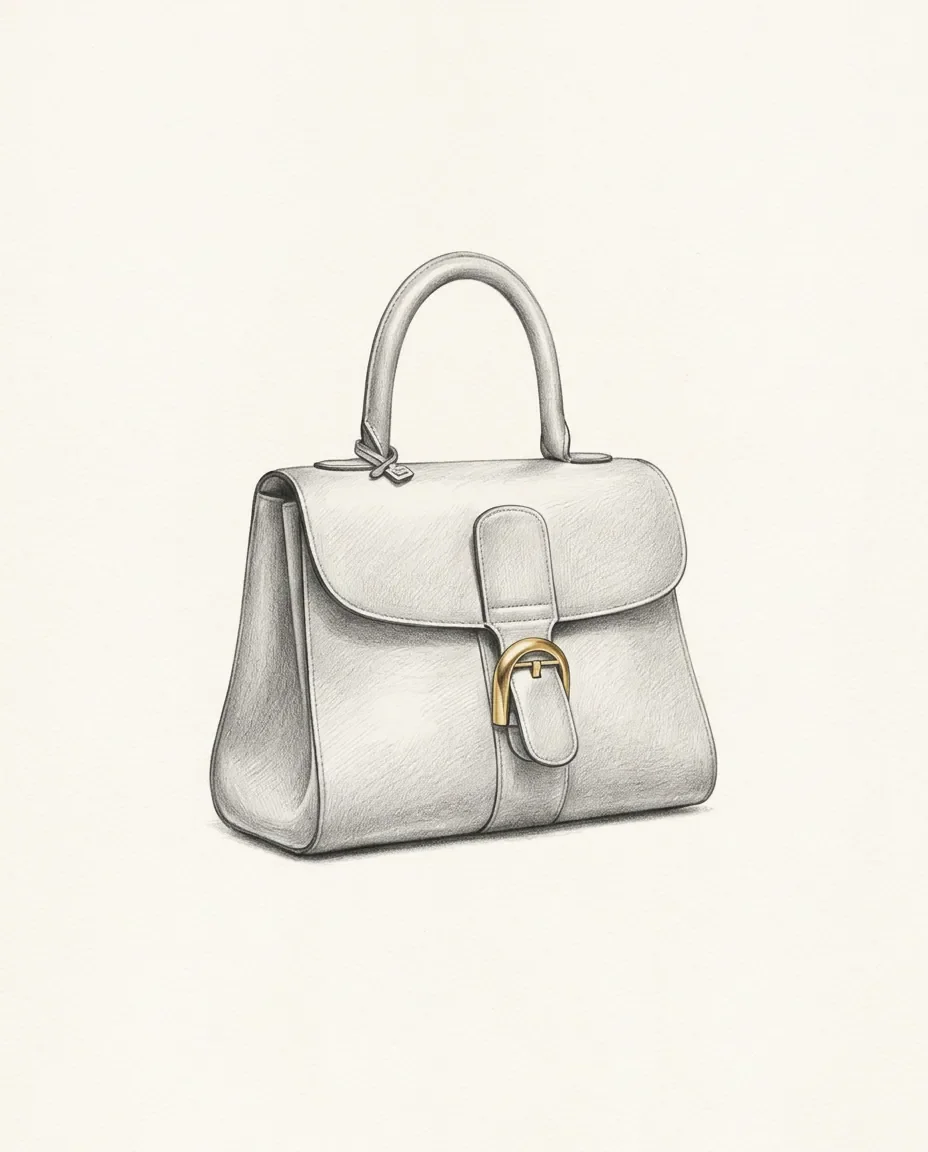
Handbag Fetish
Added 21 Jun 2026 · Updated 22 Aug 2026
A non-sexual, intense interest in acquiring and curating designer handbags, prized for craftsmanship, brand prestige, and status. It blends collecting, consumer culture, and identity signaling rather than any clinical condition.
- Prevalence
- Common
- Category
- Non-Sexual Fetishism
- Domain
- Non-sexual interest
- Confidence
- Low confidence
- Status
- Not a disorder; a consumer/collecting interest. Extreme forms may overlap with compulsive buying.
- Also known as
- Luxury Handbag Fixation, handbag obsession, designer-bag fixation, It-bag culture, purse collecting, designer handbag obsession
- Added
- 21 Jun 2026
- Updated
- 22 Aug 2026
Featured in
Overview
Handbag fixation describes an absorbed, non-sexual attachment to designer bags that spans collecting, the study of brands and craftsmanship, and the social meaning these objects carry. It is a "fetish" only in the loose, colloquial sense of a powerful fascination with a category of goods, not a clinical paraphilia or a recognised disorder. Iconic "It bags" and limited editions are frequent focal points, prized as much for what they signal as for what they hold. This article traces how the handbag became a status object, why people collect it, and where ordinary enthusiasm shades into compulsive buying.
Definition & scope
The interest belongs to non-sexual object fixation rather than to sexual fetishism. It is absent from the list of paraphilias and from clinical nosology, and it names an acquisitive, aesthetic, and status-driven enthusiasm much closer to collecting than to arousal. What distinguishes it from ordinary shopping is intensity: sustained study, ranking, and pursuit of specific models, and an identity built partly around the objects.
Examples
What the interest covers. Learning a house's model names and hardware generations well enough to date a bag on sight; tracking one specific reference (a particular size and leather of a particular model) across resale listings for years; the waitlist and the boutique relationship that stand between a buyer and a scarce piece; condition grading, authentication and provenance paperwork on the secondary market; storage, conditioning and careful rotation; unboxing and collection-tour videos made for other enthusiasts; and bags kept as heirlooms and handed on rather than carried.
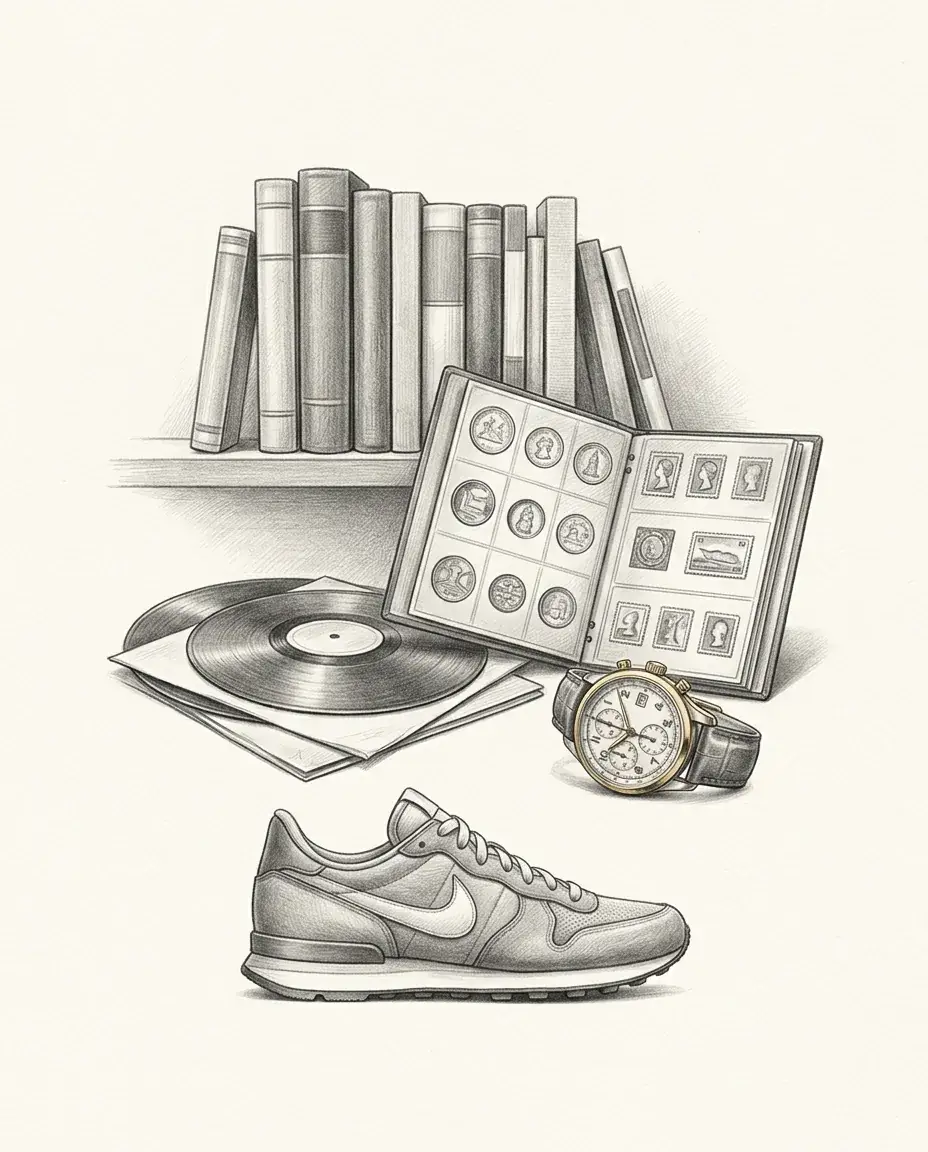
What it does not cover. There is no arousal component, which separates it cleanly from leather fetish, where the material itself is the erotic object, and from shoe fetish. It is not ordinary shopping either: the distinguishing feature is sustained study and pursuit of particular objects rather than volume of purchase. It sits beside the other acquisitive hobbies in this catalog (collecting in general, vinyl records, watches, coins and stamps), and it is distinct from compulsive hoarding, where the difficulty is an inability to discard rather than a drive to acquire specific things.
How the word is used. "Handbag fetish" is lay and journalistic shorthand; the fashion press says "It bag" or "bag collector", and the academic register reaches for commodity fetishism. None of these is a diagnosis, and no handbag interest appears in DSM-5-TR or ICD-11. The nearest clinical concept is compulsive buying-shopping disorder, which concerns buying in general rather than any one category of object.
History & origins
From utility object to status emblem
The handbag is a comparatively modern object. Structured women's bags emerged in the nineteenth century as rail travel created a need for portable, lockable personal luggage, and several of today's luxury houses grew directly out of the trunk- and leather-goods trade. Over the twentieth century, individual models became cultural touchstones, often through association with a famous person:
- 1955: Coco Chanel introduces the quilted Chanel 2.55 (named for February 1955), pioneering a shoulder strap that freed women's hands and treating the bag as a designed, named object in its own right.
- 1977: Hermès formally renames its 1930s Sac à Dépêches the Kelly bag after Grace Kelly, Princess of Monaco, who had been photographed carrying it in the 1950s.
- 1984: Hermès creates the Birkin after a chance meeting between then-CEO Jean-Louis Dumas and the actress Jane Birkin, reportedly sketched on an airplane sick bag; it became one of the most recognised and expensive bags of the following decades.
The "It bag" era
The phrase "It bag" entered fashion vocabulary in the 1990s, amid the explosive growth of the handbag market, to describe a single must-have model that defined a season. The Fendi Baguette, Chloé Paddington, Balenciaga Motorcycle and later the Mulberry Alexa became archetypes of the form, each driving waitlists and resale speculation. The It-bag cycle peaked in the 2000s and was widely reported to have cooled around 2008 to 2011, even as the underlying collecting culture and a vigorous resale and authentication market endured.
"Fetish" as commodity fetishism
Treating a non-sexual consumer object as a "fetish" borrows, loosely, from the older anthropological and Marxian idea of commodity fetishism: the attribution of near-magical, seemingly intrinsic value to a manufactured thing, detached from the labour that produced it. The designer handbag is a textbook illustration, a leather container whose price and prestige far exceed its utility because brands invest it with an aura of desirability and status. In this directory the term therefore sits within non-sexual fetishism and object fixation, a framing carried by general references rather than by any formal clinical diagnosis.
In practice
The interest is expressed through acquisition and curation of collections, close attention to materials, hardware, stitching and provenance, navigation of waitlists and the secondary market, and participation in fashion and collector communities online. For some enthusiasts, particular pieces function as investments, trophies, or heirlooms passed between generations. It overlaps in spirit with other acquisitive hobbies catalogued here, such as vinyl record collecting and coin and stamp collecting, the same completionist drive directed at a different category of object.
Psychology
The appeal combines several ordinary drives: the collector's pull toward completeness and the thrill of the hunt, aesthetic pleasure in finely made objects, identity and status signaling, and the emotional reward of ownership and of belonging to a taste community. The handbag's potency as a status marker is what commodity-fetishism theory predicts: people may consciously know the value is socially constructed yet behave as if it were intrinsic, a pattern sometimes called fetishistic disavowal.
Is a handbag fetish a real fetish?
Not in the clinical sense. The word here is metaphorical. There is no sexual-arousal component and no diagnostic category; the "fetish" label signals the intensity of attachment and echoes the economic idea of commodity fetishism rather than the sexology of sexual fetishism.
Prevalence & culture
The phenomenon is highly visible in fashion media, advertising, and social platforms, where unboxings, collection tours, and authentication guides draw large audiences. Committed collecting, however, is concentrated among more affluent consumers, so cultural visibility far outpaces actual broad participation: aspiration is far more common than ownership. There is no prevalence figure for "handbag fetish" specifically. The closest clinical analogue is compulsive buying-shopping disorder (oniomania), whose pooled adult prevalence a meta-analysis by Maraz, Griffiths and Demetrovics (2016) put at about 4.9%, with most studies finding women over-represented.
Safety, consent & law
The interest is legal and harmless. The main practical concerns are authentication and the prevalence of counterfeits in the resale market, and ordinary financial prudence given the very high price points involved. Collecting becomes a clinical concern only if it crosses into compulsive buying-shopping disorder as defined by the expert-consensus criteria (Müller, Laskowski et al., 2021): diminished control, distress, and functional or financial impairment.
Common questions
Why are designer handbags so expensive?
Materials and hand finishing account for part of it, but not for the multiples involved. The larger part is scarcity that is engineered and maintained (limited production, waitlists, and decades of accumulated brand prestige), reinforced by a resale market that validates the price. The result is an object whose cost bears very little relation to its usefulness as a bag, which is precisely what makes it a status marker.
Are luxury handbags a good investment?
A handful of models hold or increase their value on the secondary market; most do not, and depreciate much like other clothing. Returns depend on the specific model, its condition, its documentation and the state of resale demand, none of which is predictable. Treating a bag as an asset also imports risks a wardrobe does not carry: counterfeits, authentication costs, and a market that moves with fashion.
What is an It bag?
A single model that becomes the must-have accessory of a season, a term that entered fashion vocabulary in the 1990s. The Fendi Baguette, Chloé Paddington, Balenciaga Motorcycle and later the Mulberry Alexa are the archetypes, each generating waitlists and resale speculation. The cycle peaked in the 2000s and was widely reported to have cooled between 2008 and 2011, though the collecting culture outlasted it.
How do you avoid counterfeits when buying secondhand?
Counterfeits are the central risk of the resale market, and the better ones have long since passed the point where visual inspection alone is reliable. The practical protections are structural rather than forensic: buy from resellers who guarantee authenticity and refund on a failed check, insist on provenance such as receipts and original packaging, and use an independent authentication service for anything expensive before the money moves.
When does buying handbags become a problem?
When control goes, rather than when the total does. The clinical concept is compulsive buying-shopping disorder, and the expert-consensus criteria published by Müller, Laskowski and colleagues in 2021 turn on diminished control over buying, distress, and functional or financial impairment. A meta-analysis by Maraz, Griffiths and Demetrovics (2016) put pooled adult prevalence of compulsive buying at about 4.9%.
What does commodity fetishism have to do with handbags?
It is the older, economic sense of the word "fetish" and the reason a non-sexual consumer interest is filed under fetishism at all. The Marxian idea describes a manufactured object acquiring an apparently magical value detached from the labour that made it. Buyers often know perfectly well that the prestige is socially constructed and behave as though it were intrinsic anyway, a pattern sometimes called fetishistic disavowal.
- Vinyl Record Collecting44/100Non-Sexual FetishismA non-sexual enthusiasm for collecting, curating, and listening to vinyl records, valuing the analog format's sound, sleeve art, ritual, and physicality. It blends consumer culture, music fandom, and sensory satisfaction.44
- Coin & Stamp Collecting38/100Non-Sexual FetishismA non-sexual, focused interest in acquiring, organizing, and studying coins, banknotes, and postage stamps (numismatics and philately). It centers on heritage, completeness, and the tactile and historical appeal of small physical artifacts.38
- Plangonology38/100Non-Sexual FetishismThe collecting of dolls as objects, from nineteenth-century bisque to Barbie and ball-jointed dolls. The work is identifying makers and moulds, grading condition, restoring and displaying. A mainstream non-sexual hobby with its own societies and shows.38
- Relic Veneration38/100Non-Sexual FetishismRelic veneration is the devotional honoring of sacred physical remains or objects as conduits of blessing or divine presence. The bones of a saint and items associated with holy figures are typical. It is a non-sexual religious practice, not an erotic interest.38
- Stationery Fetish38/100Non-Sexual FetishismA non-sexual enthusiasm for fine stationery (fountain pens, inks, premium notebooks, and desk goods) driven by tactile pleasure. Craftsmanship, aesthetics, and collecting drive it too. It is an everyday hobby and connoisseurship interest, not a clinical condition.38
- Audiophilia39/100Non-Sexual FetishismA non-sexual devotion to high-fidelity sound reproduction and the equipment behind it: amplifiers, speakers, turntables, headphones, and cables. It is a hobby and connoisseurship interest, not a clinical condition or sexual paraphilia.39
A plain-English compound ("handbag" + "fetish"). "Fetish" derives from the Portuguese *feitiço* ("charm, sorcery"), itself from Latin *facticius* ("artificial, made by art"); here it is used colloquially for an intense fascination, echoing the Marxian sense of *commodity fetishism* rather than the clinical sexual sense.
collecting · consumer culture · status signaling
Prevalence is computed from the entry's cited population estimate. Rows marked ESTare indicative editorial estimates scored against a fixed anchor rubric, not measured quantities. Method & anchors: methodology.
Common · ≈ 1 in 20
- 01List of paraphilias, Wikipediaframing of non-sexual fetishism / object fixation
- 02Google Trends, relative search interest (search-interest proxy)search-interest proxy for designer-handbag and It-bag collecting culture
- 03An A–Z of Kinks and Fetishes, Glamourlay/mainstream framing of consumer object fixation as a non-sexual fetish
- 04It bag, Wikipediaterm 'It bag' coined in the 1990s; Chanel 2.55 (1955), Birkin and named It-bag models; rise and decline of the It-bag cycle 2000s–2011
- 05Chanel 2.55, WikipediaChanel 2.55 introduced February 1955, named for its creation date; pioneering shoulder strap that freed the wearer's hands
- 06Birkin bag, WikipediaHermès Birkin created 1984 after Jane Birkin met Jean-Louis Dumas; Kelly bag renamed 1977 after Grace Kelly
- 07Birkin bag, Encyclopaedia Britannicaorigin story of the Birkin and its rise as the world's most famous luxury handbag
- 08Commodity fetishism, WikipediaMarxian concept underlying the loose 'fetish' framing, designer handbag as the textbook example of value detached from utility; fetishistic disavowal
- 09Sexual fetishism, Wikipediacontrast between clinical sexual fetishism and the metaphorical 'fetish' label applied to a non-sexual consumer object
- 10The prevalence of compulsive buying: a meta-analysis (Maraz, Griffiths & Demetrovics, 2016), Addiction 111(3):408-419pooled adult prevalence of compulsive buying behaviour ~4.9% as the closest clinical analogue to extreme handbag collecting
- 11Proposed diagnostic criteria for compulsive buying-shopping disorder: a Delphi expert consensus study (Müller, Laskowski et al., 2021), PMC8996806expert-consensus criteria (diminished control, distress, impairment) as the clinical threshold distinguishing a hobby from compulsive buying-shopping disorder