Shoe Fetish
Retifism
Added 21 Jun 2026 · Updated 22 Aug 2026
A sexual interest in shoes as objects of attraction or arousal, valued for their style, material, and associations rather than the wearer. Clinically termed retifism, it is among the most frequently documented garment fetishes in survey and case literature.
- Prevalence
- Common
- Category
- Clothing & Garments
- Clinical term
- Retifism
- Domain
- Sexual interest · Paraphilia
- Confidence
- High confidence
- Status
- Recognized fetishistic interest; a disorder only if it causes distress, impairment, or non-consent (DSM-5-TR Fetishistic Disorder).
- Also known as
- retifism, retifisme, shoe fetishism, altocalciphilia (heels), footwear fetish
- Added
- 21 Jun 2026
- Updated
- 22 Aug 2026
Featured in
Overview
Shoe fetishism, clinically retifism, is an erotic interest centred on footwear, in which the shoe itself, rather than the foot or the person wearing it, is the primary focus of attraction. The interest frequently overlaps with foot partialism but is conceptually distinct: it is the object (its material, shape, heel, sound, and cultural associations) that carries the charge. It ranks among the most frequently documented object-and-garment fetishes in both clinical case literature and large internet surveys. This article traces the term's literary origin, its place in the history of sexology, how the interest is typically expressed, the psychology proposed to underlie it, and what is known about its prevalence.
Examples
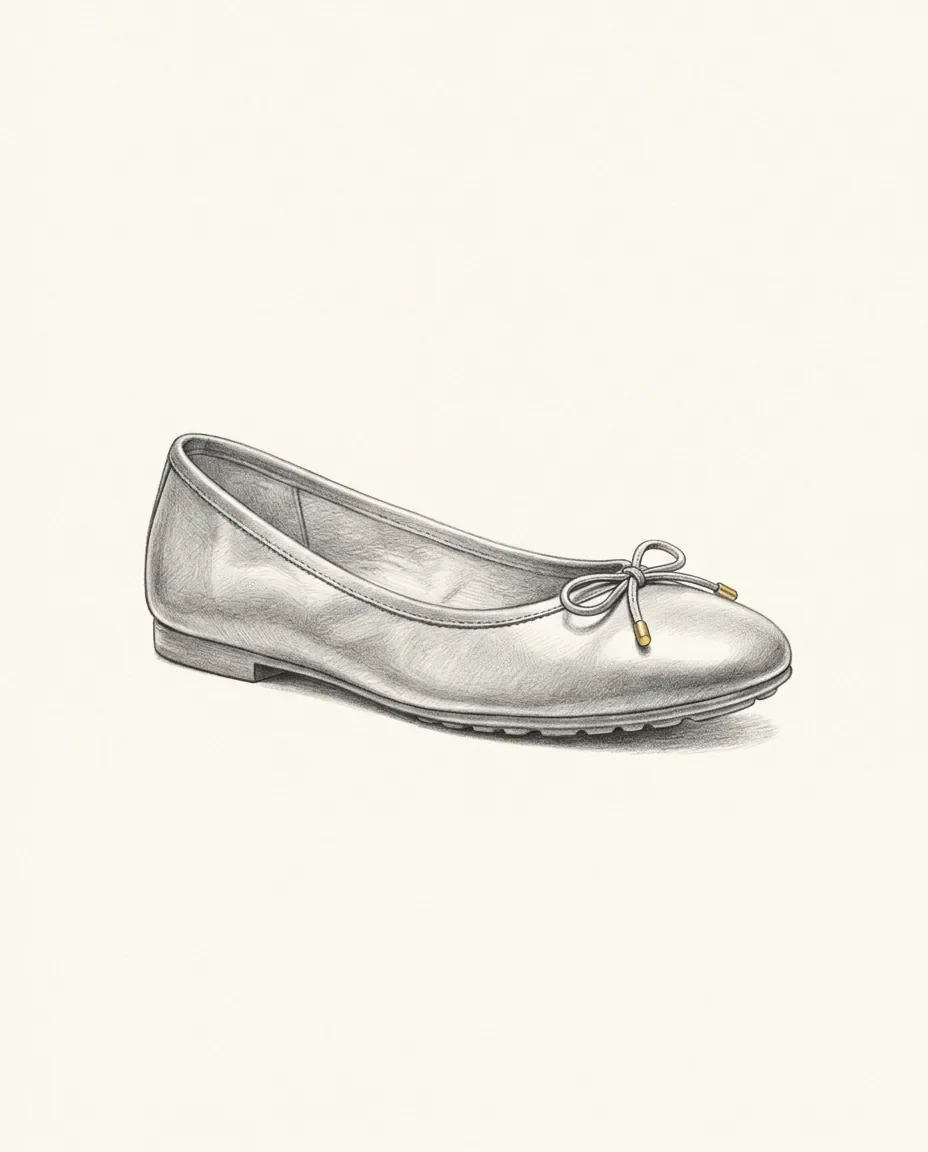
What the term covers. A particular style carrying the charge (high heels, boots, sneakers, ballet flats, sandals), or a particular material, patent, suede or soft leather, each with its own sheen and its own sound. Beyond the object the interest attaches to what shoes do: the report of a heel on a hard floor, the way a shoe deforms with wear, and shoeplay, the half-off dangling and dipping that is the behaviour most often watched for. Collecting, handling, photographing, and preferring worn pairs to new ones are all ordinary expressions, and for a large share of people the interest is an enhancer within otherwise conventional intimacy rather than a requirement of it.
What the term does not cover. It is not sneaker collecting, a non-sexual subculture organised around rarity, release dates and resale value, however intense the attachment. It is not crush or trampling interest, where the shoe is an instrument of pressure and the appeal is the force rather than the footwear. It is not leather fetishism, which follows a material across every garment instead of settling on one. It is not an interest in the smell of what has been worn in them. And it is not fashion enthusiasm: a large wardrobe is not retifism, a point the casual use of the phrase "shoe fetish" persistently obscures. Its relationship to foot fetishism is set out separately below.
How the word is used. "Shoe fetish" is casual English, applied loosely to anyone who owns too many pairs, which is precisely why the clinical eponym retifism remains useful. Neither it nor altocalciphilia, the heel-specific variant, appears in DSM-5-TR or ICD-11; the manuals recognise only a general fetishistic disorder.
History & origins
Literary roots and coinage
The clinical label retifism is an eponym. It honours the French novelist Nicolas-Edme Rétif de la Bretonne (1734–1806), whose 1769 novel Le Pied de Fanchette (Fanchette's Foot) follows a young woman pursued by shoe-fetishists and dwells on women's footwear in a way widely read as autobiographical. Rétif explored foot and shoe eroticism more than a century before the phenomenon was medically named. The term itself was coined later by the German dermatologist and sexologist Iwan Bloch, who adapted Rétif's surname into German Retifismus in direct reference to Le Pied de Fanchette, as documented in the etymology of "retifism".
Entry into clinical sexology
- 1886: Shoe and boot fetishism appear among the case material catalogued by Richard von Krafft-Ebing in Psychopathia Sexualis, the foundational forensic-sexology compendium; Krafft-Ebing regarded many shoe fetishists as also masochistically inclined, linking the interest to submission.
- early 1900s: Havelock Ellis's multi-volume Studies in the Psychology of Sex discussed foot and shoe symbolism among the "erotic symbolisms," treating them as exaggerations of normal aesthetic attraction rather than disease.
- 1905: Sigmund Freud's Three Essays on the Theory of Sexuality used foot-and-shoe fetishism as a model case for his developmental theory of object choice, in which the foot or shoe stands in for an earlier, repressed object.
From pathology to recognised variation
Twentieth- and twenty-first-century clinicians largely moved away from these early psychoanalytic frameworks toward learning-based and multifactorial models. In the modern diagnostic lineage the interest falls under the broad heading of fetishism: the DSM-5-TR reserves a diagnosis of Fetishistic Disorder for cases that cause clinically significant distress or impairment, and the ICD-11 similarly depathologises consensual, non-distressing interests, a shift that reframes ordinary shoe fetishism as a common variant of sexual interest rather than a disorder.
In practice
Expression varies widely and is typically benign: collecting or handling shoes, finding particular styles (heels, boots, sneakers, sandals) arousing, incorporating footwear into consensual intimacy, or being drawn to the materials (leather, patent, suede), the sounds, and the visual lines associated with shoes. For many people the interest is mild and recreational, an enhancer rather than a precondition for arousal; for a minority it is the principal focus. It sits within a wider family of lower-body garment interests alongside stockings and pantyhose.
Psychology
Psychological accounts most often invoke early associative conditioning, in which a once-neutral object becomes paired with sexual feeling and is reinforced over time: the dominant learning-theory explanation for object fetishes generally. The cultural eroticisation of shoes in fashion, photography, advertising, and film supplies an abundant stock of such associations, and footwear's proximity to the foot ties the interest to the broader literature on foot partialism. Most contemporary models are multifactorial, combining conditioning, the symbolic salience of footwear, and individual developmental history. The evidence base remains observational rather than experimental, and no single mechanism is established.
Prevalence & culture
How common is a shoe fetish?
Footwear is consistently the leading object of fetishistic interest in the largest available survey. In their analysis of 381 online fetish discussion groups, Scorolli et al. (2007) found that preferences for body parts (≈33%) and for objects associated with the body (≈30%) were the two most common categories, and that feet and objects associated with feet, footwear prominent among them, were the single most common target overall. General-population work corroborates the everyday reach of fetishistic interest: Joyal & Carpentier (2017) found that a substantial minority of adults report fetishistic interests, within which footwear and lower-body garments are a leading focus. The theme also enjoys broad mainstream visibility through high fashion, shoe photography, and advertising, and supports sizeable online communities on platforms such as FetLife.
Common misconceptions
Is a shoe fetish the same as a foot fetish?
No. Although the two overlap and often co-occur, they are distinct. A shoe fetish (retifism) centres on the footwear as an object, its material, shape, heel, sheen, and cultural associations, whereas foot fetishism (podophilia) centres on the bare foot itself. Many people are drawn to both, and the shoe can serve as a socially visible stand-in for the foot, which is one reason the two are frequently discussed together. The clinical literature nonetheless treats the shoe and the foot as separate foci of interest.
Safety, consent & law
Clinically, shoe fetishism is regarded as a common and generally harmless variation of sexual interest. It would be classed as Fetishistic Disorder under the DSM-5-TR only if it caused significant distress, functional impairment, or led to non-consensual behaviour. Practised privately or with consenting adults, it raises no legal or safety concerns. The one recurring exception in the case literature is acquisition without consent: taking footwear that belongs to someone else is theft whatever the motive, and such cases are much of what brought shoe fetishism to the attention of nineteenth-century forensic writers in the first place. Ordinary respect for partners' and strangers' boundaries covers the rest.
Common questions
What is altocalciphilia?
The name for a specifically heel-focused interest: arousal attached to high heels in particular rather than to footwear in general. It is a coined term rather than a diagnostic one, and it appears in glossaries and popular writing far more often than in the clinical literature. Most people with a shoe interest are not that specific: the heel simply happens to be the most eroticised shoe in Western culture.
Why do some people prefer worn shoes to new ones?
Because a worn shoe carries traces of the person who wore it: a shaped insole, a scuffed heel, a residual scent. That links the object back to a wearer in a way a boxed pair cannot, which is the same associative logic underlying object fetishism generally: the shoe is arousing partly because of what it has been near. It is also why a market in used footwear exists at all.
What is shoeplay?
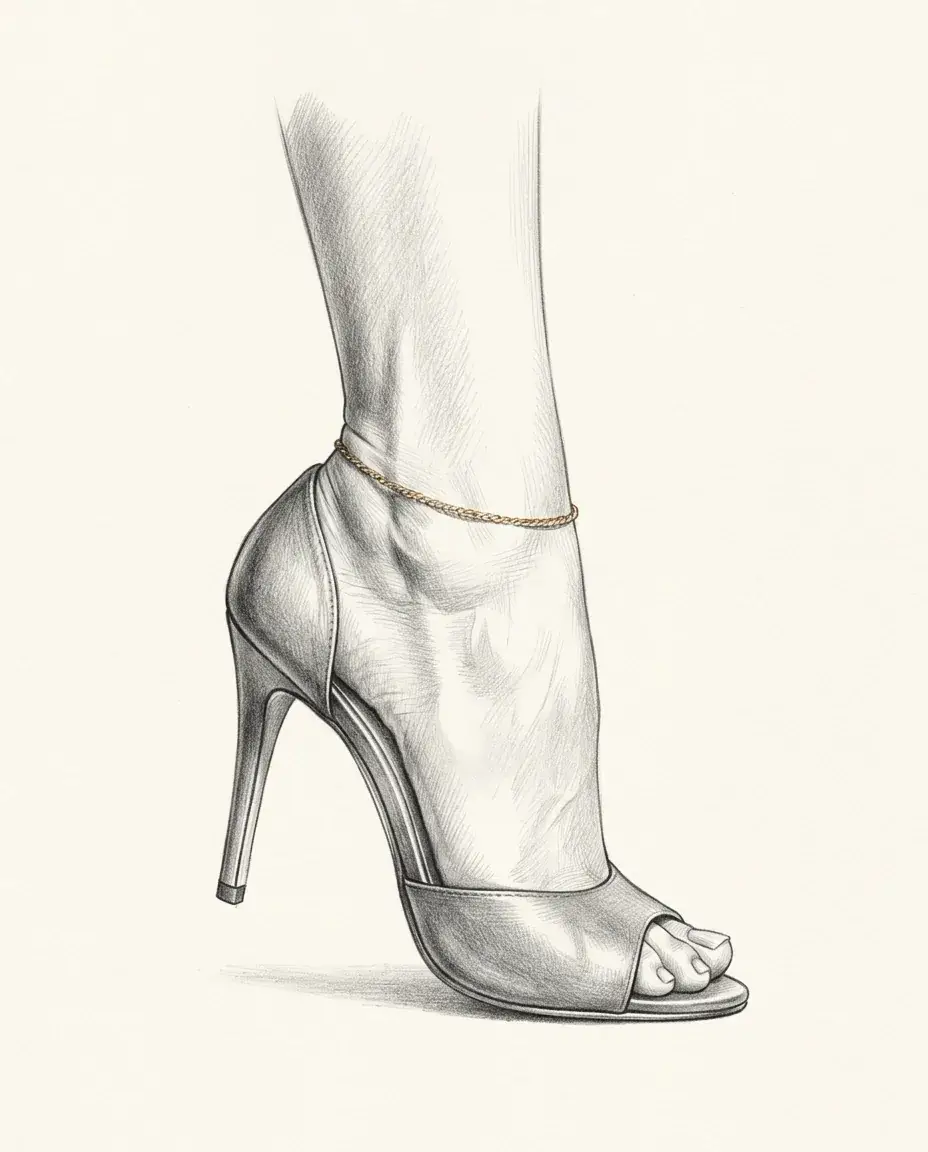
Shoeplay is slipping a shoe partly off: dangling it from the toes, dipping the heel out of the back, letting it hang and catching it again. Much of it is unconscious, done by people easing pressure at a desk or under a table, and that is part of the appeal: it is watched far more often than it is performed deliberately. It sits on the boundary between shoe interest and foot interest, involving both at once.
Is a shoe fetish connected to submission or masochism?
Not necessarily, though the association is an old one. Krafft-Ebing's 1886 case material linked many shoe fetishists to masochistic inclinations, and that reading shaped a century of writing on the subject. Modern accounts do not treat the connection as necessary: a great deal of shoe interest is purely aesthetic and involves no power dynamic at all. Where the two do coincide, it is usually because footwear already carries imagery of height, hardness and being underfoot.
When does a shoe fetish become a disorder?
Only when it causes real trouble. DSM-5-TR reserves Fetishistic Disorder for interests that have persisted for at least six months and that produce clinically significant distress or impairment, or that lead to non-consensual behaviour. Enjoying shoes, buying them, or asking a willing partner to wear a particular pair meets none of that. The threshold is about consequences, not about how unusual the interest looks from outside.
Is it all right to ask a partner to wear particular shoes?
It is an ordinary request, and most people receive it as one. What matters is that it is asked rather than assumed, that a no is accepted without pressure, and that nobody is being asked to wear something painful for long stretches; high heels in particular carry real physical costs. Raising an interest early tends to go considerably better than revealing it later as a condition.
From the blog
Mental health7 min read
Is a fetish a mental disorder? What the DSM keeps and the ICD dropped
Is a fetish a mental disorder? Not by itself: the DSM-5-TR requires distress or impairment, and the ICD-11 dropped fetishism in 2022.
How common7 min read
Shoes, heels, socks and stockings: when the fetish is what covers the foot
A shoe fetish centres on footwear, not the foot. Heels, boots, socks, stockings and pantyhose: what the surveys count and where each ranks on the index.
How common8 min read
Why feet are the most common fetish: the surveys, the theories and the parts
Why are feet the most common fetish? They lead every study that counted, 47% of body-part preferences and one adult in seven. The surveys, theories and ranking.
- High Heel Fetish56/100Altocalciphilia · Clothing & GarmentsA focused sexual interest in high-heeled shoes (stilettos, pumps, platforms) and the height, posture, and leg line they create. It is a common, generally harmless subtype of shoe fetishism.56
- Boot Fetish52/100Clothing & GarmentsA sexual interest in boots, from knee-high and thigh-high fashion styles through riding, work, combat, and military boots. They are valued for their silhouette, materials, and connotations of authority. It overlaps with shoe, leather, and uniform fetishism.52
- Stocking Fetish57/100Clothing & GarmentsA sexual interest in stockings and hosiery, centered on sheer or textured legwear, seams, garters and the look and feel of nylon and silk. It is among the most common garment and material fetishes.57
- Pantyhose Fetish52/100Garment fetishism (hosiery/legwear subtype) · Clothing & GarmentsA sexual interest in pantyhose and tights, sheer or opaque one-piece nylon legwear, focused on its full-leg coverage, smooth encasing texture, and look. A common close relative of stocking fetishism and one of the more historically recent garment interests.52
- Lingerie Fetish70/100Clothing & GarmentsAn erotic interest in lingerie and intimate apparel in which the garments themselves, their fabrics, and their styling become a focus of arousal. Bras, briefs, stockings, corsets and slips are typical. One of the most common and mainstream garment-related interests.70
- Uniform Fetish60/100Uniform Fetishism · Clothing & GarmentsAn erotic interest in uniforms and the authority, role, or status they signal: military, police, medical, school, or service dress. A common clothing-and-role fetish rather than a clinical disorder.60
Retifism is an eponym: it derives from the surname of French novelist Nicolas-Edme Rétif de la Bretonne (1734–1806), whose 1769 novel Le Pied de Fanchette dwelt on women's footwear. The German sexologist Iwan Bloch adapted the name into German Retifismus to label the interest. The alias altocalciphilia combines Latin altus ("high") and calx/calcis ("heel") with Greek -philia ("love of"), literally "love of high heels."
footwear · garment fetishism · partialism-adjacent
Prevalence is computed from the entry's cited population estimate. Rows marked ESTare indicative editorial estimates scored against a fixed anchor rubric, not measured quantities. Method & anchors: methodology.
Common · ≈ 1 in 20
- 01Scorolli et al. (2007), Relative prevalence of different fetishes, Int. J. Impotence Research 19(4):432-437prevalence anchor (footwear/shoes = 32% of clothing fetishes, the leading clothing category)
- 02Sexual fetishism, Wikipedia (carries the Scorolli 2007 relative-frequency table)carries the Scorolli relative-frequency table for footwear fetishism
- 03Joyal & Carpentier (2017), The Prevalence of Paraphilic Interests and Behaviors in the General Population, J. Sex Research 54(2):161-171general-population fetishism interest (~44%) within which footwear is a common object/clothing focus
- 04List of paraphilias, Wikipediadefinition/existence of retifism (shoe fetishism)
- 05Shoe fetishism, Wikipediaorigin of the term retifism after Nicolas-Edme Rétif de la Bretonne, his 1769 novel Le Pied de Fanchette, and historical/sexological context
- 06retifism, Wiktionaryetymology: Iwan Bloch coined German Retifismus in reference to Rétif's Le Pied de Fanchette (1769)
- 07Psychopathia Sexualis, WikipediaKrafft-Ebing (1886) documented shoe and boot fetishism and linked many shoe fetishists to masochism
- 08Three Essays on the Theory of Sexuality, WikipediaFreud (1905) used foot-and-shoe fetishism as a model case for his developmental theory of object choice
- 09Fetishistic disorder, Wikipediamodern DSM-5-TR framing: a disorder only with distress, impairment, or non-consent
- 10ICD-11, World Health OrganizationICD-11 depathologisation of consensual, non-distressing fetishistic interests