Human Pup Play
Added 22 Jun 2026 · Updated 22 Aug 2026
A consensual adult role-play in which a participant adopts the mannerisms, body language, and headspace of a dog, usually a puppy. Participants are often paired with a handler or trainer. It is a form of animal role-play involving humans only and is explicitly distinct from any interest in real animals.
- Prevalence
- Uncommon
- Category
- Identity & Transformation
- Domain
- Sexual interest
- Confidence
- Medium confidence
- Status
- Consensual adult role-play and kink, not a clinical paraphilia or disorder; benign between consenting adults and explicitly distinct from any interest in real animals.
- Also known as
- pup play, puppy play, human pup, pupplay, dog play, human dog, canine role-play
- Added
- 22 Jun 2026
- Updated
- 22 Aug 2026
Featured in
Overview
Human pup play is a consensual sociosexual role-play in which an adult takes on the mannerisms, body language, and headspace of a dog (most often a young, playful puppy) frequently alongside a partner acting as a handler, owner, or trainer. It is one of the most visible forms of animal role-play within the broader BDSM and kink world, sitting alongside related practices such as kitten play. Crucially, it has nothing to do with real animals: practitioners and researchers alike consistently and emphatically distinguish it from zoophilia. This article traces its documented emergence from gay leather culture, how it is practised, what draws people to it, and what the small but growing research literature has found.
Examples
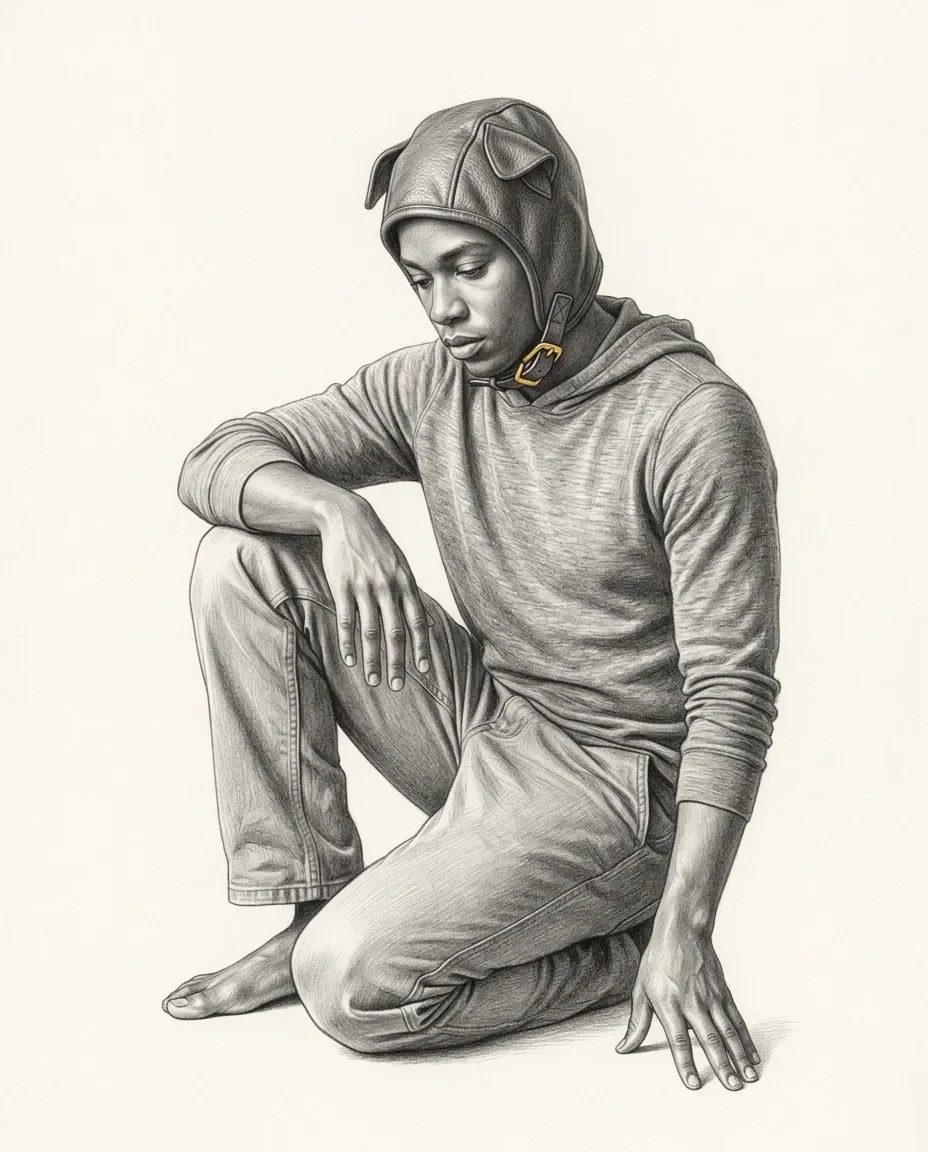
What the term covers. An adult moving on all fours, nuzzling, play-bowing, or answering in barks and whines instead of words; gear that makes the persona legible to everyone in the room: hood, ears, tail, collar, padded mitts; a handler giving simple commands, rewarding good behaviour and setting the pace of a scene; and purely social gatherings at leather events where pups tumble around together with no erotic element at all. The practice runs across that whole span, and for many practitioners the social end of it is the larger part.
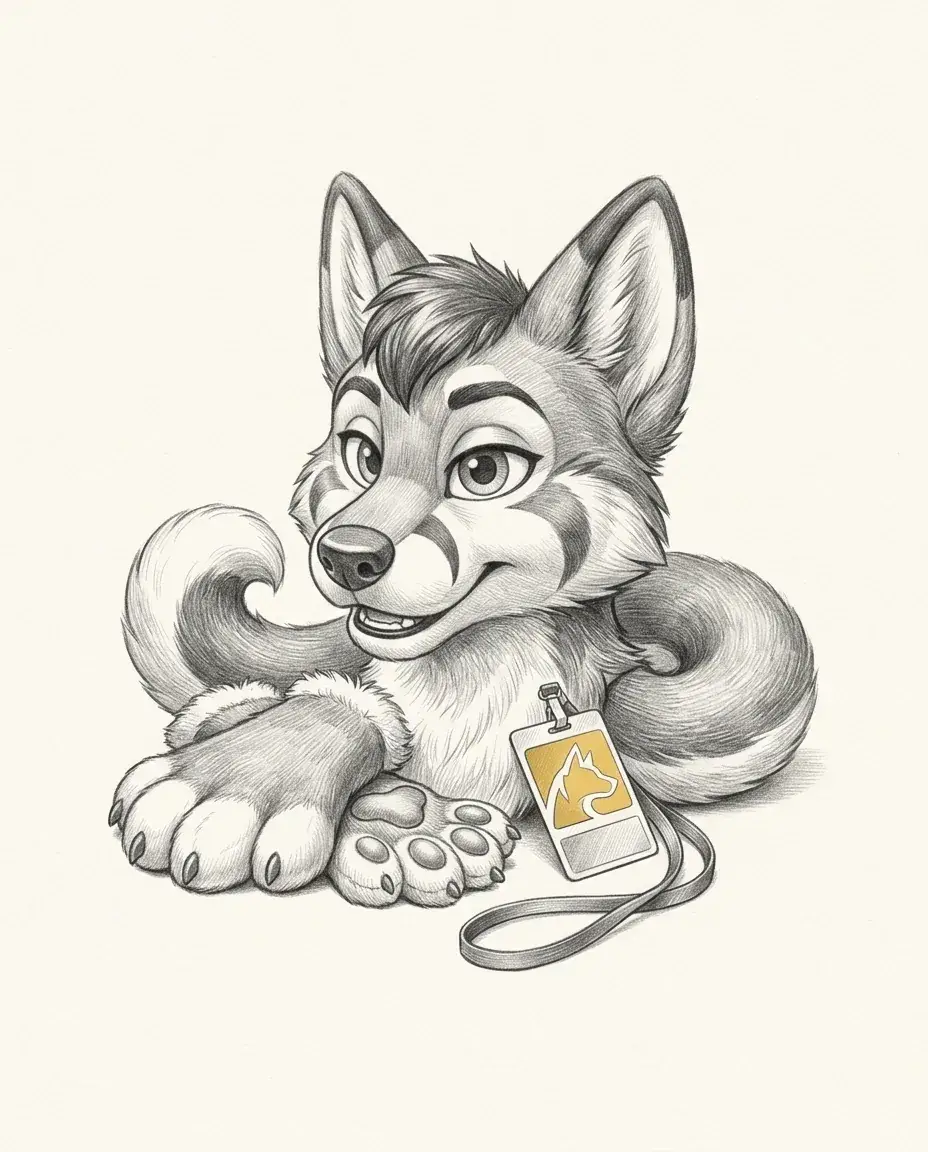
What the term does not cover. It has nothing to do with real animals. Bestiality is a sexual interest in animals themselves, a separate subject that is illegal in most jurisdictions and is never a form of pup play; the researchers who have studied pups directly went looking for a link and found none. Pet play and animal role-play are the umbrella terms of which pup play is the largest style, alongside kitten play and the older, more athletic pony play. Fursuiting and the furry fandom share animal characters but are a fandom rather than a power-exchange dynamic. Therianthropy and otherkin describe a felt non-human identity rather than a role that is put on and set down again.
How the word is used. "Pup play" is community vernacular out of gay leather culture rather than a clinical coinage, and it appears in no edition of the DSM and not in ICD-11. Practitioners use "pup" as a self-description as readily as an activity, so "he is a pup" names a standing role in a community, not just something he did last weekend.
History & origins
The phrase "pup play" is a plain-English kink term, not a clinical coinage, and its lineage is cultural rather than diagnostic. It grew out of the gay male leather and BDSM subcultures of the late twentieth century: a leather scene in which dominance, submission, training, and objectification were already being explored, and in which a submissive partner could be "trained" with a collar and leash in a dog-like manner.
Cultural & subcultural evolution
The practitioner-historian known as Pup Tim has documented a relatively precise community chronology, summarised on the community archive pupplay.info:
- 1989: Pup Tim began consciously identifying as a pup after a handler called him "pup."
- 1992: He joined Avatar, a Los Angeles BDSM education group, serving as "the sole pup for years."
- 1995–1996: In the United Kingdom, the DynSky events held early "Dog Shows," growing from three to eight contestants.
- 1997: "Dog Head Space" classes began in San Francisco, formalising the idea of a canine headspace.
- Late 1990s: Mr S Leather and other leather-goods makers began producing dedicated pup hoods, mitts, and tails, giving the practice a shared aesthetic.
- 2001–2002: The International Puppy Contest (IPC) emerged from the Texas leather scene; Pup Tim competed and won the title in 2002, helping formalise pup play as a recognisable archetype within leather.
- 2003: The documentary Pup screened in Los Angeles, an early media moment for the community.
Over these decades the emphasis shifted from pure degradation toward a playful, affectionate, identity-centred activity, and dedicated online communities gave it a common vocabulary of "pups," "handlers," and "trainers."
Clinical & academic lineage
Unlike most paraphilic-adjacent interests, pup play has no nineteenth-century clinical naming, it was never catalogued by Krafft-Ebing or Freud and appears in no edition of the DSM or ICD-11 as a disorder. Scholarly attention is recent and treats it as a benign kink and identity practice:
- 2017: Liam Wignall and Mark McCormack published An Exploratory Study of a New Kink Activity: "Pup Play" in Archives of Sexual Behavior, the first empirical study, based on interviews with gay and bisexual men, classifying it as a kink with no evidence of zoophilia.
- 2019: Darren Langdridge and Jamie Lawson published a phenomenological study drawing on 68 written accounts and 25 interviews, identifying five experiential themes.
- 2022: Wignall and colleagues reported a community survey of 733 participants describing demographics, gear, and wellbeing.
In practice
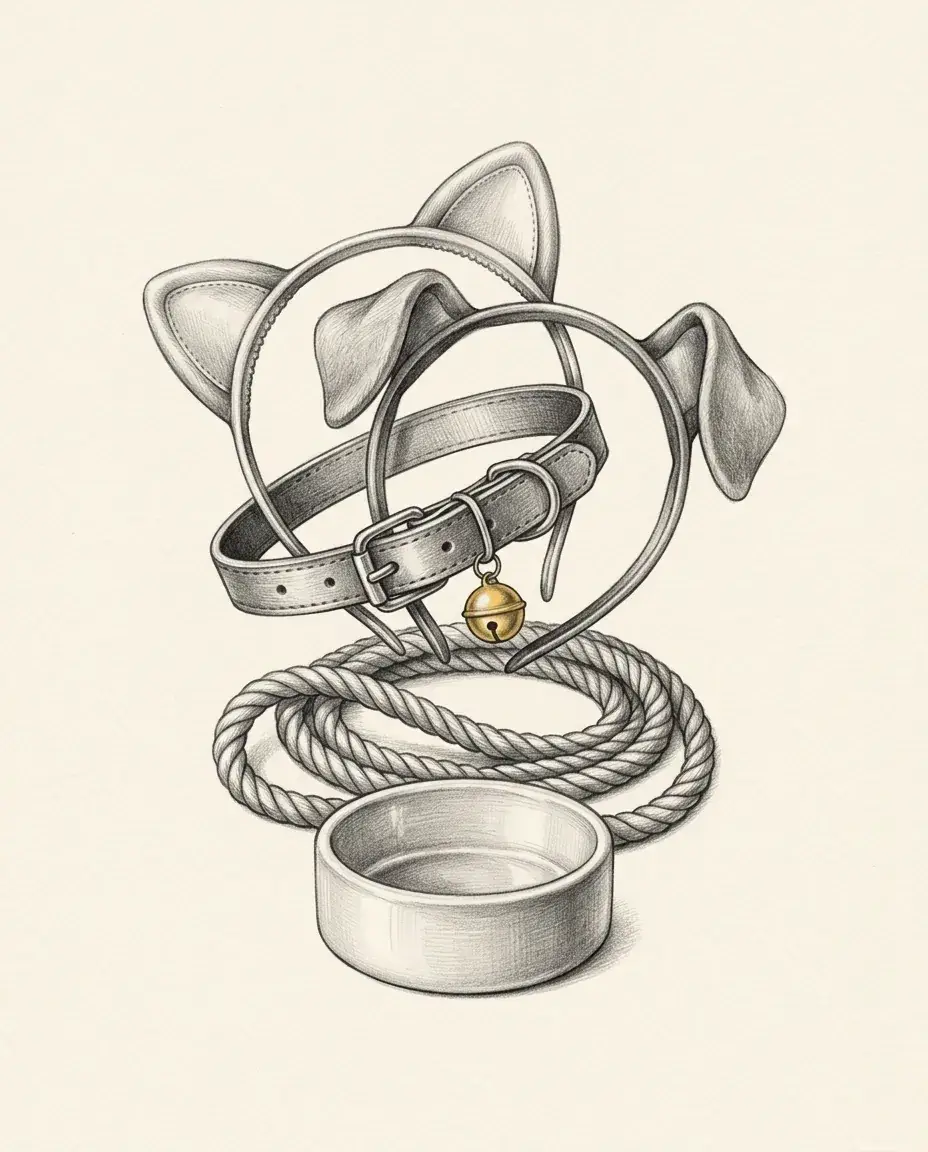
Pup play is expressed through canine body language and vocalisations (crawling, wagging, nuzzling, growling, or barking) and through gear such as ears, tails, collars, leashes, hoods, and padded mitts; in the 2022 survey roughly 91% owned gear and about 82% owned a hood or mask. Roles include "pups," "handlers," and "trainers," with community terms like alpha, beta, omega, and stray describing a pup's disposition or status. Many practitioners describe slipping into a "pup space" or headspace in which the adult self is temporarily set aside. The dynamic may be erotic, primarily playful and social, or a blend; the activity overlaps naturally with collaring, bondage, and dominance and submission.
Psychology
The phenomenological research identifies recurring themes: sexual pleasure (often tied to dominance/submission), relaxation and a mindfulness-like escape from the self, exuberant embodied play, expression of an extended or alternative selfhood, and belonging within a chosen-family community. The persona offers structure, permission to be playful, and connection within a trusting relationship; for handlers the appeal often centres on care, control, and bonding. A separate 2023 study by Wignall and colleagues of 413 practitioners found an elevated rate of self-reported autistic traits, with roughly half scoring at a level indicative of an autism diagnosis, consistent with the structure and clarity the role can provide. It is not regarded as a disorder.
Prevalence & culture
Pup play is among the more visible forms of animal role-play, with large online groups, organised contests, and a recognisable gear look. The 2022 community survey of 733 participants found a predominantly male (about 79%) and predominantly gay (about 64%) sample, skewing younger (around 58% aged 18–30) and concentrated in North America. About 49% rated their pup play as "equally social and sexual," and roughly 84% believed it had improved their mental health. It should not be confused with the broader furry fandom, though both involve animal personas.
Safety, consent & law
The practice is legal and benign between consenting adults. Responsible practice emphasises negotiation, safewords, and aftercare, with attention to breathing, comfort, and circulation whenever hoods, restraint, or gear are involved. Because a pup in role is not speaking, and because mitts remove the use of the hands, partners commonly agree a non-verbal safe signal (dropping a held object, or a fixed number of taps) so that stopping never depends on breaking character. A clear, shared understanding underpins it: the role is symbolic human role-play, entirely separate from any interest in or contact with real animals.
Common questions
Is human pup play related to zoophilia or bestiality?
No, and the two have nothing in common beyond a superficial resemblance in vocabulary. Pup play is one adult performing a canine persona for another; no animal is involved at any point. Bestiality is a sexual interest in actual animals and is illegal in most jurisdictions. Researchers who interviewed practitioners directly looked for a zoophilic component and found none, and the community itself treats the conflation as the single most damaging misunderstanding of what it does.
Is pup play always sexual?
No. For some people it is straightforwardly erotic and part of a power-exchange dynamic with a handler. For others it is closer to social play: a headspace to relax into, gear to wear at an event, and other pups to tumble around with, with nothing sexual attached. Plenty of practitioners move between the two depending on who they are with. The gear, the events and the community around it all exist independently of any sexual element.
What is pup space?
The headspace practitioners describe slipping into when the persona takes over. Attention narrows to the immediate and physical; the adult business of language, planning and self-presentation recedes; what is left is play, touch and simple response. People commonly compare it to meditation or to a deliberate holiday from the self, and the research literature identifies that escape as one of the practice's central recurring themes. It is not a trance, and people come out of it at will.
What does a pup handler do?
The handler is the human half of the pairing: the partner who gives commands, sets and holds simple rules, rewards good behaviour, holds the leash, and looks after the pup's practical needs during and after a scene: water, breaks, checking that a hood is not restricting breathing. Where the pup's job is to let go, the handler's is to stay alert. Handlers usually describe the appeal as care and bonding rather than dominance for its own sake.
Do you need gear to be a pup?
No. Hoods, ears, tails, collars and padded mitts are near-universal in the community and much of the aesthetic runs through them, but none of it is required. The persona and the headspace are the practice; the gear only makes both easier to hold onto and easier for other people to read. Many pups start with nothing at all, or with a collar borrowed from an existing dynamic. Good hoods in particular are expensive and are usually a later purchase.
Is pup play the same as being a furry?
No, though the two are confused constantly and some individuals are both. The furry fandom is a fandom: a community organised around anthropomorphic animal characters, art, conventions and fursuiting, overwhelmingly social and creative rather than kinky. Pup play is a BDSM practice built on a relationship between a pup and a handler. A fursona is a character you make; a pup persona is a role you occupy. The gear looks superficially similar, which is where most of the confusion starts.
Is pup play a sign of a mental health problem?
No. It appears in no edition of the DSM and is not in ICD-11, and consensual adult role-play is not a disorder. A 2023 study did report an elevated rate of self-reported autistic traits among practitioners, which is a finding about who is drawn to the role (its structure and clarity appear to suit many autistic people) rather than a claim that the practice is pathological. Participants themselves overwhelmingly report it improving their wellbeing.
Is pup play legal?
Yes, between consenting adults. It is role-play, and no jurisdiction treats consensual adult role-play as an offence. The ordinary limits still apply: it needs to be private or in a venue that permits it, public-decency and public-nudity laws are unaffected by the fact that a scene is a scene, and any restraint, collaring or impact element carries exactly the legal considerations it would in any other BDSM context.
- Animal Role-Play50/100Zoomimetic Role-Play · Identity & TransformationA consensual adult role-play in which a person adopts the persona, body language, and headspace of an animal, most often a puppy, kitten, or pony. It is frequently set within a power-exchange dynamic with a handler. It is humans playing animals and has no connection to real animals or zoophilia.50
- Kitten Play42/100Identity & TransformationA consensual adult role-play in which a person adopts the persona, mannerisms, and relaxed headspace of a kitten or cat. A partner often acts as owner or caretaker within a gentle power-exchange dynamic. It is symbolic human role-play with no connection to real animals.42
- Collaring63/100Power, Roles & ScenariosThe consensual act of placing a collar on a submissive partner as a negotiated symbol of ownership, commitment, protection or submission. It takes place within a Dominant/submissive relationship and is often likened to a wedding band.63
- Bondage86/100Acts & ActivitiesConsensual binding or restraint of a partner with rope, cuffs, tape or other materials for erotic, aesthetic or sensory pleasure. It is the "B" of BDSM and one of the most widely fantasised-about kinks.86
- Dominance and Submission92/100Power, Roles & ScenariosA consensual erotic dynamic in which one partner takes a dominant role and the other a submissive role, exchanging power within agreed limits. It is one of the most widespread elements of BDSM and of human sexual fantasy.92
- Gynephilia (Attraction to Women)48/100Gynephilia · Identity & TransformationGynephilia (also spelled gynophilia) is sexual attraction to women, femaleness, or femininity. Sexologists use it as an orientation-independent descriptor: a person of any gender can be gynephilic. It is a normal variant of attraction, not a paraphilia.48
"Pup play" is a plain-English descriptive term from English-speaking kink communities, combining "pup" (puppy) with "play" in the BDSM sense of consensual scene activity. It is not derived from clinical or classical roots.
animal role-play · power exchange · embodiment
Prevalence is computed from the entry's cited population estimate. Rows marked ESTare indicative editorial estimates scored against a fixed anchor rubric, not measured quantities. Method & anchors: methodology.
Uncommon · ≈ 1 in 100
- 01An Exploratory Study of a New Kink Activity: “Pup Play”, Wignall & McCormack, Archives of Sexual Behavior (2017)first empirical study (30 gay and bisexual men); classifies pup play as a kink with no evidence of zoophilia; sexual satisfaction and relaxation/headspace as motivations
- 02The Psychology of Puppy Play: A Phenomenological Investigation, Langdridge & Lawson, Archives of Sexual Behavior (2019)phenomenological study (68 written accounts, 25 interviews); five themes including sexual pleasure, escape from self, play, selfhood and community; roots in BDSM/leather; rejection of zoophilia framing
- 03Findings From a Community Survey of Individuals Who Engage in Pup Play, Wignall, McCormack, Cook & Jaspal, Archives of Sexual Behavior (2022)survey of 733 participants; predominantly male and gay sample; activity rated roughly equally social and sexual; majority reported improved mental health
- 04Pup play, Wikipediadefinition as a sociosexual activity, gear, roles (pup/handler/trainer), pup space, prevalence within LGBTQ+ communities, and distinction from furry fandom
- 05History, Culture and Practice of Puppy Play, Lawson & Langdridge, Sexualities (2020)historical and cultural development of puppy play out of the leather/BDSM subculture and its modern community formation
- 06A Slice of Pup Community History, pupplay.infopractitioner-documented community chronology: Pup Tim identifying as a pup (1989) and joining Avatar (1992), UK DynSky Dog Shows (1995–96), San Francisco 'Dog Head Space' classes (1997), gear-makers, the International Puppy Contest (2001–02) and the documentary Pup (2003)
- 07Wignall et al. (2023), Autistic Traits of People Who Engage in Pup Play, The Journal of Sex Researchsurvey of 413 pup-play practitioners finding an elevated rate of self-reported autistic traits, with roughly half scoring at a level indicative of an autism diagnosis
- 08Leather subculture, Wikipediaroots of pup play in the gay male leather/BDSM subculture, including dog-like training with collar and leash
- 09DSM-5-TR, Paraphilic Disorders (American Psychiatric Association, 2022)pup play is not catalogued as a disorder; consensual kink and role-play are not in themselves paraphilic disorders
- 10ICD-11, Paraphilic disorders (World Health Organization)consensual, non-distressing role-play is not classified as a disorder under ICD-11