Electro Play
Added 21 Jun 2026 · Updated 22 Aug 2026
A consensual sensation interest in which mild electrical current is used to produce tingling, buzzing, or muscle-twitching sensations on the body. It is practiced within BDSM and sensation-play communities using purpose-built or repurposed devices.
- Prevalence
- Common
- Category
- Sensation & Pain
- Domain
- Sexual interest
- Confidence
- Medium confidence
- Status
- Not a recognized disorder; a consensual sensation-play practice carrying notable physical risk if performed unsafely.
- Also known as
- electrostimulation, e-stim, violet wand, TENS play, electrosex, erotic electrostimulation
- Added
- 21 Jun 2026
- Updated
- 22 Aug 2026
Featured in
Overview
Electro play, also called electrostimulation, e-stim, or electrosex, is the consensual use of low-level electrical current to create distinctive sensations on the skin and muscles. Depending on the device and its settings, these range from a light tingle or buzz to sharp, snapping, or cramping sensations, and the appeal lies in the novelty and intensity of feelings that ordinary touch cannot reproduce. It is practised within BDSM and sensation-play communities rather than understood as a distinct clinical category. This article traces the practice's descent from early electrotherapy and the violet ray, the equipment that defines it, its psychology, and above all the safety conventions that govern it.
Examples
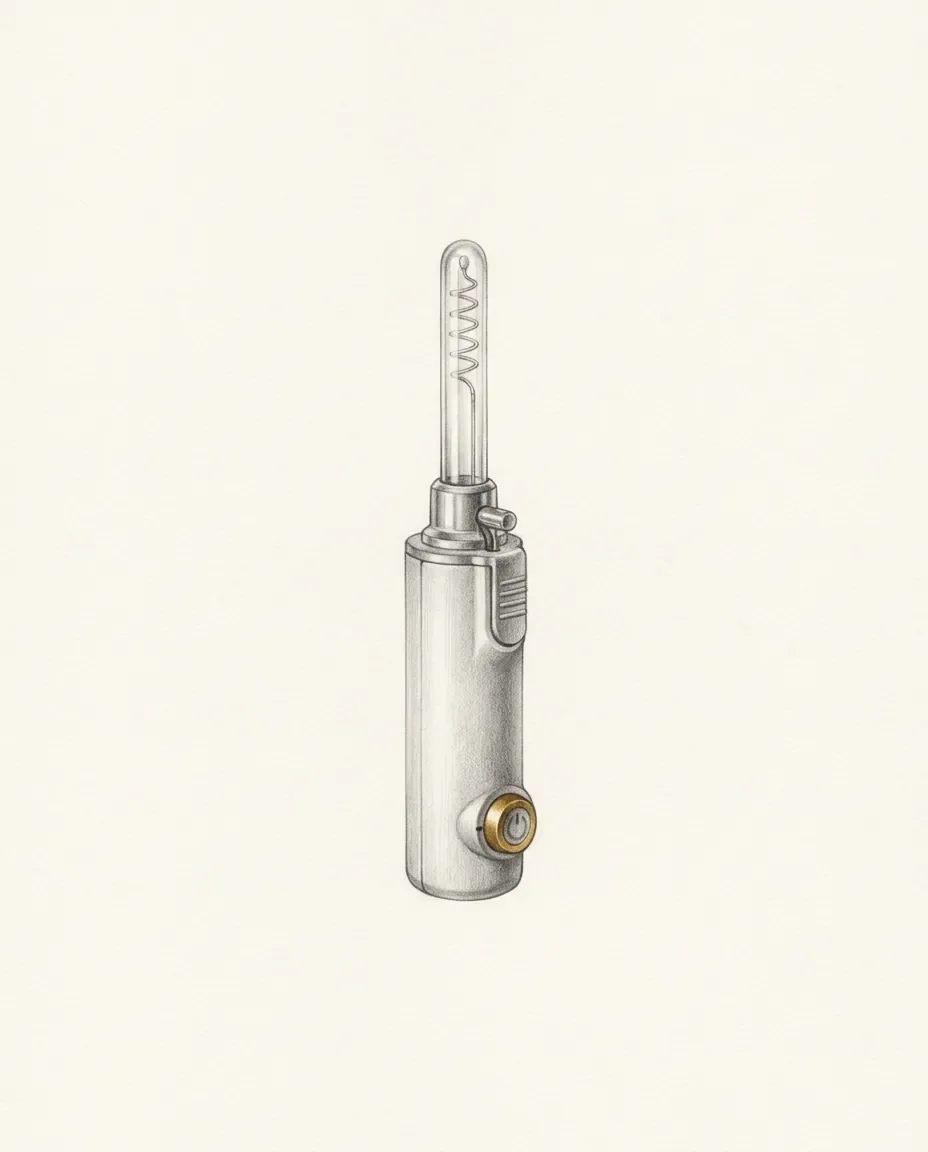
What the term covers. A control unit driving conductive pads, straps or contacts placed on the body, with adjustable frequency and intensity; medical TENS units repurposed for the same job; and the violet wand, which throws a visible spark from a glass electrode across a small air gap rather than passing current between two contacts. The sensations range from a faint tingle through a steady buzz to involuntary muscle contraction, and a session is normally negotiated in advance for which areas are in play, at what intensity, and on what signal it stops.
What the term does not cover. Violet wand play is a subset with its own entry rather than a synonym: it is high-voltage, low-current and surface-level, where contact e-stim passes current through tissue between electrodes. Sensation play with feathers, fur or a Wartenberg wheel, and temperature play with ice or warmed objects, produce unfamiliar skin sensations by mechanical or thermal means and carry nothing like the same risk profile; impact play and needle play are different modalities again. Nor is electro play simply a species of pain play: current at low settings is not painful, and much of the appeal lies in a sensation with no ordinary equivalent. It shares the edge play label with practices such as breath play because of what can go wrong, not because they feel alike.
How the word is used. The vocabulary is community vernacular throughout (electro play, e-stim, electrosex, violet wand), and none of it is a clinical coinage. The medical literature touches the field from two directions only: electrotherapy, from which the equipment descends, and forensic reports of accidental deaths involving improvised apparatus. Neither DSM-5-TR nor ICD-11 names the practice at all.
History & origins
The erotic use of electricity sits downstream of a long medical history, and almost every tool in the modern kit is a repurposed health or clinical device.
From electrotherapy to the violet ray
- Late 1800s to early 1900s: Mild electrical current was a staple of therapeutics, when electrotherapy and "electrification" were marketed for an enormous range of complaints. The high-frequency current at the heart of the field is associated with Nikola Tesla, who demonstrated a prototype violet-ray device at the 1893 World's Columbian Exposition, and with the French physician Jacques-Arsène d'Arsonval, a pioneer of high-frequency electrotherapy whose refinements made the apparatus safer for use on the body.
- c. 1900 to 1930s: The violet ray, a handheld Tesla coil energising a gas-filled glass electrode to produce a visible violet spark and mild current, became a major US industry, with dozens of manufacturers (Renulife, Fitzgerald, Fisher and others) selling hundreds of thousands of units advertised as cure-alls for everything from rheumatism to baldness.
- 1940s to 1951: The US Food and Drug Administration pursued the makers for false medical claims; the last domestic manufacturer, Master Electric, was the subject of a 1951 seizure action in Marion, Indiana, and violet-ray manufacture for medical use was effectively prohibited in the US by case law. The apparatus survived by finding a second life in kink and sensation play, where it is now sold as the violet wand.
Modern e-stim equipment
- 1920s: Per the erotic electrostimulation literature, the American Medical Association investigated electrical devices and concluded they amounted to "more or less mechanical masturbation."
- 1970s: Medical TENS (transcutaneous electrical nerve stimulation) units, developed for legitimate pain management, were adapted by hobbyists for erotic use.
- Mid-1980s: The first purpose-designed analog e-stim devices were commercially marketed; late 1990s digital units followed, offering adjustable frequency, power and programmable settings.
The contemporary practice coalesced through BDSM communities across the late twentieth century and is today supported by purpose-built devices and specialist vendors. It has never been classified as a paraphilia in the DSM-5-TR or ICD-11; it is a consensual activity, notable chiefly for its safety profile.
In practice
Electro play is typically expressed with equipment designed for the purpose (specialised power units, conductive pads or contacts, and the spark-based violet wand) as well as repurposed medical TENS units. Sessions usually sit within broader sensation-play or sensory-overload and power-exchange contexts, where the receiver and operator agree in advance on which body areas and intensities are in play, and establish clear signals to pause or stop. Like other intense modalities, it is frequently grouped under the heading of "edge play" alongside practices such as breath play.
Psychology
The interest is generally understood as a form of sensation seeking and trust exercise rather than a discrete paraphilia. The unfamiliar quality of electrical sensation, a stimulus the body cannot habituate to as it does to touch, together with the focus it demands and the collaborative care between partners, is commonly cited as central to its appeal. The evidence base is thin: there is little formal psychological study of electro play specifically, and most accounts are qualitative or drawn from the broader literature on BDSM motivation.
Prevalence & culture
Electro play has modest but stable visibility within kink communities and limited mainstream awareness. It appears on lay A–Z guides to kinks and fetishes, and it sits within the broad BDSM/sensation-play umbrella that large fantasy surveys such as Lehmiller's Tell Me What You Want (2018) found to be near-universal, though e-stim itself is a much narrower, more specialist taste. Dedicated forums, demonstrations at community events, equipment vendors, and FetLife interest groups sustain a small but committed following. Because there is little formal clinical literature, prevalence estimates rely on such community proxies rather than population data.
Safety, consent & law
Electricity carries real physical risk, so safety conventions are emphasised strongly. Per the erotic electrostimulation guidance, current is generally kept below the waist and away from the chest, head, and neck so as not to cross the heart; people with cardiac conditions, pacemakers or other implanted electronics, epilepsy, or who are pregnant are advised to abstain. Mains-powered or improvised equipment is strongly discouraged in favour of devices designed and rated for body contact: forensic literature documents accidental autoerotic deaths involving homemade mains-powered apparatus. Among informed, consenting adults using appropriate, body-rated equipment it is regarded as a benign activity. The extreme-risk flag reflects the potential for serious harm, including cardiac disturbance or arrest, if it is performed carelessly. It is legal between consenting adults, though injury caused by misuse, or contact near the heart, can raise safety and liability concerns.
Common questions
Is electro play dangerous?
It can be. The governing hazard is current crossing the heart, which is why the standing convention is to keep everything below the waist and well away from the chest, head and neck. Equipment must be designed and rated for body contact; mains-powered or improvised apparatus is the single worst idea in the field, and the forensic literature records accidental deaths involving homemade mains-powered devices. Used within those limits, with body-rated gear, it is regarded as a benign activity.
Who should not use e-stim?
Anyone with a cardiac condition, a pacemaker or another implanted electronic device, anyone with epilepsy, and anyone who is pregnant is advised to abstain entirely. These are the standard contraindications carried over from the medical devices the equipment descends from, and they are not cautions to be worked around by turning the intensity down; the concern is the interaction with the implant or the condition, not the strength of the sensation.
Can you use a medical TENS unit for e-stim?
That is where the hobby started: TENS units developed in the 1970s for pain management were adapted by enthusiasts, and purpose-built devices only reached the market in the mid-1980s. A TENS unit is at least rated for body contact, which improvised equipment is not, but it was designed for pads on a back or a limb and its manufacturer's contraindications still apply in full. Purpose-built e-stim units exist because they offer control a physiotherapy device was never built to give.
Does electro play hurt?
Not necessarily, and that is much of the point. At low settings the sensation is a tingle or a buzz with no real equivalent in ordinary touch; higher settings produce sharper, snapping sensations and involuntary muscle contraction, which some people experience as painful and others do not. Intensity is continuously adjustable, so where a given session sits on that range is a decision rather than a property of the practice.
What is a violet wand?
A handheld spark device with its own entry here, descended from the "violet ray" health gadgets sold in enormous numbers in the United States between roughly 1900 and the 1930s. A small Tesla coil energises a gas-filled glass electrode, producing the characteristic violet glow and a spark that crosses to the skin. The FDA pursued the manufacturers over false medical claims and the last American maker was the subject of a 1951 seizure action; the apparatus survived in kink instead. It differs from contact e-stim in working at the surface rather than passing current through tissue.
Is electro play a recognised paraphilia?
No. Neither DSM-5-TR nor ICD-11 lists it, and there is very little formal psychological study of it at all; what exists is qualitative, or drawn from the broader literature on BDSM motivation. It is a consensual sensation practice between adults, and it appears in the clinical record mainly through its safety profile rather than through any diagnostic category.
Is electro play legal?
Between consenting adults, yes; no jurisdiction treats electrostimulation as an offence in itself. The complications are the ordinary ones that follow serious injury. Where careless use, unrated equipment or contact near the heart causes harm, consent is unlikely to settle the question of liability, and jurisdictions differ on how far a person can consent to serious bodily harm in the first place.
- Sensory Overload Play29/100Sensation & PainA consensual sensation-play practice of deliberately flooding the senses with intense, layered, or competing input. Overlapping touch, temperature, sound, and light produce an overwhelming, disorienting state. It is the mirror image of sensory deprivation.29
- Breath Play52/100Asphyxiophilia · Sensation & PainA sexual interest in restricting breathing or blood/oxygen flow to heighten arousal, ranging from light, negotiated partnered breath control. At its far end it includes solitary erotic asphyxiation. Clinically recognised as a specifier of sexual masochism and carrying a serious risk of accidental death.52
- Wet & Messy (WAM / Sploshing)39/100Sensation & PainWet & Messy (WAM), also called sploshing, is arousal from being covered in or playing with messy substances such as food, mud, slime, or liquids. It is a sensation-focused, generally non-explicit form of play.39
- Ballbusting41/100Sensation & PainConsensual BDSM activity in which a partner applies blunt force (kicking, kneeing, squeezing or striking) to the testicles. A focused subset of cock-and-ball torture, often within femdom or humiliation play, it carries a real risk of genital injury.41
- Bastinado / Foot Whipping37/100Sensation & PainConsensual impact play that concentrates strokes on the bare soles of the feet, a foot-centred subset of BDSM sensation play. Because the soles are nerve-dense and lightly padded, it yields intense sensation and carries elevated injury risk, so practitioners keep it firmly risk-aware.37
- Needle Play37/100Sensation & PainConsensual BDSM practice in which fine sterile needles are passed temporarily through the surface of the skin for sensation, ritual, or visual effect. They are removed at the end of the scene. A higher-risk edge practice distinct from permanent body piercing.37
A plain-English descriptive term: "electro" (from Greek elektron, "amber," the material the ancients rubbed to make static electricity) plus "play." The kink-community labels are likewise descriptive: "e-stim" abbreviates electrostimulation, and "violet wand" names the device by the violet glow of its gas-filled electrode, a survivor of the early-1900s "violet ray" Tesla-coil health gadgets; none is a clinical -philia/-lagnia coinage.
electrical sensation · neuro-stimulation · consensual pain
Prevalence is computed from the entry's cited population estimate. Rows marked ESTare indicative editorial estimates scored against a fixed anchor rubric, not measured quantities. Method & anchors: methodology.
Common · ≈ 1 in 20
- 01An A–Z of Kinks and Fetishes, Glamourlay framing of electro play / e-stim as a recognized BDSM sensation-play kink
- 02Lehmiller (2018), Tell Me What You Want, survey of 4,175 Americanssituates electrostimulation within the broad BDSM/sensation-play umbrella that is a common fantasy
- 03FetLife, kink community group sizes (community-size proxy)community-size proxy for e-stim and violet wand interest groups
- 04Violet wand, Wikipediahistory of the violet wand as a repurposed early-1900s high-frequency 'violet ray' health device
- 05Erotic electrostimulation, WikipediaDefines e-stim, dates the equipment timeline (TENS adapted 1970s; purpose-built devices mid-1980s analog and late-1990s digital), the 1920s AMA finding, and the safety conventions (current below the waist, away from the heart; cautions for cardiac/pacemaker/epilepsy/pregnancy; forensic deaths from mains-powered homemade devices).
- 06Violet ray, WikipediaHistory of the violet ray as an early-1900s high-frequency Tesla-coil health device (Tesla's 1893 demonstration, c.1900-1930s industry, FDA action and the 1951 Master Electric seizure) later repurposed as the violet wand.
- 07Tesla coil, WikipediaExplains the high-frequency Tesla-coil mechanism underlying the violet wand.
- 08DSM-5-TR, Paraphilic Disorders (American Psychiatric Association, 2022)Establishes that electro play is not classified as a paraphilic disorder.
- 09ICD-11, Paraphilic disorders (World Health Organization)Establishes that electro play is not classified as a paraphilic disorder.