Temperature Play
Added 21 Jun 2026 · Updated 22 Aug 2026
Consensual sensation play that uses warmth and cold, such as ice, chilled or warmed objects, and contrasting temperatures, to heighten skin sensation. It is a gentle, accessible branch of BDSM sensation play centered on thermal contrast.
- Prevalence
- Common
- Category
- Sensation & Pain
- Domain
- Sexual interest
- Confidence
- Medium confidence
- Status
- Consensual BDSM sensation play; a common, benign variation rather than a clinical disorder absent distress or non-consent.
- Also known as
- ice play, hot and cold, thermal sensation, wax play, thermal play
- Added
- 21 Jun 2026
- Updated
- 22 Aug 2026
Featured in
Overview
Temperature play is a form of consensual sensation play that uses heat and cold to stimulate the skin and heighten bodily awareness. Also called ice play or thermal play, it covers tracing ice across the body, pressing chilled or warmed implements to the skin, dripping low-melt wax, and alternating warm and cool to sharpen tactile contrast. It sits among the more accessible, lower-intensity branches of BDSM sensation play, which makes it a common entry point for newcomers, with wax play as its most specialized, higher-risk subset. This article traces the practice from its therapeutic forerunners to its settled place in modern kink vocabulary, then covers how it is done, its psychology, prevalence, and the safety margins that keep it low-risk.
Definition & scope
What sets temperature play apart from the wider sensation family is that the stimulus is thermal, not impact or pressure. The interest is in contrast and the shock of the unexpected, a cold trail followed by warmth, rather than in pain for its own sake. That distinguishes it from impact practices such as flogging and caning, even though the same negotiation, trust, and aftercare frame all of them. Two broad modes exist: cold play (ice cubes, chilled glass or metal, refrigerated toys) and heat play, whose signature form is wax play, the controlled dripping of low-melt candle wax. Many scenes combine both, or pair temperature with a blindfold so the receiver cannot anticipate what is coming.
Examples
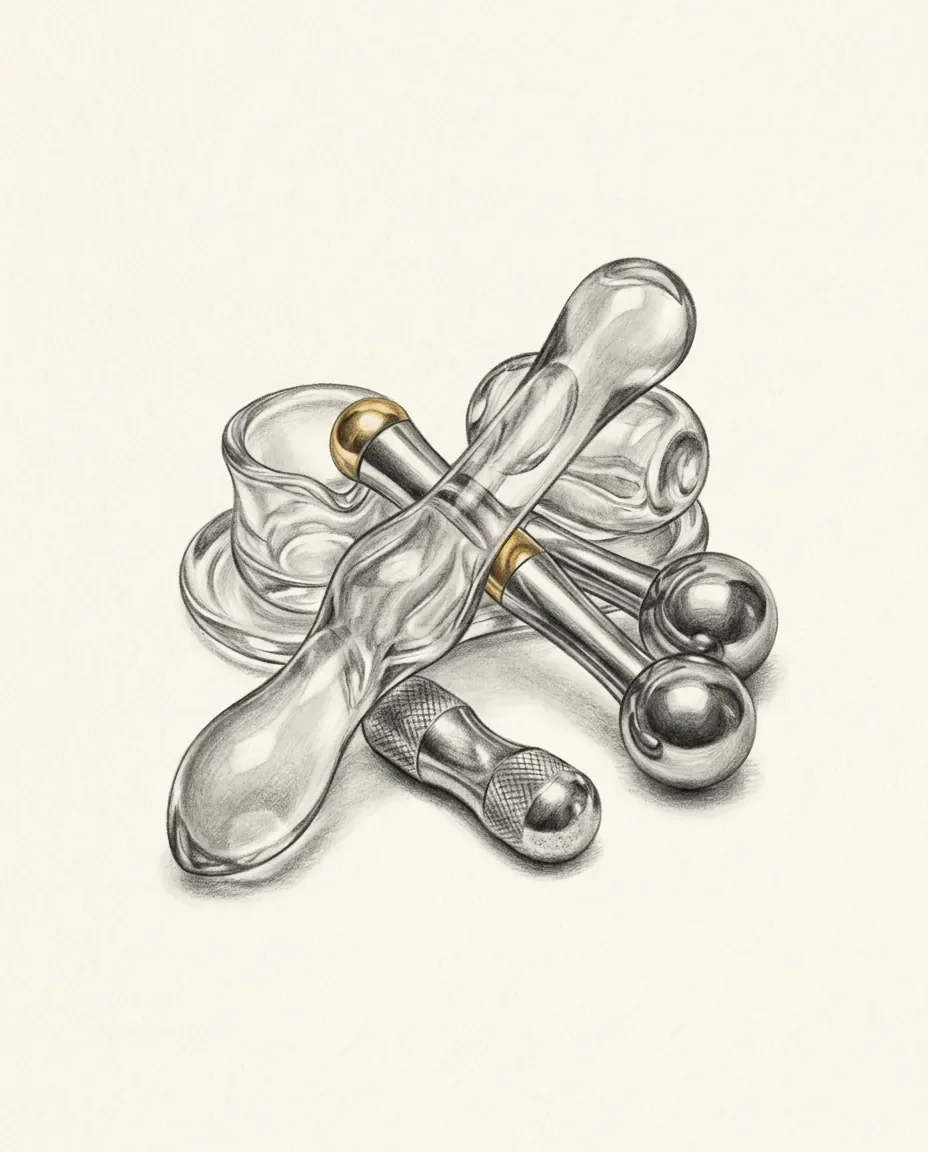
What the term covers. An ice cube traced along the back or shoulders and left to melt; a glass or steel toy chilled in the fridge or warmed in water beforehand; low-melt massage wax dripped from a height so it cools on the way down; a warm compress or heated stone alternated with something cold to sharpen the contrast; and a blindfold added so the receiver cannot see which is coming next. In every case the stimulus is thermal, and that is the whole boundary of the term.
What it does not cover. Wax play is a subset rather than a synonym: the heat form, and the one carrying a genuine burn risk. A standing erotic fixation on cold itself, as distinct from an enjoyment of contrast, is cold fetish or psychrophilia: an attraction rather than an activity. Impact practices such as spanking, flogging and caning deliver force, not temperature, and texture-led work (sensation play with feathers or a Wartenberg wheel, or abrasion play) varies the surface rather than the heat. Fire play and branding apply heat far past anything temperature play involves and belong with edgeplay. Urtication produces a burning sensation chemically, from nettles, with no heat at all.
How the word is used. "Temperature play" is community vocabulary, coined and spread through kink education rather than clinical literature, and it appears in neither DSM-5-TR nor ICD-11. It works as an umbrella: people say "temperature play" when a scene mixes hot and cold, and name the specific practice ("ice play", "wax play") when only one of the two is in use.
History & origins
Therapeutic and sensory forerunners
Deliberate temperature contrast as a sensory technique has deep roots in bathing and therapeutic culture: the Roman frigidarium and caldarium, Nordic sauna-and-cold-plunge traditions, and the warming practice of fire cupping that, as the Wikipedia article on temperature play notes, was "appropriated from traditional and holistic medicine communities." These were framed as health or hydrotherapy practices rather than erotic ones, but they established the long cultural familiarity with hot-cold contrast that erotic practice would later borrow.
A modern, community-coined term
As an explicitly named element of consensual kink, "temperature play" is a modern, community-coined umbrella term rather than a clinical one. Its precise coinage is not well documented, and, unlike the classic paraphilias, it does not appear in the foundational sexological literature such as Krafft-Ebing's Psychopathia Sexualis (1886) or Havelock Ellis's Studies in the Psychology of Sex. Instead it belongs to the broader category of sensation play that grew out of the organized leather and BDSM subcultures of the later twentieth century. The vocabulary spread through educational kink writing, in-person workshops, and online communities rather than through a single coiner or landmark text.
Settling into the mainstream lexicon
By the 2010s, ice and wax play were routinely listed among recognized common kinks in mainstream lay guides (for example, Glamour's "A–Z of Kinks and Fetishes") reflecting its settled, beginner-friendly place in the vocabulary of consensual exploration. Its visibility tracks the broader cultural normalization of BDSM following the Fifty Shades phenomenon, which brought sensation-play concepts to a far wider audience.
In practice
It is typically expressed through slow, attentive application: one partner introduces temperature changes while the other focuses on the shifting sensations. Common elements include:
- Glass, metal, or stone implements warmed or chilled beforehand.
- Ice traced lightly across less delicate areas of the skin.
- Low-melt-point massage or wax play candles dripped from a height to cool en route to the skin.
- Blindfolds to amplify surprise and anticipation.
- Alternating warm and cool to sharpen contrast.
The appeal usually lies in contrast and anticipation rather than in any pain component, which is what keeps it gentler than impact-based sensation play.
Psychology
What makes temperature play appealing?
The draw is heightened sensory focus, the trust and vulnerability of surrendering control over what one feels, and a meditative quality of attending closely to sensation. Unexpected warmth or cold sharpens attention and grounds a person in the present moment: a mechanism shared with the wider family of sensation- and pain play interests, where a controlled, novel stimulus heightens arousal and presence. As a consensual variation it is considered benign and is not a clinical condition.
Prevalence & culture
How common is temperature play?
Dedicated prevalence research on temperature play specifically is limited, so estimates lean on its overlap with the broader sensation- and dominance/submission-play umbrella, which population surveys show to be common. In the Quebec general-population survey by Joyal, Cossette & Lapierre (2015), masochism-themed fantasies and submission/domination themes were common rather than rare among both men and women, and Lehmiller's large U.S. survey reported in Tell Me What You Want (2018) similarly found BDSM and sensation fantasies to be widespread. Within kink communities the practice has moderate visibility as an introductory activity, and community proxies such as FetLife groups indicate steady interest in ice and wax play among practitioners.
Safety, consent & law
Between consenting adults it is legal and generally low-risk when sensible precautions are taken. Cold carries a real hazard: ice can cause cold burns, and as it melts it can form edges sharp enough to cut tender skin. Heat must be controlled too. The single most important variable in wax play is the wax's melting point, because that sets the temperature that reaches the skin. Per the Wikipedia article on wax play, typical candle waxes differ enough to matter:
| Wax type | Typical melting point | Notes |
|---|---|---|
| Soy | ~46–57 °C (115–135 °F) | Lowest; common for play |
| Paraffin | ~47–65 °C (117–149 °F) | Widely used; check the grade |
| Beeswax | ~62–65 °C (144–149 °F) | Runs hot; noted as unsafe for play |
Dyes, oils, and added scents raise the melting point further, so a coloured or perfumed candle can burn hotter than a plain one of the same wax. Dedicated low-temperature massage or play candles are strongly preferred over ordinary household candles, which burn far hotter and can scald or blister. Dripping from a height lets the wax cool in the air before it lands. Sensible practice avoids prolonged contact with very cold or very hot items, steers clear of delicate areas, keeps wax away from the face and away from broken skin, and negotiates limits, a safeword, and aftercare in advance. Applying intense temperature to a non-consenting person, or causing injury, would be harmful and potentially unlawful as assault.
Common questions
Does temperature play hurt?
Usually not, and that is much of the point. The draw is contrast and surprise rather than pain, which is what makes it gentler than impact play: ice on warm skin registers as a shock more than an ache, and a properly chosen wax lands as a brief bloom of heat. It can hurt if something goes wrong (ice held in one place long enough to burn, or a candle that melts too hot), but pain here is a failure mode, not the intended sensation.
Can you use an ordinary candle for wax play?
No. Household, dinner and scented candles are formulated to burn well, not to be poured onto skin, and they melt far hotter than the low-temperature massage and play candles sold for the purpose, hot enough to scald or blister. Dyes, oils and fragrance push the melting point higher still, so a coloured, scented household candle is the worst case of all. If a candle does not state a low melting point and an intended use on skin, it is not suitable.
Is temperature play safe?
It is among the lower-risk things in BDSM, but it is not risk-free. Cold burns as readily as heat, and melting ice can develop edges sharp enough to nick tender skin. The heat risk is set almost entirely by the wax's melting point. The practical margins are simple: keep cold moving rather than parked in one place, drip wax from a height so it cools in the air, keep both away from the face, eyes and broken skin, and stop at numbness.
What do you need for temperature play?
Very little, which is part of the appeal. Ice, and a bowl of warm water for anything you want heated. Glass, steel or stone toys, which hold temperature well and are easy to clean. Low-melt massage candles if you want the heat side of it. A blindfold, because not knowing what is coming is most of the effect. A towel. Nothing on that list is specialised equipment or needs to come from a kink retailer.
Is temperature play a good place to start with BDSM?
It is one of the standard recommendations, for practical reasons rather than symbolic ones. The equipment is household, the sensation is immediate and stops the moment the stimulus is removed, nothing is left on the body afterwards, and the risks are legible enough for a first-timer to manage. It also introduces the machinery everything else depends on (negotiating beforehand, checking in during, and having a safeword) at very low stakes.
What is the difference between temperature play and sensation play?
Sensation play is the broad family: anything that works by varying what the skin feels, including feathers, textures and implements such as a Wartenberg wheel. Temperature play is the branch where the variable is heat or cold specifically. In practice they run together, since a scene mixing ice, silk and a pinwheel is doing all of it at once, but the terms are not interchangeable: one names the stimulus, the other names the whole category.
Is temperature play a fetish or a disorder?
Neither, in the clinical sense. It is a consensual activity between adults, it appears in neither DSM-5-TR nor ICD-11, and enjoying it says nothing diagnostic about anyone. A standing erotic fixation on cold itself, rather than on the contrast, does have its own name (cold fetish, or psychrophilia), and even that is a variation rather than a disorder unless it causes real distress or involves someone who has not consented.
- Wax Play50/100Ceroticism · Sensation & PainConsensual temperature and sensation play in which warm candle wax is dripped onto a partner's skin for a brief heat sensation. A cooling, hardening trace follows. It is a popular, ritualistic element of BDSM sensation play that requires care to avoid burns.50
- Flogging60/100Sensation & PainConsensual impact play in which one partner strikes another's body with a multi-tailed flogger, whip, or single-tail. The rhythmic sensation ranges from a broad "thuddy" impact to a sharp, stinging line. It is a common, negotiated element of BDSM sensation play.60
- Pain Play58/100Algolagnia · Sensation & PainPain play (algolagnia) is a clinical umbrella term for sexual arousal connected to physical pain, whether that pain is received or inflicted. The received form is labelled active/masochistic, the inflicted form passive/sadistic. It frames pain itself, not any specific implement, as the source of erotic interest.58
- Caning48/100Sensation & PainConsensual impact play using a thin, flexible rod such as a rattan cane or switch to deliver sharp, stinging strokes. It is a focused subset of BDSM impact play known for an intense, lingering sensation and carries higher injury risk than padded implements.48
- Suspension Bondage49/100Sensation & PainA form of consensual bondage in which a restrained person is partly or fully lifted off the ground from one or more overhead suspension points. Rope, webbing, cuffs, or chain carry the load. It is a technically demanding, higher-risk practice within the wider rope-bondage and BDSM world.49
- Biting Kink51/100Odaxelagnia · Sensation & PainOdaxelagnia is a consensual interest in arousal from biting or being bitten, ranging from gentle nibbling to firmer bites that may leave a temporary mark. It blends strong sensation, intimacy, and a mild element of marking, and sits at the gentle end of sensation play.51
temperature · cold sensation · skin sensation
Prevalence is computed from the entry's cited population estimate. Rows marked ESTare indicative editorial estimates scored against a fixed anchor rubric, not measured quantities. Method & anchors: methodology.
Common · ≈ 1 in 20
- 01Lehmiller (2018), Tell Me What You Want, survey of 4,175 Americanssensation/BDSM play fantasies are common, situating temperature play within the broad pain/sensation umbrella
- 02An A–Z of Kinks and Fetishes, Glamourlay framing of ice and wax temperature play as a recognized common kink
- 03FetLife, kink community group sizes (community-size proxy)community-size proxy for temperature/wax play interest groups
- 04Temperature play, Wikipediabackground on temperature play as a recognized form of consensual BDSM sensation play, ice/wax practices, fire-cupping appropriation from holistic medicine, and safety (cold burns, sharp melting ice edges, candle temperatures)
- 05Joyal, Cossette & Lapierre (2015), What Exactly Is an Unusual Sexual Fantasy?, J. Sexual Medicine 12(2):328-340Quebec general-population survey (n=1,516) finding masochism and submission/domination fantasies common rather than rare, situating sensation play within frequently reported interests
- 06Psychopathia Sexualis, WikipediaKrafft-Ebing's 1886 foundational sexological work, noted as not containing 'temperature play', which is a modern community term rather than a classic paraphilia
- 07Wax play, Wikipediawax play as the heat form of temperature play, and typical melting points of soy (~46–57 °C), paraffin (~47–65 °C) and beeswax (~62–65 °C, noted unsafe) candles, with dyes/oils/scents raising the melting point