Abrasion Play
Added 21 Jun 2026 · Updated 22 Aug 2026
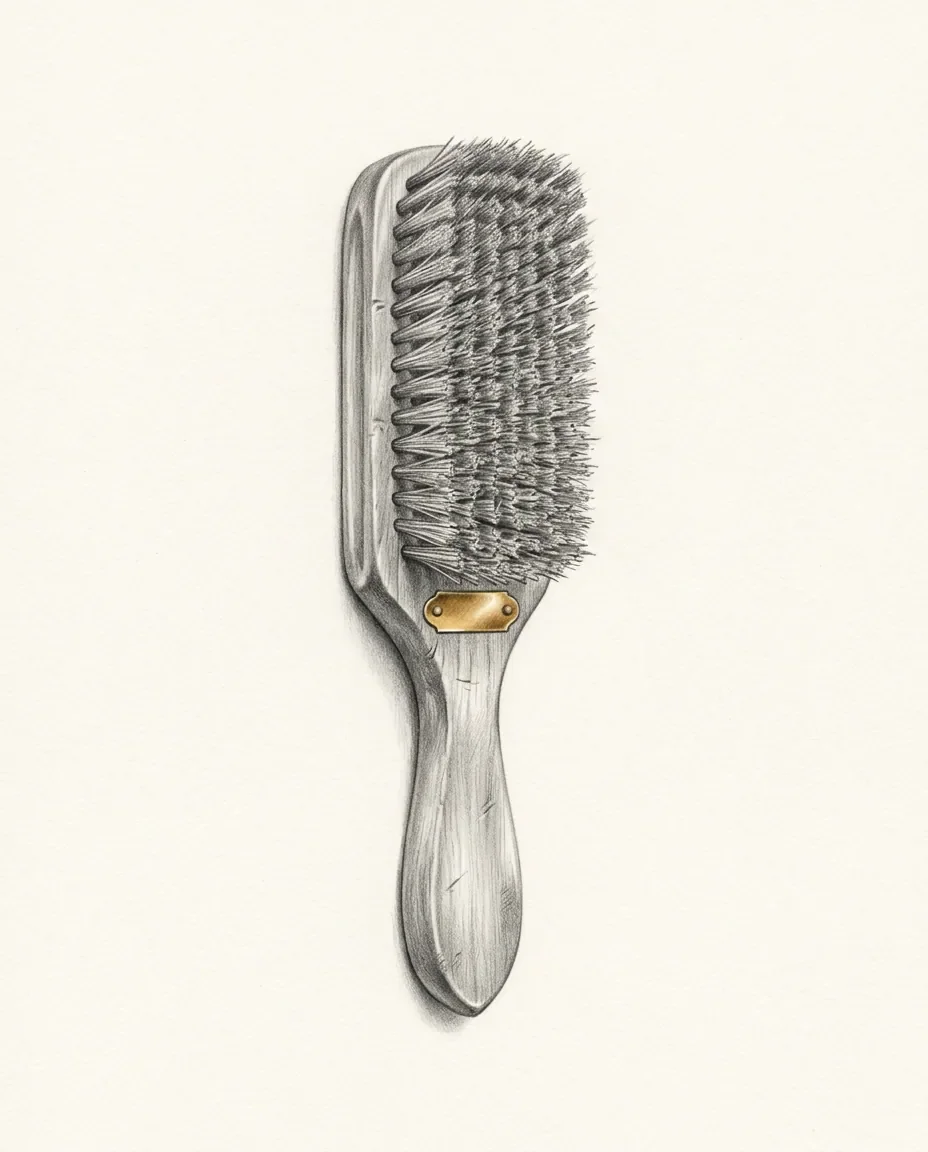
Abrasion play is a sensation-play practice in which rough, scratchy textures are drawn across the skin to create friction-based sensation. Sandpaper, coarse cloth, abrasive gloves and fingernails are typical. It is a niche, consensual BDSM activity, not a paraphilia.
- Prevalence
- Uncommon
- Category
- Sensation & Pain
- Domain
- Sexual interest
- Confidence
- Low confidence
- Status
- Non-paraphilic BDSM sensation-play practice; no clinical diagnosis.
- Also known as
- abrasion, friction play, rough sensation play, scratch play, sandpaper play
- Added
- 21 Jun 2026
- Updated
- 22 Aug 2026
Featured in
Overview
Abrasion play is a form of sensation play in which textured or rough materials are drawn across the skin to produce a scraping, friction-based sensation. Common implements include sandpaper, emery boards, loofahs, coarse cloth, abrasive gloves, brushes, or fingernails. It belongs to the wider family of consensual sensory techniques rather than to any clinical category, and is valued for the vivid, edgy feeling it creates rather than for any single object of attraction. This article covers where abrasion play sits in the kink lexicon, its documented lineage in the leather community, how it is typically practised, its psychology, and its safety profile.
Examples
What the term covers. Sandpaper or an emery board drawn slowly across the back or thighs; a loofah, hemp cloth or coarse towel worked over an area until it burns; abrasive bath gloves; a stiff-bristled brush; and fingernails, the one implement everybody already has. Intensity is set by the grit of the material and the pressure behind it rather than by speed, and sessions usually stay on broad, forgiving areas of skin.
What the term does not cover. Scratching is the nearest neighbour and is catalogued separately, because nails cut lines while an abrasive surface works a whole area evenly. Urtication, stinging the skin with nettles, produces a chemical sting rather than friction. Wax play and temperature play act through heat and cold, impact play through a blow, and needle play and knife play deliberately break the skin, which abrasion tries not to do. The non-erotic pleasure some people take in rough or unusual surfaces is texture fixation, which is not play at all.
How the word is used. "Abrasion play" is leather-community vocabulary, not clinical language. It is defined in the Glossary of BDSM and taught in kink-education settings, and appears in neither DSM-5-TR nor ICD-11. Practitioners usually shorten it to "abrasion," and talk about "sensitising" an area (brushing skin patiently until a later light touch or breath registers vividly), which is the effect the technique is prized for rather than the scrape itself.
History & origins
Abrasion has a clearer origin story than most sensation techniques. According to the veteran leather educator David Stein, it was Chuck Barrow, a full member of the Chicago Hellfire Club, who "more or less invented it as an SM technique." Stein learned it directly from Barrow in 1981, then wrote it up in an essay, "Oh, the Pleasure of the Pain! An Ode to Abrasion," and demonstrated it at leather events for decades, which is how the technique spread through the community. Stein is the same educator who, in 1983, coined the phrase "safe, sane and consensual" for the Gay Male S/M Activists statement of purpose, so abrasion's documentation is bound up with the wider codification of consent-based kink.
A named technique within sensation play
Beyond that leather-community lineage, abrasion is one named technique within the broader sensation play repertoire, sitting alongside temperature play, wax play, and impact play, which practitioners and educators catalogued as the community developed a shared vocabulary. The English-language Glossary of BDSM defines abrasion simply as the "use of friction with a rough surface against the receptive partner," noting it may be used to sensitise an area of skin. Popular reference guides and A-to-Z kink lists, such as Glamour's A–Z of kinks and fetishes, now describe it as a recognised, if niche, activity. Because it is a community practice rather than a clinical entity, it is absent from diagnostic manuals; consensual BDSM as a whole was distinguished from disordered sadism and masochism in the move from earlier diagnostic frameworks to the ICD-11, which no longer treats consensual sadomasochism as a disorder.
In practice
Sessions are typically performed slowly and deliberately, often across the back, thighs, or buttocks, where skin is more forgiving:
- intensity is controlled by the coarseness of the material and the pressure applied;
- a long, patient brushing can leave the skin so sensitised that a light touch or breath registers vividly, as Stein described in his teaching;
- it is frequently combined with other sensation techniques such as temperature or light impact play;
- the goal is a heightened, contrast-rich sensory experience rather than injury.
For most practitioners it forms one thread in a varied sensory palette rather than an exclusive focus.
Psychology
The appeal lies in the heightened, sometimes "edgy" skin sensations and in the trust dynamic between the giver and the receiver. Intense but controlled stimulation can sharpen body awareness and presence, and the surrender involved can deepen connection. Within sensation play more broadly, contrast (alternating rough abrasion with soft or warm stimuli) can intensify the experience by keeping the receiver's attention fully on their body. It is not classified as a paraphilia and carries no clinical diagnosis; researchers studying BDSM populations, such as Wismeijer & van Assen (2013), have generally found practitioners to be psychologically well-adjusted, undercutting older assumptions of pathology.
Prevalence & culture
Abrasion play is a niche practice within the sensation-play and BDSM community. It appears on detailed kink reference lists and within community spaces rather than in mainstream surveys, so reliable prevalence figures are scarce. Broader work on the prevalence of BDSM interest (for example Joyal & Carpentier (2017), who found masochism and dominance/submission fantasies to be common in a representative sample) gives context for the parent category, but no published study isolates abrasion play specifically. Community-size proxies such as FetLife groups suggest a small but identifiable group of enthusiasts.
Safety, consent & law
Safety is the central concern. Abrasive textures can break the skin, cause irritation, or create open wounds that raise infection risk, so experienced practitioners keep sessions light, avoid sensitive, thin, or already-broken skin, monitor the treated area for breaks, and provide aftercare afterward. Because of the marking and bleeding risk, kink-education sources caution that abrasion carries a higher-than-usual chance of lasting skin damage and recommend hygiene precautions (including blood-borne-infection precautions where skin is broken) around any open skin. It is legal between consenting adults, and any skin-marking activity should remain fully consensual: negotiated in advance with clear limits and a safeword, in line with the community's risk-aware consensual kink ethic.
Common questions
What do people use for abrasion play?
Almost anything with a rough surface: sandpaper and emery boards, loofahs, hemp or coarse cloth, abrasive bath gloves, stiff-bristled brushes, and fingernails. The material's grit and the pressure applied set the intensity, so a fine-grade paper used firmly and a coarse one used lightly can feel similar. Most people start with the gentlest option available and work up, because an abrasive that feels mild for ten seconds does not stay mild for two minutes.
What is the difference between abrasion play and scratching?
The implement, and what it leaves behind. Scratching uses fingernails to draw lines, so the sensation is sharp and linear and the marks are stripes. Abrasion works an entire area evenly with a textured surface, producing a broad heat and a general reddening rather than distinct lines. The two are often combined, and fingernails can be used either way, which is why the terms are sometimes blurred in casual use.
Is abrasion play safe?
It is riskier than most sensation techniques, and the reason is straightforward: abrasives are designed to remove material. Broken skin, grazes and lingering irritation are the realistic outcomes of going too hard, and any break in the skin brings infection risk and blood-borne-infection precautions into play. Experienced practitioners avoid thin, delicate or already-damaged skin, check the area repeatedly rather than relying on the receiver's report, and stop well before the surface gives way.
Does abrasion play leave marks?
Usually yes, at least briefly. A worked area typically reddens and stays warm and tender for hours, and a firmer session can leave a graze or a patch that scabs. Kink-education material treats abrasion as carrying a higher-than-usual chance of lasting skin damage, so anyone who needs to avoid visible marks should treat it as a technique to negotiate carefully rather than one to improvise.
Who invented abrasion play?
As a named technique it has an unusually clear origin. Chuck Barrow, a member of the Chicago Hellfire Club, is credited by the leather educator David Stein with more or less inventing it as an SM technique. Stein learned it from Barrow in 1981, wrote it up, and demonstrated it at leather events for decades, which is how it spread. People have obviously scratched and scraped each other for far longer; what Barrow and Stein supplied was the method and the name.
Is abrasion play a paraphilia?
No. It is a consensual technique within sensation play, not a category of sexual interest, and it appears in no diagnostic manual. ICD-11 no longer treats consensual sadomasochism as a disorder at all, and studies of BDSM practitioners such as Wismeijer and van Assen (2013) have found them to be psychologically well-adjusted. Enjoying rough textures on skin says nothing about a person's mental health.
- Sensation Play45/100Sensation & PainAn interest in heightened, varied skin sensations created with soft, textured, or lightly stimulating implements. Feathers, fur, silk, brushes, ice, or pinwheels are typical, often combined with anticipation and the contrast between soothing and prickling touch. It is a common, gentle form of erotic play.45
- Temperature Play49/100Sensation & PainConsensual sensation play that uses warmth and cold, such as ice, chilled or warmed objects, and contrasting temperatures, to heighten skin sensation. It is a gentle, accessible branch of BDSM sensation play centered on thermal contrast.49
- Wax Play50/100Ceroticism · Sensation & PainConsensual temperature and sensation play in which warm candle wax is dripped onto a partner's skin for a brief heat sensation. A cooling, hardening trace follows. It is a popular, ritualistic element of BDSM sensation play that requires care to avoid burns.50
- Impact Play71/100Sensation & PainAn umbrella term for consensual BDSM activities in which one partner strikes another's body with a hand or implement for erotic sensation or power exchange. It spans light spanking through to firmer use of paddles, floggers, crops, and canes within negotiated limits.71
- Sadism59/100Sexual Sadism Disorder · Clinical ParaphiliasRecurrent, intense sexual arousal from the physical or psychological suffering of another person. As the DSM-5-TR's Sexual Sadism Disorder it is diagnosed only when acted on with a non-consenting person or when it causes clinically significant distress or impairment; consensual dominance is not itself a disorder.59
- Masochism69/100Sexual Masochism Disorder · Clinical ParaphiliasA DSM-5-TR paraphilic disorder defined by recurrent, intense arousal from being humiliated, beaten, bound, or otherwise made to suffer. It is diagnosed only when that arousal causes the person clinically significant distress or impairment. Consensual masochistic interest without distress is not a disorder.69
Plain-English descriptive term: "abrasion" (from Latin *abradere*, "to scrape off") names the scraping action; "play" marks it as consensual BDSM activity. Not a clinical coinage.
friction · sensation · sensation play
Prevalence is computed from the entry's cited population estimate. Rows marked ESTare indicative editorial estimates scored against a fixed anchor rubric, not measured quantities. Method & anchors: methodology.
Uncommon · ≈ 1 in 100
- 01An A–Z of Kinks and Fetishes, GlamourPopular reference listing abrasion play as a recognized sensation-play kink and describing typical materials and practice.
- 02FetLife, kink community group sizes (community-size proxy)Community-size proxy indicating a small but identifiable group of practitioners interested in abrasion and friction-based sensation play.
- 03Glossary of BDSM, WikipediaDefines abrasion as the use of friction with a rough surface against the receptive partner, used to sensitise the skin.
- 04Wismeijer & van Assen (2013). Psychological characteristics of BDSM practitioners, J. Sexual Medicine (PubMed)Finds BDSM practitioners to be psychologically well-adjusted, supporting the non-pathological framing of sensation play.
- 05Joyal & Carpentier (2017). Prevalence of paraphilic interests and behaviors in the general population, PubMedRepresentative-sample prevalence context for masochism and dominance/submission interests, the parent category of abrasion play.
- 06ICD-11 for Mortality and Morbidity Statistics, WHOEstablishes that consensual sadomasochism is not classified as a disorder in ICD-11, supporting the non-clinical status of abrasion play.
- 07Risk-aware consensual kink, WikipediaFrames the negotiated-consent and risk-awareness ethic referenced in the safety section.
- 08Hurts So Fine: Erotic Abrasion, David Stein, San Francisco Leathermen's Discussion GroupDocuments the technique's origin: Chuck Barrow of the Chicago Hellfire Club as its inventor, David Stein learning it in 1981 and popularising it, his essay and teaching, the sensitising effect, low-risk profile, and blood-borne-infection precautions; Stein coined 'safe, sane and consensual' in 1983.