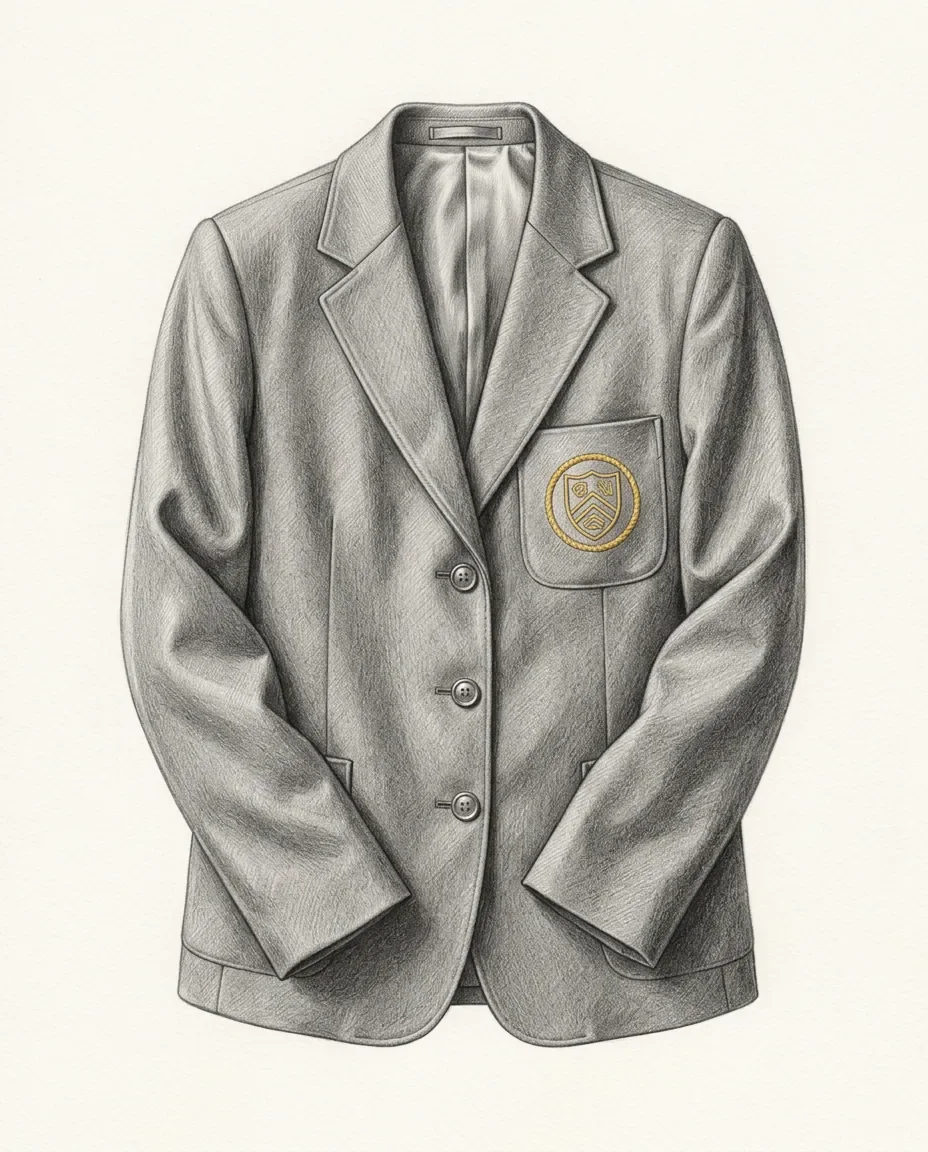
Schoolgirl Uniform Fetish
Added 21 Jun 2026 · Updated 22 Aug 2026
An erotic interest in school or academic uniforms (pleated skirts, blazers, neckties, and sailor-style collars) worn by consenting adults as styled costume. It is a role-coded clothing preference rather than a clinical disorder.
- Prevalence
- Common
- Category
- Clothing & Garments
- Domain
- Sexual interest
- Confidence
- Low confidence
- Status
- Common clothing/role-coded fetish among adults; a normal variation, not a disorder unless it causes distress or impairment.
- Also known as
- school-uniform fetishism, schoolgirl uniform kink, sailor-uniform fetish, academic dress kink, uniform fetish
- Added
- 21 Jun 2026
- Updated
- 22 Aug 2026
Featured in
Overview
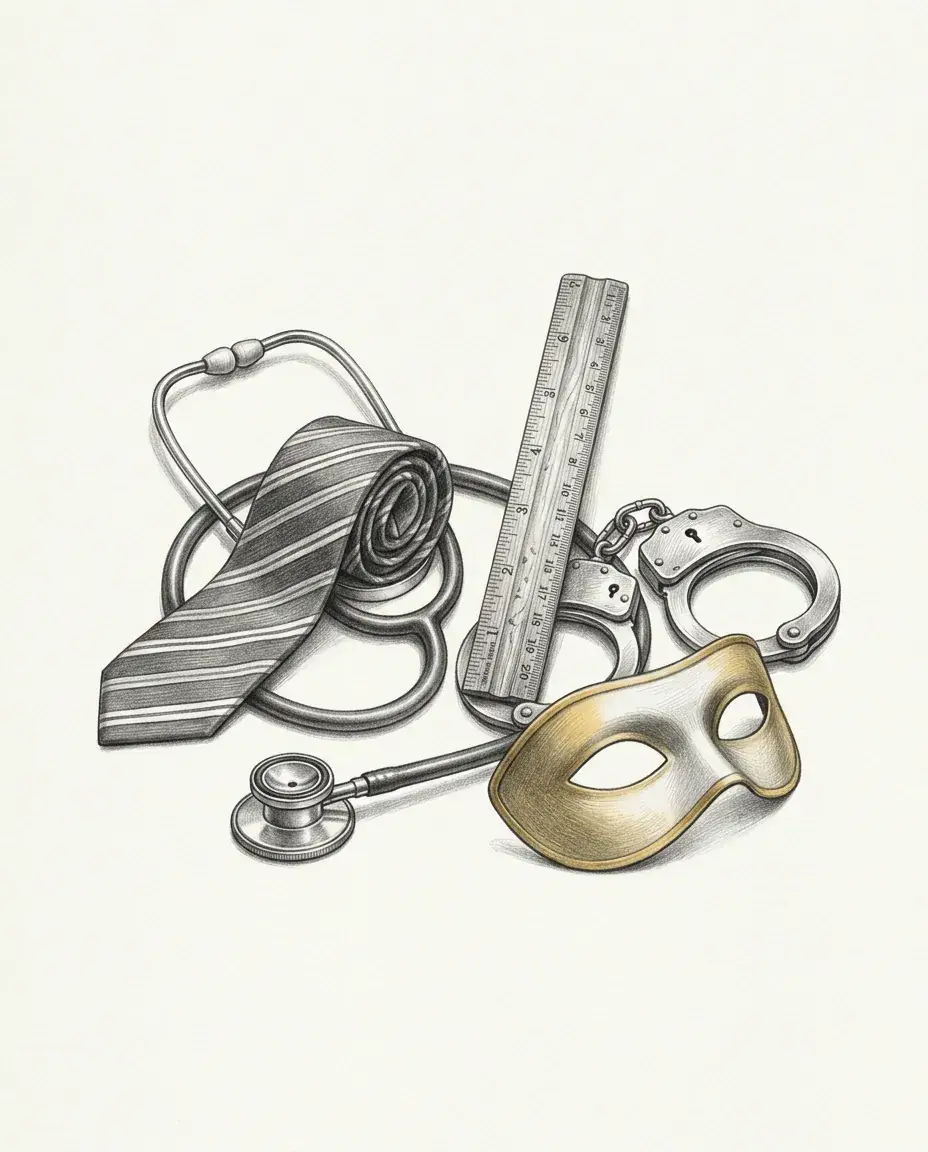
School-uniform fetishism is a clothing-focused erotic interest in which the standardized garments of academic dress (pleated skirts, blazers, knee socks, neckties, and the Japanese sailor-collar (seifuku) style) become a source of arousal layered onto otherwise conventional attraction. Practised exclusively among consenting adults wearing adult-styled costume, it is a role-coded clothing preference rather than a clinical disorder. This article traces the term's roots in the wider study of clothing fetishism, the twentieth-century rise of the uniform as a cultural image, and how the appeal rests on the garment's crisp, coded silhouette and its associations with tidiness, structure, and clearly defined social roles.
Examples
What the term covers. An adult partner dressed in uniform styling (a pleated tartan skirt, a blazer, knee socks, a knotted tie, or the Japanese sailor collar) worn as costume in a private adult setting; an interest in the garments themselves, their cut and coded formality, independent of who wears them; the seifuku as it appears in anime and manga, a drawn stylistic convention rather than a reference to any real institution; and cosplay of adult characters who wear it. In every case the people are adults and the clothing is adult costume sold for adults.
What the term does not cover. This is where the term is most often misread, so it is worth stating flatly: the interest is in a style of clothing worn by grown adults, and it is not an interest in minors. Sexual attraction to prepubescent children is pedophilia; to pubescent children, hebephilia; to mid-to-late adolescents, ephebophilia. Those are separate categories, and acting on them is a serious crime; a garment preference between consenting adults is neither. People who report this interest are overwhelmingly teleiophilic (drawn to physically mature adults) and remain so with the costume on. It is also not age play or DDlg, which turn on an adult adopting an age-coded role rather than on a garment. It is narrower than general uniform fetishism, which also covers military and medical dress, and distinct from teacher role-play, a scenario about institutional authority.
How the word is used. "Schoolgirl uniform fetish" is lay and community vocabulary, drawn from kink catalogues and adult-media category labels; seifuku is simply the Japanese word for uniform, used in English for the sailor-collared style. Neither has a clinical coinage. DSM-5-TR and ICD-11 name attraction to minors but contain no garment- or school-uniform-specific category, and a costume preference between consenting adults is not a diagnosis.
History & origins
Clinical lineage
The specific phrase "school-uniform fetishism" has no documented single coinage; it emerged in lay and subcultural usage rather than the clinical literature. Its conceptual roots, however, sit within the broader study of clothing or garment fetishism, which sexologists have discussed since the nineteenth century.
- 1886: Richard von Krafft-Ebing catalogued garment-focused arousal in Psychopathia Sexualis, establishing clothing as a recognised fetish object.
- Early 1900s: Havelock Ellis, in his Studies in the Psychology of Sex, treated the symbolic and aesthetic dimensions of dress, framing clothing arousal as part of normal erotic life rather than pure pathology.
- 2013–2022: Contemporary frameworks, the DSM-5-TR and ICD-11, classify a clothing-focused interest as a disorder only when it is recurrent, intense, and causes distress, impairment, or harm. A consensual adult costume preference does not meet that bar, so it is treated as ordinary sexual fetishism of the benign, non-disordered kind.
Cultural & subcultural evolution
The schoolgirl-uniform motif as a distinct popular image is tied closely to twentieth-century Japan and later to Western pop culture.
- 1920–1921: The sailor-style seifuku (sērāfuku) was adopted for girls' schools, with Heian Jogakuin reportedly adopting it around 1920 and Fukuoka Jo Gakuin in 1921 under principal Elizabeth Lee, who had studied in the United Kingdom and modelled the design on British Royal Navy uniform. The look also echoed the scaled-down sailor suits then worn by European royal children and the sailor dresses popular among young Americans. Cheap and simple to sew, and read as modest, it spread rapidly across Japanese schools.
- Late 20th century: The seifuku was absorbed into manga, anime, and idol culture, where the uniform became a widely recognised stylised costume and a visual shorthand far removed from any real institution.
- 1998: In the West, Britney Spears's "...Baby One More Time" music video, with its plaid-skirt schoolgirl look, crystallised the uniform as an adult pop-culture costume, inspiring countless Halloween outfits and cementing its mainstream visibility.
In practice
Expression is typically aesthetic and role-play oriented: a consenting adult partner wearing uniform-style attire, costume play, or scenarios that use the garment as a recognisable visual cue. As with related uniform fetishism, the erotic charge is carried by the clothing and its coded look (the silhouette, the pleats, the collar) not by any real institution or person.
Psychology
The interest fits established models of fetish formation through associative learning, in which a previously neutral object becomes linked with arousal through repeated pairing. Uniforms are heavily loaded symbols (they signal order, belonging, discipline, and a defined social role) and the contrast between a formal coded look and an intimate setting (sometimes described as "transgressing" the propriety the garment represents) is part of the appeal for many participants. As Krafft-Ebing and later sexologists noted, the symbolic meaning of dress can be as arousing as its texture, blurring the line between a true fetish and a strong aesthetic preference.
Prevalence & culture
How common is it?
Uniform aesthetics enjoy high cultural visibility, especially through Japanese pop culture and mainstream Western fashion, but school-uniform fetishism specifically is modest in dedicated-community size and lightly studied. In Scorolli et al.'s 2007 survey of roughly 5,000 members of online fetish groups, objects associated with the body accounted for about 30% of preferences and body parts about 33%, with feet and footwear most common; uniforms and other garments form a smaller share within the clothing category catalogued on Wikipedia's sexual-fetishism overview. Lay catalogues such as Glamour's A–Z of kinks list schoolgirl and sailor-uniform play as a recognisable adult costume kink. Many people hold only mild, media-driven associations without identifying a fetish at all.
Safety, consent & law
The interest is benign only when it involves consenting adults and adult-styled costume. Any real or simulated sexualisation of minors is illegal and falls wholly outside the scope of this entry; the legitimate practice is an adult aesthetic, not a reference to real students or schools. Among adults, standard norms of mutual consent, negotiation, and privacy apply, as they do across related lingerie and maid costume interests.
Common questions
Does a schoolgirl uniform fetish mean someone is attracted to minors?
No. The interest is in a style of clothing (pleats, blazer, tie, sailor collar) worn by adults as costume, and the great majority of people who report it are attracted only to adults and would be unmistakably uninterested in an actual child. Attraction to children or adolescents is a separate matter with its own clinical names and, when acted on, criminal consequences. If the appeal genuinely rests on the wearer being underage rather than on the garment, that is a different problem and is worth taking to a professional.
Is a schoolgirl uniform fetish legal?
Yes, where it stays what it is: consenting adults, adult costume, private setting. What is illegal everywhere is sexual material involving real minors, and in many jurisdictions drawn or simulated material depicting minors as well. The garment is not what the law looks at; the age of the people involved, and the age depicted, is. That distinction is also why costume retailers sell adult-sized versions openly: the market is an adult one.
Is this the same as a uniform fetish?
It is a subset of one. Uniform fetishism covers coded institutional dress in general (military, police, medical, service) and usually runs on the authority and belonging the outfit signals. The school variant is narrower and reads differently: the same crisp formality, but attached to tidiness, structure and propriety rather than to command. Plenty of people respond to both, and lay catalogues often file them together, but the associations they trade on are not identical.
Can you have this interest without any interest in real schools?
That is the normal case, and it is what the interest actually is. The appeal attaches to a garment style and its associations (crispness, order, formality, the contrast between a buttoned-up look and a private setting), not to an institution. Most people who report it have no interest in real schools, real students, or age-coded role-play of any kind. The uniform functions the way a maid's outfit or a nurse's does: a recognisable costume with a set of connotations, worn by an adult who chose it.
How is this different from age play or DDlg?
Age play and DDlg are about role (an adult adopting a younger persona, or a caregiver-and-little dynamic), and they can happen in ordinary clothes or in none. A school-uniform interest is about a garment, and can be completely static: someone puts the outfit on and nothing else about the interaction changes. The two are sometimes combined, but neither requires the other, and both are adult-only practices in which every participant is a consenting adult.
Where should the costume come from?
From adult costume and fashion retailers, which is where the market already sits: adult sizing, adult styling, no connection to any actual institution. The look people respond to is the style (the pleats, the tie, the collar) rather than any particular school's real uniform, so sourcing genuine schoolwear adds nothing to the aesthetic while dragging a real school into a private adult scene. Plaid skirts, blazers and ties are also ordinary fashion garments, which is the simplest route of all.
Is a schoolgirl uniform fetish a paraphilia or a disorder?
No. Neither DSM-5-TR nor ICD-11 contains a school-uniform category, and both reserve fetishistic-disorder labels for interests that are recurrent and intense and cause the person real distress or impairment, or that involve someone who has not consented. A costume preference acted on with a willing adult partner meets none of those conditions. The threshold is about consequences and consent, never about which garment is involved.
From the blog
- Uniform Fetish60/100Uniform Fetishism · Clothing & GarmentsAn erotic interest in uniforms and the authority, role, or status they signal: military, police, medical, school, or service dress. A common clothing-and-role fetish rather than a clinical disorder.60
- Maid Fetish44/100Clothing & GarmentsAn erotic interest in maid costumes worn by consenting adults, classically the black-and-white "French maid" look. That look means a fitted dress, frilled white apron, lace trim, and headpiece. A costume- and service-role clothing preference, not a clinical disorder.44
- Lingerie Fetish70/100Clothing & GarmentsAn erotic interest in lingerie and intimate apparel in which the garments themselves, their fabrics, and their styling become a focus of arousal. Bras, briefs, stockings, corsets and slips are typical. One of the most common and mainstream garment-related interests.70
- Glasses Fetish47/100Clothing & GarmentsA sexual or romantic attraction to people wearing eyeglasses, or to the spectacles themselves, often tied to perceptions of intelligence. Perceptions of sophistication or vulnerability are often part of it too.47
- Diaper Fetish44/100Autonepiophilia · Clothing & GarmentsAn erotic or comfort-oriented adult interest in wearing or using diapers. It overlaps with but is distinct from paraphilic infantilism; when centred on the garment and on perceiving oneself as an infant it is termed autonepiophilia. Adherents often call themselves diaper lovers (DL) within the ABDL community.44
- Garter Belt Fetish44/100Garter and suspender-belt fetishism · Clothing & GarmentsAn erotic interest in garter (suspender) belts and the straps that frame the thighs and hold up stockings, prized for their glamour. The visual framing of the upper legs is central to the appeal. A common intimate-apparel fetish tied to lingerie, not a clinical disorder.44
Descriptive English compound: "school" + "uniform" (from Latin *uniformis*, "of one form") + "fetishism" (from Portuguese *feitiço*, "charm, sorcery", via Latin *facticius*, "made by art"). The Japanese variant centres on the *seifuku* (制服, "uniform") and its sailor-collar style.
uniforms · role-coded clothing · costume play
Prevalence is computed from the entry's cited population estimate. Rows marked ESTare indicative editorial estimates scored against a fixed anchor rubric, not measured quantities. Method & anchors: methodology.
Common · ≈ 1 in 20
- 01Scorolli et al. (2007), Relative prevalence of different fetishes, Int. J. Impotence Research 19(4):432-437relative-prevalence context: uniforms fall within clothing fetishes, where footwear (32%) and legwear (33%) dominate
- 02Sexual fetishism, Wikipedia (carries the Scorolli 2007 relative-frequency table)uniform fetishism recognized as a clothing/role-coded fetish; carries the Scorolli table
- 03An A–Z of Kinks and Fetishes, Glamourmainstream lay framing of schoolgirl/sailor uniform play as a recognizable costume kink
- 04School uniforms in Japan, Wikipediahistory of the sailor-style seifuku adopted for girls' schools around 1920-1921 (Heian Jogakuin, Fukuoka Jo Gakuin under Elizabeth Lee, modelled on British Royal Navy attire) and its later cultural diffusion through manga, anime, and idol culture
- 05Psychopathia Sexualis, WikipediaKrafft-Ebing's 1886 cataloguing of garment-focused arousal; the symbolic meaning of dress as an early clinical observation in clothing fetishism
- 06Richard von Krafft-Ebing, Wikipediabiographical context for the sexologist who documented clothing/garment fetishism in the nineteenth century
- 07Havelock Ellis, Wikipediaearly-twentieth-century treatment of the symbolic and aesthetic dimensions of dress in Studies in the Psychology of Sex
- 08...Baby One More Time, Wikipedia1998 Britney Spears music video whose plaid-skirt schoolgirl look crystallised the uniform as an adult Western pop-culture costume
- 09DSM-5 (American Psychiatric Association)diagnostic framework under which a clothing-focused interest is a disorder only when recurrent, intense, and distressing/impairing/harmful
- 10ICD-11 (World Health Organization)international classification limiting paraphilic-disorder diagnosis to interests causing distress or harm, excluding benign consensual costume preferences