Lingerie Fetish
Added 21 Jun 2026 · Updated 22 Aug 2026
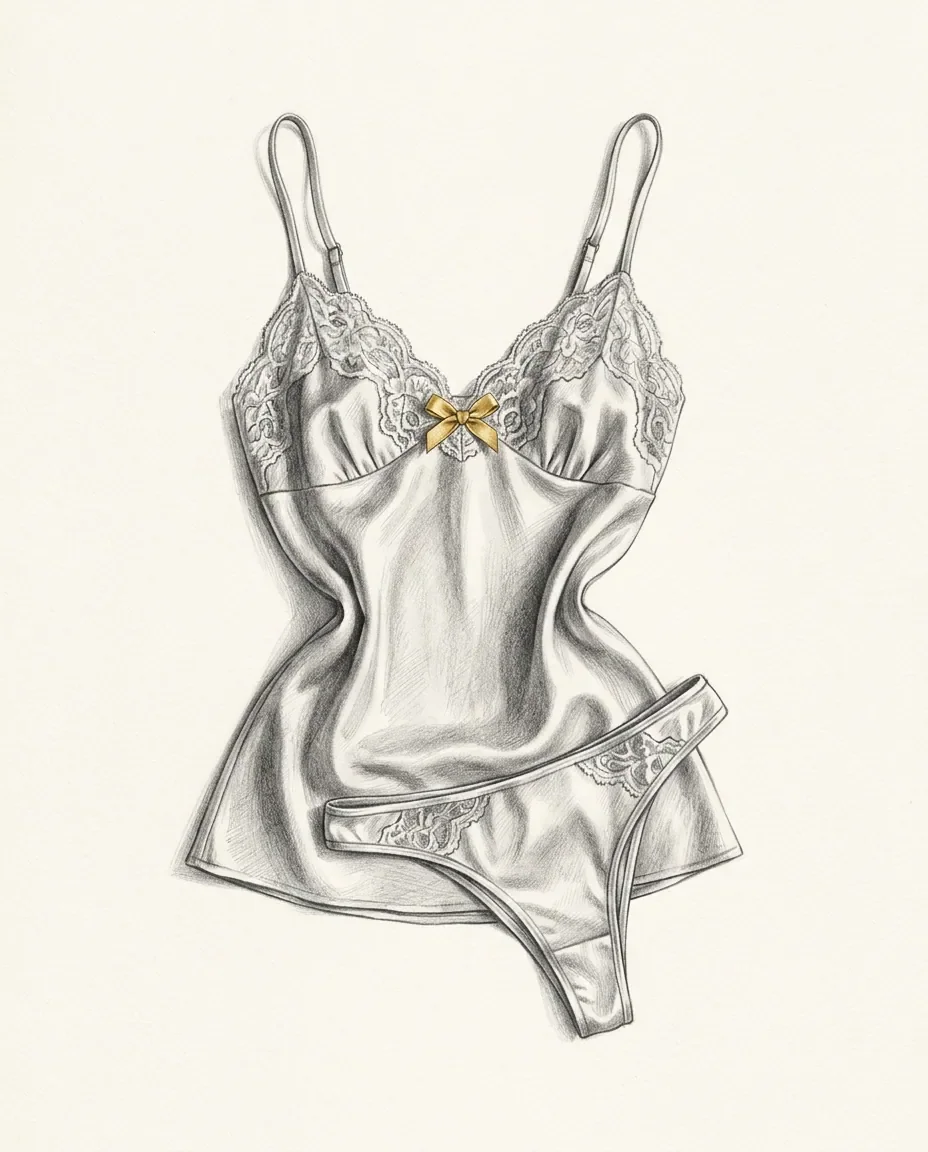
An erotic interest in lingerie and intimate apparel in which the garments themselves, their fabrics, and their styling become a focus of arousal. Bras, briefs, stockings, corsets and slips are typical. One of the most common and mainstream garment-related interests.
- Prevalence
- Very common
- Category
- Clothing & Garments
- Domain
- Sexual interest
- Confidence
- Medium confidence
- Status
- Very common garment interest; not a disorder. Fetishistic disorder applies only with distress, impairment, or harm.
- Also known as
- Lingerie Fetishism, lingerie fetishism, underwear fetish, intimate apparel fetish, lingerie kink
- Added
- 21 Jun 2026
- Updated
- 22 Aug 2026
Featured in
Overview
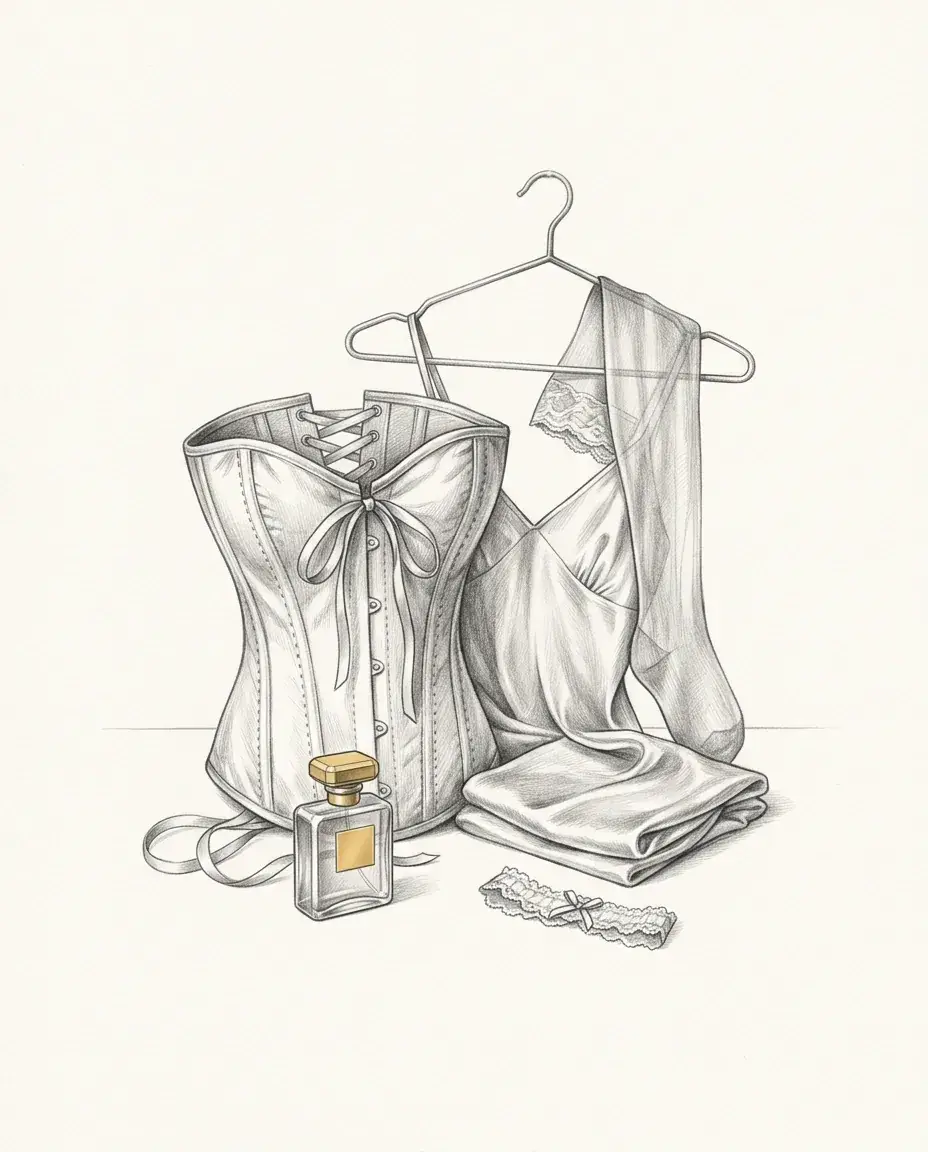
Lingerie fetishism is a garment-focused erotic interest in which intimate apparel (bras, briefs, stockings, corsets and slips) becomes significant in its own right rather than merely as something worn beneath outer clothes. The appeal may rest on visual styling, the feel of fabrics such as silk, satin or lace, the suggestion of partial concealment, or the ritual of wearing and seeing such garments. Because it is so widely shared and socially accepted, it sits at the soft, near-universal end of the spectrum of erotic interests. This article covers how the interest was first documented, how it is typically expressed, the mechanisms proposed for it, and its prevalence and cultural footprint.
Definition & scope
Lingerie fetishism is a form of garment fetishism focused on women's intimate apparel. It ranges from a mild preference, where lingerie pleasantly heightens desire, to a stronger fixation in which the garment itself carries much of the erotic charge. The interest can centre on seeing a partner in lingerie, on wearing it oneself, or on the materials and craftsmanship of the items. It is distinct from a body-part partialism: the focus is the clothing, not the anatomy beneath it. It is benign, and only the rare cases that cause real distress, impairment or harm would meet the clinical bar for a disorder.
Examples
What the term covers. Bras and briefs, stockings, corsets and basques, slips, camisoles, babydolls and teddies, and the fabrics they are cut from. The interest attaches to the garment in several distinct ways: choosing and buying it, seeing a partner dressed in it, wearing it oneself, or wanting it kept on rather than taken off. That last point is the usual practical marker: lingerie is not treated as a preliminary to be got out of the way, but as part of what is wanted.
What the term does not cover. It is not a body-part interest: a breast fetish or a leg fetish is about anatomy, this is about cloth. It is also an umbrella rather than a precise label, so where the focus is one specific item (panties, stockings, a corset, a garter belt), the narrower term describes it better. Where the pull is the material itself, in lace, silk, satin or nylon, that is a fabric interest that finds lingerie a convenient host. Wearing lingerie oneself is not in itself cross-dressing, which concerns gendered presentation rather than the garment as an object, and it is not endytophilia, where arousal depends on a partner staying clothed at all.
How the word is used. "Lingerie fetish" is retail and lay vocabulary, not a diagnosis. No manual names the garment: DSM-5-TR recognises only a general Fetishistic Disorder requiring distress or impairment, and ICD-11 dropped fetishism as a diagnosis in 2018. In ordinary speech people use "fetish" here loosely, to say a preference is strong rather than to claim a condition.
History & origins
Clinical lineage
The eroticisation of clothing was among the first phenomena early sexologists tried to describe, and lingerie fetishism inherits that broader history of garment fetishism.
- 1886: Richard von Krafft-Ebing records fixations on garments, fabrics and articles of clothing in Psychopathia Sexualis, among the earliest systematic case descriptions of object-focused desire.
- 1887: the French psychologist Alfred Binet first applies the word fetishism to erotic life in his essay Du fétichisme dans l'amour, published in the Revue Philosophique, arguing that such attractions form through associative experience.
- Early 1900s: Havelock Ellis examines the symbolism of dress and undergarments within his Studies in the Psychology of Sex, while Sigmund Freud later folds clothing fetishes into his theory of unconscious displacement.
- 1920s: Magnus Hirschfeld proposes a theory of partial attractiveness, distinguishing ordinary, near-universal fetishistic responses to features such as garments from rarer pathological forms.
From pathology to normal variation
Modern diagnostic manuals have steadily narrowed what counts as a disorder. The DSM-5-TR treats fetishistic interests as a normal variation and reserves Fetishistic Disorder for cases that cause clinically significant distress, impairment or harm. The World Health Organization went further: in the ICD-11 (2018) it removed fetishism and fetishistic transvestism as psychiatric diagnoses entirely. By either framework, an everyday erotic appreciation of lingerie is not a disorder.
Cultural evolution of the garment
The specific charge of lingerie also tracks the social history of the garment. The word derives from the French linge ("linen") and came into English usage in the nineteenth century as intimate underclothes began to be designed for appearance as well as function. The corset had shaped and displayed the female torso since the sixteenth century, and across the twentieth century the wider category was deliberately styled and eroticised: from Lady Duff-Gordon's looser early designs and the spread of the brassiere, through Frederick's of Hollywood, to Victoria's Secret, founded by Roy Raymond in 1977, whose advertising, photography and televised fashion shows helped turn lingerie from a functional item into a fashion category.
In practice
The interest is typically expressed through ordinary intimacy and personal style, and it is one of the very few erotic interests with a mainstream retail industry built around supplying it.
- Wearing lingerie oneself, or enjoying a willing adult partner wearing it.
- Appreciating, selecting and collecting particular styles, cuts and fabrics.
- Valuing the tactile qualities of silk, satin or lace and the play of revealing and concealing.
It frequently overlaps with adjacent garment interests such as a stocking fetish or a taste for the sheen of PVC and latex, and for some it intersects with cross-dressing when the pleasure lies in wearing the garments oneself.
Psychology
What causes a lingerie fetish?
Lingerie's erotic charge is generally understood as a learned, culturally reinforced association rather than an innate response, consistent with the associative-learning accounts proposed by Binet, Krafft-Ebing and Ellis. The interplay of revealing and concealing the body, conditioning through pervasive fashion and media imagery, and the symbolic link between intimate garments and intimacy itself all plausibly contribute. The evidence remains largely theoretical and observational rather than experimental, so these mechanisms are best read as well-supported hypotheses. For most people the interest functions as a mild enhancement to desire rather than a strict requirement for arousal.
Prevalence & culture
How common is a lingerie fetish?
Clothing is one of the largest fetish domains, and lingerie is among its most prominent items. Lingerie also enjoys very high cultural visibility through advertising, fashion shows, cinema and a large commercial industry, and it sustains substantial online and retail communities.
| Study | Year | Finding |
|---|---|---|
| Scorolli et al. | 2007 | Among objects associated with the body, garments accounted for roughly 30% of fetish preferences, second only to body parts |
| Joyal & Carpentier | 2017 | Interest in non-living objects, clothing prominent among them, is common in the general population rather than rare |
Popular references routinely list lingerie among the most mainstream, widely-acknowledged kinks, all of which supports a comparatively high prevalence estimate.
Safety, consent & law
This is a benign, non-paraphilic interest with no inherent consent or legal concerns when it involves one's own garments or those of a willing adult partner. As with any shared activity, ordinary consent and respect for a partner's boundaries apply; there are no special legal restrictions on the interest itself.
Common questions
Is a lingerie fetish a disorder?
No. Diagnostic manuals treat an erotic interest in clothing as a normal variation. DSM-5-TR reserves Fetishistic Disorder for cases causing the person clinically significant distress or impairment, and ICD-11 removed fetishism from its list of diagnoses entirely in 2018. Enjoying lingerie, collecting it, or wanting it present to feel fully aroused does not come close to either bar.
What is the difference between liking lingerie and having a lingerie fetish?
Degree rather than kind, and the line is genuinely blurry. Most people find lingerie appealing as one part of a wider attraction to a person. The word fetish is usually reserved for cases where the garment itself carries much of the erotic charge: where its absence noticeably dampens arousal, or where the item is as much the point as the wearer. Neither position is a problem to be in.
Do women have lingerie fetishes too?
Yes, and in two directions. Some women are drawn to seeing a partner in intimate apparel; many more describe the pleasure of wearing it, where the appeal combines the feel of the fabric with how it changes the way they carry themselves and are seen. The best-known prevalence data come from online fetish communities whose membership skewed heavily male, so the published figures describe those samples rather than the population.
Is it a fetish if I like wearing lingerie myself?
It can be, and it is common. Wearing lingerie for the feel of the fabric and the way it changes how you carry yourself is one of the ordinary forms this interest takes, for people of any gender. Where a man wears women's intimate apparel it may additionally be described as cross-dressing, a separate question about gendered presentation, and likewise not a disorder unless it causes real distress.
What is the difference between a lingerie fetish and a panty fetish?
Scope. A panty fetish is focused on one garment, and often on a specific worn pair, including its scent and the intimacy of it having been worn. A lingerie fetish is the broader interest in intimate apparel as a category: sets, cut, fabric, styling, the assembled look. Many people have both, and the narrower label is simply more informative when it fits.
Should I tell my partner I have a lingerie fetish?
There is no obligation, but it is usually easy news to deliver: lingerie is among the most socially accepted erotic interests there is, and a partner is more likely to be curious than alarmed. It helps to say what you actually enjoy, whether that is the look, the fabric, keeping it on, or wearing it yourself, rather than leading with the word fetish, which sounds heavier than the thing it describes.
Does having a lingerie fetish mean I am not attracted to my partner's body?
No. In practice the two work together: the garment frames and partly conceals the body rather than replacing it, and most people describe lingerie as heightening attraction to a partner rather than substituting for it. A small minority do find the garment sufficient on its own, which is still benign, though it is worth talking about openly if a partner feels displaced by it.
From the blog
- Stocking Fetish57/100Clothing & GarmentsA sexual interest in stockings and hosiery, centered on sheer or textured legwear, seams, garters and the look and feel of nylon and silk. It is among the most common garment and material fetishes.57
- PVC Fetish42/100Objects & MaterialsAn erotic attraction to shiny PVC and vinyl clothing, prized for its high-gloss "wet look", smooth slick surface, and tight, body-hugging fit. A common, accessible cousin of latex and leather fetishism.42
- Cross-Dressing60/100Transvestism · Identity & TransformationWearing clothing associated with another gender, sometimes for erotic arousal and sometimes for comfort, self-expression, or relaxation. When arousal is persistent and causes distress it is diagnosed clinically as transvestic disorder; the interest itself is benign and distinct from transgender identity.60
- Shoe Fetish65/100Retifism · Clothing & GarmentsA sexual interest in shoes as objects of attraction or arousal, valued for their style, material, and associations rather than the wearer. Clinically termed retifism, it is among the most frequently documented garment fetishes in survey and case literature.65
- Uniform Fetish60/100Uniform Fetishism · Clothing & GarmentsAn erotic interest in uniforms and the authority, role, or status they signal: military, police, medical, school, or service dress. A common clothing-and-role fetish rather than a clinical disorder.60
- High Heel Fetish56/100Altocalciphilia · Clothing & GarmentsA focused sexual interest in high-heeled shoes (stilettos, pumps, platforms) and the height, posture, and leg line they create. It is a common, generally harmless subtype of shoe fetishism.56
From French lingerie ("linen goods, washables"), from linge ("linen"), ultimately from Latin lineus ("of linen"); the word entered English in the 19th century as a term for intimate apparel.
intimate apparel · underwear · garment fetishism
Prevalence is computed from the entry's cited population estimate. Rows marked ESTare indicative editorial estimates scored against a fixed anchor rubric, not measured quantities. Method & anchors: methodology.
Very common · ≈ 1 in 7
- 01List of paraphilias, Wikipediadefinition/existence of lingerie/underwear garment fetishism
- 02Joyal & Carpentier (2017), The Prevalence of Paraphilic Interests and Behaviors in the General Population, J. Sex Research 54(2):161-171general-population interest in object/material fetishism (~44%); clothing items like lingerie are a leading subtype
- 03Scorolli et al. (2007), Relative prevalence of different fetishes, Int. J. Impotence Research 19(4):432-437prevalence anchor, clothing fetishes are a major fetish category, with intimate apparel prominent among garments
- 04An A–Z of Kinks and Fetishes, Glamourlay framing, lingerie is one of the most mainstream, widely-acknowledged common kinks
- 05Richard von Krafft-Ebing, Psychopathia Sexualis (1886)early sexological documentation of fixations on garments and fabrics, foundational to clothing fetishism
- 06Sexual fetishism, Wikipedia (history of the fetishism concept, incl. Binet 1887)Alfred Binet's 1887 application of the term 'fetishism' to object/clothing-focused attraction; Havelock Ellis; Hirschfeld's partial-attractiveness theory; DSM-5-TR normal-variation framing and ICD-11 removal of fetishism as a diagnosis
- 07Lingerie, Wikipediaetymology of 'lingerie' from French linge ('linen'), its 19th-century entry into English, and the 20th-century shift from functional underclothes to a styled, eroticized fashion category (Duff-Gordon, Frederick's of Hollywood, Victoria's Secret)
- 08Victoria's Secret, Wikipediafounded 1977; advertising and televised fashion shows helped turn lingerie into a fashion category
- 09Roy Raymond, WikipediaRoy Raymond founded Victoria's Secret in 1977