Nun Fetish
Added 21 Jun 2026 · Updated 22 Aug 2026
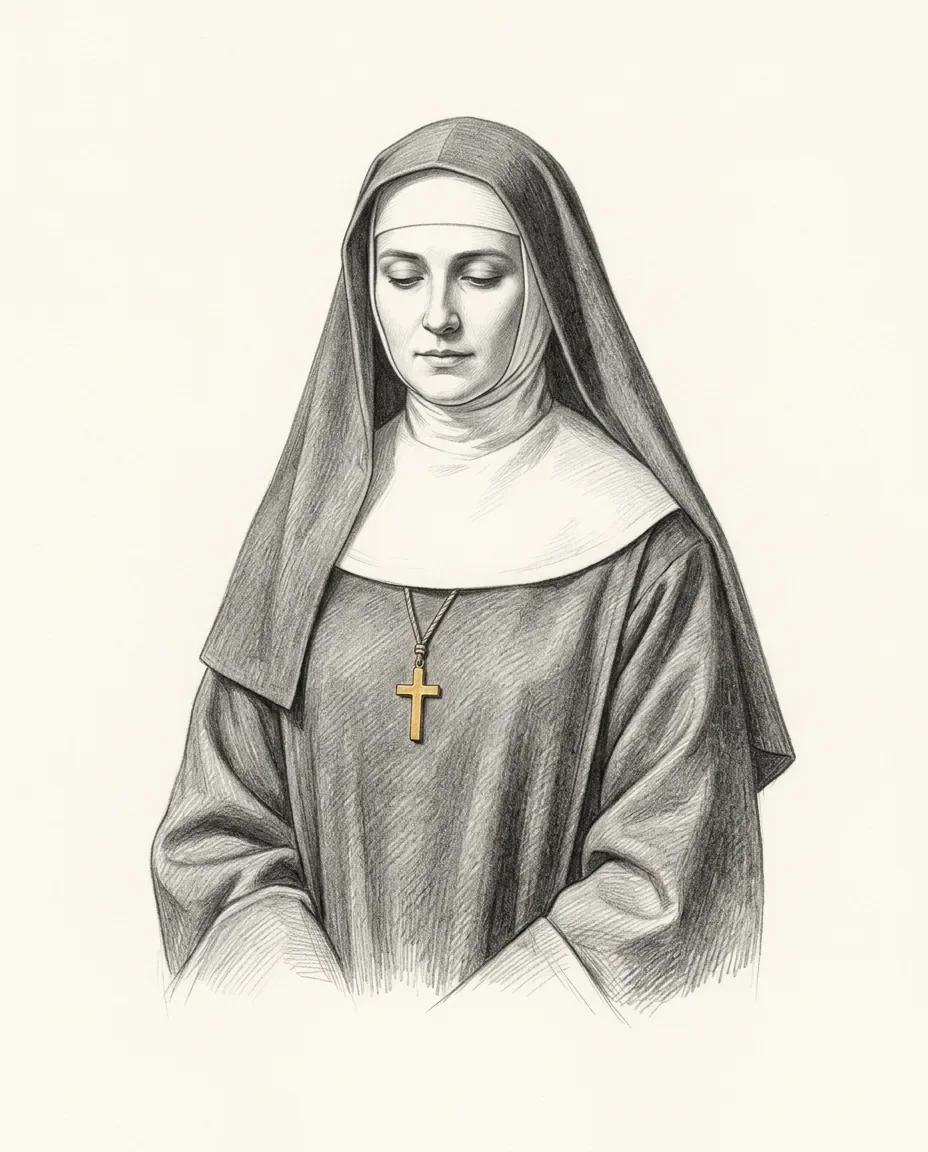
An erotic interest centred on religious dress, most often the nun's habit and veil, valued for its modest silhouette and ritual symbolism. Themes of forbidden allure are part of the draw. A niche costume and role-play fetish, not a clinical disorder.
- Prevalence
- Uncommon
- Category
- Clothing & Garments
- Domain
- Sexual interest
- Confidence
- Low confidence
- Status
- Niche costume/uniform fetish; a normal variation, not a disorder unless it causes distress or impairment.
- Also known as
- religious-habit fetishism, nun habit fetish, clerical dress kink, veil-and-habit attraction, habit fetish
- Added
- 21 Jun 2026
- Updated
- 22 Aug 2026
Featured in
Overview
A nun fetish, sometimes called religious-habit fetishism, is a clothing- and costume-focused erotic interest in which religious dress (most often the nun's habit and veil, though also other clerical and devotional garments) becomes a notable source of arousal or fixation. Much of the appeal rests on the friction between what the garments signify (chastity, vocation, restraint) and an erotic reframing of them, together with their distinctive full-coverage silhouette and ritual symbolism. This article sets out the documented cultural and clinical lineage of the interest, how it is typically expressed, its proposed psychology, and the social cautions that attach to it.
Definition & scope
The interest is best classed as a specific case of clothing fetishism: arousal attached to a garment rather than to a religious act or belief. In practice it centres on the habit as a costume and on the role and persona it codes, which places it close to the wider family of uniform and role-coded dress interests. It is not a devotional practice, and for most people it is a preference woven into otherwise conventional attraction rather than a fixed requirement for arousal.
Examples
What the term covers. The interest shows up in three registers. As costume: a purpose-made habit, coif and veil worn in private between consenting adults, valued for the heavy drape and full coverage as much as for what the garment signifies. As role-play: negotiated scenes between consenting adults built around vow, discipline and temptation, where the persona does as much work as the fabric. And as depiction: the habit as an image in fiction, painting, adult media and the nunsploitation film cycle, where what holds the interest is a representation and no religious life is involved at all.
What the term does not cover. It is not devotion and not an interest in faith. Arousal attached to sacred objects themselves (icons, rosaries, vestments as consecrated things rather than as costume) is hierophilia, while relic veneration is a non-sexual devotional practice with no erotic content. The families this belongs to are uniform and costume interests, alongside the schoolgirl uniform, the maid outfit and the wedding dress: ceremonial dress that codes a role. Approaching clergy who have not consented, or who are constrained by a position of trust, is not costume play and has nothing to do with this entry.
How the word is used. "Nun fetish" and "habit fetish" are lay terms with no clinical counterpart; the only framing the manuals offer is the generic clothing fetishism, and neither DSM-5-TR nor ICD-11 names a nun-specific category. The phrase is also used loosely, sometimes for a taste for the nunsploitation aesthetic and sometimes for an actual costume preference, and the two are worth separating before assuming which is meant.
History & origins
Clinical lineage
The interest has no single coinage. It is documented instead as an instance of clothing fetishism, a pattern formalised by Richard von Krafft-Ebing in Psychopathia Sexualis (1886), who described the eroticisation of particular garments and materials as a recurring form of fetishism. Contemporary frameworks do not treat costume preferences of this kind as a distinct diagnosis: they are normal-range variation unless they cause distress or impairment, the same threshold the DSM-5-TR applies to fetishistic disorder generally.
Cultural & subcultural evolution
The erotic charge of the habit is far older than any clinical vocabulary and is largely a cultural inheritance. The figure of the transgressive or "forbidden" nun is a staple of Gothic and libertine literature of the late eighteenth century:
- 1791: the Marquis de Sade's Justine stages sexual exploitation within monastic settings, casting the convent as a hypocritical enclosure of repressed desire.
- 1796: Matthew Lewis's Gothic novel The Monk (published anonymously in March 1796) makes the corrupted cleric and the violated convent central to its scandalous plot.
- 1796: Denis Diderot's La Religieuse (The Nun), written around 1760 and first published in France in 1796, dramatises forced vocation, cloistered cruelty, and same-sex desire behind convent walls.
These works fused sacred imagery with sexual transgression and fixed the habit as a recurring icon of taboo. The motif carried into twentieth-century film and culminated in the nunsploitation cycle: a subgenre of exploitation cinema that peaked in 1970s Europe, especially Catholic Italy and Spain. Ken Russell's The Devils (1971), adapted from Aldous Huxley and a real seventeenth-century convent scandal, is widely cited as its catalyst, after which directors such as Joe D'Amato, Bruno Mattei, and (in Japan) Norifumi Suzuki produced numerous entries setting vows of chastity against eruptions of carnal imagery. The trope persists in mainstream cinema: Paul Verhoeven's Benedetta (2021), drawn from Judith C. Brown's history of the seventeenth-century nun Benedetta Carlini, gave it fresh visibility. Modern lay catalogues of kinks, such as Glamour's A to Z of kinks and fetishes, list religious and uniform role-play among recognised niche interests, while academic surveys fold the nun habit into the broader clothing-fetish field documented by Scorolli and colleagues (2007).
In practice
Expression is generally confined to fantasy and consensual adult role-play: enjoyment of the costume's distinctive look, scenarios that play on temptation or the breaking of a strict role, or privately collecting and wearing habit-style attire. It typically uses purpose-made costumes rather than the dress of practising clergy, and the persona (modesty, discipline, the vow) usually matters as much as the fabric.
Psychology
What makes the habit erotically charged?
Several overlapping mechanisms are proposed. The most cited is the appeal of the forbidden: a garment that signals chastity and rule can heighten rather than dampen desire, an effect that fits reactance theory, where a perceived restriction on freedom makes the restricted thing more attractive. Lay sexuality writing sometimes labels this cluster with informal coinages such as hierophilia (arousal tied to sacred imagery) or pecattiphilia (arousal tied to sin), but these are not established clinical categories. Beyond taboo, the habit carries strong symbolic and authority-coded weight, and simple associative learning can attach arousal to a striking, memorable uniform, paralleling the broader draw of uniforms and other ceremonial dress such as the wedding dress. As with most specific costume interests, the evidence base is largely qualitative and inferential rather than experimental.
Prevalence & culture
How common is a nun fetish?
It is uncommon and rarely studied directly. The Scorolli (2007) survey of online fetish communities, which found garment- and object-linked fetishes made up a sizable share of cases overall, does not break out the nun habit as its own category, reflecting how small a subset it is. Small communities exist online, and the nun motif recurs in fiction, art, and adult media, giving it more cultural visibility than its likely prevalence. Faint awareness of the trope is widespread even among people with no personal interest, sustained by its long literary and cinematic afterlife.
Safety, consent & law
When the interest involves costumes and consenting adults in private, there are no inherent safety, consent, or legal concerns. The relevant cautions are social and ethical: such play can be deeply offensive within faith communities, so discretion and respect for others' beliefs are appropriate, and the ordinary norms of mutual consent and privacy apply.
Common questions
Is a nun fetish a real fetish or just a costume preference?
For most people it is a preference rather than a requirement, a costume and a persona that sharpen an otherwise conventional attraction. It meets the clinical definition of a fetish only in the loose sense that arousal is attached to a garment. It would become fetishistic disorder only if the habit were necessary for arousal and that caused genuine distress or impairment, the same threshold applied to every clothing interest.
Do you have to be religious, or raised Catholic, to have a nun fetish?
No. A Catholic upbringing supplies a vivid early association and is a common enough backstory, but the erotic charge of the habit is a cultural inheritance available to anyone who has seen a film or read a Gothic novel. The interest is in what the garment signals (chastity, discipline, enclosure), and that signal reads clearly to people with no religious background whatsoever.
What is nunsploitation?
A subgenre of exploitation cinema that peaked in 1970s Europe, especially in Catholic Italy and Spain, setting vows of chastity against eruptions of carnal imagery inside convent walls. Ken Russell's The Devils (1971) is widely cited as its catalyst, and directors including Joe D'Amato, Bruno Mattei and Norifumi Suzuki produced many entries. It is the single largest reason the habit functions as an erotic icon in popular culture, and Paul Verhoeven's Benedetta (2021) shows the trope is still live.
Is a nun fetish disrespectful to Catholics or to nuns?
Many believers experience it that way, and that reaction is reasonable rather than something to argue down. Nothing about private costume play between consenting adults is unlawful, but the imagery is sacred to a great many people and treating it as neutral is a mistake. The practical implication is discretion: keep it private, involve only people who have opted in, and do not stage it in or around actual religious settings or communities.
Is a nun fetish a disorder?
No. It is a niche instance of clothing fetishism, which contemporary frameworks treat as normal-range variation. Neither DSM-5-TR nor ICD-11 names a nun-specific category, and fetishistic disorder is diagnosed only where an interest causes clinically significant distress or impairment. Enjoying a costume, however charged that costume, does not meet the standard.
What is the difference between a nun fetish and hierophilia?
The object. A nun fetish attaches to the habit as costume and to the role it codes, a uniform interest that happens to be religious. Hierophilia attaches to sacred objects and imagery as sacred: icons, rosaries, vestments, ritual implements, valued for their consecrated character rather than for how they look worn. The two can overlap in practice, but one is about a role and the other about the holy.
- Uniform Fetish60/100Uniform Fetishism · Clothing & GarmentsAn erotic interest in uniforms and the authority, role, or status they signal: military, police, medical, school, or service dress. A common clothing-and-role fetish rather than a clinical disorder.60
- Wedding Dress Fetish23/100Clothing & GarmentsAn erotic interest centered on wedding dresses, bridal veils, and related ceremonial attire, valued for their romantic symbolism. Their fabrics and ritual associations are part of the appeal. It is a niche clothing and costume fetish, not a clinical disorder.23
- Lingerie Fetish70/100Clothing & GarmentsAn erotic interest in lingerie and intimate apparel in which the garments themselves, their fabrics, and their styling become a focus of arousal. Bras, briefs, stockings, corsets and slips are typical. One of the most common and mainstream garment-related interests.70
- Tie Fetish26/100Clothing & GarmentsAn erotic interest centered on neckties, dress collars, and the surrounding shirt-and-tie formalwear, valued for their look and constriction. Their authoritative associations are part of the draw. It is a niche clothing fetish, not a clinical disorder.26
- Raincoat Fetish25/100Clothing & GarmentsAn erotic attraction to rainwear (rubberized or PVC macs, capes, sou'westers and waders) for their waterproof sheen or matte texture. The sound of the material adds to it, as does the tension between a garment's plain practicality and its covert erotic charge.25
- Fur Clothing Fetish29/100Doraphilia · Clothing & GarmentsAn erotic interest in wearing or being touched by fur garments such as coats, stoles, and wraps, valued for their softness, warmth, and luxurious feel. It is a benign garment fetish, the worn-clothing subtype of doraphilia.29
uniforms · role-coded clothing · costume play
Prevalence is computed from the entry's cited population estimate. Rows marked ESTare indicative editorial estimates scored against a fixed anchor rubric, not measured quantities. Method & anchors: methodology.
Uncommon · ≈ 1 in 100
- 01Scorolli et al. (2007), Relative prevalence of different fetishes, Int. J. Impotence Research 19(4):432-437garment/clothing fetish framing; nun habit is a niche subset of clothing fetishism
- 02An A–Z of Kinks and Fetishes, Glamourlay framing of religious/role-play uniform kinks as a recognized niche interest
- 03Sexual fetishism, Wikipedia (carries the Scorolli 2007 relative-frequency table)definition/existence of clothing-based fetishism context
- 04Richard von Krafft-Ebing, Psychopathia Sexualis (1886)origin of clothing/garment fetishism as a clinical category underlying habit-and-veil interest
- 05Nunsploitation, Wikipedia1970s European/Italian exploitation-film cycle, Ken Russell's The Devils (1971) as catalyst, and the habit as a recurring cinematic taboo icon
- 06The Monk, WikipediaMatthew Lewis's 1796 Gothic novel as an early literary source of the corrupted-cleric / forbidden-convent erotic trope
- 07La Religieuse (novel), WikipediaDiderot's The Nun (written c.1760, published in France 1796) as a foundational forbidden-nun / cloistered-transgression narrative
- 08Clothing fetish, Wikipediaclassing the nun habit as a case of clothing fetishism; nuns' habits regarded as uniforms that can be fetishized
- 09Fetishistic disorder, WikipediaDSM-5-TR distress/impairment threshold distinguishing a fetish interest from fetishistic disorder
- 10Reactance (psychology), Wikipediareactance as a proposed mechanism for the heightened appeal of forbidden, rule-coded religious dress