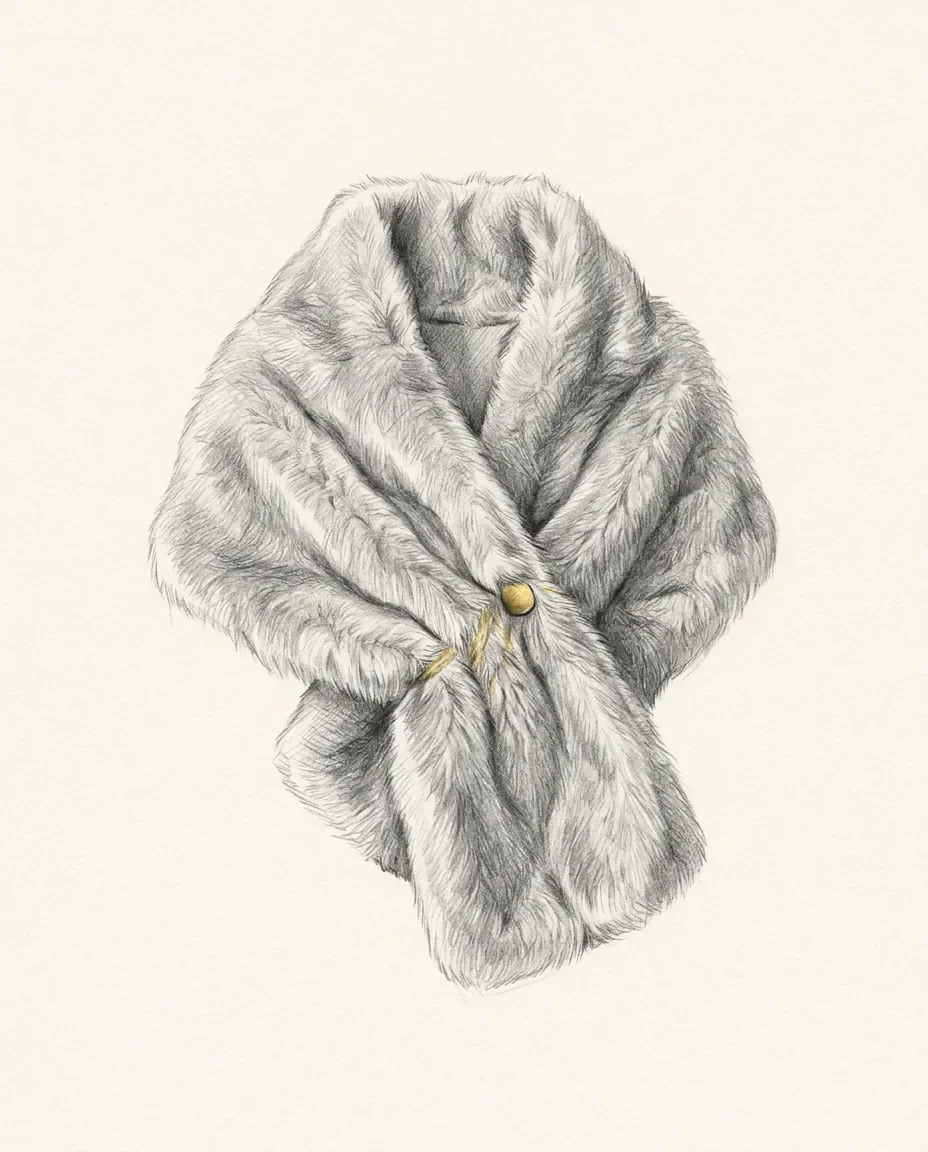
Fur Clothing Fetish
Doraphilia
Added 21 Jun 2026 · Updated 22 Aug 2026
An erotic interest in wearing or being touched by fur garments such as coats, stoles, and wraps, valued for their softness, warmth, and luxurious feel. It is a benign garment fetish, the worn-clothing subtype of doraphilia.
- Prevalence
- Rare
- Category
- Clothing & Garments
- Clinical term
- Doraphilia
- Domain
- Sexual interest
- Confidence
- Low confidence
- Status
- Worn-garment subtype of doraphilia; a normal variation, not a disorder absent distress or impairment.
- Also known as
- Fur-Garment Fetishism (Doraphilia, worn), fur-garment fetishism, fur coat fetish, doraphilia (garment), doraphilia, fur-clothing kink
- Added
- 21 Jun 2026
- Updated
- 22 Aug 2026
Featured in
Overview
Fur-garment fetishism is a clothing-focused variant of doraphilia in which the worn fur item (a coat, stole, collar, or wrap, rather than raw hide) becomes the source of arousal or comfort. The appeal typically centres on the tactile sensation of fur against skin, its warmth and weight, its visual association with luxury and glamour, and the way a coat or wrap drapes and envelops the body. It is a benign garment fetish involving consenting adults and ordinary clothing. This article covers its literary and clinical lineage, how it is typically expressed, the psychology behind it, and the limited evidence on its prevalence.
Examples
What the term covers. A coat, stole, collar, muff or wrap as the object of attention, whether worn by a partner or by oneself; the feel of the pile against bare skin and the weight of the garment across the shoulders; the way a full-length coat changes a silhouette; and the aesthetic charge of the fur-clad figure that fashion photography and film have traded on for a century. Faux fur counts, and is often preferred, because the interest attaches to texture and drape rather than to the provenance of the pelt.
What it does not cover. It is narrower than the parent fur fetish, which takes in loose pelts, rugs and raw hide as well: here the item has to be worn or wearable. It is not furry fandom or fursuiting, which concern an anthropomorphic character and an identity rather than a garment, nor pet play or animal role-play, where the adopted role is the point. Neighbouring garment interests (leather, latex, silk) share the structure but not the material. A non-sexual liking for stroking soft surfaces for comfort is better described as texture fixation.
How the word is used. "Fur fetish" is the everyday phrase; doraphilia, from the Greek for hide, is the reference-book label, and it is broader than this entry because it covers leather and bare skin as well as fur. Neither term is a diagnosis in DSM-5-TR or ICD-11, where a garment interest falls under fetishistic disorder only if it causes distress or impairment. In practice most people reach for the shorthand of Venus in Furs rather than any clinical word at all.
History & origins
A garment with a literary charge
The fur coat carried erotic meaning in fiction long before clinical sexology named the interest. The foundational text is Leopold von Sacher-Masoch's 1870 novella Venus in Furs (Venus im Pelz), in which a commanding, fur-clad woman becomes the object of devoted submission: fusing the worn garment specifically with power, glamour, and desire. Sacher-Masoch's surname later supplied the root of the clinical term masochism, and the image of the fur-wrapped figure has remained a fixture of erotic iconography ever since.
Clinical lineage
- 1886: Richard von Krafft-Ebing's Psychopathia Sexualis gave fetishism its first systematic psychiatric treatment and catalogued soft materials, fur and velvet among them, as possible objects of fixation, helping establish the idea of a garment or material fetish in clinical thought.
- 1887: Alfred Binet applied the term fetishism to sexuality in Le fétichisme dans l'amour, proposing that such fixations form through "associations" laid down in an emotionally charged early encounter with the object: a learning-theory account, summarised in Wikipedia's overview of sexual fetishism, that applies naturally to a garment worn close to the body.
- 1905: Sigmund Freud's Three Essays on the Theory of Sexuality singled out fur as a worked example, arguing that "the part played by fur as a fetish owes its origin to an association with the hair" of the body, anchoring fur in psychoanalytic theories of fetishism.
- Modern catalogues: The umbrella label doraphilia (from Greek dora, "hide" or "skin") names attraction to animal skin, fur, or leather; the worn-garment interest described here is the clothing-centred slice of that wider category, distinguished from the broader fur fetish by its focus on the garment on the body rather than the material as such. The precise coinage of doraphilia is not well documented, but its Greek roots and its placement among material fetishes are consistent across modern references. Clinical opinion now treats such a preference as a disorder only when it causes the person distress or impairment.
In practice
The interest is commonly expressed by wearing fur garments during intimacy, by enjoying a partner dressed in a fur coat, stole, or collar, or simply by a strong aesthetic attraction to coats, wraps, and muffs. Many enthusiasts favour faux fur, for ethical reasons or for its consistent, controllable texture, and the interest frequently blends garment fetishism with broader soft-material preferences. Because the focus is the worn item, it sits naturally alongside other garment-centred interests such as leather fetishism and latex fetishism.
Psychology
The appeal is usually linked to the strong comfort and sensory associations of soft, warm, enveloping materials: sometimes traceable to early tactile experiences, in line with the associative-learning account running from Binet onward, and reinforced by the cultural coding of fur as a marker of glamour and sensuality. The enveloping, body-wrapping quality of a coat or wrap adds a dimension absent from a loose pelt: the garment both touches the skin and reshapes the wearer's silhouette. As with the parent fur fetish, the evidence specific to the worn-garment subtype is thin, and most claims are extrapolated from the wider literature on textile and material fetishism. The interest is distinct from furry and animal-identity interests, which concern character and persona rather than the garment itself.
Prevalence & culture
How common is a fur fetish?
Uncommon as a dedicated interest, though fur recurs as a prototypical fetish object across the historical and clinical literature. Dedicated communities are small, and the worn-garment subtype receives little focused research. The internet-survey by Scorolli et al. (2007), sampling at least 5,000 fetish-community members, found clothing fetishes dominated by legwear (33%) and footwear (32%); "whole-body wear such as jackets" made up roughly 9% of clothing groups, within which fur coats are a small residual slice. A 1983 clinical case-review put soft materials or fabrics at about 6% of textile-fetish cases. Broader population work such as Joyal & Carpentier (2017) shows object and material fetishism to be common as a general category but does not isolate fur garments. Cultural visibility is moderate, sustained by fashion and film's long use of the fur coat to signal luxury and allure.
Safety, consent & law
The interest involves consenting adults and ordinary garments and raises no consent or legal concerns. The only adjacent considerations are the ethical and regulatory questions surrounding the sourcing of real animal fur (fur-farming bans, sales restrictions, and endangered-species protections) which are matters of consumer choice and wildlife-trade law rather than of the interest itself, and which many enthusiasts avoid altogether by choosing faux fur.
Common questions
What is doraphilia?
Doraphilia is the reference-book term for an erotic interest in animal skin, fur or leather, from the Greek dora, meaning hide. It is broader than a fur-clothing interest, since it also covers unworn pelts and leather goods. The coinage is not well documented and it is not a diagnostic category; a clinician would simply describe a material or garment fetish.
Is a fur fetish about real fur or faux fur?
Either, and faux fur is very commonly preferred. What the interest attaches to are the tactile qualities (the pile against skin, the warmth, the weight and drape of the garment), and a synthetic pile delivers those with more consistency and none of the ethical questions. People who do prefer real fur usually cite differences in texture and in how the garment moves rather than any interest in its origin.
Is a fur fetish the same as being a furry?
No, and the two are regularly confused because they share a word. A fur-clothing interest is a garment fetish: the coat or stole is itself the focus. Furry fandom is a fan subculture built around anthropomorphic animal characters, and fursuiting is the largely performative, social practice of wearing a character costume. One is about a garment, the other about a character.
Why do people find fur erotic?
The usual account combines sensation with symbolism. Soft, warm, enveloping materials carry strong comfort associations, and the learning-theory tradition running from Alfred Binet onward holds that such associations can be laid down in an emotionally charged early encounter with the object. On top of that sits a long cultural coding of fur as luxury and sensuality. The evidence specific to the worn-garment form is thin, so these remain interpretations rather than findings.
Is a fur fetish a disorder?
No. It involves consenting adults and ordinary clothing, and modern clinical opinion treats a material or garment preference as a disorder only where it causes the person distress or impairment. Fur has an outsized presence in the history of fetish theory (Krafft-Ebing catalogued it in 1886, Freud used it as a worked example in 1905), but that is a fact about the literature, not about the people who enjoy it.
Why does Venus in Furs come up in every discussion of this?
Because Leopold von Sacher-Masoch's 1870 novella fused the worn fur garment with power and devotion more memorably than anything before it, and the image never left erotic iconography. The book matters twice over: Sacher-Masoch's surname later supplied the root of the clinical term masochism. It is a literary landmark, not evidence about how common the interest is.
- Fur Fetish32/100Doraphilia · Objects & MaterialsAn erotic interest in fur, animal skins, or hides, real or faux, valued for their softness, warmth, scent, and sensory feel against the body. Clinically termed doraphilia, it is generally a benign material fetish rather than a disorder.32
- Leather Fetish65/100Leather fetishism · Objects & MaterialsAn erotic attraction to leather as a material: its look, smell, creak, shine, and feel when worn. It overlaps strongly with BDSM gear and is bound up with a recognised, organised leather subculture with its own bars, codes, and titles.65
- Latex Fetish62/100Latex fetishism · Objects & MaterialsAn erotic interest in latex garments and their tight, glossy, second-skin qualities. A common material fetish involving the look, feel, sound, smell, and enveloping sensation of clinging latex on consenting adults.62
- Leather Glove Fetish31/100Clothing & GarmentsAn erotic interest focused specifically on leather gloves: their look on the fingers, scent, faint creak, and smooth feel. A material-specific subset of glove fetishism that overlaps leather fetishism; an uncommon preference, not a clinical disorder.31
- Ballet Boot Fetish32/100Clothing & GarmentsAn erotic interest in ballet boots, the fetish footwear that holds the foot fully en pointe on a seven-inch heel. The appeal lies in the leg line, the object itself and the limit it places on walking. A niche within shoe and boot fetishism.32
- Nun Fetish26/100Clothing & GarmentsAn erotic interest centred on religious dress, most often the nun's habit and veil, valued for its modest silhouette and ritual symbolism. Themes of forbidden allure are part of the draw. A niche costume and role-play fetish, not a clinical disorder.26
The clinical umbrella term *doraphilia* derives from Ancient Greek *dora* ("hide" or "skin of an animal", from *derein*, "to skin or flay") + *-philia* ("love of, attraction to"), meaning attraction to animal skin, fur, or leather. "Fur" itself is plain English, from Old French *forrer*, "to line (a garment)."
outerwear · luxury garments · garment fetishism
Prevalence is computed from the entry's cited population estimate. Rows marked ESTare indicative editorial estimates scored against a fixed anchor rubric, not measured quantities. Method & anchors: methodology.
Rare · ≈ 1 in 1,000
- 01Sexual fetishism, Wikipedia (carries the Scorolli 2007 relative-frequency table)garment fetishism falls under the clothing-fetish relative-frequency framework (Scorolli table)
- 02Scorolli et al. (2007), Relative prevalence of different fetishes, Int. J. Impotence Research 19(4):432-437places fur-garment interest within the small residual category of clothing fetishes
- 03Joyal & Carpentier (2017), The Prevalence of Paraphilic Interests and Behaviors in the General Population, J. Sex Research 54(2):161-171broad object/material fetishism interest (~44%) of which worn-fur garments are a very small slice
- 04Richard von Krafft-Ebing, Psychopathia Sexualis (1886)early clinical citation of fur and velvet among soft materials that can become objects of fetishistic fixation
- 05Venus in Furs, WikipediaSacher-Masoch's 1870 novella fusing the worn fur garment with power and desire; source of the term masochism
- 06Freud, S. (1905), Three Essays on the Theory of Sexuality (Strachey translation)Freud's claim that fur as a fetish originates in an association with bodily hair, anchoring fur in psychoanalytic fetish theory