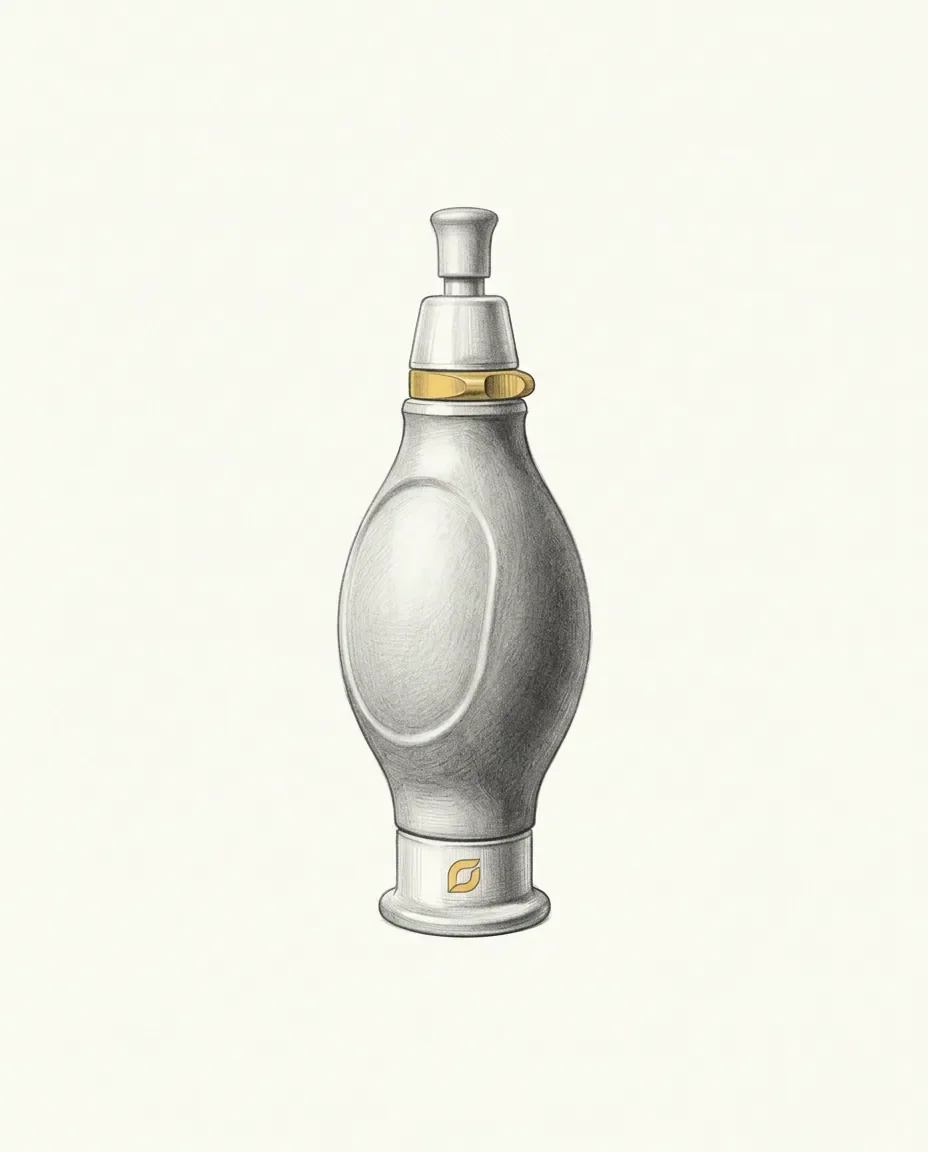
Suction Play
Added 21 Jun 2026 · Updated 22 Aug 2026
A consensual sensation interest in applying controlled suction or vacuum to the skin or body parts to create a sustained pulling feeling. Glass or silicone cups and hand or battery pumps are used, leaving redness and temporary marks. A niche practice within sensation play.
- Prevalence
- Uncommon
- Category
- Sensation & Pain
- Domain
- Sexual interest
- Confidence
- Low confidence
- Status
- Uncommon benign sensation interest; not a recognized disorder. Notable for physical risk requiring informed, cautious practice.
- Also known as
- suction / cupping play, cupping, cupping play, pump play, vacuum play, vacuum pumping
- Added
- 21 Jun 2026
- Updated
- 22 Aug 2026
Featured in
Overview
Suction or cupping play is the consensual use of vacuum pressure against the skin to produce a pulling, tightening sensation, surface flushing, and often temporary circular marks. Practitioners use therapeutic-style fire or silicone cups, dedicated cupping sets, or hand- and battery-operated vacuum pumps, borrowing the mechanics of traditional cupping bodywork but reframing the tool for erotic sensation rather than treatment. It belongs to the broad family of consensual sensation play, prized for a feeling unlike impact, pinching, or scratching. This article traces the long medical lineage of the cup, the recent and lightly documented emergence of the erotic form, and the genuine physical risks that make it a cautious, edge-aware practice.
Definition & scope
The defining mechanic is negative pressure: air is drawn out from under a cup or cylinder so the skin and underlying tissue lift into the vacuum. Two broad tool families exist. Cups (glass fire cups, or squeeze-bulb and pump-valve silicone sets) sit flush against a flat area and create the classic round mark. Pumps (hand or battery cylinders) apply directed suction to a specific body part for a swelling, engorging effect. What separates the erotic practice from clinical cupping bodywork is intent, not equipment: the goal is sensation, novelty, and sometimes a consensual temporary mark, not treatment of a complaint. It is not a recognised disorder.
Examples
What the term covers. A row of silicone or glass cups set along the back, thighs or shoulders and left in place while the skin draws up into each one; a fire cup, in which a brief flame consumes the air inside a glass dome before it is placed; a hand or battery pump cylinder held against a single body part for a swelling, engorging effect; and the round marks left behind, which some people treat as a private souvenir of the scene rather than an unwanted side effect. Intensity is set by how much air is drawn out and how long the cup stays, so the same equipment covers everything from a light pull to a scene-length hold.
What the term does not cover. Cupping bodywork performed to treat a complaint is the same instrument with a different purpose, and is not this. Pinching and clamping compresses tissue rather than lifting it into a vacuum, and impact play bruises by force; both can leave similar-looking marks by an entirely different mechanism. Scratching and wax play are neighbouring sensation practices with no vacuum involved, and nipple play overlaps only where a suction device happens to be the tool.
How the word is used. It is community vocabulary, borrowed wholesale from bodywork: people say "cupping", "pump play" or "vacuum play" far more often than "suction play". Neither the practice nor any of its aliases appears in the DSM-5-TR or the ICD-11, and it is listed only in lay A-Z kink glossaries and general catalogues of paraphilias.
History & origins
The medical lineage of the cup
The tool at the centre of this interest predates any erotic framing by millennia. Cupping is one of the oldest recorded bodywork techniques: it has one of its earliest documented appearances in the Ebers Papyrus (c. 1550 BCE), the ancient Egyptian medical compilation, where suction was applied for pain, fever, and other complaints.
- c. 1550 BCE: Egyptian physicians describe cupping in the Ebers Papyrus, drawing fluids and "bad humours" to the surface.
- c. 460–370 BCE: Hippocrates records cupping for internal disease and structural problems; Greco-Roman surgeons later used cups for bloodletting.
- 281–341 CE: the Chinese alchemist and physician Ge Hong documents cupping within early Chinese medicine, where it became a lasting fixture, later paired with acupuncture.
- early 1900s: the physician William Osler still recommended cupping for pneumonia, after which it faded from mainstream Western practice as germ theory and pharmacology took hold.
For most of recorded history, then, the cup was a mainstream medical instrument. It returned to broad public visibility through athletics and wellness culture in the 2010s, most spectacularly at the 2016 Rio Olympics, when the circular bruises on swimmer Michael Phelps and other competitors drew worldwide media attention and a surge of search interest.
The erotic adaptation
The erotic form has no documented coinage or founding figure; its precise origin is not well documented. It is best understood as a recent, community-driven offshoot of contemporary sensation play and body-modification subcultures, in which existing suction tools (therapeutic fire cups, silicone cupping sets, and vacuum pumps) were repurposed for intensity and for consensual, temporary marking. Unlike the classical paraphilias catalogued by Krafft-Ebing or Havelock Ellis, it has no dedicated clinical literature and is named only in lay kink glossaries and community spaces; it appears in A–Z kink listings and broad paraphilia catalogues rather than in the DSM-5-TR or ICD-11.
In practice
Application usually means placing one or more cups, or a pump cylinder, against the skin and drawing a partial vacuum so the tissue is gently pulled upward, producing a sustained pull and, often, a temporary circular mark or flush. Sessions range from light, brief contact to stronger, longer holds. The practice is frequently combined with other sensations (temperature, texture, or light pain) as one option on a wider menu, and the visible aftermarks are sometimes valued as a private token of a scene, an appeal shared with blood fetish and other marking-oriented interests.
Does suction play leave marks?
Often, yes. Sustained vacuum ruptures tiny surface blood vessels, leaving a round red-to-purple mark that resembles a bruise and typically fades over several days to a couple of weeks. Lighter, briefer application may leave only a transient flush. Because the marks are foreseeable, they should be part of what is negotiated in advance, not a surprise.
Psychology
The appeal overlaps with general enjoyment of novel body sensation, the focus and trust of being "worked on" by a partner, and in some cases an attraction to visible aftermarks. With essentially no dedicated research on the erotic form, explanations are extrapolated from the broader literature on consensual sensation play and body modification rather than drawn from study of this activity specifically: a thin and contested evidence base that should be read as suggestive, not established.
Prevalence & culture
Cupping enjoys modest mainstream visibility through its wellness and athletic associations, but the erotic form is a small niche with limited dedicated community presence and effectively no prevalence data, so any figure is a rough estimate. It is most often encountered as one item within broader sensation-play circles rather than as a standalone scene, and it has little independent media footprint beyond general kink glossaries.
Safety, consent & law
Is suction play dangerous?
It carries real physical risk and is properly treated as an edge practice. Vacuum pressure ruptures small blood vessels and can cause bruising, blistering, broken or torn skin, blood blisters, and lasting marks, with added hazards on sensitive, thin-skinned, or poorly suited areas. Responsible practice depends on informed consent, conservative timing and pressure, avoidance of vulnerable sites, attention to skin condition and medical contraindications (such as bleeding disorders, anticoagulant use, or fragile skin), and attentive aftercare. Fire-cup methods add a burn hazard from the open flame used to evacuate the air. It is regarded as a benign interest only when these precautions are observed among consenting adults; as with impact play and other pain play, causing injury can raise assault questions in some jurisdictions regardless of consent.
Common questions
Is suction play the same as cupping therapy?
The equipment is often identical; the purpose is not. Cupping bodywork is applied to treat a complaint (pain, stiffness, congestion), and has a documented medical history stretching back to the Ebers Papyrus. Suction play uses the same cups and pumps for sensation, novelty and, sometimes, a consensual mark. Nothing about the hardware distinguishes them, so the difference is entirely one of intent and context.
What does suction play feel like?
A sustained pull rather than a hit. The skin and the tissue under it are drawn up into the cup, which reads as a deep, tightening, slightly numb stretch that stays constant while the cup is in place, followed by a rush of sensation when it comes off. Pumps directed at a single body part produce a tighter, swelling version of the same thing. Intensity scales with how much air is removed and how long it stays removed.
Can you use cupping cups bought for massage?
Many people do: the silicone and pump-valve sets sold for bodywork are the same devices. What changes in a kink context is that nobody is treating anything, so the guidance a practitioner would follow about placement and duration is not in play. Skin condition, medication and bleeding disorders matter far more than the brand of cup, and glass fire cups add an open flame that silicone sets do not.
Is fire cupping riskier than silicone cups?
Yes, in one specific way: the method uses a brief flame to burn off the air inside a glass cup before it is placed, so it introduces a burn hazard that squeeze-bulb and pump-valve sets do not have. The vacuum itself behaves much the same either way. Glass also breaks, which silicone does not.
Who should avoid suction play?
Anyone with a bleeding or clotting disorder, anyone taking anticoagulants, and anyone with fragile, thin, broken, sunburnt or infected skin. Vacuum pressure works by rupturing small surface vessels, which turns a routine mark into a real injury on skin that cannot take it. Sensitive and thin-skinned areas are avoided for the same reason, and medical history is negotiated before any equipment comes out.
Can suction play leave permanent marks or scars?
The ordinary round mark is a broken-capillary bruise and fades over days to a couple of weeks. Permanent damage is not the usual outcome but is possible where the vacuum is too strong or held too long: blistering, blood blisters and torn skin all break the surface, and anything that breaks the surface can scar. Conservative pressure and short holds are what keep it in bruise territory.
Is suction play a fetish or a disorder?
Neither, in any formal sense. It is a sensation technique rather than an attraction to a particular object or body part, and it is named in neither the DSM-5-TR nor the ICD-11; it appears only in lay kink glossaries. Like any consensual interest, it would draw clinical attention only if it caused the person real distress or impairment, or involved someone who had not agreed to it.
- Primal Play33/100Identity & TransformationA consensual style of intimacy in which partners drop social restraint and act from an instinctual, animalistic headspace. It most often takes the form of predator-and-prey dynamics. In its feral register it overlaps with therian identity and inner-animal embodiment rather than scripted scenes.33
- Blood Fetish29/100Hematolagnia · Body Functions & FluidsAn erotic interest in blood, in its sight, scent, warmth, or symbolic links to vitality, danger, and intimate bonding. Consensual blood play is one form it sometimes takes. It is rare and carries serious bloodborne-infection risk.29
- Sensory Overload Play29/100Sensation & PainA consensual sensation-play practice of deliberately flooding the senses with intense, layered, or competing input. Overlapping touch, temperature, sound, and light produce an overwhelming, disorienting state. It is the mirror image of sensory deprivation.29
- Violet Wand Play29/100Sensation & PainViolet wand play uses a repurposed early-20th-century electrotherapy device to send a spark through glass or metal electrodes onto the skin. The spark is low-current, high-frequency and high-voltage, producing a tingling, prickling, or crackling sensation.29
- Predicament Play28/100Sensation & PainA consensual BDSM practice in which a restrained or instructed partner is held in a sustained, awkward position. The position is engineered so that relieving one discomfort introduces another. The appeal lies in endurance, surrender, and slowly building muscular sensation rather than acute pain.28
- Sounding28/100Sensation & PainConsensual insertion of a smooth rod or dilator into the urethra for erotic sensation. A niche, higher-risk form of penetration play named after the medical instruments (urethral sounds) repurposed for it.28
A plain-English descriptive name: "suction" (from Latin *suctus*, the past participle of *sugere*, "to suck") paired with "play." The alias "cupping" derives from the cups historically used to draw a partial vacuum against the skin in traditional medicine.
pressure sensation · suction · skin sensation
Prevalence is computed from the entry's cited population estimate. Rows marked ESTare indicative editorial estimates scored against a fixed anchor rubric, not measured quantities. Method & anchors: methodology.
Uncommon · ≈ 1 in 100
- 01List of paraphilias, Wikipediadocuments suction/pressure-based sensation play as a recognized kink activity
- 02An A–Z of Kinks and Fetishes, Glamourcupping/suction listed among A-Z sensation kinks (lay framing)
- 03FetLife, kink community group sizes (community-size proxy)small dedicated community/group sizes (community-size proxy)
- 04Cupping therapy, Wikipediahistory of cupping as an ancient therapeutic technique (Hippocrates, Ge Hong, William Osler) and its modern wellness/athletic revival at the 2016 Rio Olympics
- 05Ebers Papyrus, Wikipediac. 1550 BCE ancient Egyptian medical compilation, among the earliest documented uses of cupping
- 06Richard von Krafft-Ebing, Psychopathia Sexualis (1886), Wikipediaclassical clinical cataloguing of paraphilias against which the undocumented erotic-cupping coinage is contrasted