High Heel Fetish
Altocalciphilia
Added 21 Jun 2026 · Updated 22 Aug 2026
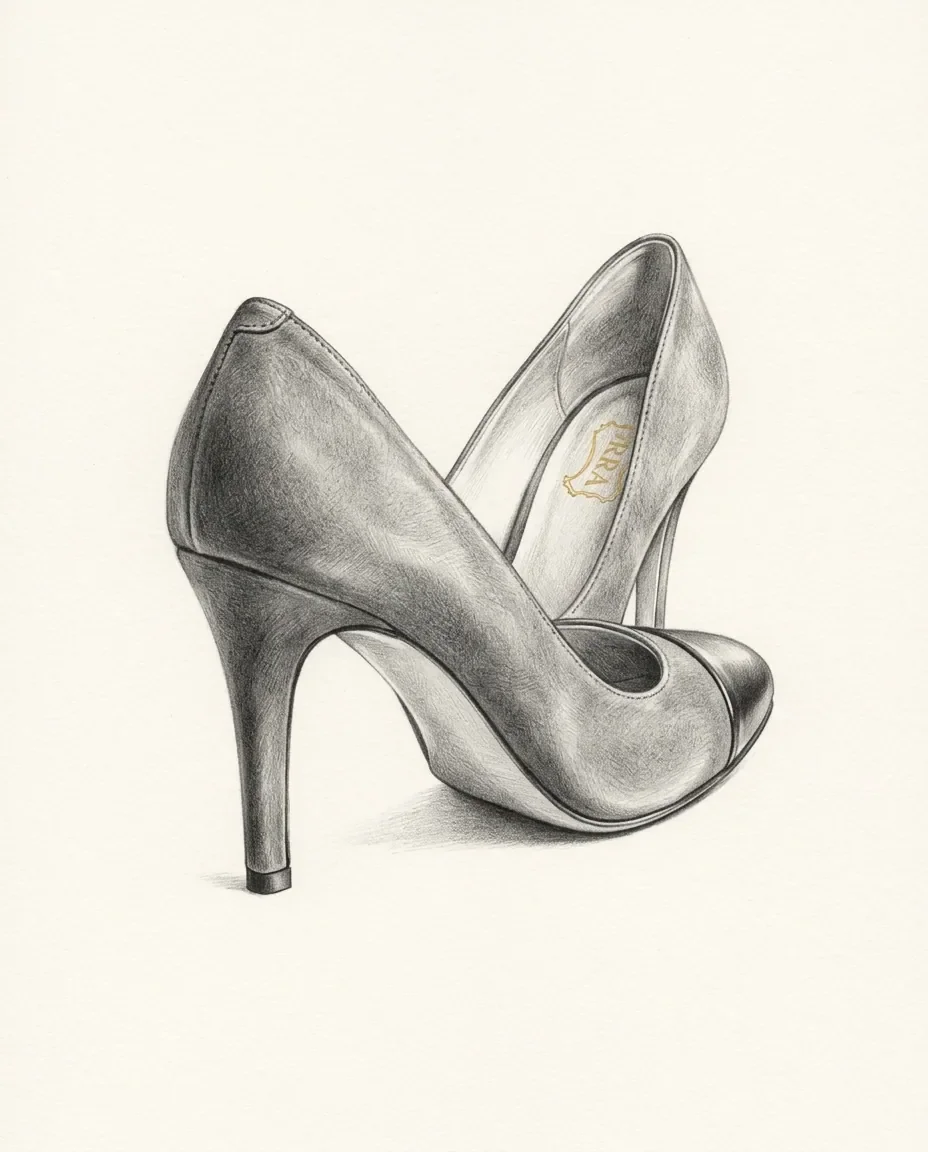
A focused sexual interest in high-heeled shoes (stilettos, pumps, platforms) and the height, posture, and leg line they create. It is a common, generally harmless subtype of shoe fetishism.
- Prevalence
- Common
- Category
- Clothing & Garments
- Clinical term
- Altocalciphilia
- Domain
- Sexual interest
- Confidence
- Medium confidence
- Status
- Common variation of sexual interest; not a disorder absent distress, impairment, or non-consent.
- Also known as
- altocalciphilia, high-heel fetishism, heel fetish, stiletto fetish, high heels kink
- Added
- 21 Jun 2026
- Updated
- 22 Aug 2026
Featured in
Overview
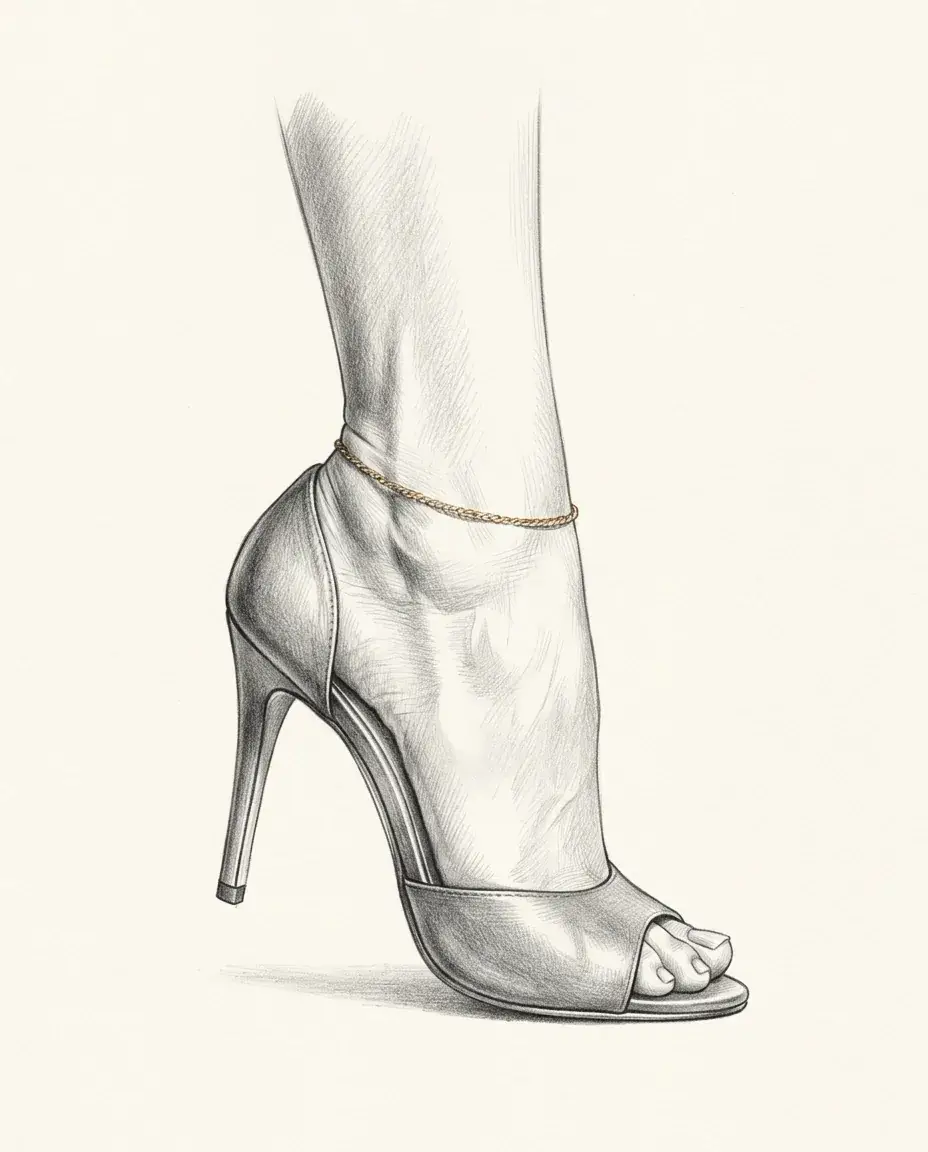
High-heel fetishism, sometimes labelled altocalciphilia, is an erotic interest centred specifically on high-heeled footwear such as stilettos, pumps, and platforms. It is a more specialised expression of shoe fetishism, distinguished by its emphasis on heel height and the way heels alter posture, gait, and the line of the leg and foot. For most people it functions as a strong preference or reliable turn-on rather than a strict requirement, blending aesthetic admiration with erotic attraction. This article covers the interest's sexological lineage, the cultural history of the heel itself, and what surveys can and cannot tell us about how common it is.
Examples
Heel interest is narrower than it looks from outside. What is doing the work is the heel and what it does to the body, not footwear in general.
What the term covers. Stilettos, court pumps, platforms, wedges and heeled ankle boots, sorted in practice by height and by the slenderness of the heel rather than by brand or season. The interest commonly attaches to what the shoe changes: the arched foot held inside it, the shortened stride, the raised calf and altered posture, the report of the footfall on a hard floor. Expression runs from looking, photographing and collecting through to asking a partner to keep heels on during intimacy, or to wearing them oneself.
What the term does not cover. It is a subtype of shoe fetishism rather than a synonym for it: where the appeal survives a flat shoe, the broader term fits better, and where the shaft matters more than the heel it is a boot fetish. It is not a foot fetish, which is anatomy rather than object, though an interest in the arch a heel forces often travels alongside it. It is not trampling or crush interest, where the heel is an instrument of pressure and the point is the force applied. Legwear interests such as stockings and pantyhose target a different garment entirely. And the stiletto's long association with the dominatrix is a cultural image rather than part of the definition; heel interest implies no particular relationship to femdom.
How the word is used. "Heel fetish" and "stiletto fetish" are ordinary English. Altocalciphilia is a modern pseudo-clinical coinage that circulates in kink glossaries and appears in no medical index; neither DSM-5-TR nor ICD-11 names a heel-specific condition, recognising only fetishism in general.
History & origins
Clinical lineage
Footwear and feet are among the oldest and best-documented objects of erotic fixation in sexology. Richard von Krafft-Ebing discussed shoe and foot interest in Psychopathia Sexualis (1886); Havelock Ellis treated it in his Studies in the Psychology of Sex; and Sigmund Freud's Three Essays on the Theory of Sexuality (1905) made the foot and shoe the textbook example of a fetish object, reading the shoe partly as a symbolic substitute. These works established the broad category of partialism and fetishism to which heel interest belongs. The pseudo-clinical alias altocalciphilia (Latin altus, "high," + calx/calcis, "heel," + Greek -philia) is a modern, informal coinage; it does not appear in the DSM-5-TR or ICD-11, where high-heel interest would simply fall under fetishism: and only rises to a fetishistic disorder if it causes distress, impairment, or harm.
Cultural & subcultural evolution
The heel itself has a layered history that pre-dates and feeds the fetish:
- ~10th century: heeled riding boots appear in Persian cavalry use, securing the foot in the stirrup so a mounted archer could brace and shoot; as the footwear historian Elizabeth Semmelhack of the Bata Shoe Museum explains, the heel began as functional cavalry gear and a status marker tied to horse ownership.
- c. 1599–early 1600s: Persia's Shah Abbas I, commanding the largest cavalry of the era, sends diplomatic missions to Western Europe; heels catch on among male aristocrats as an exotic symbol of martial virility. Louis XIII and Louis XIV of France famously wear them, and red heels become a court signal of rank.
- Late 17th–18th century: women take up heels, and styles split by gender; by the 1780s high, thin heels read as emblems of femininity.
- 1860s onward: after a Revolutionary-era decline, heels resurge; through the late 19th century, fetish illustration already fixes on the slim heel.
- 1950s: the modern stiletto, named after the slender dagger, is refined by designers including Roger Vivier (working with Christian Dior, who reinforced the heel with a thin steel rod, c. 1954) and André Perugia, and quickly becomes "an emblem of female sexuality." Wartime pin-up imagery had already welded heels to glamour.
- Late 1970s–1980s: punk and high-fashion subcultures revive the stiletto; it later becomes a recurring icon of the femme fatale and the dominatrix, cementing its fetish status.
In practice
The interest is commonly expressed through appreciation of the visual silhouette heels create, the sound of the footfall, collecting or photographing shoes, or incorporating heels into consensual intimacy. It frequently coexists with related foot, leg, stocking, and boot interests, and ranges from purely aesthetic enjoyment to a focal element of arousal.
Psychology
No single mechanism is established, but the leading accounts are complementary. Cultural conditioning is central: heels have been intensively eroticised in fashion, film, advertising, and pin-up imagery for over a century, supplying a ready-made erotic cue. Associative learning then links that cue to arousal at the individual level. Heels also reshape posture and gait (arching the foot, tilting the pelvis, lengthening the leg line) in ways long read as signals of confidence and adult femininity, which plausibly heightens their salience. As with most common fetishes, the evidence base is observational and the developmental origins are not firmly settled.
Prevalence & culture
Footwear is the single dominant object within clothing fetishism. The Scorolli et al. (2007) analysis of online fetish communities found that, among clothing-related fetishes, footwear accounted for roughly 32% of the groups sampled (with legwear such as stockings around 33%): and heels are the leading footwear subtype; the figures are carried in the relative-frequency table on Wikipedia's sexual fetishism page. More broadly, Joyal & Carpentier (2017) found fetishism common enough in the general population to fall outside the "statistically unusual" range, and mainstream outlets such as Glamour's A–Z of kinks routinely list heel and shoe interest among the most familiar. Because surveys usually fold heels into the broader shoe/foot category, a dedicated prevalence figure for heels specifically is approximate, but cultural awareness is high given how visible heels are in media.
Safety, consent & law
Clinically this is regarded as a common variation of normal sexual interest, not a disorder, absent distress, impairment, or non-consent. It involves consenting adults and ordinary footwear, so there are no inherent consent or legal concerns beyond everyday caution: very high heels can pose minor physical risks to the wearer: balance loss, ankle strain, and foot discomfort with prolonged wear.
Common questions
Is a high heel fetish the same as a foot fetish?
No, though the two overlap constantly. A foot fetish is directed at the body part; heel interest is directed at footwear and at what it does to posture and line. The confusion is understandable, because a heel arches the foot dramatically, so someone drawn to arches may find heels compelling for a reason that has nothing to do with shoes. Either occurs perfectly well without the other.
What is the difference between a heel fetish and a shoe fetish?
Scope. Shoe fetishism covers footwear of every kind, flats, sneakers and sandals included; heel interest is the subtype in which the height and slenderness of the heel is doing the work. The practical test is whether a flat shoe holds any appeal at all. If it does, the broader term describes the interest better than the narrow one.
Were high heels originally men's shoes?
Yes. The heel began as functional cavalry gear, bracing the foot in a stirrup so a mounted archer could shoot, and reached Western Europe from Persia around 1600, where male aristocrats took it up as a mark of martial status and horse ownership. Louis XIII and Louis XIV both wore heels, and red heels signalled rank at the French court. Women adopted them later in the seventeenth century, and only by the 1780s did high, thin heels read as specifically feminine.
Why do heels carry such a strong erotic charge?
Two things reinforce one another. Heels have been eroticised deliberately and continuously by fashion, film, advertising and pin-up imagery for well over a century, so the cue arrives already loaded. And they physically change the body (arching the foot, shortening the stride, tilting the pelvis, lengthening the leg line) in ways long read as signals of confidence and adult femininity. Neither account is established as a cause; the evidence for both is observational.
Is a high heel fetish a disorder?
No. Neither DSM-5-TR nor ICD-11 names heel interest, and altocalciphilia, the term often quoted as though it were a diagnosis, is an informal modern coinage found in glossaries rather than medical indexes. The manuals recognise a general fetishistic disorder only where an interest causes marked distress or impairment, or involves someone who has not consented.
Are very high heels bad for the wearer's feet?
Prolonged wear can cause real discomfort, and the risks are ordinary rather than exotic: loss of balance, ankle strain, and foot pain from weight shifted onto the ball of the foot. That is a matter for whoever is wearing them, and it is the one place where an enthusiasm can quietly become a demand on someone else's body. Wearing time is a reasonable thing to agree in advance.
How do I ask a partner to wear heels?
Ask plainly, and frame it as a request rather than an expectation. Being specific helps (a style, a height, keeping them on rather than a whole outfit), because a concrete suggestion is easier to answer than a general one. Bear in mind that heels are genuinely uncomfortable to wear for long, so a short, chosen occasion tends to work better for both people than an open-ended arrangement.
From the blog
- Shoe Fetish65/100Retifism · Clothing & GarmentsA sexual interest in shoes as objects of attraction or arousal, valued for their style, material, and associations rather than the wearer. Clinically termed retifism, it is among the most frequently documented garment fetishes in survey and case literature.65
- Boot Fetish52/100Clothing & GarmentsA sexual interest in boots, from knee-high and thigh-high fashion styles through riding, work, combat, and military boots. They are valued for their silhouette, materials, and connotations of authority. It overlaps with shoe, leather, and uniform fetishism.52
- Stocking Fetish57/100Clothing & GarmentsA sexual interest in stockings and hosiery, centered on sheer or textured legwear, seams, garters and the look and feel of nylon and silk. It is among the most common garment and material fetishes.57
- Pantyhose Fetish52/100Garment fetishism (hosiery/legwear subtype) · Clothing & GarmentsA sexual interest in pantyhose and tights, sheer or opaque one-piece nylon legwear, focused on its full-leg coverage, smooth encasing texture, and look. A common close relative of stocking fetishism and one of the more historically recent garment interests.52
- Panty Fetish54/100Garment fetishism (underwear subtype) · Clothing & GarmentsAn erotic interest in underpants, panties or knickers, valued for their fabric, cut, intimate associations, and sometimes the scent of a worn pair. A common intimate-apparel fetish, not a disorder when it involves consenting adults and one's own or freely given items.54
- Uniform Fetish60/100Uniform Fetishism · Clothing & GarmentsAn erotic interest in uniforms and the authority, role, or status they signal: military, police, medical, school, or service dress. A common clothing-and-role fetish rather than a clinical disorder.60
The pseudo-clinical alias 'altocalciphilia' is a modern compound from Latin altus ('high') and calx/calcis ('heel'), plus Greek -philia ('attraction'): literally 'love of high heels.' The plain-English name 'high heel fetish' is descriptive; 'stiletto' borrows the Italian word for a slender dagger, after the heel's shape.
footwear · heels · garment fetishism
Prevalence is computed from the entry's cited population estimate. Rows marked ESTare indicative editorial estimates scored against a fixed anchor rubric, not measured quantities. Method & anchors: methodology.
Common · ≈ 1 in 20
- 01Scorolli et al. (2007), Relative prevalence of different fetishes, Int. J. Impotence Research 19(4):432-437prevalence anchor (footwear 32% of clothing fetishes; heels are the dominant subtype)
- 02Sexual fetishism, Wikipedia (carries the Scorolli 2007 relative-frequency table)carries the Scorolli relative-frequency table for clothing/footwear fetishes
- 03An A–Z of Kinks and Fetishes, Glamourmainstream lay framing of high-heel/shoe fetish as a common kink
- 04Foot fetishism / shoe fetishism, Wikipedia (Krafft-Ebing, Ellis, Freud lineage)historical sexological treatment of shoe and foot fetishism by Krafft-Ebing, Ellis, and Freud (Three Essays, 1905)
- 05Richard von Krafft-Ebing, Psychopathia Sexualis (1886), Wikipediaearliest systematic clinical discussion of shoe and foot fetishism, founding the category to which heel interest belongs
- 06Standing Tall: The Curious History of Men in Heels, Bata Shoe Museum (Elizabeth Semmelhack), via Google Arts & CultureSemmelhack's account of the heel's Persian cavalry origin as functional riding gear, Shah Abbas I's diplomacy spreading it to European male aristocrats, and impracticality as a status signal
- 07High-heeled footwear, Wikipediahistory of the heel: Persian cavalry origins, 17th-century European court adoption (Louis XIII/XIV), shift to women's fashion, and 19th-20th-century eroticisation
- 08Stiletto heel, Wikipediastiletto named after the dagger; Roger Vivier, André Perugia and Charles Jourdan in the 1950s; stiletto fetishized as an erotic icon of the femme fatale
- 09Joyal & Carpentier (2017), The Prevalence of Paraphilic Interests and Behaviors in the General Populationfetishism is common enough in the general population to fall outside the 'statistically unusual' range
- 10DSM-5-TR, Paraphilic Disorders (American Psychiatric Association, 2022)high-heel interest is not a named diagnosis; classed under fetishism, a disorder only with distress, impairment or harm
- 11ICD-11, Paraphilic disorders (World Health Organization)no specific high-heel diagnosis; fetishistic interest is pathologised only when it causes distress, impairment or harm