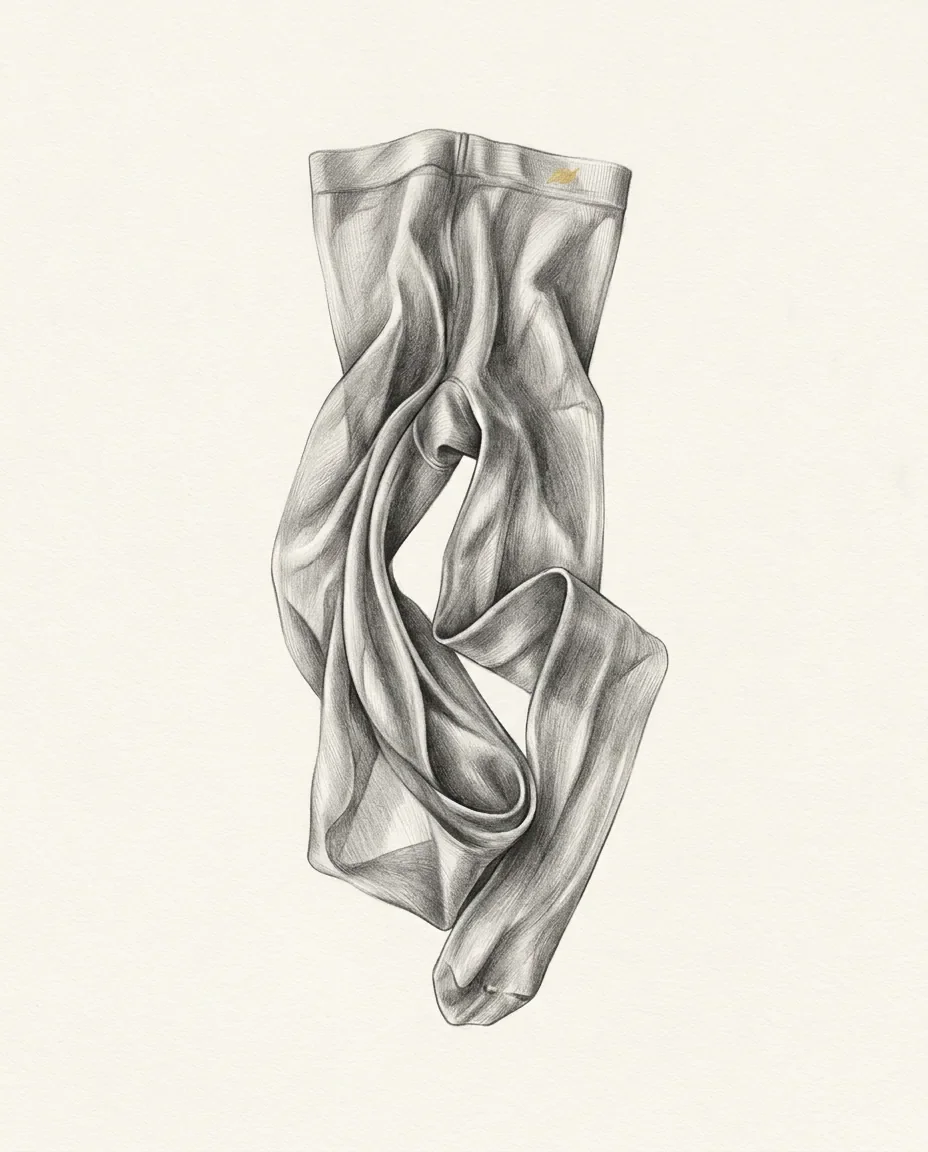
Pantyhose Fetish
Garment fetishism (hosiery/legwear subtype)
Added 21 Jun 2026 · Updated 22 Aug 2026
A sexual interest in pantyhose and tights, sheer or opaque one-piece nylon legwear, focused on its full-leg coverage, smooth encasing texture, and look. A common close relative of stocking fetishism and one of the more historically recent garment interests.
- Prevalence
- Common
- Category
- Clothing & Garments
- Clinical term
- Garment fetishism (hosiery/legwear subtype)
- Domain
- Sexual interest
- Confidence
- Medium confidence
- Status
- Benign variation of sexual interest; not a disorder absent distress, impairment, or non-consent.
- Also known as
- Pantyhose & Tights Fetishism, tights fetish, sheer nylon fetish, nylon fetish, nylon encasement (sheer), hosiery fetish, legwear fetish
- Added
- 21 Jun 2026
- Updated
- 22 Aug 2026
Featured in
Overview
Pantyhose and tights fetishism is an erotic interest in one-piece legwear that encases the legs and lower body in sheer or opaque nylon. It overlaps closely with stocking fetishism but is set apart by the continuous, full-coverage character of pantyhose, which many enthusiasts value precisely for its smooth, seamless, encasing quality. This article covers the garment's mid-twentieth-century origins, the older clinical lineage of fetishism that frames the interest, how it is typically expressed, and its prevalence and cultural footprint.
Definition & scope
Pantyhose (British English: tights) are a single garment combining briefs and stockings into continuous legwear. The fetish attaches to the material (sheer or opaque nylon), its denier and finish, the smooth encasing coverage, and the look of the legwear on the body. It is a close relative of stocking interest; the defining difference is the seamless, waist-to-toe coverage rather than separate stockings and suspenders.
Examples
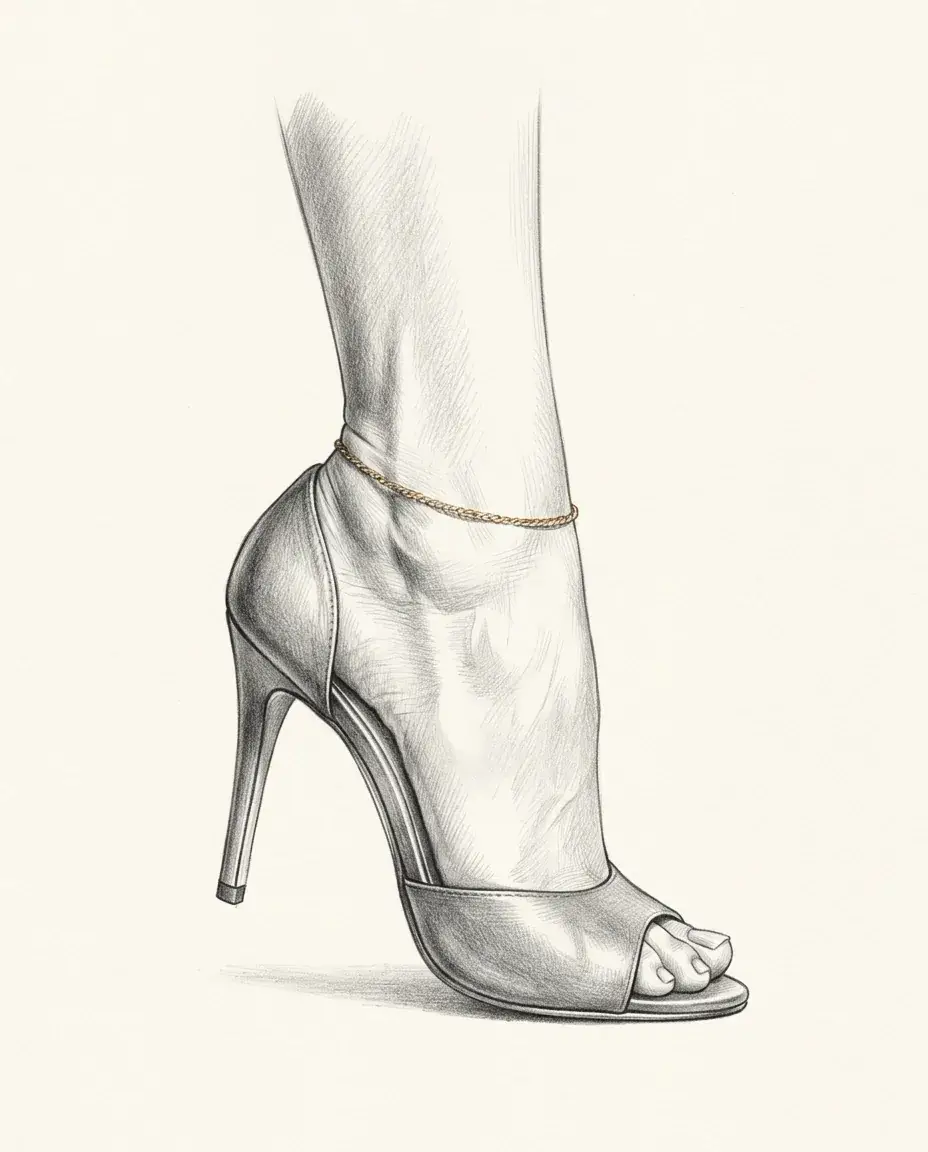
What the term covers. Attraction to the garment itself (denier and sheerness, matte or glossy finish, colour, the reinforced toe, the fit at the waist) and to the look of a leg once it is inside one. It covers wearing as much as looking: a large part of the interest is the sensation of smooth nylon against one's own skin, and pantyhose worn invisibly under other clothes is a recurring theme for exactly that reason. The seamless waist-to-toe coverage is the specific draw for those who describe the appeal as encasement, and the interest commonly arrives packaged with the high heels, boots or shoes worn with it.
What the term does not cover. Stocking fetish is the nearest neighbour and the commonest confusion: stockings are separate, stop at the thigh, and bring a whole vocabulary of seams, welts and garter belts, the visual cues pantyhose deliberately does away with. Nylon fetish is the material rather than the garment, and takes in slick synthetics well beyond legwear, as latex and spandex do for theirs. Leg fetish is an interest in the leg with or without anything on it, and foot fetish in the foot; both meet a hosiery interest at the nylon-covered foot without being it. Panties and lingerie are intimate apparel, where pantyhose is ordinary daywear, part of what many enthusiasts find appealing about it.
How the word is used. Plain modern English and wholly non-clinical: "pantyhose" in American usage, "tights" in British, "hosiery" or "legwear" in the trade and in survey categories. No diagnostic manual names it. DSM-5-TR and ICD-11 speak only of fetishistic disorder, and only where distress, impairment or harm is present.
History & origins
A garment of the twentieth century
Unusually among fetishes, this one cannot predate its object by more than a few decades: pantyhose did not exist before the mid-twentieth century, which makes it one of the most historically recent garment interests. The story begins with nylon, the first fully synthetic fibre, introduced by DuPont in 1938; nylon stockings became a sensation soon after and rapidly displaced silk in hosiery.
The decisive innovation was combining briefs and stockings into a single garment. Allen Gant Sr. of Glen Raven Mills developed "Panti-Legs" around 1953 and brought them to the open market about 1959. What turned a niche product into an everyday staple was fashion: the 1960s miniskirt exposed the leg well above the knee and made the seamless coverage of pantyhose a practical necessity. By 1970 pantyhose sales had overtaken stockings for the first time.
- 1938: DuPont introduces nylon; nylon stockings follow.
- c. 1953-1959: Allen Gant Sr. (Glen Raven Mills) develops and markets one-piece "Panti-Legs".
- 1960s: the miniskirt drives mass adoption of pantyhose.
- 1970: pantyhose overtake stockings in sales.
Clinical lineage
The fetish term itself is plain modern English with no documented clinical coinage, but the broader frame long predates the garment. Hosiery- and stocking-related cases were documented by Richard von Krafft-Ebing in Psychopathia Sexualis (1886) and discussed by Havelock Ellis in Studies in the Psychology of Sex. Sexual fetishism as a category was named by the French psychologist Alfred Binet, whose 1887 essay Le fétichisme dans l'amour, extending an 1882 paper by Jean-Martin Charcot and Valentin Magnan, proposed that a fetish forms when an object linked to early, intense sexual emotion comes to dominate desire. As pantyhose entered everyday wardrobes in the 1960s, the interest attached to a new garment within this older framework. Modern diagnostic manuals treat it as benign: the DSM-5-TR and ICD-11 reserve "Fetishistic Disorder" for cases marked by distress, impairment, or harm.
In practice
Common expressions include attraction to the look and feel of the fabric, a preference for partners wearing pantyhose during consensual intimacy, appreciation of specific deniers (sheerness), colours, finishes, or textures, and enjoyment of the sensory quality of smooth nylon against skin. For some, the seamless full-leg coverage connects to broader interests in encasement. The interest sits alongside related legwear and footwear interests such as high heels, shoes, and boots, often worn together.
Psychology
Proposed mechanisms combine learned association with cultural cues, though the causal evidence base is thin and largely retrospective. The standard associative-learning model, a garment becoming coupled to a formative sexual experience, is the most cited, echoing Binet's 1887 conditioning hypothesis. Because pantyhose became ubiquitous in twentieth-century professional and everyday dress, the garment carries dual connotations of the routine and the deliberately presented, which may amplify its symbolic salience. Tactile sensitivity to smooth synthetic fabric is frequently reported by enthusiasts and fits the prominence of texture-based appeal across hosiery interests. No single theory is established.
Prevalence & culture
How common is it?
There is no direct prevalence figure specific to pantyhose, so estimates are anchored to broader research. Joyal & Carpentier (2017), a representative survey of 1,040 adults, found 26% reported interest in fetishism, a level the authors call neither rare nor statistically unusual and similar across sexes. In the large internet study by Scorolli et al. (2007), "objects usually associated with the body" (the class that includes hosiery and other garments) made up about 30% of fetish preferences, ranking second after body parts. Pantyhose keep a steady cultural presence through fashion and dancewear and support active online communities, but dedicated research usually subsumes them within the wider hosiery and legwear category, so the value here is an approximation rather than a directly measured figure.
Safety, consent & law
Clinically this is a benign variation of sexual interest. Because it involves ordinary clothing and consenting adults, it carries no inherent safety, consent, or legal concerns; ordinary norms of mutual consent apply.
Common questions
What is the difference between a pantyhose fetish and a stocking fetish?
Coverage, and the visual vocabulary that follows from it. Stockings are two separate garments ending at the thigh, held up by suspenders or silicone, and much of their appeal lies in the seam, the welt and the band of bare skin above. Pantyhose are one continuous garment from waist to toe, and their appeal is usually described in the opposite terms: uninterrupted, smooth, encasing. Many people like both, but they are different pleasures.
Is a pantyhose fetish about the legs or the garment?
The garment, which is what separates it from a leg fetish. A leg interest is satisfied by a bare leg; a pantyhose interest generally is not, and for many people the covered leg is the more compelling of the two. The distinction sounds pedantic until it is tested, because it predicts what someone actually responds to, and the two interests coexist often enough that the difference is easy to miss.
Why does nylon feel so appealing?
The reported appeal is tactile before it is visual: the fabric is smooth, faintly cool, slightly compressive, and moves against skin in a way ordinary cloth does not. That texture-driven pull runs through hosiery interests generally, and is why a nylon fetish can attach to the material regardless of what it has been cut into. Why texture becomes eroticised for some people and not others is not established; associative learning is the usual account, and the evidence for it is thin.
Do men wear pantyhose as part of the fetish?
Frequently: it is one of the larger strands of the interest rather than a curiosity within it. Reported motivations run from the sensation itself to warmth and leg support under other clothing, with the garment often worn where nobody else will see it. Wearing them is not the same as cross-dressing, which is about presenting in clothing associated with another gender; a man wearing tights for how they feel is pursuing a material interest, though the two can overlap.
Is it normal to prefer legs in tights to bare legs?
It is common and unremarkable within this interest. Partial concealment recurs across garment fetishes: the fabric smooths and unifies the leg, changes its colour and sheen, and suggests as much as it shows. Where the preference is strong enough that bare legs hold little appeal, it is a fetish in the descriptive sense, still benign, and clinically relevant only if it causes distress or crowds out the rest of someone's sex life.
Is a pantyhose fetish a paraphilia or a disorder?
No. It involves ordinary clothing and consenting adults, and the manuals reserve fetishistic disorder for cases marked by significant distress, impairment or harm, a threshold a preference for hosiery does not approach. For context on how ordinary such interests are, Joyal and Carpentier's (2017) representative survey of 1,040 adults found 26% reported an interest in fetishism, a level the authors describe as neither rare nor statistically unusual.
From the blog
- Stocking Fetish57/100Clothing & GarmentsA sexual interest in stockings and hosiery, centered on sheer or textured legwear, seams, garters and the look and feel of nylon and silk. It is among the most common garment and material fetishes.57
- High Heel Fetish56/100Altocalciphilia · Clothing & GarmentsA focused sexual interest in high-heeled shoes (stilettos, pumps, platforms) and the height, posture, and leg line they create. It is a common, generally harmless subtype of shoe fetishism.56
- Shoe Fetish65/100Retifism · Clothing & GarmentsA sexual interest in shoes as objects of attraction or arousal, valued for their style, material, and associations rather than the wearer. Clinically termed retifism, it is among the most frequently documented garment fetishes in survey and case literature.65
- Boot Fetish52/100Clothing & GarmentsA sexual interest in boots, from knee-high and thigh-high fashion styles through riding, work, combat, and military boots. They are valued for their silhouette, materials, and connotations of authority. It overlaps with shoe, leather, and uniform fetishism.52
- Panty Fetish54/100Garment fetishism (underwear subtype) · Clothing & GarmentsAn erotic interest in underpants, panties or knickers, valued for their fabric, cut, intimate associations, and sometimes the scent of a worn pair. A common intimate-apparel fetish, not a disorder when it involves consenting adults and one's own or freely given items.54
- Sock Fetish50/100Clothing & GarmentsA sexual interest in socks, in their look, feel, scent, or association with the feet, treated as a benign relative of foot fetishism. It overlaps with hosiery and scent (olfactophilic) interests.50
A plain modern English compound describing the garment: 'pantyhose' = 'panty' (diminutive of 'pants', clipped from 'pantaloons') + 'hose' (Old English 'hosa', leg-covering), i.e. one-piece sheer legwear, a term coined with the garment itself in the mid-twentieth century. 'Fetish' descends from Portuguese 'feitiço' ('charm, sorcery') via French 'fétiche'. The colloquial name has no distinct clinical derivation.
hosiery · legwear · garment fetishism
Prevalence is computed from the entry's cited population estimate. Rows marked ESTare indicative editorial estimates scored against a fixed anchor rubric, not measured quantities. Method & anchors: methodology.
Common · ≈ 1 in 20
- 01Scorolli et al. (2007), Relative prevalence of different fetishes, Int. J. Impotence Research 19(4):432-437prevalence anchor: stockings/legwear are ~33% of clothing fetishes, a leading garment category
- 02Sexual fetishism, Wikipedia (carries the Scorolli 2007 relative-frequency table)carries the Scorolli clothing-fetish table where hosiery/legwear ranks among the top garment fetishes
- 03Joyal & Carpentier (2017), The Prevalence of Paraphilic Interests and Behaviors in the General Population, J. Sex Research 54(2):161-171provincial survey of 1,040 adults: 26% reported interest in fetishism, described as neither rare nor statistically unusual, supporting a few-percent prevalence for hosiery specifically
- 04Pantyhose, Wikipediahistory: nylon introduced by DuPont 1938; Allen Gant Sr. (Glen Raven Mills) developed 'Panti-Legs' c.1953, marketed c.1959; 1960s miniskirt drove adoption; pantyhose overtook stockings by 1970
- 05The Origins of the Theory of Sexual Fetishism: Charcot & Magnan (1882) and Alfred Binet (1887), SpringerBinet's 1887 'Le fétichisme dans l'amour' built on Charcot & Magnan (1882) and named sexual fetishism, proposing an early-association origin
- 06Psychopathia Sexualis, Wikipediaconfirms Krafft-Ebing's Psychopathia Sexualis was first published in 1886 and catalogued a wide range of paraphilias including hosiery/stocking cases
- 07DSM-5-TR, American Psychiatric AssociationDSM-5-TR distinguishes a benign fetishistic interest from Fetishistic Disorder, which requires distress, impairment, or harm
- 08ICD-11, World Health OrganizationICD-11 frames consensual fetishistic interest as non-pathological, classing disorders only where there is distress or harm to others