Stocking Fetish
Added 21 Jun 2026 · Updated 7 Sep 2026
A sexual interest in stockings and hosiery, centered on sheer or textured legwear, seams, garters and the look and feel of nylon and silk. It is among the most common garment and material fetishes.
- Prevalence
- Common
- Category
- Clothing & Garments
- Domain
- Sexual interest
- Confidence
- Medium confidence
- Status
- Common variation of sexual interest; not a disorder absent distress, impairment, or non-consent.
- Also known as
- Stocking & Hosiery Fetishism, hosiery fetish, nylon fetish, hold-ups fetish, legwear fetish, pantyhose fetish, tights fetish
- Added
- 21 Jun 2026
- Updated
- 7 Sep 2026
Featured in
Overview
Stocking and hosiery fetishism is an erotic interest in legwear such as stockings, hold-ups, tights and garter-belt combinations. Attraction may settle on the sheer or textured fabric, the way the material frames the legs, fine details like back seams and lace welts, or the tactile glide of nylon and silk against skin. As a garment-and-material interest involving ordinary clothing and consenting adults, it sits among the most common and benign variations of human sexuality, and is documented here as a normative preference rather than a clinical disorder.
Definition & scope
The interest covers the full family of legwear: sheer and opaque stockings, thigh-high hold-ups, seamed and seamless styles, suspender/garter arrangements, and closely related items such as pantyhose and tights. Some people are drawn chiefly to the visual line the garment gives the leg; others to a specific material (silk, fine-denier nylon, fishnet, lace) or to tactile sensation. The interest overlaps with, but is distinct from, leg and foot partialism: the focus here is the garment and its material rather than the body part alone. It becomes a clinical matter only in the uncommon case where it causes marked distress, impairment or harm.
Examples
The interest is easiest to place by the distinctions its practitioners themselves draw, because the neighbouring terms sit close enough that casual speech swaps them freely.
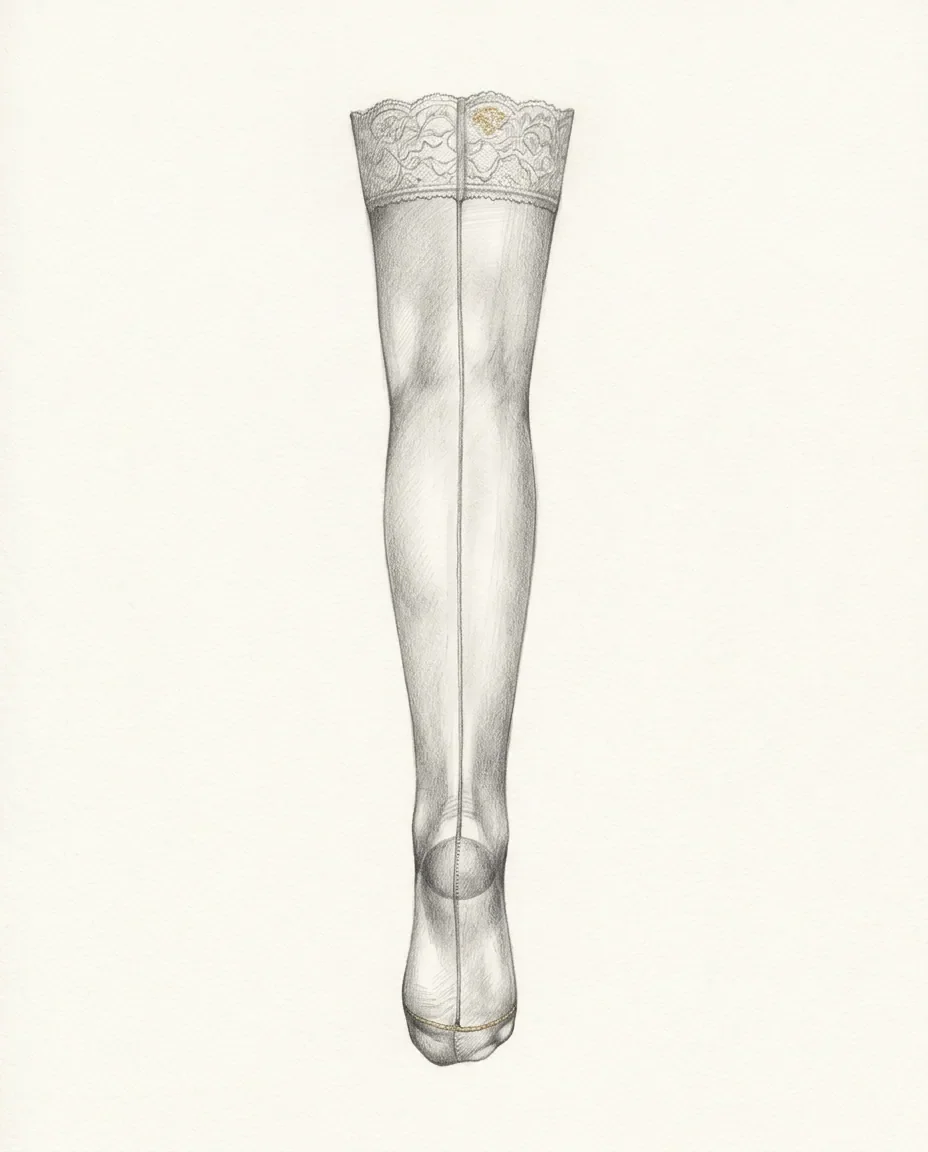
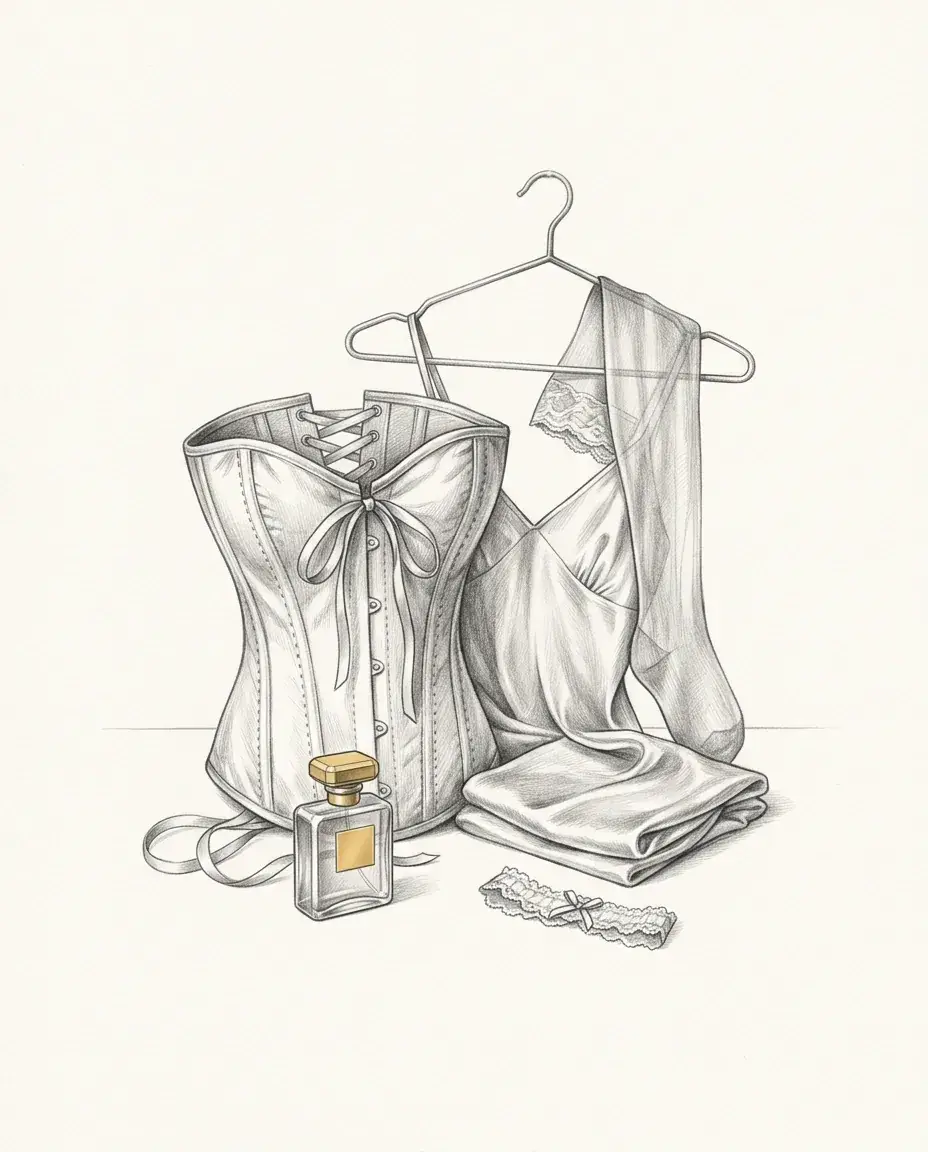
What the term covers. Sheer nylons in fine deniers and opaque styles in heavy ones; thigh-high hold-ups with a silicone band; the seamed style, whose line up the back of the leg is the detail most often singled out; fishnets and lace welts; and the suspender-and-garter arrangement that holds a two-piece stocking up. The attraction may sit in how the garment looks on a partner, in wearing it oneself, in the sound and glide of the fabric, or in the moment of putting it on. Many people who report it want the legwear kept on rather than removed.
What the term does not cover. Pantyhose and tights are a single waist-to-toe garment, and the difference from a two-piece stocking is one practitioners care about; the garter belt is hardware rather than hosiery. Where the pull is a material that happens to have been cut into legwear (nylon, silk, lace, satin), that is a fabric interest, and lingerie fetishism is the umbrella above all of them. A leg fetish is anatomy rather than cloth, and socks sit at the far end of the same wardrobe. Wearing stockings oneself is not by itself cross-dressing, which concerns gendered presentation rather than the appeal of one item. Seamed stocking fetish is the narrower case, an interest in the back seam itself and the fully fashioned construction that produced it.
How the word is used. "Stocking fetish," "hosiery fetish" and "nylon fetish" circulate interchangeably in lay and retail speech, and none of them is a diagnosis: neither DSM-5-TR nor ICD-11 names a hosiery-specific condition, recognising only a general fetishistic disorder that turns on distress or impairment. In ordinary use the word "fetish" here reports the strength of a preference rather than claiming a clinical state.
History & origins
The eroticisation of legwear long predates any clinical label, and its modern form is bound up as much with textile and fashion history as with sexology.
Clinical lineage
Nineteenth- and twentieth-century sexologists treated arousal to clothing as a recognised category in its own right.
- 1886: Richard von Krafft-Ebing's Psychopathia Sexualis defined fetishism in psychiatric terms for the first time, cataloguing arousal fixated on inanimate objects and specific fabrics among his clinical cases and framing it, in the idiom of the day, as a deviation of the sexual instinct.
- 1897–1928: Havelock Ellis, in his multi-volume Studies in the Psychology of Sex, discussed the erotic symbolism of stockings, shoes and the foot, treating such attractions as exaggerations of ordinary aesthetic preference rather than disease.
- 1905: Sigmund Freud's Three Essays on the Theory of Sexuality introduced the idea of component instincts and partial fixation, framing garment fetishes as the displacement of desire onto a non-genital object closely associated with the body, an account that links legwear fetishism to leg and foot partialism.
- Modern manuals: neither the DSM-5-TR nor the ICD-11 lists a stocking- or hosiery-specific diagnosis; a consensual garment interest only meets the threshold for fetishistic disorder where it causes marked distress, impairment or harm. "Stocking fetish" therefore remains a colloquial descriptor rather than a distinct diagnostic entity.
Material & cultural evolution
The intensity of the modern interest tracks the history of the garment itself.
- Silk stockings were long a luxury good, but the decisive shift came with synthetic fibre. DuPont demonstrated its new nylon stocking at the 1939 New York World's Fair, famously showing off the fibre's strength.
- 16 May 1940: the nationwide retail launch, remembered as "Nylon Day," set off a wave of demand sometimes called "nylon fever." By reporting of the era, roughly four million pairs sold across the United States within the first days, with tens of thousands of pairs bought in New York alone on the first day, as the Smithsonian's stocking history records.
- Wartime requisition of nylon for parachutes and other materiel then made stockings scarce; women improvised by painting seams up the backs of their legs, cementing the back seam as a charged signal of glamour and effort.
- Mid-century pin-up art, Hollywood starlets and lingerie advertising entrenched the seamed stocking, garter belt and suspender as visual shorthand for intimacy and deliberate allure. As everyday tights and bare legs displaced stockings in ordinary wear, the stocking became a chosen, intentional garment, which for many heightened rather than diminished its erotic charge.
In practice
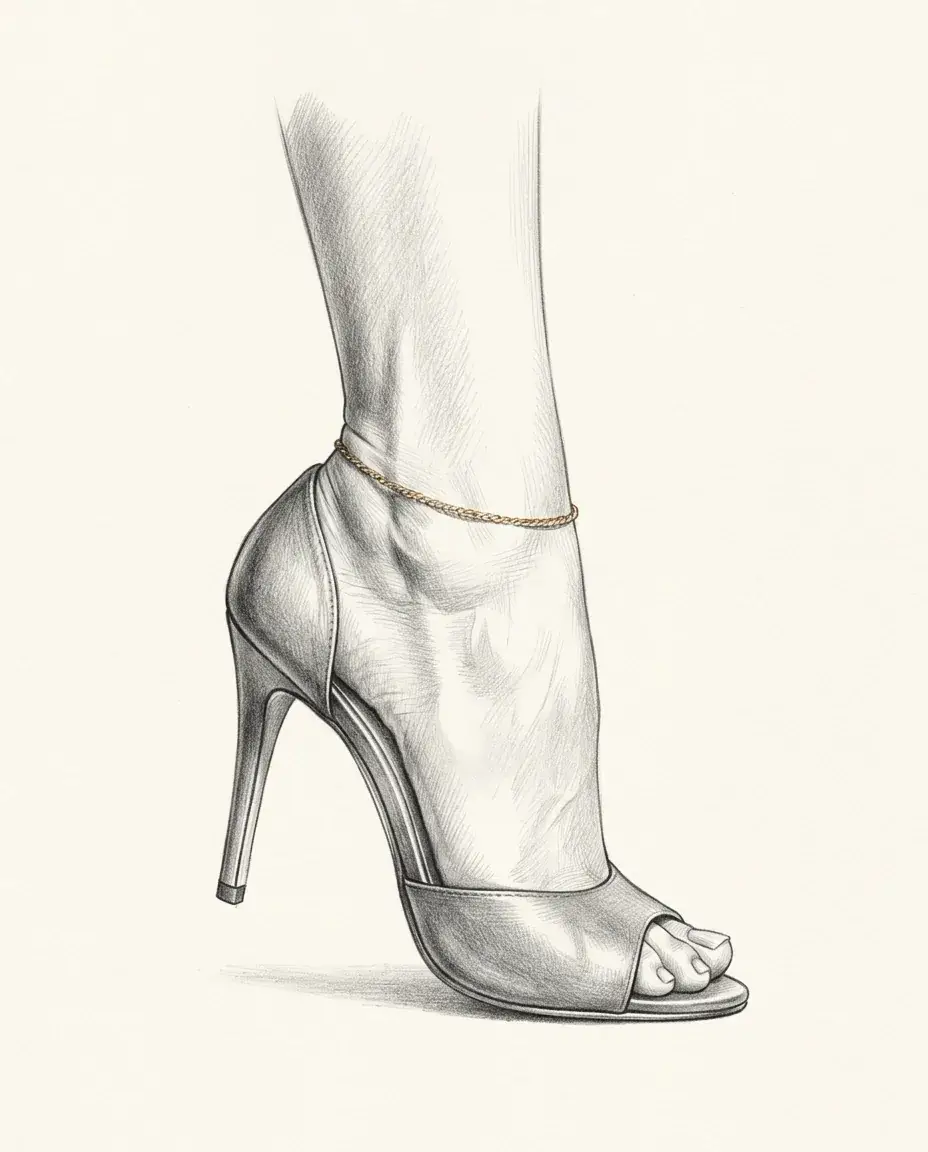
The interest is expressed through appreciation of legwear in imagery or in person, a preference for partners wearing stockings during consensual intimacy, close attention to particular materials, deniers, colours and styles, and sometimes collecting or wearing the garments oneself. It frequently blends with leg and foot partialism and with a broader appreciation of fabric texture, overlapping closely with pantyhose fetishism and with footwear interests such as high heels and boots.
Psychology
Proposed mechanisms combine associative conditioning, in which legwear becomes paired with sexual arousal through repeated co-occurrence, with the powerful cultural eroticisation of stockings as signifiers of glamour and sensuality. Freud's notion of partial fixation offers an additional frame: desire attaches to a garment that stands metonymically for the body it covers. The decline of stockings as everyday clothing has, for some, sharpened their meaning as an intentional, occasion-marking garment. As with garment fetishes generally, the evidence base for any single causal account is thin, and these interests are understood clinically as normative variations rather than disorders absent distress, impairment or non-consent.
Prevalence & culture
How common is a stocking fetish?
Within clothing fetishes, legwear consistently ranks at or near the top. Object and material fetishism is reported by a substantial minority of the general population: Joyal & Carpentier (2017) found fetishistic interests common in their representative Quebec sample. The most-cited breakdown of clothing preferences comes from Scorolli et al. (2007), who counted members, groups and messages across 381 online fetish discussion communities (an estimated 5,000+ participants). Among clothing-related groups, items worn on the legs and buttocks (stockings, tights and similar) formed the single largest category:
| Clothing category | Share of clothing-fetish groups |
|---|---|
| Legwear (stockings, tights) & buttock-area | ~33% |
| Footwear (shoes, boots) | ~32% |
| Underwear | ~12% |
| Whole-body wear | ~9% |
Stockings retain strong cultural visibility through fashion, retro and pin-up aesthetics, and bridal and lingerie traditions, and the interest has a large, easily found presence in online kink communities. Because surveys rarely isolate hosiery from broader garment interest, the specific prevalence figure attached to this entry is an informed approximation.
Safety, consent & law
Involving ordinary clothing and consenting adults, this interest carries no inherent safety, consent or legal concerns. As with any partner-directed preference, the ordinary norms of communication and consent apply.
Common questions
What is the difference between stockings, hold-ups and tights?
Stockings are separate leg-length garments that need something to hold them up, traditionally a suspender or garter belt. Hold-ups do the same job with an elasticated or silicone band at the thigh, so no belt is needed. Tights, called pantyhose in American English, are a single garment running from waist to toe. The distinction matters to the interest: many people who describe a stocking fetish specifically prefer the two-piece arrangement and the bare skin above it, which is why pantyhose fetishism is catalogued separately.
Is a stocking fetish a disorder?
No. It involves ordinary clothing and consenting adults, and neither DSM-5-TR nor ICD-11 names a hosiery-specific condition. The manuals recognise only a general fetishistic disorder, which requires that an interest cause marked distress or impairment, or involve someone who has not consented. A preference for legwear crosses none of those thresholds by itself, however strong it happens to be.
Why do seamed stockings have such a strong pull?
The back seam survives from the era when stockings were knitted flat and sewn, and it persists now as a deliberate stylistic choice rather than a necessity. Its charge is largely historical. When wartime requisition of nylon made stockings scarce, women drew seams up their bare legs to imitate them, and mid-century pin-up and Hollywood imagery then fixed the seamed leg as shorthand for glamour and effort. It reads as intentional, which is much of the appeal.
Does liking stockings mean I have a foot or leg fetish?
Not necessarily. A leg fetish is an interest in anatomy and a foot fetish in another body part; a stocking interest is directed at a garment and the material it is made of. The three co-occur often enough that people assume they are one thing, but each is reported on its own, and it is perfectly ordinary to find hosiery compelling and legs unremarkable, or the reverse.
Is it a fetish if I like wearing stockings myself?
It can be, and the interest is documented in wearers as readily as in observers. Wearing them can be about how the fabric feels, how it changes the way you carry yourself, or simply knowing they are on under ordinary clothes. None of that says anything about gender identity: wearing one garment is not the same as cross-dressing, which concerns presenting in the clothing of another gender rather than the appeal of a specific item.
Why is nylon specifically associated with this fetish?
Because the modern garment and the modern interest arrived together. Silk stockings were a luxury few owned; DuPont's nylon put sheer legwear within general reach from its 1939 World's Fair debut and its retail launch in May 1940, and the fibre's particular qualities (the sheerness, the sheen, the glide against skin) became what people meant by "stockings." The alias nylon fetish dates from that, and a related interest can attach to the material itself wherever it turns up.
How do I tell a partner I find stockings arousing?
Directly, and outside a sexual moment. This is an unusually easy interest to raise, because the request concerns an item of clothing rather than an act: naming a specific style, colour or texture gives a partner something concrete to say yes or no to. Most people hear "I like you in these" as a compliment. If they would rather not, the interest stays yours to enjoy and does not become an obligation on them.
From the blog
How common7 min read
Shoes, heels, socks and stockings: when the fetish is what covers the foot
A shoe fetish centres on footwear, not the foot. Heels, boots, socks, stockings and pantyhose: what the surveys count and where each ranks on the index.
How common8 min read
Why feet are the most common fetish: the surveys, the theories and the parts
Why are feet the most common fetish? They lead every study that counted, 47% of body-part preferences and one adult in seven. The surveys, theories and ranking.
- Pantyhose Fetish52/100Garment fetishism (hosiery/legwear subtype) · Clothing & GarmentsA sexual interest in pantyhose and tights, sheer or opaque one-piece nylon legwear, focused on its full-leg coverage, smooth encasing texture, and look. A common close relative of stocking fetishism and one of the more historically recent garment interests.52
- High Heel Fetish56/100Altocalciphilia · Clothing & GarmentsA focused sexual interest in high-heeled shoes (stilettos, pumps, platforms) and the height, posture, and leg line they create. It is a common, generally harmless subtype of shoe fetishism.56
- Shoe Fetish65/100Retifism · Clothing & GarmentsA sexual interest in shoes as objects of attraction or arousal, valued for their style, material, and associations rather than the wearer. Clinically termed retifism, it is among the most frequently documented garment fetishes in survey and case literature.65
- Boot Fetish52/100Clothing & GarmentsA sexual interest in boots, from knee-high and thigh-high fashion styles through riding, work, combat, and military boots. They are valued for their silhouette, materials, and connotations of authority. It overlaps with shoe, leather, and uniform fetishism.52
- Panty Fetish54/100Garment fetishism (underwear subtype) · Clothing & GarmentsAn erotic interest in underpants, panties or knickers, valued for their fabric, cut, intimate associations, and sometimes the scent of a worn pair. A common intimate-apparel fetish, not a disorder when it involves consenting adults and one's own or freely given items.54
- Uniform Fetish60/100Uniform Fetishism · Clothing & GarmentsAn erotic interest in uniforms and the authority, role, or status they signal: military, police, medical, school, or service dress. A common clothing-and-role fetish rather than a clinical disorder.60
From English "stocking" (a close-fitting covering for the foot and leg, from Old English "stocc," a stump or post, via the older garment term "stock") plus the descriptive "fetish," from Portuguese "feitiço" (charm, sorcery) via Latin "facticius" (made by art). A plain-English descriptive name rather than a coined clinical term.
hosiery · legwear · garment fetishism
Prevalence is computed from the entry's cited population estimate. Rows marked ESTare indicative editorial estimates scored against a fixed anchor rubric, not measured quantities. Method & anchors: methodology.
Common · ≈ 1 in 20
- 01Scorolli et al. (2007), Relative prevalence of different fetishes, Int. J. Impotence Research 19(4):432-437prevalence anchor (stockings/legwear = 33% of clothing fetishes)
- 02Sexual fetishism, Wikipedia (carries the Scorolli 2007 relative-frequency table)carries the Scorolli relative-frequency table for legwear fetishism
- 03Joyal & Carpentier (2017), The Prevalence of Paraphilic Interests and Behaviors in the General Population, J. Sex Research 54(2):161-171broad object/material fetishism interest in general population (~44%)
- 04Havelock Ellis, Studies in the Psychology of Sex (1897–1928)early sexological discussion of garment/stocking symbolism as exaggerated aesthetic preference
- 05Nylon stocking, Wikipediamaterial history: DuPont nylon debut at the 1939 World's Fair, the May 1940 launch and "nylon fever," and the cultural rise of stockings as a glamour emblem
- 06Stocking Series, Part 1: Wartime Rationing and Nylon Riots, Smithsonian Magazine16 May 1940 "Nylon Day" retail launch, ~4 million pairs sold in the first days, wartime scarcity and the practice of painting seams onto bare legs
- 07Psychopathia Sexualis, WikipediaKrafft-Ebing's 1886 work defining fetishism in psychiatric terms, including fixation on fabrics and inanimate objects
- 08Pin-up model, Wikipediamid-century pin-up and Hollywood imagery entrenching the seamed stocking and garter as visual shorthand for glamour
- 09DSM-5, Wikipediano stocking/hosiery-specific diagnosis; fetishistic disorder requires distress or impairment
- 10ICD-11, Wikipediano stocking/hosiery-specific diagnosis in the WHO classification