Leg Fetish
Crurophilia
Added 21 Jun 2026 · Updated 22 Aug 2026
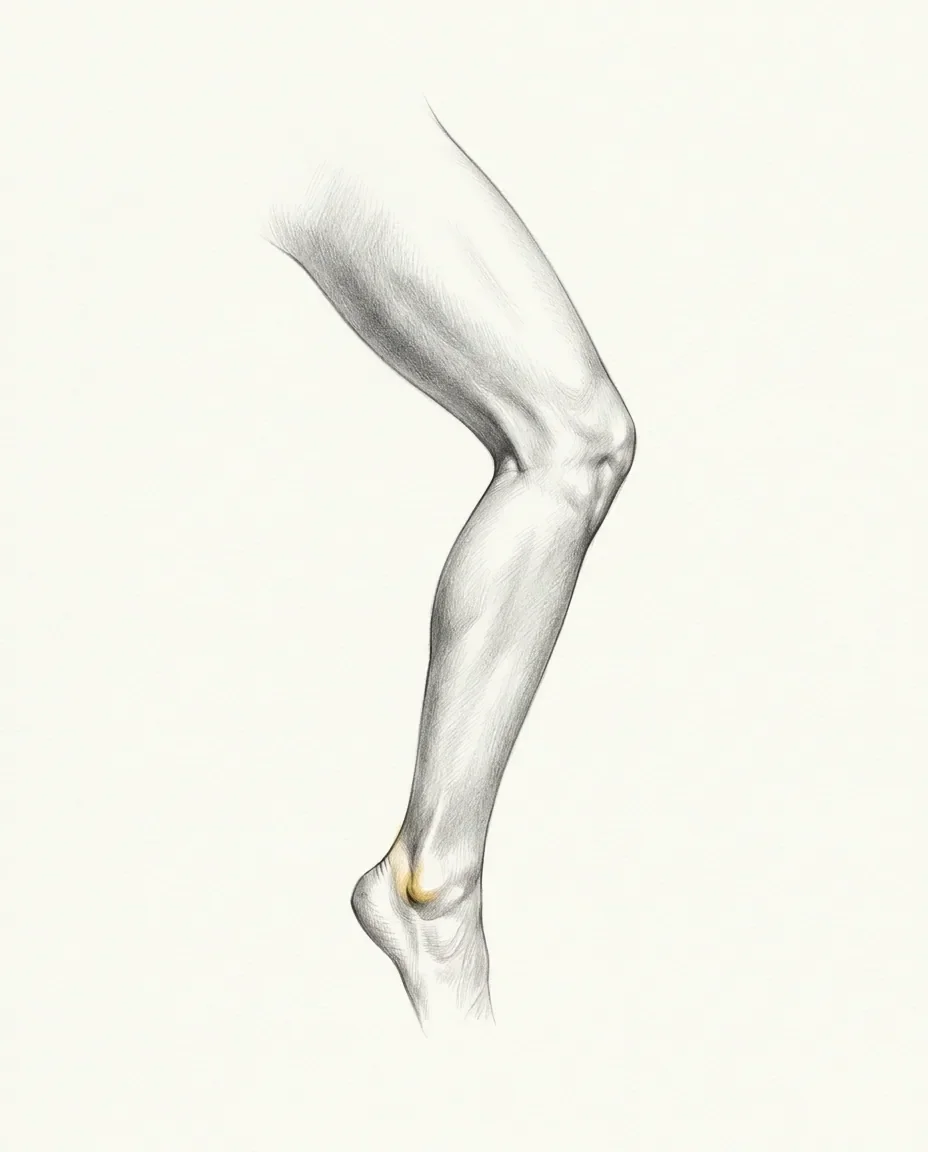
Crurophilia is a partialism in which the legs are the primary focus of sexual attraction. Interest may center on a leg's shape, length, line, or musculature, or on the way legs are framed by clothing such as stockings, skirts, or heels.
- Prevalence
- Common
- Category
- Body Parts & Partialism
- Clinical term
- Crurophilia
- Domain
- Sexual interest · Paraphilia
- Confidence
- Medium confidence
- Status
- Partialism; a benign paraphilic variation, not a disorder absent distress or impairment.
- Also known as
- Leg Partialism (Crurophilia), crurophilia, leg fetishism, leg partialism
- Added
- 21 Jun 2026
- Updated
- 22 Aug 2026
Featured in
Overview
Crurophilia: the clinical name for a leg fetish: is a partialism in which the legs (the thighs, calves, knees, or the overall line of the limb) are the central source of erotic interest rather than an incidental feature of general attraction. It is among the more common partialisms and frequently overlaps with attraction to feet, hosiery, and footwear. For most people it is experienced as a strong preference woven into ordinary desire rather than an exclusive requirement for arousal. This article traces how the eroticisation of the legs was first catalogued by sexology, how the clinical category shifted, and what the (thin) evidence says about how common it is.
Examples
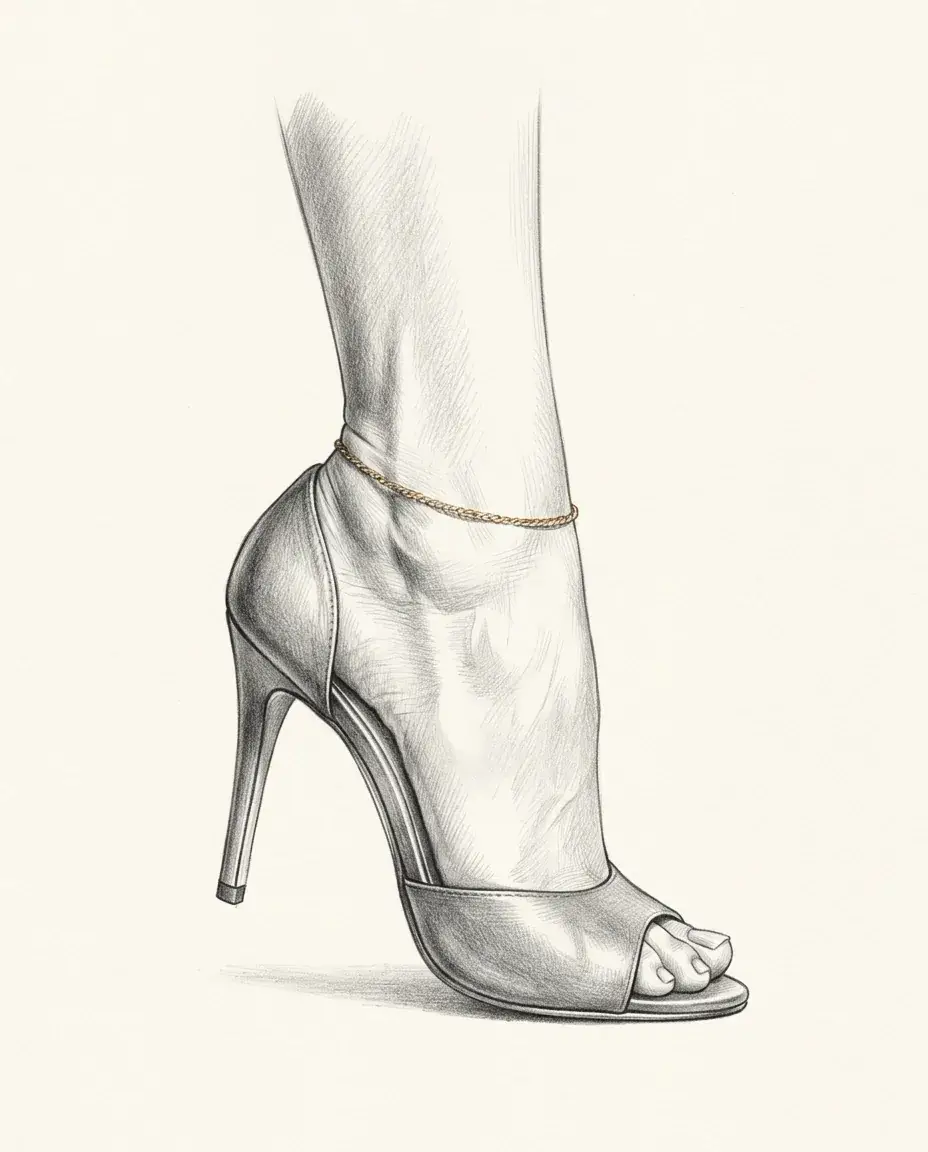
What the term covers. Attention that settles on the line of the limb (the length of the thigh, the curve of the calf, the shape of the knee, the definition of the muscle), whether in a partner or in an image. It covers how the leg is framed as much as the leg itself, which is why the interest runs so often alongside stockings, pantyhose, a garter belt or heels that change the posture and lengthen the line. The usual expressions are looking, a preference for a shorter hemline, and ordinary affectionate contact; for most people it is one strong ingredient of attraction rather than a requirement of it.
What the term does not cover. The narrower foci within the same limb have their own names: the thigh and the knee. The foot is a separate partialism that happens to co-occur often, and the buttocks are the adjacent one above. Where the garment rather than the limb is the point, the accurate term is a clothing or material fetish (nylon, boots, hosiery), and the two are separable, however routinely they are found together. Muscle worship follows developed musculature across the whole body rather than settling on the leg, and abasiophilia concerns braces, casts and an altered gait rather than the limb's line.
How the word is used. "Leg fetish" is plain modern English and is what almost everyone says. Crurophilia is the Latin-and-Greek coinage that partialism references list, but it is catalogue vocabulary rather than working clinical language, and neither form appears in DSM-5-TR or ICD-11. What those manuals recognise is fetishistic disorder, a threshold a body-part preference reaches only with distress or impairment.
History & origins
Clinical lineage
The modern study of body-part focus belongs to the late-nineteenth-century birth of sexology.
- 1886: Richard von Krafft-Ebing catalogued fetishistic attraction to discrete bodily features in Psychopathia Sexualis, establishing the template for treating a fixation on one body part as a distinct erotic pattern.
- 1897 onward: the British physician Havelock Ellis explored the eroticisation of the body across his multi-volume Studies in the Psychology of Sex, situating leg- and limb-focused desire within a broader survey of human sexuality.
- Twentieth century: the narrower concept of partialism (arousal centred on a specific non-genital body part) was absorbed into the psychiatric nomenclature. In the DSM-IV it was a separate paraphilia "not otherwise specified."
- 2013: the DSM-5 merged partialism into fetishistic disorder, which now reaches a "highly specific focus on nongenital body parts." Crucially, the diagnosis applies only when the interest causes marked distress or functional impairment, a body-part preference alone is not a disorder.
- Present: both the DSM-5-TR (2022) and the ICD-11 frame consensual non-distressing interests of this kind as benign variation, not pathology.
The everyday term leg fetish is plain modern English; the clinical label crurophilia derives from Latin crus ("leg, shin") plus the Greek-derived suffix -philia ("love, affinity"). Its precise coinage is not well documented, but it follows the standard -philia pattern used across the sexological vocabulary, and crurophilia is listed in modern partialism references with the leg as its source of arousal.
Cultural & subcultural evolution
What counts as an alluring stretch of leg has always tracked clothing norms. As accounts of leg fetishism note, the parts of the body deemed sexually desirable are shaped by contemporary dress codes: in the Victorian era, when legs were almost entirely covered, a glimpse of ankle or knee carried a charge that later, more exposed fashions diluted. The twentieth century's rise of shorter hemlines, sheer hosiery, pin-up art, and leg-forward advertising progressively foregrounded the limb, and the internet later gave leg-focused admiration its own forums, image boards, and creator niches.
In practice
The interest is expressed through admiration of the legs and a preference for how they are presented and framed:
- Appreciation of leg shape, length, line, and musculature.
- A preference for skirts, shorts, stockings, hosiery, or high heels that emphasise the limb, an overlap with clothing fetishism for legwear.
- Non-explicit touch and ordinary affectionate contact between consenting adults.
For most people the interest is one ingredient in attraction rather than a precondition for it.
Psychology
Explanations draw on associative learning, the legs becoming a conditioned erotic cue through repeated pairing with arousal, and on the legs' prominence as a visual signal of health, youth, and fitness. The frequent co-occurrence of leg and foot interest is sometimes linked to a neuro-anatomical idea associated with V. S. Ramachandran, who proposed that the cortical map (the sensory homunculus) places the foot region adjacent to the genital region. That hypothesis concerns the foot specifically and was offered without experimental evidence, so it should be treated as speculative rather than established; it is best read as one plausible thread in why lower-limb interest clusters. Fashion and media that foreground the legs further reinforce the cue. Across these accounts the evidence base is thin and largely indirect.
Prevalence & culture
How common is a leg fetish?
Leg-focused attraction is common as a preference and ranks among the leading body- and clothing-linked interests, though clean figures for bare legs specifically are scarce. It has notable cultural visibility, appearing widely in advertising, fashion, and pin-up imagery, and it sustains sizable online communities. The most-cited dataset, Scorolli et al. (2007), surveyed online fetish communities and found that of clothing-related fetishes, legwear (stockings, skirts) accounted for about 33%, the leading clothing category, while feet dominated the body-part foci at about 47%. The study did not break out bare legs as a discrete body-part category, so the legwear figure is the closest direct anchor; the Scorolli table is also reproduced on Wikipedia. Broader population work such as Joyal & Carpentier (2017) shows that fetishistic interest in general is common (around half of respondents reported some paraphilic interest), the umbrella under which body-part partialisms like legs sit. As a discrete clinical category, crurophilia remains comparatively under-studied, with most evidence drawn from survey and proxy data.
Variations & related interests
Leg interest sits close to several neighbouring partialisms and clothing fetishes: most obviously foot fetishism and attraction to the buttocks, as well as hosiery and footwear fetishes. Many people experience these as a connected lower-body cluster rather than separate fixations.
Safety, consent & law
The interest is benign, concerning consenting adults and ordinary admiration or contact, and it carries no inherent safety or legal considerations. The one boundary worth naming is the ordinary one about other people: noticing a stranger in public is unremarkable, while photographing or filming them covertly is not, and many jurisdictions treat covert photography as an offence in its own right.
Common questions
Is a leg fetish normal?
Yes, in the ordinary sense of the word. A pronounced preference for the shape and line of a partner's legs is one of the most familiar patterns in attraction, and neither DSM-5-TR nor ICD-11 treats a body-part preference as a disorder in itself. What the manuals recognise is fetishistic disorder, which requires marked distress or functional impairment on top of the interest. A preference that fits comfortably into a person's life is a variation, not a symptom.
Is it a leg fetish if I just find legs attractive?
Probably not, and the distinction is worth keeping. Almost everyone finds some part of a partner's body more compelling than the rest. A partialism means the legs are the organising focus of arousal rather than one attractive feature among many. The line is a matter of degree and nobody polices it, but the label describes where attention reliably lands, not whether a person has noticed that legs can be attractive.
What is the difference between a leg fetish and a stockings or hosiery fetish?
One targets the body, the other the garment. A leg fetish is a partialism: the limb itself, bare or covered, is the draw. A stocking, pantyhose or nylon interest follows the fabric (its sheen, its texture, the sound of it) and can attach to it whoever is wearing it. The two overlap constantly, because hosiery is designed to frame the leg, but a simple test is whether bare legs still hold the interest.
Why do leg and foot fetishes so often occur together?
Partly because the two are continuous: attention that follows the line of a limb does not stop at the ankle, and the clothing that frames one usually frames the other. A neurological conjecture associated with V. S. Ramachandran, placing the foot's cortical map next to the genital map, is sometimes offered as an explanation, but it concerns the foot specifically and was proposed without experimental support. Shared cultural presentation accounts for more of the clustering than any settled mechanism does.
Is crurophilia a real clinical term?
It is a real word with a thin clinical career. Built from Latin crus ("leg") and -philia, it appears in reference lists of partialisms as the label for leg-focused arousal, but it is not a diagnosis, has no entry in DSM-5-TR or ICD-11, and is rarely used either by clinicians or by people who have the interest. Expect to meet it in glossaries far more often than in a consulting room.
When would a leg fetish be a problem?
When it stops being a preference and starts costing something. The clinical threshold is marked distress or impairment: an interest that has to be satisfied before arousal is possible at all, that crowds out a partner, or that the person themselves finds unwelcome. It also crosses a line when it involves someone who has not consented. Short of that, no amount of enthusiasm turns a preference into a disorder.
From the blog
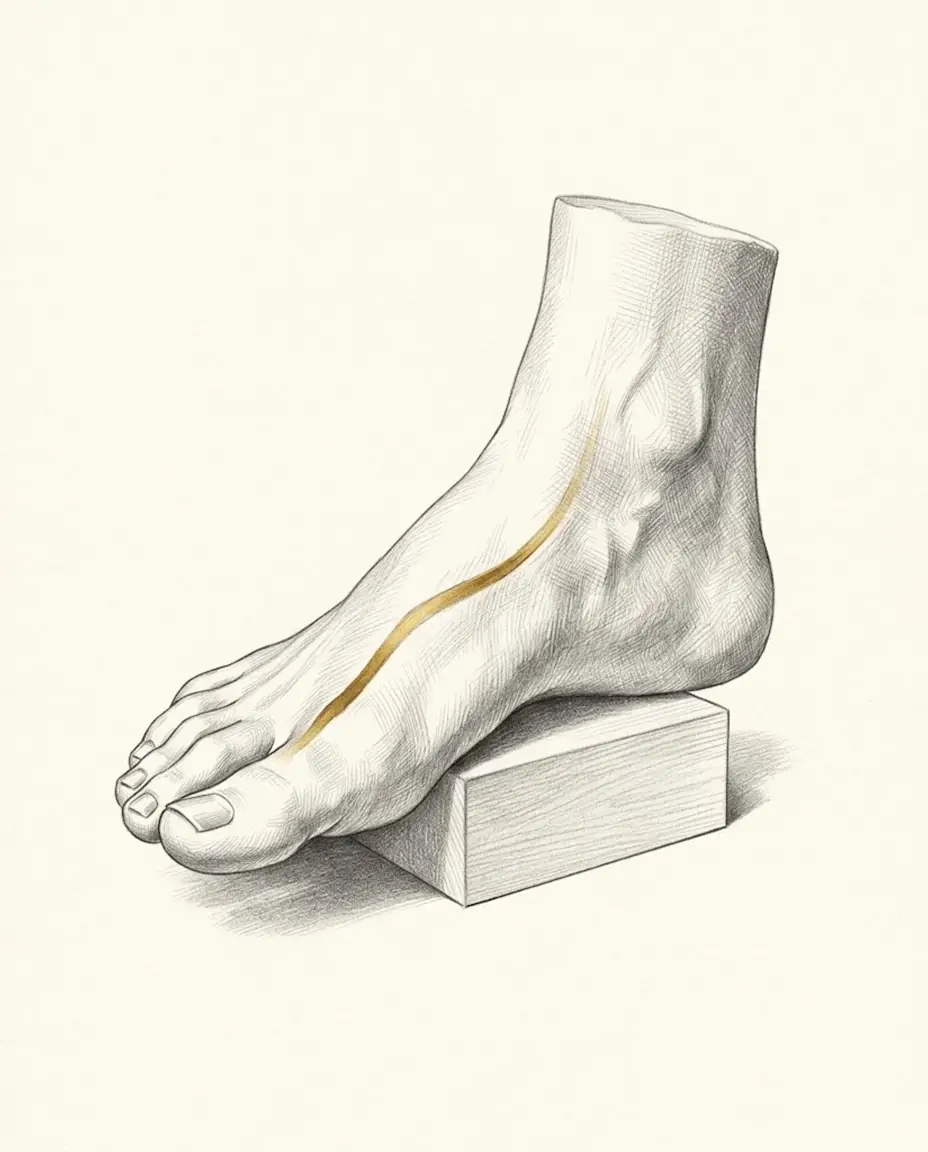
- Foot Fetish83/100Podophilia · Body Parts & PartialismA focused erotic interest in feet (their shape, soles, toes, arches, or grooming) as a primary source of attraction. Within partialism (erotic focus on a non-genital body part) it is the example people report most, by a wide margin.83
- Butt Fetish61/100Pygophilia · Body Parts & PartialismA pronounced sexual or aesthetic attraction focused on the buttocks, clinically termed pygophilia. It ranges from a very common preference for the shape, size, and movement of the rear to a rarer, exclusive partialism.61
- Sole Fetish53/100Body Parts & PartialismSole fetishism is an erotic focus on the underside of the foot, the sole, and especially on its texture and softness. The wrinkles and flex-lines that appear when the foot bends are a particular draw. A narrower form of foot partialism tied to the popular "wrinkled soles" search term.53
- Hair Fetish52/100Trichophilia · Body Parts & PartialismA focused erotic interest in hair, most often scalp hair, attaching to its length, thickness, texture, colour or styling. It sometimes attaches to acts such as brushing, growing or cutting. Clinically termed trichophilia, it is a recognized but moderately uncommon partialism.52
- Vulva Fetish52/100Colpophilia · Body Parts & PartialismA pronounced erotic focus on the vulva and external female genitals, their appearance and scent, sometimes termed colpophilia. The act of seeing or stimulating them is part of the focus.52
- Size Difference Kink55/100Body Parts & PartialismAn erotic interest in a marked contrast in physical scale (height, build, or weight) between partners, where the disparity itself is the focus of arousal. The closeness, vulnerability, or power dynamic it implies is part of the same appeal.55
From Latin crus ("leg, shin") + the suffix -philia (Greek philia, "love, affinity"), literally "love of the leg"; the colloquial English name "leg fetish" has no further derivation.
lower body · limbs
Prevalence is computed from the entry's cited population estimate. Rows marked ESTare indicative editorial estimates scored against a fixed anchor rubric, not measured quantities. Method & anchors: methodology.
Common · ≈ 1 in 20
- 01Scorolli et al. (2007), Relative prevalence of different fetishes, Int. J. Impotence Research 19(4):432-437prevalence anchor, legs and related lower-body parts feature among the most common body-part fetishes after feet (47%)
- 02Sexual fetishism, Wikipedia (carries the Scorolli 2007 relative-frequency table)carries the Scorolli relative-frequency table placing leg/lower-body partialism among leading body-part fetishes
- 03Joyal & Carpentier (2017), The Prevalence of Paraphilic Interests and Behaviors in the General Population, J. Sex Research 54(2):161-171general-population fetishism interest (~44%) within which body-part partialisms like legs sit
- 04Richard von Krafft-Ebing, Psychopathia Sexualis (1886)early sexological cataloguing of fetishistic attraction to discrete body parts, foundational to the partialism concept
- 05Havelock Ellis, Studies in the Psychology of Sex (1897 onward)early exploration of eroticization of the body informing the modern understanding of partialisms
- 06Leg fetishism, Wikipediadefinition of leg fetishism (crurophilia) as a partialism focused on thighs/knees/calves/ankles, and that the parts deemed desirable track contemporary dress codes (e.g. Victorian ankle/knee charge)
- 07Partialism, Wikipediapartialism as focus on a non-genital body part; separate paraphilia (NOS) in DSM-IV, merged into fetishistic disorder in DSM-5; crurophilia listed with the leg as source of arousal
- 08Fetishistic Disorder, Psychology TodayDSM-5 reaches a 'highly specific focus on nongenital body parts' and only qualifies as a disorder given marked distress or impairment, a body-part preference alone is not a disorder
- 09Foot fetishism, WikipediaV. S. Ramachandran's sensory-homunculus hypothesis (foot region adjacent to genital region), noted to be offered without experimental evidence, context for why lower-limb (foot/leg) interest co-occurs
- 10DSM-5-TR, Paraphilic Disorders (American Psychiatric Association, 2022)current framing of consensual, non-distressing body-part interests as benign variation rather than disorder
- 11ICD-11, Paraphilic disorders (World Health Organization)ICD-11 frames non-distressing consensual interests of this kind as benign variation, not pathology