Algophilia (Arousal from Pain)
Algophilia
Added 22 Jun 2026 · Updated 22 Aug 2026
An archaic sexological label for sexual arousal or pleasure derived from pain. A near-synonym of algolagnia that overlaps heavily with sexual masochism, the term clinicians use today.
- Prevalence
- Uncommon
- Category
- Sensation & Pain
- Clinical term
- Algophilia
- Domain
- Sexual interest · Paraphilia
- Confidence
- Low confidence
- Status
- Archaic near-synonym of algolagnia and sexual masochism; not a separate diagnosis. Modern clinicians use 'masochism' (DSM-5-TR Sexual Masochism Disorder; ICD-11), diagnosed only with distress or impairment.
- Also known as
- algolagnia, sexual algophilia, love of pain, passive algolagnia, pain arousal
- Added
- 22 Jun 2026
- Updated
- 22 Aug 2026
Featured in
Overview
Algophilia is an archaic sexological term for sexual pleasure or arousal derived from pain. A close cousin of algolagnia, it overlaps so heavily with sexual masochism that modern clinicians simply use masochism, or, where pain is inflicted on another, sadism. The label survives mainly in dictionaries and the history of sexology rather than in current practice. This article traces the term's nineteenth-century origins, the rival vocabulary that displaced it, how the underlying interest is expressed and understood, and the safety and legal context that pain-focused interests require.
Definition & scope
Algophilia names arousal from pain regardless of who bears it, which is why nineteenth-century writers treated it, like algolagnia, as an umbrella term. In modern usage the receiving side maps onto masochism and the inflicting side onto sadism. The word is not a diagnosis and appears in no current classification; it is best read as a historical label for a response that clinicians now describe with the sadism/masochism pair.
Examples
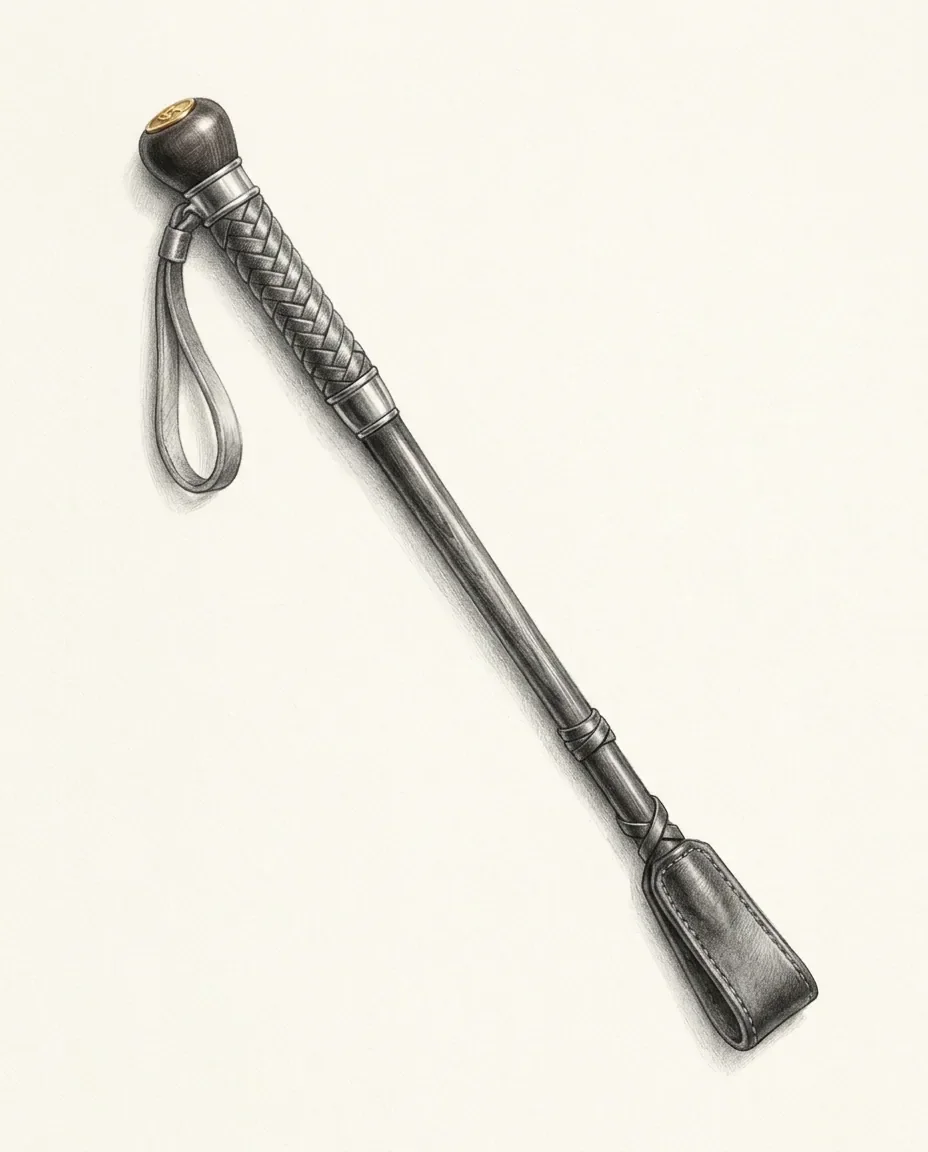
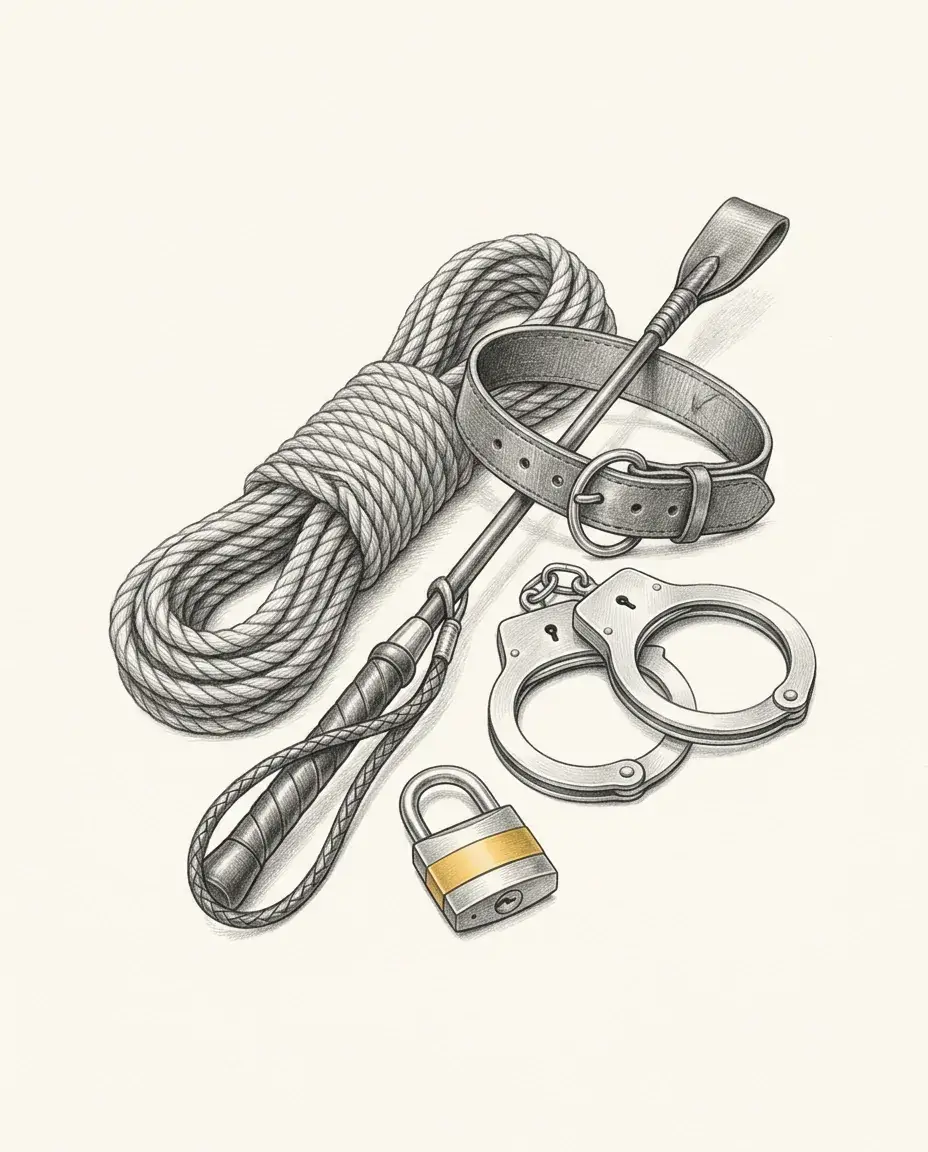
What the term covers. Because algophilia was proposed as an umbrella, it reaches in both directions at once. On the receiving side it describes negotiated impact play (spanking, a flogger, a cane) experienced as pleasurable rather than aversive; the brief sting of wax play; the contrast of temperature play; the sharp, ritualised sensation of needle play. On the inflicting side it describes arousal at delivering those same sensations to a willing partner. Nineteenth-century writers used one word for both, which is why the label maps onto masochism and sadism together rather than onto either alone.
What the term does not cover. Sensation play aims at intensity (feathers, fur, ice, a pinwheel) without pain being the object. Degradation and humiliation hurt psychologically and need no physical stimulus at all. Pain play is the same territory under the name current practice actually uses. Self-injury outside any erotic frame is a different clinical matter, and pain inflicted on someone who has not agreed to it is assault.
How the word is used. The register is clinical and the term is archaic: it belongs to the history of sexology rather than to any current manual, appearing in neither DSM-5-TR nor ICD-11, and rarely in modern dictionaries, which record its rival algolagnia instead. Someone writing "algophilia" today is almost always quoting a nineteenth-century source, or a glossary derived from one.
History & origins
Coinage and the Féré–Schrenck-Notzing dispute
Algophilia belongs to the late-nineteenth-century effort to name erotic responses to pain. The French physician Charles Féré used algophilia, literally a "love" or "fondness" of pain, for what others called masochism. In 1892 the German psychiatrist and paranormal investigator Albert von Schrenck-Notzing (1862–1929) introduced the rival term algolagnia precisely to differentiate his reading from Féré's: he held that the response involved lust (Greek lagneía) rather than love (-philia). As Etymonline records, algolagnia was coined in German in 1892 and entered English around 1900 as Modern Latin.
The umbrella that lost
Algolagnia was meant as a unifying umbrella for both active algolagnia (inflicting pain) and passive algolagnia (receiving it), drawing together what Krafft-Ebing had split into sadism and masochism in Psychopathia Sexualis (1886). Krafft-Ebing named sadism after the Marquis de Sade and masochism after the novelist Leopold von Sacher-Masoch. That polarity, taken up by Sigmund Freud and absorbed into psychoanalysis, prevailed in medical discourse. The unifying terms lost: both algophilia and algolagnia survive only as historical near-synonyms, little used today. Modern dictionaries such as Merriam-Webster still record algolagnia as "sexual pleasure derived from pain," but the clinical field long ago settled on the sadism/masochism pair, codified in the DSM-5-TR and ICD-11 as Sexual Masochism and Sexual Sadism Disorders.
In practice
Where the concept is invoked at all, it overlaps with the receiving side of consensual pain play in BDSM: negotiated impact, pinching, temperature, or other intense sensation experienced as pleasurable rather than aversive. As with masochism, the activity is defined by negotiation, limits, and safewords, and the receiving partner, sometimes called the "bottom," typically directs intensity. This is non-instructional reference framing, not a how-to.
Psychology
What causes arousal from pain?
The appeal is understood through the same mechanisms proposed for masochism: release from control, a sharp narrowing of attention onto sensation, endorphin and arousal responses to managed discomfort, and the symbolic weight of trust and surrender. Context and consent reframe the pain, so that the same stimulus that would be aversive in another setting registers as pleasurable when it is wanted, controlled, and embedded in a trusted dynamic. The evidence base specific to pain arousal is modest and largely descriptive; most theorising borrows from the broader, and still contested, literature on masochism and BDSM.
Prevalence & culture
How common is it?
As a word, algophilia is obscure, encountered chiefly in dictionaries, glossaries, and histories of sexology. The underlying interest, however, is far from rare. In Joyal & Carpentier's general-population survey (2017) of 1,040 adults, masochism exceeded the threshold the authors set for a "statistically unusual" interest, placing pain-related arousal among the more commonly reported paraphilic interests rather than an outlier. Fantasy data point the same way: in Lehmiller's Tell Me What You Want (2018) survey of 4,175 Americans, about 65% reported fantasising about receiving pain and 60% about inflicting it. The archaic label itself carries little cultural visibility, eclipsed by the everyday language of BDSM and by the clinical category of masochism.
Safety, consent & law
Because it centres on pain, this interest carries genuine physical risk, which is why it is flagged. Non-instructional safety framing emphasises informed negotiation, clear limits and safewords, risk-aware technique, attention to injury and infection, and aftercare. Activity between consenting adults is legal in most jurisdictions, though consent may not extend to serious bodily injury under some laws, a limit illustrated by cases in several countries where courts have held that one cannot lawfully consent to grievous harm. Clinically, an interest in pain is not in itself a disorder: per the DSM-5-TR, attention is warranted only when it causes marked distress or impairment, or trends toward self-endangerment, and care is supportive rather than punitive.
Common questions
Is algophilia the same as masochism?
Not quite. Masochism names arousal at being hurt, bound, or made to suffer, and in DSM-5-TR it becomes Sexual Masochism Disorder only with distress or impairment. Algophilia was proposed as a wider label for arousal at pain in either direction, so it takes in sadism as well. The wider label lost: clinicians describe the receiving side as masochism and the inflicting side as sadism, which leaves algophilia nothing of its own to name.
Is algophilia the same as algolagnia?
They are near-synonyms coined in competition. Charles Féré's algophilia built the word on -philia, "love"; Albert von Schrenck-Notzing answered in 1892 with algolagnia, from lagneía, "lust", because he thought lust rather than love was what the pattern involved. Both were umbrellas covering pain-linked arousal in either direction, and both were displaced by the sadism/masochism pair. Of the two, algolagnia is the one dictionaries still record, and the one this catalog uses for the practice, under pain play.
Is being aroused by pain a mental disorder?
No, not on its own. DSM-5-TR draws the line at consequences: an interest becomes Sexual Masochism Disorder or Sexual Sadism Disorder only when it causes the person marked distress or impairment, or is acted on with someone who has not consented. A negotiated interest in intense sensation between consenting adults falls outside that threshold, and clinical guidance treats it as a variation rather than as something to be corrected.
How is arousal from pain different from self-harm?
The frame around it. Consensual pain play is wanted, negotiated, bounded by limits and a safeword, and the sensation is sought because in that context it is pleasurable. Self-injury is typically solitary, unwanted at some level, and aimed at relieving distress rather than producing pleasure; the same physical act can mean opposite things. Where a pain interest tips into secrecy, escalation, or self-endangerment, that shift is what warrants support, not the interest itself.
Is consensual pain play safe?
It carries genuine physical risk, which is why this interest is flagged. Bruising, broken skin, nerve injury and infection are all possible, and intensity is easy to misjudge once adrenaline is involved. Harm-reduction practice rests on informed negotiation before anything begins, explicit limits and a safeword, checking in on what the receiving partner is actually feeling, knowing which areas of the body tolerate impact badly, and aftercare afterwards. This is context rather than instruction.
Is it legal to consent to being hurt during sex?
Up to a point, and the point varies by jurisdiction. Activity between consenting adults is generally lawful, but several legal systems hold that a person cannot consent to serious bodily injury, so consent stops working as a defence once harm crosses a threshold set by a court rather than by the participants. The practical effect is that ordinary sensation play is unremarkable in law, while activity leaving lasting injury may not be, whatever both people wanted.
- Masochism69/100Sexual Masochism Disorder · Clinical ParaphiliasA DSM-5-TR paraphilic disorder defined by recurrent, intense arousal from being humiliated, beaten, bound, or otherwise made to suffer. It is diagnosed only when that arousal causes the person clinically significant distress or impairment. Consensual masochistic interest without distress is not a disorder.69
- Sadism59/100Sexual Sadism Disorder · Clinical ParaphiliasRecurrent, intense sexual arousal from the physical or psychological suffering of another person. As the DSM-5-TR's Sexual Sadism Disorder it is diagnosed only when acted on with a non-consenting person or when it causes clinically significant distress or impairment; consensual dominance is not itself a disorder.59
- Sensation Play45/100Sensation & PainAn interest in heightened, varied skin sensations created with soft, textured, or lightly stimulating implements. Feathers, fur, silk, brushes, ice, or pinwheels are typical, often combined with anticipation and the contrast between soothing and prickling touch. It is a common, gentle form of erotic play.45
- Pain Play58/100Algolagnia · Sensation & PainPain play (algolagnia) is a clinical umbrella term for sexual arousal connected to physical pain, whether that pain is received or inflicted. The received form is labelled active/masochistic, the inflicted form passive/sadistic. It frames pain itself, not any specific implement, as the source of erotic interest.58
- Branding And Burning Play21/100Sensation & PainAn interest in consensual heat and burn sensation, ranging from transient fire play that leaves no mark to deliberate permanent branding or cautery. Such marking sits within power-exchange or body-modification contexts. It is a rare, high-risk practice confined to experienced niche communities.21
- Stress Position Play22/100Sensation & PainA consensual BDSM practice in which one partner holds a physically demanding posture to test endurance and obedience. It uses fatigue and gravity rather than restraints. The same term also names a coercive interrogation technique, a distinct and non-consensual meaning this entry separates clearly.22
From Greek álgos (ἄλγος) "pain" + -philia (φιλία) "love, affection"; literally a love of pain. Coined in this sense by the French physician Charles Féré, and contrasted by Schrenck-Notzing with his own term algolagnia (álgos "pain" + lagneía "lust").
algolagnic · archaic sexology term · masochism synonym
Prevalence is computed from the entry's cited population estimate. Rows marked ESTare indicative editorial estimates scored against a fixed anchor rubric, not measured quantities. Method & anchors: methodology.
Uncommon · ≈ 1 in 100
- 01Algolagnia, WikipediaFéré's 'algophilia', Schrenck-Notzing's introduction of 'algolagnia' (1892) to stress lust over love, Greek roots (algos 'pain', lagneia 'lust'), and the active/passive umbrella
- 02Algolagnia, Etymology, Origin & Meaning (Etymonline)etymology and 1892/1900 dating of algolagnia from Greek algos 'pain' + lagneia 'lust'; coined by Schrenck-Notzing (1862-1929)
- 03Algolagnia, Merriam-Webster Dictionarydictionary definition of algolagnia as sexual pleasure derived from pain
- 04Richard von Krafft-Ebing, Psychopathia Sexualis (1886)the sadism/masochism polarity that algolagnia/algophilia tried to unify and that ultimately prevailed
- 05Joyal & Carpentier (2017), The Prevalence of Paraphilic Interests and Behaviors in the General Population, J. Sex Research 54(2):161-171general-population prevalence: masochism exceeded the 'statistically unusual' threshold among 1,040 adults, placing pain-related arousal among the more commonly reported paraphilic interests
- 06Albert von Schrenck-Notzing, Wikipediabiographical context for the German psychiatrist (1862–1929) who coined algolagnia in 1892 to stress lust over Féré's 'love'
- 07Lehmiller (2018), Tell Me What You Want, survey of 4,175 Americansfantasy prevalence: about 65% fantasised about receiving pain and 60% about inflicting it
- 08Three Essays on the Theory of Sexuality (Freud, 1905), WikipediaFreud's adoption of the sadism/masochism polarity into psychoanalysis, helping it prevail over algolagnia/algophilia
- 09DSM-5-TR, Paraphilic Disorders (American Psychiatric Association, 2022)modern clinical framing as Sexual Masochism Disorder, diagnosed only with distress or impairment; replaces the archaic algophilia label
- 10ICD-11, Paraphilic disorders (World Health Organization)ICD-11 codification of Sexual Sadism and Sexual Masochism, the categories that displaced algolagnia/algophilia