Toe Fetish
Toe Partialism
Added 21 Jun 2026 · Updated 22 Aug 2026
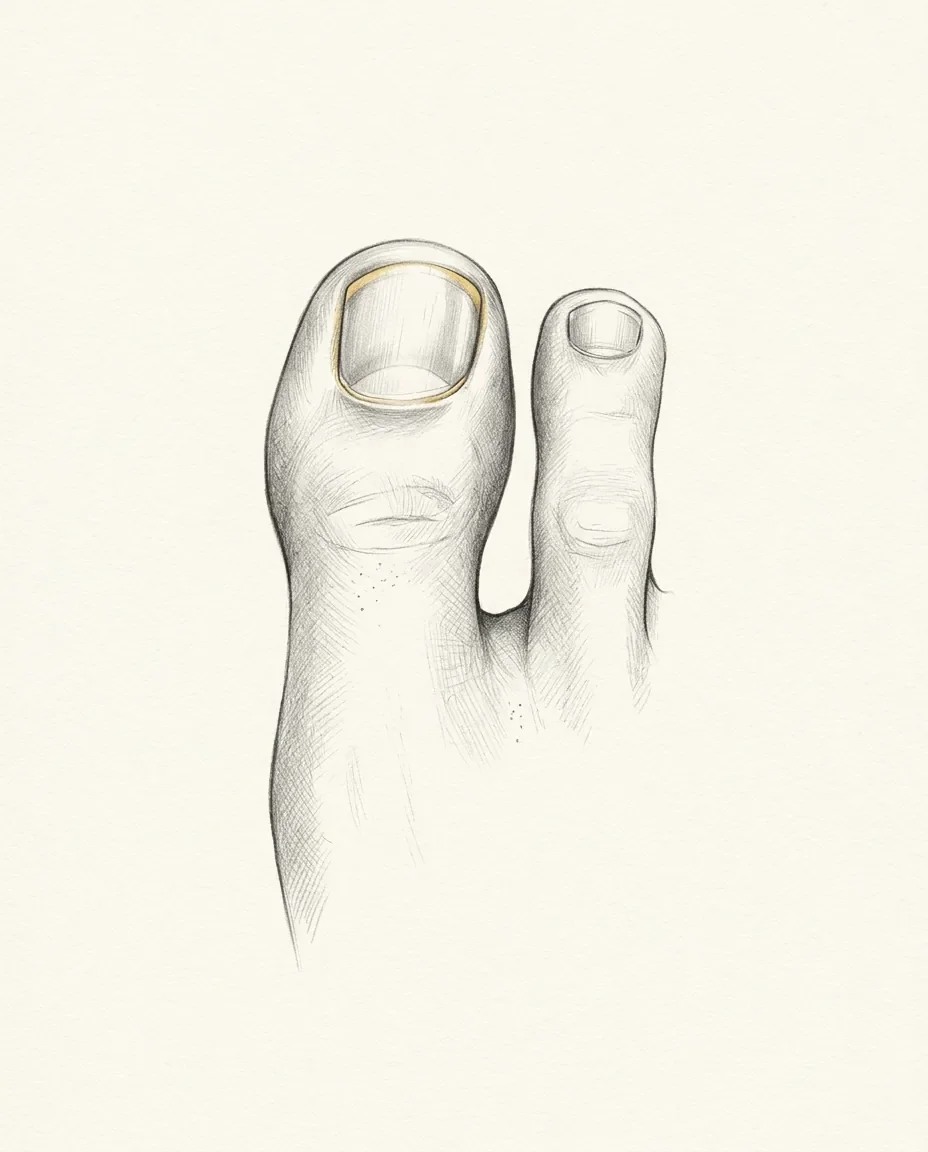
A focused erotic interest specifically in the toes: a narrower subset of foot partialism. The toes' shape, length, arrangement, adornment such as painted nails or toe rings, or related contact are a primary source of attraction.
- Prevalence
- Common
- Category
- Body Parts & Partialism
- Clinical term
- Toe Partialism
- Domain
- Sexual interest · Paraphilia
- Confidence
- Low confidence
- Status
- A partialism within the foot-fetish spectrum; classified as a paraphilia only if it causes distress, impairment, or harm.
- Also known as
- toe partialism, toe fetishism, toe sucking interest, digit partialism (foot), podactyl partialism
- Added
- 21 Jun 2026
- Updated
- 22 Aug 2026
Featured in
Overview
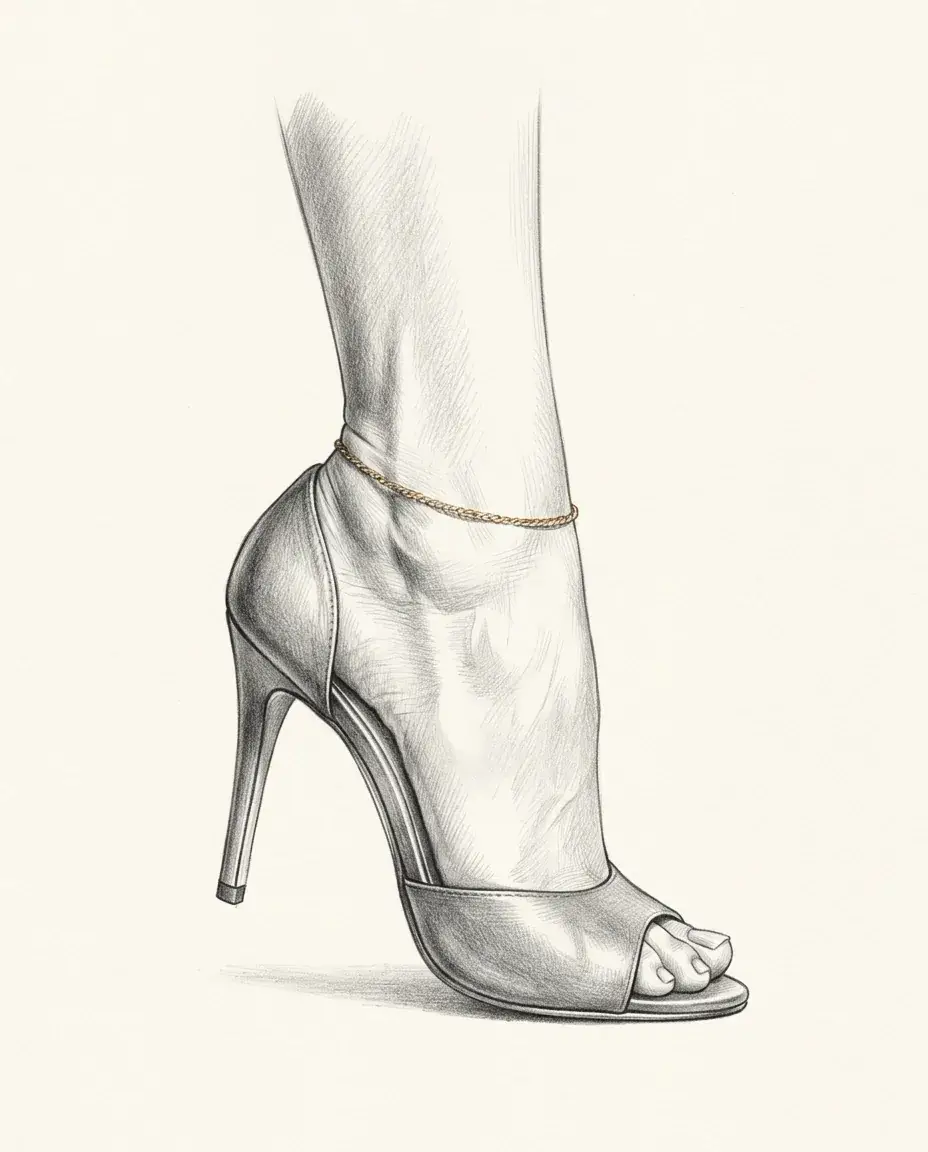
Toe partialism is an erotic interest concentrated specifically on the toes, a narrower expression of the much broader foot partialism. The shape, length, and arrangement of the toes (along with adornment such as nail polish, toe rings, or hosiery) are central to the attraction, and the interest typically coexists with general foot fetishism and an appreciation of footwear. This article traces its lineage within the documented history of foot eroticism, the proposed mechanisms behind it, and what reliable prevalence data exist.
Examples
Toe partialism is defined by how narrow its focus is, which makes the surrounding foot interests the best way to locate it.
What the term covers. Attention that settles on the toes themselves (their length, proportion and arrangement, the shape of the nails, the way they splay or curl) and on the ways toes are presented: nail polish, toe rings, hosiery, a fresh pedicure. Where the interest is acted on rather than only felt, the usual forms are toe sucking and the toejob; it also shows up in close-focus photography and in the shoeplay that briefly exposes the toes in public.
What the term does not cover. The broader foot fetish, of which this is a subset, takes the whole foot as its object, as do the neighbouring interests in the sole, the arch, the bare foot and foot scent. A nail fetish follows the nails wherever they are, hands included. Footwear interests (shoes, socks, stockings, high heels) target what covers the foot rather than the foot itself. And acts such as a footjob, foot worship or trampling are things done with feet, which an attraction to toes may motivate but does not define.
How the word is used. Plain descriptive English with no clinical coinage of its own: the diagnostic umbrella is partialism, which the DSM-5-TR handles within fetishistic disorder and the ICD-11 treats similarly, in both cases only where there is distress, impairment or a non-consenting person. In community and search usage "toe fetish" and "foot fetish" are often used interchangeably, and the narrower term is mostly reached for by people specifying where exactly their own attention goes.
History & origins
Clinical lineage
Foot-focused eroticism is among the oldest and best-documented partialisms in the sexological record. Richard von Krafft-Ebing gave foot and shoe fetishism extended attention in Psychopathia Sexualis (first published 1886), proposing that such fetishes form when a childhood experience "imprints" an erotic association that persists into adulthood even after its origin is forgotten. Havelock Ellis treated the eroticisation of the foot as a recurring theme in his Studies in the Psychology of Sex (Vol. II, 1936 ed.), helping to establish it as a legitimate object of inquiry rather than mere deviance.
The clinical word partialism (an erotic focus on a specific, non-genital body part) entered the diagnostic vocabulary over the twentieth century. Under the DSM-5/DSM-5-TR it is treated within fetishistic disorder (a reclassification from the separate listing it held in DSM-IV) and warrants a clinical diagnosis only when it causes significant distress, impairment, or harm: otherwise it is regarded as an ordinary variation of sexual interest. The toe-specific form has no separate documented coinage or dated entry into any nosology; the literature treats it as a narrower expression of foot partialism rather than a distinct diagnosis, alongside related body-part interests like the nail fetish.
The cortical-adjacency hypothesis
A frequently cited neurological idea, advanced by neuroscientist V. S. Ramachandran around 1994, observes that on the brain's sensory homunculus the cortical map for the foot lies immediately adjacent to the map for the genitals, and speculates that cross-wiring between these regions could help explain why the foot so often acquires an erotic charge. The hypothesis remains unproven: a later imaging study reported very little neuronal activation from foot stimulation, undermining a simple homuncular explanation. It is best treated as a suggestive but contested mechanism, not established fact.
Cultural evolution
The eroticisation of feet recurs across many cultures and historical periods, and in the internet era it has become one of the most visible and organised body-part interests online. Filmmaker Quentin Tarantino is often cited for the recurrent foot imagery in his films, a frequently noted touchstone of the interest's mainstream cultural presence.
In practice
Among consenting adults, expression commonly includes:
- Looking at and gently touching the toes, bare or pedicured.
- Appreciation of nail polish, toe rings, hosiery, or other adornment.
- Oral or manual contact such as toe-sucking or massage.
- Photography or collection of imagery focused on feet and toes.
Psychology
Alongside the contested cortical-adjacency hypothesis, mainstream accounts emphasise associative learning, an early or memorable pairing of feet with sexual arousal that is later reinforced, and the long-standing cultural eroticisation of feet across many societies. Krafft-Ebing's original "imprinting" intuition prefigures these conditioning-based models. For the great majority of people the interest functions as an aesthetic preference rather than a compulsion, and the evidence base for any single causal mechanism remains thin and debated.
Prevalence & culture
Feet are by a wide margin the most common body-part fetish. In the large internet survey by Scorolli and colleagues (2007) (which analysed 381 fetish discussion groups targeting at least 5,000 participants and was published in the International Journal of Impotence Research) feet and objects associated with feet were the single most preferred target, accounting for about 47% of body-part-focused preferences, far ahead of the next groups (body fluids and body size, each roughly 9%), with footwear adding a large share of object-related interest. The Scorolli table is widely reproduced, including on Wikipedia's sexual fetishism article. The toe-specific subset is therefore still relatively prevalent and is supported by large, active online communities, even though dedicated toe-only research is sparse; the popularity figures in this entry are calibrated to foot-fetish data and scaled down accordingly.
Safety, consent & law
Between consenting adults, toe partialism is a benign variation of sexual interest with no inherent legal concern. The practical considerations are ordinary ones: fungal infections such as athlete's foot and nail fungus pass by skin contact, and small cuts, cracked skin or verrucas are best left alone until they heal, so washing beforehand and a glance at the skin cover most of it. Photography, a common expression of the interest, carries its own consent question: images of a partner should be taken, kept and shared only on terms that partner has actually agreed to.
Common questions
Is a toe fetish the same as a foot fetish?
It is a narrower version of it. A foot fetish takes the whole foot as its object, including the soles, arches and ankles; toe partialism concentrates on the digits and how they are presented. In practice the two almost always coexist, and most people with the narrower focus describe themselves using the broader word because it is the one everyone recognises.
How common is a toe fetish?
Nobody has measured the toe-specific form directly, so the figure is inferred from foot data. Scorolli et al.'s 2007 analysis of 381 online fetish discussion groups, covering at least 5,000 participants, found feet accounted for about 47% of body-part fetishes, the largest single category by a wide margin. Toes are one slice of that, which makes the interest uncommon in absolute terms but unremarkable within foot-focused communities.
Is a toe fetish a paraphilia or a disorder?
It is a partialism (an erotic focus on a non-genital body part), which the DSM-5-TR treats within fetishistic disorder rather than as a separate listing. Being a partialism is not being disordered. A diagnosis requires marked distress, functional impairment, or a non-consenting person, none of which follows from the interest itself between adults.
Is toe sucking part of a toe fetish?
It is the most common way the interest gets expressed, but the two are not the same thing. Toe sucking is an act, and plenty of people do it as part of general foot play or simply because a partner enjoys it, with no particular attraction to toes. Equally, someone can have a lifelong toe interest that stays entirely visual.
Does the brain-map theory explain why feet and toes attract fetishes?
It is a suggestive idea that has not held up well. V. S. Ramachandran noted around 1994 that the foot and genital regions sit next to each other on the brain's sensory map and proposed that cross-wiring might explain the pattern. Later imaging work reported very little activation from foot stimulation, undermining the simple version. Associative learning and the long cultural eroticisation of feet remain the mainstream explanations.
Are there any hygiene risks with toe play?
Only ordinary ones. Fungal infections such as athlete's foot and nail fungus spread by skin contact, and small cuts, cracked skin or verrucas are best left alone until they heal. Washing beforehand handles most of it. Where toes make contact with a partner's genitals, the same skin-to-skin transmission risks apply as with any other genital contact.
From the blog
- Nail Fetish24/100Onychophilia · Body Parts & PartialismAn erotic interest centered on fingernails or toenails, particularly their length, shape, color, or adornment. The nails themselves are the primary focus of attraction.24
- Back Fetish23/100Dorsal Partialism · Body Parts & PartialismA focused erotic interest in the back and shoulders, where this dorsal region of the torso is a primary source of attraction rather than the body as a whole. It is generally a benign aesthetic preference, best understood as a form of partialism.23
- Toejob34/100Acts & ActivitiesA non-penetrative sexual act in which the toes, rather than the soles or arches, stimulate a partner. It is the toe-focused form of the footjob and a common expression of foot interest, benign between consenting adults.34
- Barefoot Fetish57/100Body Parts & PartialismAn erotic interest focused specifically on bare, unshod feet rather than feet in shoes or hosiery. A narrower expression of foot partialism, it centres on naked soles and toes, the contrast between clean and dirty feet, and the sight of bare feet in everyday or public settings.57
- Size Difference Kink55/100Body Parts & PartialismAn erotic interest in a marked contrast in physical scale (height, build, or weight) between partners, where the disparity itself is the focus of arousal. The closeness, vulnerability, or power dynamic it implies is part of the same appeal.55
- Stigmatophilia (Tattoos & Piercings)58/100Stigmatophilia · Body Parts & PartialismAn erotic attraction to bodies marked by tattoos, piercings, scarification, and other forms of body modification. The modified or adorned skin is itself a central focus of arousal rather than incidental decoration.58
"Toe" is plain English (Old English ta), and "toe fetish" is a descriptive compound rather than a clinical coinage; it sits within the partialism family. The bookish descriptor "podactyl" combines Ancient Greek pous, pod- (foot) with daktylos (finger or toe).
lower body · extremities · subset of foot partialism
Prevalence is computed from the entry's cited population estimate. Rows marked ESTare indicative editorial estimates scored against a fixed anchor rubric, not measured quantities. Method & anchors: methodology.
Common · ≈ 1 in 20
- 01Scorolli et al. (2007), Relative prevalence of different fetishes, Int. J. Impotence Research 19(4):432-437prevalence anchor (feet 47% of body-part fetishes; toes are a narrower subset)
- 02Relative prevalence of different fetishes, International Journal of Impotence Research (Nature)primary journal landing: 381 discussion groups, ≥5,000 participants; feet ~47% of body-part preferences, next groups (body fluids, body size) each ~9%
- 03Sexual fetishism, Wikipedia (carries the Scorolli 2007 relative-frequency table)carries the Scorolli relative-frequency table placing feet/toes at the top of body-part fetishes
- 04List of paraphilias, Wikipediadefinition/existence of foot and toe partialism
- 05Foot fetishism, Wikipediahistory of foot/shoe fetishism (Krafft-Ebing 1886 imprinting, Havelock Ellis), the Ramachandran ~1994 cortical-adjacency hypothesis and the later imaging study undermining it, and the Tarantino cultural reference
- 06Partialism, Wikipediadefinition of partialism as an erotic focus on a non-genital body part and its DSM-5 treatment within fetishistic disorder (diagnosed only when it causes distress, impairment, or harm)